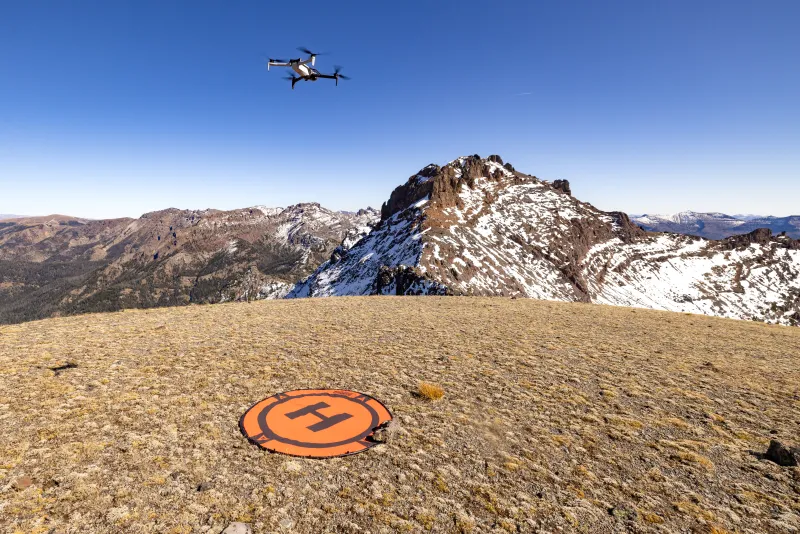
Can you fly a drone in a national park? Regulations for flying drones
Not from park land or water: every park's rules prohibit launching, landing or operating a drone there except as approved in writing by the superintendent.
- Jail, at most, for breaking a park's closure
- 6months
- Fine, at most, in the park service's words
- $5,000
- FAA request over parks: above ground level
- 2,000ft
- National forests: launch from wildlife over
- 328ft
- Kinds of federal land compared
- 7
The National Park Service rule for flying drones in national parks
Every park's compendium closes its land and water to drones, and only the superintendent's written approval opens them.
- In a park
No launching, landing or flying from park land or water, unless the superintendent approves it in writing.
ClosedThe exact rule
Launching, landing, or operating an uncrewed or remotely piloted aircraft from or on lands and waters administered by the National Park Service … is prohibited except as approved in writing by the superintendent.
National Park Service Reference Manual 60, chapter 12, Uncrewed Aircraft Systems, section 12.1.2 (September 2024)What it means: every park must carry these words in its compendium, the park's written list of closures; Appendix 8 says “All superintendents are required to insert closure language in the park compendium.” The manual treats drones as aircraft “regardless of size or weight”.
The regulation behind it
Violating a closure, designation, use or activity restriction or condition, schedule of visiting hours, or public use limit is prohibited.
36 CFR 1.5(f), Closures and public use limits (eCFR)What it means: the superintendent may “close all or a portion of a park area to all public use or to a specific use or activity” (1.5(a)(1)), and the drone closure in the compendium rests on this section. A closure is announced by signs at entry points and along the boundary, by maps or by other means, and the compendium “shall be updated annually and made available to the public upon request” (1.7).
- A permit
Not for flying for fun, except at model aircraft airstrips a park names; research and filming permits have conditions of their own.
Airstrips - Taking off outside
The park service and the FAA each have words on it, quoted side by side below.
Both quoted - The penalty
A misdemeanor, with up to six months in jail and a $5,000 fine.
Misdemeanor - Next door
Forest, refuge or BLM land next door: each agency has its own rule, in the table below.
Varies
A worked example: Yellowstone
Yellowstone's 2026 compendium is a worked example. It uses the same words, “prohibited except as approved in writing by the Superintendent”, and gives its reasons: wildlife, thermal areas, the safety of visitors near roads and crowds, and wilderness character. The park service's explainer is just as plain about another park: “Grand Canyon National Park does not allow recreational use of uncrewed aircraft by the public.”
Three more rules a flight can break
The park service names three more rules a drone flight can break: 36 CFR 2.2 (disturbing wildlife), 2.34 (disorderly conduct) and 2.12(a)(3), which bars “operating any type of portable motor or engine” in nondeveloped areas without a permit. The park regulations “do not apply on non-federally owned lands and waters or on Indian tribal trust lands” inside a park's boundaries (36 CFR 1.2(b)).
Policy Memorandum 14-05 is gone
Reference Manual 60, chapter 12, released in September 2024, now holds the park service's drone policy. Policy Memorandum 14-05 of 2014, which older pages still cite, was rescinded on October 1, 2024: the park service's memo index lists it as “Rescinded by memo dated 10/1/24; see now RM-60”.
Drone permits: special use permits, research and aerial photography
Research and filming flights need written approval with conditions of their own, and permits for flying for fun are not approved, except at model aircraft airstrips a park names.
A special use permit that allows launching, landing or operating a drone “must be approved in writing by the Regional Director unless otherwise specified below”, and filming and events follow Appendix 8 of the manual.
The park service flies drones itself, for search and rescue, fire operations, scientific study and aerial photography, when the superintendent approves.
Flying for fun (49 U.S.C. 44809)
The manual: “Recreational use of UAS other than those under subsection 4 below will not be approved.” Subsection 4 is the one route: model aircraft airstrips named in the park's compendium, with the flights managed by a permit issued to a local model aircraft community organization.
The park service's advice to a recreational flyer: “Check the park website”; if drones are not allowed, ask the superintendent whether an area can be designated or a special use permit obtained.
Check one parkResearch, filming and other work (Part 107)
Research flights need written authorization, for example a scientific research and collecting permit under 36 CFR 2.5, and a flight safety plan, and “Pilots must possess an FAA Part 107 Certificate.” For paid aerial photography and other commercial flights, “the NPS cannot issue a permit for a commercial uncrewed aircraft activity unless the FAA has sanctioned the flight.”
A permit's conditions
A permit's conditions include an FAA Part 107 license, flying only inside the designated area, and no launch or landing from land “eligible, studied, proposed, recommended, or officially designated as wilderness.” The park service's general filming and still photography permit page does not mention drones.
A Part 107 certificate is needed for a permit but is not one; the drone license guide covers the certificate.
Drone license guideFlying over a park from outside: what the park service and the FAA each say
The closure covers launching, landing or operating “from or on lands and waters administered by the National Park Service”.
For drone pilots who launch outside the boundary and cross over park land, here is what each agency says, in its own words; we add no verdict.
What the park service says
“Jurisdiction by the NPS ends at the park boundary.”
National Park Service, “Uncrewed Aircraft in the National Parks” (updated May 22, 2025)
Also from the park service: the same article says the policy “does not modify any requirement imposed by the Federal Aviation Administration”, and Reference Manual 60, Appendix 8 says “the FAA has primary jurisdiction over the National Airspace System”. No park service text we read speaks to a flight launched outside the boundary that crosses over park land.
What the FAA says
“Laws designating takeoff and landing locations have no direct effect on where UAS may operate in the air.”
FAA and U.S. Department of Transportation fact sheet on state and local regulation of drones (July 14, 2023), written about state and local laws, not about federal land agencies
In other FAA documents: the Remote Pilot study guide lists, among other airspace areas, “Wildlife Areas/Wilderness Areas/National Parks and request to operate above 2,000 AGL”; it is a request, and the guide says no more. The FAA's Airspace Restrictions page lists stadiums and sporting events, airports, restricted or special use airspace, Washington, D.C., and emergency and rescue operations; national parks, forests and refuges are not on it.
Penalties under the park regulations
A violation is a misdemeanor, with up to six months in jail and a $5,000 fine.
In jail, at most, for breaking a park's drone closure (36 CFR 1.3, 18 U.S.C. 1865).
Fine, at most, in the park service's words: a misdemeanor.
In prison, at most, for a knowing violation on a wildlife refuge (16 U.S.C. 668dd(f)).
Fine, at most, for breaking the BLM's wilderness rules (43 CFR 6302.30).
Under 36 CFR 1.3(a) a person convicted of breaking the park regulations “shall be subject to the criminal penalties provided under 18 U.S.C. 1865”, which reads “imprisoned not more than 6 months, fined under this title, or both”, and the park service sums it up as “a misdemeanor with the maximum penalty of six months in jail and a $5,000 fine”.
Each other kind of federal land has a penalty of its own, as its rule states it: the table under other federal lands gives each one.
Case by case
Park rangers enforce the closure and, in the park service's words, “have discretion to look at potential violations on a case-by-case basis.”
How to check one park's rules and regulations
Each park's rules and regulations for drone flights are in its compendium: to understand the rules of one park, read the current one.
-
Step 1: Open the park's website
First stopThe park service's own advice: “Check the park website”, then ask the superintendent.
From: the park service's advice to recreational flyers.
-
Step 2: Read the current compendium
Updated yearlyParks update it every year and make it available on request, and closures are also posted on signs at entry points and along the boundary. Yellowstone, the one park we checked for this, links its compendium from its Laws & Policies page.
Where: the park's own website, or the park office on request (36 CFR 1.7).
-
Step 3: Ask the superintendent
In writingIf drones are not allowed, ask whether an area can be designated or a special use permit obtained. Only an approval in writing opens park land and water to a drone.
From: Reference Manual 60, chapter 12, and the park service's advice to recreational flyers.
-
Can I fly here?
Step 4: Check your spot
Before you goTo see whether a spot is inside a national park or a wilderness area before you go, use Can I fly here? It checks the spot against park and wilderness boundaries, the airspace and the other flight rules.
Drone rules and regulations on other federal lands
Each agency that manages federal land has rules of its own, and the FAA's rules apply on all of them.
National parks
No launching, landing or operating from park land or water without the superintendent's written approval.
National forests and grasslands
Outside wilderness, no Forest Service rule names drones. Its tips: keep away from campgrounds, trail heads and visitor centers, and launch more than 328 feet from wildlife.
Wilderness areas
No take-off, landing or operating from designated wilderness, on any agency's land.
National wildlife refuges
Launching, landing or disturbing wildlife by drone on a refuge is prohibited by law, in the Fish and Wildlife Service's words.
Bureau of Land Management land
No national BLM drone page: on or just over the ground a drone follows the off-highway vehicle rules, and local closures may apply.
Army Corps of Engineers lakes
Aircraft fly on project lands only at locations the District Commander designates.
Bureau of Reclamation land
No flying within 400 feet of dams, powerplants, campgrounds and the other listed facilities without prior approval.
Which land is your spot on?
Can I fly here? checks a spot against park and wilderness boundaries and the airspace.
Can I fly here?Each agency's rule, in its own words
One card per kind of land: the rule in the agency's own documents, who says yes, the penalty as the rule states it, and what the agency and the FAA each say about a drone launched outside.
| Land | Managed by | The rule | Who says yes | Penalty, as stated | Launched outside, flying over: the agency | Launched outside, flying over: the FAA | Read |
|---|---|---|---|---|---|---|---|
| National parks and other park service areas | National Park Service (Interior) | Every park's compendium must say that launching, landing or operating a drone “from or on lands and waters administered by the National Park Service” “is prohibited except as approved in writing by the superintendent” (Reference Manual 60, 12.1.2). The closure rests on 36 CFR 1.5(a)(1) and (f), with public notice and the written compendium under 1.7. The park service also names 36 CFR 2.2 (wildlife), 2.12(a)(3) (portable motors in nondeveloped areas) and 2.34 (disorderly conduct). | The superintendent, in writing. A special use permit for drones must be approved in writing by the Regional Director, and “Recreational use of UAS other than those under subsection 4 below will not be approved”: subsection 4 is model aircraft airstrips named in the compendium, flown under a permit issued to a local model aircraft community organization. Research needs a 36 CFR 2.5 permit and a Part 107 certificate; commercial flights need the FAA's approval first. | 36 CFR 1.3(a) applies 18 U.S.C. 1865: “imprisoned not more than 6 months, fined under this title, or both”. The park service: “Violation of the ban is a misdemeanor with the maximum penalty of six months in jail and a $5,000 fine.” | “Jurisdiction by the NPS ends at the park boundary”, and the policy “does not modify any requirement imposed by the Federal Aviation Administration”; the FAA “has primary jurisdiction over the National Airspace System” (Appendix 8). No park service text we read speaks to a flight launched outside the boundary that crosses over park land. | The FAA and DOT fact sheet of July 14, 2023, written about state and local laws, not about federal land agencies: “Laws designating takeoff and landing locations have no direct effect on where UAS may operate in the air.” The FAA's Remote Pilot study guide lists, among other airspace areas, “Wildlife Areas/Wilderness Areas/National Parks and request to operate above 2,000 AGL.” The FAA's Airspace Restrictions page (updated December 11, 2025) lists stadiums, airports, restricted or special use airspace, Washington, D.C., and emergency operations; national parks, forests and refuges are not among them. | November 13, 2026 (park service documents, 36 CFR part 1, 18 U.S.C. 1865); November 14, 2026 (Yellowstone's compendium, FAA pages, the study guide) |
| National forests and grasslands | USDA Forest Service | The Forest Service's drone tips: “Keep your UAS away from populated and noise-sensitive areas, such as campgrounds, trail heads, and visitor centers”; launch more than 328 feet (100 meters) from wildlife; no flying in a temporary flight restriction, such as over a wildfire. No section of 36 CFR part 261 names drones: aircraft are exempt from motor vehicle use designations (261.13(a)), and a forest order can prohibit “Landing of aircraft” (261.50, 261.58(y)). | The Forest Service's drone page names no permit for flying for fun. Closures are made by order of the Forest Supervisor or another authorized officer (36 CFR 261.50). | 36 CFR 261.1b: “imprisonment of not more than six months or a fine in accordance with the applicable provisions of 18 U.S.C. 3571 or both”. The drone page states no penalty. | “The FAA has authority over all airspace.” And, as a tip: “Do not fly over congressionally designated wilderness areas or primitive areas”, because people seek them for solitude and quiet. | The FAA and DOT fact sheet of July 14, 2023, written about state and local laws, not about federal land agencies: “Laws designating takeoff and landing locations have no direct effect on where UAS may operate in the air.” The FAA's Airspace Restrictions page (updated December 11, 2025) lists stadiums, airports, restricted or special use airspace, Washington, D.C., and emergency operations; national parks, forests and refuges are not among them. | November 13, 2026 |
| Wilderness areas, on any agency's land | The agency that manages the area, under the Wilderness Act | The Wilderness Act: “no use of motor vehicles, motorized equipment or motorboats, no landing of aircraft, no other form of mechanical transport” (16 U.S.C. 1133(c)). The Forest Service counts drones as both “motorized equipment” and “mechanical transport”; BLM rules count aircraft as motorized equipment (43 CFR 6300.0-5). Each agency's own rule: 36 CFR 261.18 and 293.6, 43 CFR 6302.20, 50 CFR 35.5, and a park service permit condition that bars launch or landing from wilderness. | No permit route for the public is named in the texts we read. The Act allows uses needed to administer the area and uses specifically provided for by law. The BLM's Bears Ears sheet excepts aircraft use that a wilderness area's enabling legislation describes; the Forest Service Chief may permit landing of aircraft where it was established before designation (36 CFR 293.6(d)). | Each agency's own. Forest Service: up to six months or a fine under 18 U.S.C. 3571, or both (36 CFR 261.1b). BLM: a fine of not more than $100,000 under 18 U.S.C. 3571 and imprisonment for not more than 12 months (43 CFR 6302.30). Park service: 36 CFR 1.3 and 18 U.S.C. 1865. Refuges: 16 U.S.C. 668dd(f). | Forest Service: drones “cannot take off from, land in, or be operated from congressionally designated wilderness areas”, and, as a tip, do not fly over them. BLM, at Bears Ears: “The public is prohibited from landing, taking off, or operating a drone within wilderness.” The Act's words are “within any such area”. | The FAA and DOT fact sheet of July 14, 2023, written about state and local laws, not about federal land agencies: “Laws designating takeoff and landing locations have no direct effect on where UAS may operate in the air.” The FAA's Remote Pilot study guide lists, among other airspace areas, “Wildlife Areas/Wilderness Areas/National Parks and request to operate above 2,000 AGL.” | November 13, 2026 (the agencies' texts); November 14, 2026 (FAA fact sheet, the study guide) |
| National wildlife refuges | U.S. Fish and Wildlife Service (Interior) | The Fish and Wildlife Service: “No. Launching, landing or disturbing wildlife by aircraft (drones) on national wildlife refuges is prohibited by law.” 50 CFR 27.34: “the unauthorized landing or take-off on a national wildlife refuge, except in an emergency, is prohibited”, as is unauthorized flying at altitudes that harass wildlife; disturbing any animal needs a special permit (27.51(a)). Refuge wilderness adds 50 CFR 35.5. | “Contact the individual refuge's manager if you have questions.” The service's law page: drone use on or from refuge land for commercial photography needs a permit under 43 CFR 5.1-12. | 16 U.S.C. 668dd(f): a knowing violation, a fine under title 18 or up to 1 year in prison, or both; any other violation, a fine under title 18 or up to 180 days, or both. 50 CFR 28.31(a)(1) points to “the penalties as prescribed by law”; the service's pages state no penalty. | 50 CFR 27.34 covers landing or take-off on a refuge and flying at altitudes that harass wildlife; it does not say where the drone was launched. “National wildlife refuge boundaries are designated on up-date FAA aeronautical charts.” The service: do not rely solely on apps “such as AirMap, B4UFly or DJI Go” to tell whether a place is legal. | The FAA's Remote Pilot study guide lists, among other airspace areas, “Wildlife Areas/Wilderness Areas/National Parks and request to operate above 2,000 AGL.” The FAA's Where Can I Fly page (updated March 8, 2024): “The FAA's B4UFLY service shows where recreational flyers can and cannot fly.” The FAA and DOT fact sheet of July 14, 2023, written about state and local laws, not about federal land agencies: “Laws designating takeoff and landing locations have no direct effect on where UAS may operate in the air.” | November 13, 2026 (Fish and Wildlife Service pages, 50 CFR parts 27 and 35); November 14, 2026 (16 U.S.C. 668dd, 50 CFR part 28, FAA pages) |
| Bureau of Land Management public lands | Bureau of Land Management (Interior) | BLM Manual 1626: “as a motorized vehicle, an unmanned aircraft is governed by the OHV regulations while they are on or immediately over the ground” (OHV: off-highway vehicle). At Bears Ears, one monument: “you must launch and land your drone on designated routes only.” Local closures and restrictions under 43 CFR 8364 may apply; we found no national BLM drone page. | The Bears Ears sheet: “Get in touch with land managers working with the public lands where you have planned a flight.” Closures and restrictions are set by the authorized officer (43 CFR 8364.1). | 43 CFR 8360.0-7: “a fine not to exceed $1,000 and/or imprisonment not to exceed 12 months”. A temporary closure: a fine under 18 U.S.C. 3571, up to 12 months, or both (8364.1(e)). | The Bears Ears sheet: “the BLM regulates drones while they are on or immediately over the ground”, and learn the policies of the other agencies “you may fly over before crossing boundaries”. Manual 1626: the FAA provides the regulation and guidance for drones. | The FAA and DOT fact sheet of July 14, 2023, written about state and local laws, not about federal land agencies: “Laws designating takeoff and landing locations have no direct effect on where UAS may operate in the air.” | November 13, 2026 |
| Army Corps of Engineers lakes | U.S. Army Corps of Engineers (each District) | 36 CFR 327.4(b): “The operation of aircraft on project lands at locations other than those designated by the District Commander is prohibited.” The section does not name drones. The Nashville District names approved hobby locations and bars drones near locks, dams, power plants and switch yards and where people camp and swim; we found no national Corps drone page. | The District Commander designates the locations (327.4(b)). In the Nashville District, exceptions come from the Operations Project Managers, through the lake resource manager's office; commercial filming needs an event permit and a production assistance agreement. | 36 CFR 327.25(a): “a fine of not more than $5,000 or imprisonment for not more than six months or both”. The Nashville District: “Violations may result in removal from federal property and potential citations.” | No careless, negligent or reckless operation “on or above project waters or project lands” (327.4(c)); nothing in the section allows deviating from FAA rules (327.4(d)). | The FAA and DOT fact sheet of July 14, 2023, written about state and local laws, not about federal land agencies: “Laws designating takeoff and landing locations have no direct effect on where UAS may operate in the air.” | November 13, 2026 |
| Bureau of Reclamation lands and reservoirs | Bureau of Reclamation (Interior) | Drones count as aircraft (43 CFR 423.2). “You must not operate any aircraft within 400 feet near or over dams, powerplants” and the other facilities the rule lists, campgrounds among them, without prior approval by an authorized official (423.41(b)(1)); no flying in an FAA temporary flight restriction over Reclamation land without prior approval by an authorized officer (423.41(c)(1)). We found no Reclamation web page that states a drone rule. | Prior approval by an authorized official (423.41(b)(1)) or officer (423.41(c)(1)); special use area rules under subpart E (423.41(a)). | 43 CFR 423.71: a fine under 18 U.S.C. 3571, or imprisonment for not more than 6 months, or both. | “You must not operate any aircraft on or above Reclamation facilities, lands, and waterbodies in a careless, negligent, or reckless manner” (423.41(b)(2)); comply with federal, state and local laws (423.41(a)). | The FAA and DOT fact sheet of July 14, 2023, written about state and local laws, not about federal land agencies: “Laws designating takeoff and landing locations have no direct effect on where UAS may operate in the air.” | November 13, 2026 |
The Forest Service's drone page still bases flying for fun on a section of law that was repealed in 2018, and its airport distance is older than the statute that replaced it; this page leaves those lines out, since 49 U.S.C. 44809 now holds the recreational exception.
Wilderness areas: protected on every agency's land
Designated wilderness can lie inside a national park, forest, refuge or BLM land, and the Wilderness Act applies on all of them.
The Act's words apply within any wilderness area, with the exceptions the Act states (16 U.S.C. 1133(c)). Each agency's own words:
- Wilderness Act
No motor vehicles, no motorized equipment, no landing of aircraft and no mechanical transport inside a wilderness area.
NoThe exact rule
no use of motor vehicles, motorized equipment or motorboats, no landing of aircraft, no other form of mechanical transport
16 U.S.C. 1133(c), the Wilderness ActWhat it means: the Act allows uses needed to administer the area and uses specifically provided for by law. Each agency's own rule then says how drones fit.
- Forest Service
“UAS are considered to be both ‘motorized equipment’ and ‘mechanical transport’”; they “cannot take off from, land in, or be operated from” congressionally designated wilderness.
NoThe rules behind it
Its rules prohibit motorized equipment and “Landing of aircraft” in National Forest Wilderness (36 CFR 261.18). They exclude “small battery-powered, hand-carried devices such as flashlights, shavers, and Geiger counters” from motorized equipment (293.6(b)); no text we read applies that exception to drones.
- Bureau of Land Management
Motorized equipment “includes ... aircraft” (43 CFR 6300.0-5), and at Bears Ears, “The public is prohibited from landing, taking off, or operating a drone within wilderness.”
No - Fish and Wildlife Service
No motorized equipment and no landing of aircraft in refuge wilderness, except uses established before designation that the Director permits (50 CFR 35.5).
No - Park service
A permit never allows launch or landing from land eligible for, or designated as, wilderness (Reference Manual 60, Appendix 8).
No
Flying over wilderness
On flying over wilderness, the wordings differ: the Forest Service, as a tip, “Do not fly over congressionally designated wilderness areas or primitive areas”; the BLM, “operating a drone within wilderness”; the FAA's study guide, a “request to operate above 2,000 AGL” over wilderness areas.
Is your spot in wilderness?
Can I fly here? checks a spot against park and wilderness boundaries before you go.
Can I fly here?National wildlife refuges: protecting wildlife
The Fish and Wildlife Service's answer: “No. Launching, landing or disturbing wildlife by aircraft (drones) on national wildlife refuges is prohibited by law.”
- Take-off, landing
Its rule bars “the unauthorized landing or take-off on a national wildlife refuge, except in an emergency”, and unauthorized flying “at altitudes resulting in harassment of wildlife” (50 CFR 27.34); disturbing any plant or animal is prohibited “except by special permit” (27.51).
No - Boundaries
“National wildlife refuge boundaries are designated on up-date FAA aeronautical charts.”
On charts - Photography
Commercial photography with a drone on or from refuge land needs a permit.
Permit - Apps
On apps, the two agencies say different things, side by side. The Fish and Wildlife Service: do not rely solely on apps “such as AirMap, B4UFly or DJI Go” to tell whether a place is legal; “Contact the individual refuge's manager”. The FAA: “The FAA's B4UFLY service shows where recreational flyers can and cannot fly.”
Ask
Ask the refuge
The service's advice when you are not sure: “Contact the individual refuge's manager if you have questions.”
State parks and city parks
State parks are not federal land, and the rule for drones in a state park is the state's: look in the state park agency's regulations, or ask the park office what applies there.
- City or county park
A city or county park can have posted rules or a local code of its own.
Local - Ground and air
The FAA's fact sheet, written about state and local laws, says they have “a valid interest in choosing where aircraft may operate on the ground”, while laws on takeoff and landing places “have no direct effect on where UAS may operate in the air”.
Takeoff spots - Our reading
We read no state's own park rules for this page; a state-by-state guide is planned.
Planned
Drone laws by state
Each state's own drone laws, topic by topic, are in the state guide.
Drone laws by stateFAA rules for drone operations that still apply
No land agency's rule replaces the Federal Aviation Administration's.
The Forest Service puts it in one line: “The FAA has authority over all airspace.” Recreational flyers and Part 107 pilots each follow their own set of FAA rules.
- Flying for fun
Under 49 U.S.C. 44809, the statute asks for prior authorization in Class B, C or D airspace or in an airport's Class E surface area, flight at or below 400 feet in uncontrolled (Class G) airspace, and proof of registration and of the passed safety test on request.
400 ft - Flying under Part 107
Part 107 has its own operating rules and the remote pilot certificate; the drone license guide covers them.
Certificate - For both
On temporary flight restrictions, the Forest Service says drones may not fly in them, “such as wildfires”, and Reclamation bars flying in one over its land without approval. The FAA: “We prohibit flying your drone over any emergency or rescue operations including” wildfires and hurricanes.
No TFRs - Remote ID
Which drones must broadcast Remote ID is in the Remote ID guide.
Broadcast
Related pages
Your spot first, then the rules that go with it.
Where you fly
Your drone and you
The rules
Can you fly a drone in a national park? Questions and answers
Can drones be used in Yellowstone National Park?
Not by visitors without written approval: Yellowstone's compendium prohibits launching, landing or operating a drone from park land and water “except as approved in writing by the Superintendent”, citing wildlife, thermal areas, visitor safety and wilderness character. The park links its compendium from its Laws & Policies page.
How do I get a national park drone permit?
Ask the park: a special use permit for a drone needs the Regional Director's written approval. Permits for flying for fun are not approved, except at model aircraft airstrips a park's compendium names. Research needs a research permit and a Part 107 certificate; a commercial flight needs the FAA's approval first.
Can I fly in a national park if I have a Part 107 certificate?
Not on the certificate alone. Park permits ask for a Part 107 certificate, and the park service cannot permit a commercial flight “unless the FAA has sanctioned the flight”, but the certificate is not a permit: the superintendent's written approval still decides.
Is flying over a national park legal if I take off outside?
The park service's closure covers flying “from or on” park land and water, and its jurisdiction “ends at the park boundary”; we found no park service text on a flight launched outside. The FAA's study guide lists national parks with a “request to operate above 2,000 AGL”. We add no verdict; both agencies' words are side by side in the section on flying over from outside.
What happens if I fly a drone in a national park?
Breaking the closure is a misdemeanor under 36 CFR 1.3 and 18 U.S.C. 1865: up to six months in jail and a $5,000 fine, in the park service's words. Rangers have “discretion to look at potential violations on a case-by-case basis.”
Can you fly a drone in a national forest?
Outside wilderness, no section of the Forest Service's rules (36 CFR part 261) names drones, and its tips ask you to keep away from campgrounds, trail heads and visitor centers, launch more than 328 feet (100 m) from wildlife and stay out of temporary flight restrictions. In designated wilderness, drones cannot take off, land or be operated from there, and a forest order can prohibit landing aircraft in an area.
Can you fly a drone in a state park?
That is the state's rule, not a federal one: look in the state park agency's regulations or ask the park office. We have not read each state's rules for this page.
Can you fly a drone in a local or city park?
The FAA's fact sheet says state and local governments have “a valid interest in choosing where aircraft may operate on the ground”, and that laws on takeoff and landing places have “no direct effect on where UAS may operate in the air”. Check the park's posted rules or the city's code.
Is there a map of where I can fly?
Can I fly here? checks a spot for park and wilderness land and airspace. The FAA says its B4UFLY service “shows where recreational flyers can and cannot fly”; the Fish and Wildlife Service says not to rely solely on apps for refuges and to contact the refuge's manager.
Can the FAA tell who flew a drone?
A drone with Remote ID broadcasts its serial number or a session ID with its position, but “no member of the public may have access to FAA's database” that links it to a person; the FAA can share that match with authorized law enforcement on request. The Remote ID guide explains what is sent and who can read it.
Sources Named, not linked.
Documents are named, not linked. Each was read on November 13, 2026 or the day after; the park service's chapter, memo index and article, Yellowstone's compendium and 36 CFR part 1 were read again on November 14, 2026.
National Park Service
- Reference Manual 60, chapter 12, Uncrewed Aircraft Systems (signed September 25, 2024), and its Appendix 8
- National Park Service policy memoranda index (updated October 8, 2026)
- “Uncrewed Aircraft in the National Parks” (updated May 22, 2025) and the filming and still photography permits page
- Yellowstone Superintendent's Compendium 2026 (signed September 17, 2026) and Yellowstone's Laws & Policies page
Laws and regulations
- 36 CFR parts 1 and 2, sections 1.2, 1.3, 1.4, 1.5, 1.7, 2.2, 2.5, 2.12 and 2.34
- 18 U.S.C. 1865, 3559 and 3571: park offenses, classes of offense and fines
- 16 U.S.C. 1133 (the Wilderness Act) and 16 U.S.C. 668dd (the National Wildlife Refuge System)
- 36 CFR parts 261, 293 and 327; 43 CFR parts 423, 6300 and 8360; 50 CFR parts 27, 28 and 35
- 49 U.S.C. 44809, Exception for limited recreational operations of unmanned aircraft, and its statutory notes
Other land agencies
- Forest Service “Recreational Drone Tips”
- Fish and Wildlife Service “May I fly a drone on a national wildlife refuge?” and its law page on uncrewed aircraft systems
- BLM Manual 1626, Travel and Transportation Management, and the BLM Utah sheet “Drones: Do and Don't, Bears Ears National Monument” (April 24, 2023)
- Army Corps of Engineers, Nashville District, drone use page, and the Bureau of Reclamation recreation page
FAA
- FAA and U.S. Department of Transportation fact sheet on state and local regulation of drones (July 14, 2023)
- Remote Pilot - Small Unmanned Aircraft Systems Study Guide, FAA-G-8082-22
- FAA “Airspace Restrictions” (updated December 11, 2025) and “Where Can I Fly?” (updated March 8, 2024)