Skip to content
Rulebook
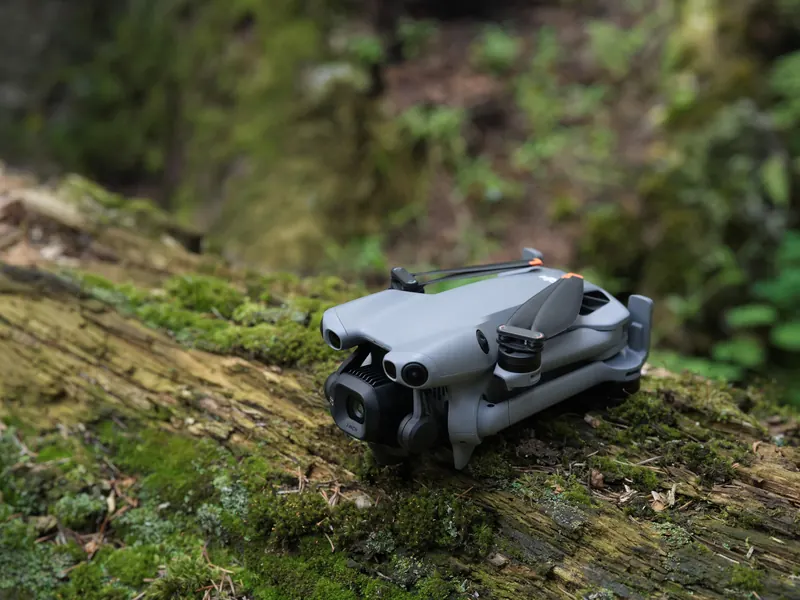
A folded DJI Mini 5 Pro resting on a mossy log in a forest

DJI drone comparison: compare DJI drones side by side

Pick two or three drones: the makers' figures side by side, a difference marked only where more is plainly better, and what U.S. rules mean for each drone.

Checked against the documents under Sources, November 14, 2026Free, no account

Compare DJI drones side by side

The page address keeps your pick, so you can share it. Nothing is saved.

Picking other drones needs JavaScript, which is off in this browser. Here: the DJI Mini 4 Pro and DJI Mini 4K. Two more comparisons and the list of all 14 drones in the tool follow under "Two more DJI drone comparisons".

No prices, stock or sale status here. Whether a DJI drone can still be bought in the U.S. is on DJI ban in the U.S.

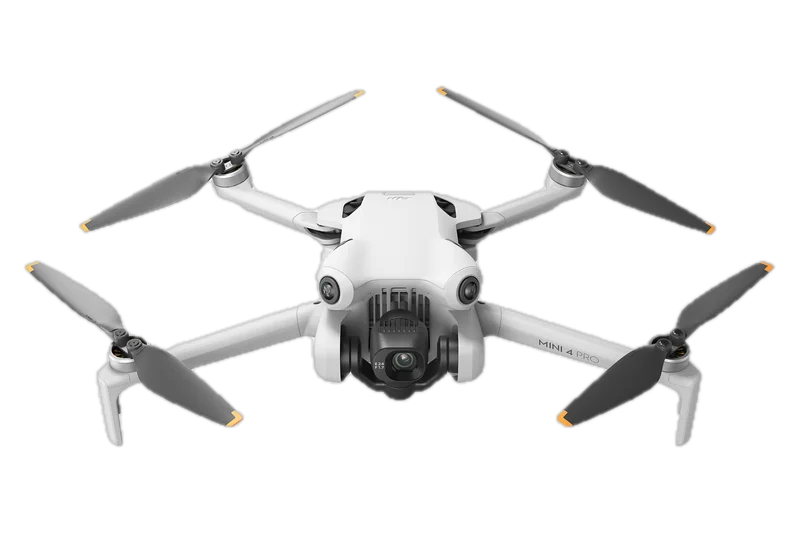
  • The white DJI Mini 4 Pro with its arms unfolded, seen from the front

    DJI Mini 4 Pro

    Takeoff weightUnder 0.549 lb (249 g)

    With Intelligent Flight Battery Plus: Not stated by the maker

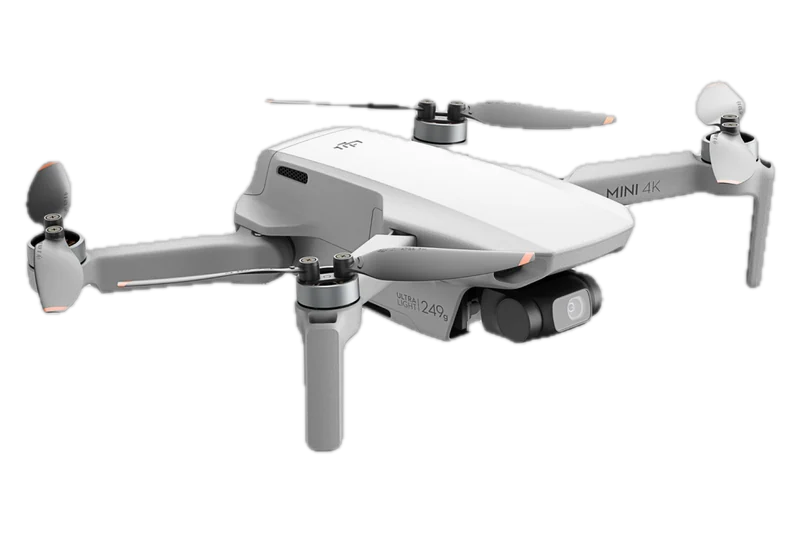
  • The DJI Mini 4K with its arms unfolded, seen from the side

    DJI Mini 4K

    Takeoff weight0.542 lb (246 g)

The bars share one scale, 0 to 1.65 lb (750 g); a paler bar is a heavier battery. The dashed line is 0.55 lb (249 g): flown for fun, a drone that weighs more must be registered. The photos are not to scale. Studio photos: DJI.

marks the longer flight time, the higher wind rating, the wider temperature range, more internal storage, sensing in more directions, a microSD slot, or the longer FCC transmission distance. No mark where a figure is not stated or every figure is the same.

The DJI Mini 4 Pro and DJI Mini 4K: each maker's figures as printed, read November 13, 2026, and what the FAA rules mean for each.
FigureDJI Mini 4 ProDJI Mini 4K
Weight and U.S. rules
Takeoff weightUnder 0.549 lb (249 g)With Intelligent Flight Battery Plus: Not stated by the maker0.542 lb (246 g)
FAA registration, flown for funUnder 249 g (0.549 lb) at takeoff. Flown for fun at 0.55 lb (249 g) or less, it needs no registration.With Intelligent Flight Battery Plus: Takeoff weight not known.Weigh the drone ready to fly, battery and accessories on. Flown for fun at 0.55 lb (249 g) or less, it needs no registration.246 g (0.5423 lb) at takeoff. Flown for fun at 0.55 lb (249 g) or less, it needs no registration.
Remote ID, flown for funNot needed: Remote ID applies to drones that are registered or must be, and this one is neither.Record: on the FAA list, but the maker says the built-in Remote ID is on only with the Intelligent Flight Battery PlusNot needed: Remote ID applies to drones that are registered or must be, and this one is neither.Record: no FAA declaration of compliance found and no maker statement
Flight
Max flight time34 min, longerWith Intelligent Flight Battery Plus: 45 min31 min
Max horizontal speed35.8 mph (16 m/s)35.8 mph (16 m/s)
Max wind speed resistance23.9 mph23.9 mph
Operating temperature14 to 104 °F (−10 to 40 °C), wider32 to 104 °F (0 to 40 °C)
Camera and video
Image sensor1/1.3-inch CMOS1/2.3” CMOS
Effective pixels48 MP12 MP
Video resolution4K: 3840×2160@24/25/30/48/50/60/100*fps4K: 3840×2160@24/25/30 fps
Gimbal3-axis3-axis
Sensing and transmission
Obstacle sensingAll directions, senses more directionsMaker's words: Omnidirectional binocular vision system, supplemented with a 3D infrared sensor at the bottom of the aircraftDownwardMaker's words: Downward Vision System and Infrared Sensing System
Max transmission distance12.4 mi (20 km), FCC, longer6.2 mi (10 km), FCC
Battery
Battery capacity2,590 mAhWith Intelligent Flight Battery Plus: 3,850 mAh2,250 mAh
Battery energy18.96 WhWith Intelligent Flight Battery Plus: 28.4 Wh17.32 Wh
Show 8 more rowsShow 5 more rows
More rows for the DJI Mini 4 Pro and DJI Mini 4K, and the maker's documents behind every figure.
FigureDJI Mini 4 ProDJI Mini 4K
Size and storage
DimensionsFolded, without propellers: 5.8 × 3.7 × 2.5 in (148 × 94 × 64 mm)Unfolded, with propellers: 11.7 × 14.7 × 4 in (298 × 373 × 101 mm)Folded: 5.4 × 3.2 × 2.3 in (138 × 81 × 58 mm)Unfolded, with propellers: 9.6 × 11.4 × 2.2 in (245 × 289 × 56 mm)
FoldsYesYes
Internal storage2 GBNot stated by the maker
microSD slotYesYes
Control
ControllersDJI RC-N2, DJI RC 2DJI RC-N1, DJI RC-N1C
Flight over people and propeller guards
Flight over people, Part 107Flying over people who are not taking part is allowed only if the drone fits Category 1, 2, 3 or 4. Categories 2 and 3 need a declaration of compliance the FAA has accepted; Category 4 needs an airworthiness certificate.Whether this drone fits Category 1 cannot be told from its weight (0.55 lb or less): it must also have no exposed rotating parts that would cut skin.Record: under 0.549 lb (249 g); propeller guards sold or documented by the maker, not in the boxFlying over people who are not taking part is allowed only if the drone fits Category 1, 2, 3 or 4. Categories 2 and 3 need a declaration of compliance the FAA has accepted; Category 4 needs an airworthiness certificate.Whether this drone fits Category 1 cannot be told from its weight (0.55 lb or less): it must also have no exposed rotating parts that would cut skin.Record: 0.542 lb (246 g); propeller guards sold or documented by the maker, not in the box
Propeller guardsSold or documented by the maker, not in the boxSold or documented by the maker, not in the box
Where the figures come from
Maker's documentsDJI Mini 4 Pro specs page (U.S.); DJI Mini 4 Pro product page (U.S.); DJI consumer drone comparison page (U.S.). Read 2026-11-13, 2026-11-14.DJI Mini 4K user manual v1.0 (English)
  • Under Part 107 every drone is registered, whatever its weight. So under Part 107 Remote ID applies to every drone: one without built-in Remote ID needs a broadcast module, or must stay inside an FAA-recognized identification area (FRIA).
  • None of the drones in this tool, as sold, is on the FAA list of accepted declarations of compliance for flight over people (Categories 2 and 3).
  • Transmission distance is the radio link's farthest reach in the open with no interference, not a legal range: flown for fun or under Part 107, the drone stays within visual line of sight.
  • DJI Mini 4K: All figures from the user manual v1.0 spec table (DJI has no Mini 4K specs page).
How this DJI drone comparison works

Pick two or three of the 14 drones. Every figure is the maker's own, as printed in the document named at the foot of each table: a specs page, a support or FAQ page, a product page or a user manual.

Marks

A small diamond marks a difference only where more is plainly better, all else equal: the longer flight time, the higher wind rating, the wider temperature range (only when one range holds the other), more internal storage, sensing in more directions (only when one drone senses every direction the other does), a microSD slot, and the longer FCC transmission distance. The mark is a shape with words for screen readers, never a colour.

No mark

Weight, size, speed, sensor, pixels, video, battery and gimbal. Lighter or heavier, smaller or bigger, each suits someone, and a sensor capable of more pixels does not by itself make a better picture. Video is never marked: the records hold both 4:3 and 16:9 frames, and a taller frame is not a better one.

Gaps

"Not stated by the maker" means the maker's document gives no figure, and the tool never shows it as zero or "no". A row with such a gap gets no mark, since the missing figure could be the largest. "None" appears only where the maker says there is none, such as the DJI Mini 3's internal storage.

Units, the switch and the FAA rows

Imperial units come first, with the maker's metric figure in brackets. The drone figures were read on November 13, 2026.

Show only differences: hides the rows where every drone has the same figure.

DJI gives transmission distance as the farthest one-way range in an open place free of interference, under each standard; the table shows the FCC figure where the maker names it. It is not a legal range: flown for fun or under Part 107, the drone stays within visual line of sight.

The three FAA rows use the same rules and wording as Can I fly here?: registration when flown for fun, Remote ID, and flight over people under Part 107. Each row states the condition and what the record shows, and splits by battery where a battery changes the weight.

What the tool leaves out

Features each maker names its own way, such as intelligent flight modes, are left out: they cannot be lined up row by row. The Sensing row gives the directions each maker says its sensors cover; how a drone uses them for obstacle avoidance is not compared here. What each drone offers beyond these rows goes on its own model page, starting with DJI Mini 4 Pro specs and limits. The tool does not rank drones for beginners or experienced pilots; for a first drone, see Best drones for beginners.

DJI's U.S. comparison page marks the DJI Mini 2, DJI Air 2S and DJI Mavic Air 2 as end of life, so they are not in the tool. It marks the DJI Mini 3 Pro end of life too, which stays in the tool. That page does not list the DJI Mini 5 Pro, Neo, Neo 2 or Mavic 4 Pro; DJI's U.S. site has no specs page for the Mini 5 Pro, Neo 2 or Mavic 4 Pro, so their figures come from DJI's UK pages, and their columns say so.

The facts on this page were last checked against the documents named under Sources on November 14, 2026.

The DJI Mini 4 Pro: 34 minutes in DJI's wind-tunnel test.

Flight time is a lab figure

Maximum flight time is DJI's wind-tunnel figure: the drone flies forward at a constant speed, as if in still air at sea level, until the battery forces a landing. The test speed differs by model, 13.4 mph for the DJI Mini 4 Pro and Mini 3 and 10.6 mph for the Mini 4K, and DJI says actual experience may vary. So the Mini 4 Pro's 34 minutes and the Mini 4K's 31 minutes are lab figures, and close flight time figures say little.

Two more DJI drone comparisons: DJI Mini 4K vs Mini 3, Mini 4 Pro vs Air 3S

Drawn from the same data as the tool above, so the figures match it. With JavaScript on, the tool compares any two or three of the drones listed at the end.

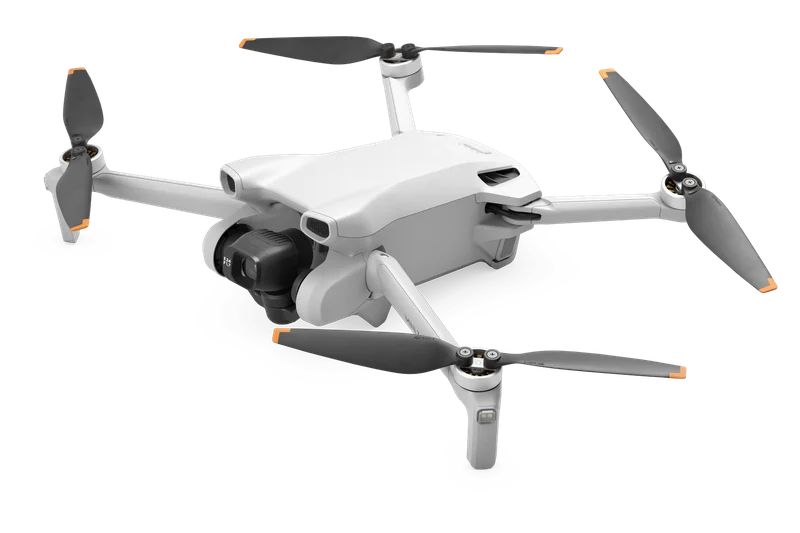
The DJI Mini 4K with its arms unfolded, seen from the sideThe DJI Mini 3 unfolded, seen from the front quarter with its camera under the nose

DJI Mini 4K vs DJI Mini 3

Marked in the table: the DJI Mini 3 has the longer flight time and the wider temperature range.

0.542 lb vs 0.547 lb · 31 min vs 38 min

Open the pair in the tool
Every figure side by side

marks the longer flight time, the higher wind rating, the wider temperature range, more internal storage, sensing in more directions, a microSD slot, or the longer FCC transmission distance. No mark where a figure is not stated or every figure is the same.

The DJI Mini 4K and DJI Mini 3: each maker's figures as printed, read November 13, 2026, and what the FAA rules mean for each.
FigureDJI Mini 4KDJI Mini 3
Weight and U.S. rules
Takeoff weight0.542 lb (246 g)0.547 lb (248 g)With Intelligent Flight Battery Plus: About 0.639 lb (290 g)
FAA registration, flown for fun246 g (0.5423 lb) at takeoff. Flown for fun at 0.55 lb (249 g) or less, it needs no registration.248 g (0.5467 lb) at takeoff. Flown for fun at 0.55 lb (249 g) or less, it needs no registration.With Intelligent Flight Battery Plus: About 290 g (0.6393 lb) at takeoff is over 0.55 lb (249 g): register it before you fly, and then Remote ID applies.
Remote ID, flown for funNot needed: Remote ID applies to drones that are registered or must be, and this one is neither.Record: no FAA declaration of compliance found and no maker statementNot needed: Remote ID applies to drones that are registered or must be, and this one is neither.With Intelligent Flight Battery Plus: This flight needs Remote ID. The built-in Remote ID broadcasts only with the Intelligent Flight Battery Plus; with the standard battery it does not.Record: on the FAA list, but the maker says the built-in Remote ID is on only with the Intelligent Flight Battery Plus
Flight
Max flight time31 min38 min, longerWith Intelligent Flight Battery Plus: 51 min
Max horizontal speed35.8 mph (16 m/s)35.8 mph (16 m/s)
Max wind speed resistance23.9 mph23.9 mph
Operating temperature32 to 104 °F (0 to 40 °C)14 to 104 °F (−10 to 40 °C), wider
Camera and video
Image sensor1/2.3” CMOS1/1.3-inch CMOS
Effective pixels12 MP48 MP
Video resolution4K: 3840×2160@24/25/30 fps4K: 3840×2160@24/25/30 fps
Gimbal3-axis3-axis
Sensing and transmission
Obstacle sensingDownwardMaker's words: Downward Vision System and Infrared Sensing SystemDownwardMaker's words: Downward vision system
Max transmission distance6.2 mi (10 km), FCC6.2 mi (10 km), FCC
Battery
Battery capacity2,250 mAh2,453 mAhWith Intelligent Flight Battery Plus: 3,850 mAh
Battery energy17.32 Wh18.1 WhWith Intelligent Flight Battery Plus: 28.4 Wh
Size and storage
DimensionsFolded: 5.4 × 3.2 × 2.3 in (138 × 81 × 58 mm)Unfolded, with propellers: 9.6 × 11.4 × 2.2 in (245 × 289 × 56 mm)Folded, without propellers: 5.8 × 3.5 × 2.4 in (148 × 90 × 62 mm)Unfolded, with propellers: 9.9 × 14.3 × 2.8 in (251 × 362 × 72 mm)
FoldsYesYes
Internal storageNot stated by the makerNone
microSD slotYesYes
Control
ControllersDJI RC-N1, DJI RC-N1CDJI RC-N1, DJI RC
Flight over people and propeller guards
Flight over people, Part 107Flying over people who are not taking part is allowed only if the drone fits Category 1, 2, 3 or 4. Categories 2 and 3 need a declaration of compliance the FAA has accepted; Category 4 needs an airworthiness certificate.Whether this drone fits Category 1 cannot be told from its weight (0.55 lb or less): it must also have no exposed rotating parts that would cut skin.Record: 0.542 lb (246 g); propeller guards sold or documented by the maker, not in the boxFlying over people who are not taking part is allowed only if the drone fits Category 1, 2, 3 or 4. Categories 2 and 3 need a declaration of compliance the FAA has accepted; Category 4 needs an airworthiness certificate.Whether this drone fits Category 1 cannot be told from its weight (0.55 lb or less): it must also have no exposed rotating parts that would cut skin.With Intelligent Flight Battery Plus: Flying over people who are not taking part is allowed only if the drone fits Category 1, 2, 3 or 4. Categories 2 and 3 need a declaration of compliance the FAA has accepted; Category 4 needs an airworthiness certificate.Record: 0.547 lb (248 g); propeller guards sold or documented by the maker, not in the box
Propeller guardsSold or documented by the maker, not in the boxSold or documented by the maker, not in the box
Where the figures come from
Maker's documentsDJI Mini 4K user manual v1.0 (English)DJI Mini 3 specs page (U.S.); DJI Mini 3 product page (U.S.); DJI consumer drone comparison page (U.S.). Read 2026-11-13, 2026-11-14.
  • Under Part 107 every drone is registered, whatever its weight. So under Part 107 Remote ID applies to every drone: one without built-in Remote ID needs a broadcast module, or must stay inside an FAA-recognized identification area (FRIA).
  • None of the drones in this tool, as sold, is on the FAA list of accepted declarations of compliance for flight over people (Categories 2 and 3).
  • Transmission distance is the radio link's farthest reach in the open with no interference, not a legal range: flown for fun or under Part 107, the drone stays within visual line of sight.
  • DJI Mini 4K: All figures from the user manual v1.0 spec table (DJI has no Mini 4K specs page).
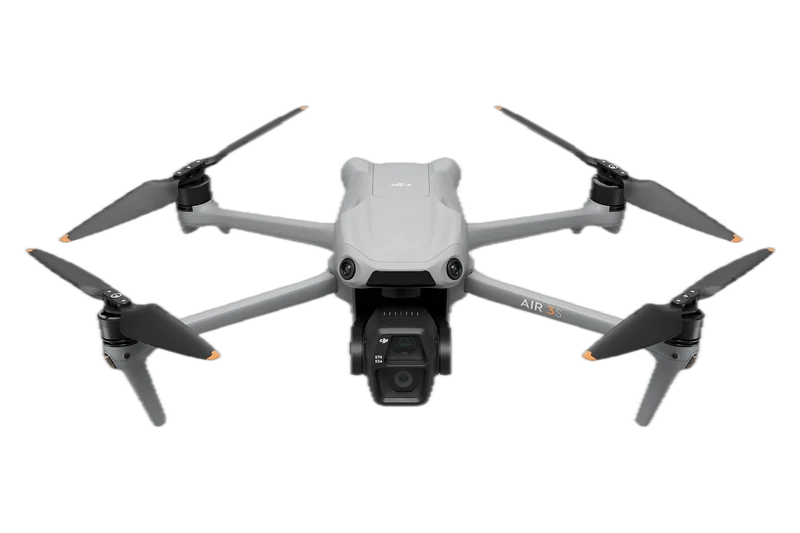
The white DJI Mini 4 Pro with its arms unfolded, seen from the frontThe DJI Air 3S unfolded, seen from the front with its dual camera on the gimbal

DJI Mini 4 Pro vs DJI Air 3S

Marked in the table: the DJI Air 3S has the longer flight time, the higher wind rating and more internal storage.

Under 0.549 lb vs 1.596 lb · 34 min vs 45 min

Open the pair in the tool
Every figure side by side

marks the longer flight time, the higher wind rating, the wider temperature range, more internal storage, sensing in more directions, a microSD slot, or the longer FCC transmission distance. No mark where a figure is not stated or every figure is the same.

The DJI Mini 4 Pro and DJI Air 3S: each maker's figures as printed, read November 13, 2026, and what the FAA rules mean for each.
FigureDJI Mini 4 ProDJI Air 3S
Weight and U.S. rules
Takeoff weightUnder 0.549 lb (249 g)With Intelligent Flight Battery Plus: Not stated by the maker1.596 lb (724 g)
FAA registration, flown for funUnder 249 g (0.549 lb) at takeoff. Flown for fun at 0.55 lb (249 g) or less, it needs no registration.With Intelligent Flight Battery Plus: Takeoff weight not known.Weigh the drone ready to fly, battery and accessories on. Flown for fun at 0.55 lb (249 g) or less, it needs no registration.724 g (1.5961 lb) at takeoff is over 0.55 lb (249 g): register it before you fly, and then Remote ID applies.
Remote ID, flown for funNot needed: Remote ID applies to drones that are registered or must be, and this one is neither.Record: on the FAA list, but the maker says the built-in Remote ID is on only with the Intelligent Flight Battery PlusBroadcasts Remote ID.Record: built-in Remote ID, on the FAA list of accepted declarations
Flight
Max flight time34 minWith Intelligent Flight Battery Plus: 45 min45 min, longer
Max horizontal speed35.8 mph (16 m/s)47 mph (21 m/s)
Max wind speed resistance23.9 mph26.8 mph, higher
Operating temperature14 to 104 °F (−10 to 40 °C)14 to 104 °F (−10 to 40 °C)
Camera and video
Image sensor1/1.3-inch CMOS1-inch CMOS
Effective pixels48 MP50 MP
Video resolution4K: 3840×2160@24/25/30/48/50/60/100*fps4K: 3840×2160@24/25/30/48/50/60/120*fps
Gimbal3-axis3-axis
Sensing and transmission
Obstacle sensingAll directionsMaker's words: Omnidirectional binocular vision system, supplemented with a 3D infrared sensor at the bottom of the aircraftAll directionsMaker's words: Omnidirectional binocular vision system, supplemented with forward-facing LiDAR and an infrared sensor at the bottom of the aircraft
Max transmission distance12.4 mi (20 km), FCC12.4 mi (20 km), FCC
Battery
Battery capacity2,590 mAhWith Intelligent Flight Battery Plus: 3,850 mAh4,276 mAh
Battery energy18.96 WhWith Intelligent Flight Battery Plus: 28.4 Wh62.5 Wh
Size and storage
DimensionsFolded, without propellers: 5.8 × 3.7 × 2.5 in (148 × 94 × 64 mm)Unfolded, with propellers: 11.7 × 14.7 × 4 in (298 × 373 × 101 mm)Folded, without propellers: 8.4 × 4 × 3.5 in (214.2 × 100.6 × 89.2 mm)Unfolded, without propellers: 10.5 × 12.8 × 4.2 in (266.1 × 325.5 × 106 mm)
FoldsYesYes
Internal storage2 GB42 GB, more
microSD slotYesYes
Control
ControllersDJI RC-N2, DJI RC 2DJI RC-N3, DJI RC 2
Flight over people and propeller guards
Flight over people, Part 107Flying over people who are not taking part is allowed only if the drone fits Category 1, 2, 3 or 4. Categories 2 and 3 need a declaration of compliance the FAA has accepted; Category 4 needs an airworthiness certificate.Whether this drone fits Category 1 cannot be told from its weight (0.55 lb or less): it must also have no exposed rotating parts that would cut skin.Record: under 0.549 lb (249 g); propeller guards sold or documented by the maker, not in the boxFlying over people who are not taking part is allowed only if the drone fits Category 1, 2, 3 or 4. Categories 2 and 3 need a declaration of compliance the FAA has accepted; Category 4 needs an airworthiness certificate.Record: 1.596 lb (724 g); propeller guards sold or documented by the maker, not in the box
Propeller guardsSold or documented by the maker, not in the boxSold or documented by the maker, not in the box
Where the figures come from
Maker's documentsDJI Mini 4 Pro specs page (U.S.); DJI Mini 4 Pro product page (U.S.); DJI consumer drone comparison page (U.S.). Read 2026-11-13, 2026-11-14.DJI Air 3S specs page (U.S.); DJI Air 3S product page (U.S.); DJI consumer drone comparison page (U.S.). Read 2026-11-13, 2026-11-14.
  • Under Part 107 every drone is registered, whatever its weight. So under Part 107 Remote ID applies to every drone: one without built-in Remote ID needs a broadcast module, or must stay inside an FAA-recognized identification area (FRIA).
  • None of the drones in this tool, as sold, is on the FAA list of accepted declarations of compliance for flight over people (Categories 2 and 3).
  • Transmission distance is the radio link's farthest reach in the open with no interference, not a legal range: flown for fun or under Part 107, the drone stays within visual line of sight.
  • DJI Air 3S: Sensor and pixels are the wide-angle camera; the medium tele camera is 1/1.3-inch CMOS, 48MP.
  • DJI Air 3S: Speed is in still air; the page gives 27 m/s with a 6 m/s tailwind.

The 14 drones in the tool

The first pair's drones each have a page of their own, with every figure and the U.S. rules: the DJI Mini 4K and the DJI Mini 3. So does the second pair's DJI Air 3S, and the DJI Neo and DJI Mavic 4 Pro from the list.

What U.S. rules mean for each DJI drone

Registration, Remote ID and flight over people: what each rule asks of each drone.

  • Registration

    Flown for fun, a drone that weighs 0.55 lb (249 g) or less at takeoff, everything on board included, needs no FAA registration. Every other drone must be registered and marked before it flies.

    Weigh yours
    The Mini 5 Pro, bigger batteries and Part 107

    The rule's figure is 0.55 lb, which is 249.48 g; FAA web pages round it to 250 g in different words. So the DJI Mini 5 Pro, printed at 0.551 lb (249.9 g), is over the line at its printed weight though under 250 g, and at that weight it must be registered even when flown for fun. DJI prints a tolerance of plus or minus 4 g beside the figure, so weigh yours: the rule goes by what the drone weighs at takeoff.

    A bigger battery can change the answer. DJI says the Mini 4 Pro and Mini 3 weigh more than 249 g with the Intelligent Flight Battery Plus, the Mini 3 about 0.639 lb (290 g). DJI prints no figure for the Mini 4 Pro with it, so the tool says to weigh the drone ready to fly.

    Under Part 107 every drone needs its own registration number, whatever it weighs, and a recreational registration cannot be used for Part 107 flights. Registration costs $5 and lasts 3 years: per drone under Part 107, one certificate for all your drones flown for fun.

  • Remote ID

    Remote ID applies to every drone that is registered or must be. Since September 16, 2023 such a drone flies as a standard Remote ID drone with its broadcast built in, with a broadcast module, or only inside an FAA-recognized identification area (FRIA).

    If registered
    Which DJI drones broadcast it

    A standard Remote ID drone must be on an FAA-accepted declaration of compliance; with a module, the pilot must be able to see the drone the whole flight.

    The DJI Mini 4 Pro, Mini 3 and Air 3S are on the FAA list of accepted Remote ID declarations; the DJI Mini 4K, Neo, Neo 2 and Flip are not. DJI's firmware for the Mini 4 Pro and Mini 3 turns U.S. Remote ID on only when the Intelligent Flight Battery Plus is fitted. Since every Part 107 drone is registered, under Part 107 a drone without built-in Remote ID needs a broadcast module, or must stay inside a FRIA.

  • Flight over people

    None of the drones in the tool, as sold, has an accepted declaration for flight over people. The two on the FAA list that name DJI Minis cover modified drones declared by other companies, not the stock models.

    No declaration
    The four categories, and flying for fun

    Under Part 107 a drone may not fly over a person unless that person takes part in the flight, is under a covered structure or inside a stationary vehicle, or the flight fits one of four categories. Category 1 is a drone of 0.55 lb (249 g) or less, everything on board, at takeoff and for the whole flight, with no exposed rotating parts that would lacerate human skin. Categories 2 and 3 need the drone on a declaration of compliance the FAA has accepted, and Category 4 needs an airworthiness certificate. The FAA keeps no list of Category 1 drones, so the tool states the conditions and what the record shows.

    Flown for fun, the law sets no over-people category: you follow a community-based organization's safety guidelines, and the FAA recommends that those guidelines restrict flights over people.

The DJI Mini 4 Pro, under 0.549 lb (249 g) with its standard battery.

Can I fly here?

Registration and Remote ID go with the drone; where you may fly it goes with the place and the hour. Our check takes a place and gives one verdict with its reasons: airspace, flight restrictions and the ceiling.

Check where you can fly

Choosing a DJI drone: weight, flight time, camera and sensing

Weight decides the paperwork. With their standard batteries the DJI Mini 4K at 0.542 lb (246 g), the Mini 3 at 0.547 lb (248 g) and the Mini 4 Pro under 0.549 lb (249 g) are inside the 0.55 lb line; the Mini 5 Pro at 0.551 lb (249.9 g) and the Air 3S at 1.596 lb (724 g) are not.

Flight time and wind

DJI rates the Mini 3 for 38 minutes, the Mini 4 Pro for 34 and the Mini 4K for 31, and the Air 3S for 45. With the Intelligent Flight Battery Plus the Mini 3 reaches 51 minutes and the Mini 4 Pro 45. All three Minis are rated for wind up to 23.9 mph (10.7 m/s), the Air 3S up to 26.8 mph (12 m/s). The Mini 4K's operating range starts at 32 F (0 C), the others' at 14 F (-10 C).

Camera and video

The Mini 4 Pro and Mini 3 carry a 1/1.3-inch 48 MP sensor, the Mini 4K a 1/2.3-inch 12 MP one, and the Air 3S, in its wide camera, a 1-inch 50 MP sensor capable of 4K video at up to 120 fps (its second, medium tele camera is not in the table). All four record 4K: up to 100 fps on the Mini 4 Pro, 30 fps on the Mini 4K and Mini 3.

Sensing and range

The Mini 4 Pro and Air 3S sense obstacles in all directions, the Air 3S with forward LiDAR as well; the Mini 4K and Mini 3 sense downward only. Under FCC rules the Mini 4 Pro and Air 3S reach 12.4 mi (20 km) free of interference, the Mini 4K and Mini 3 6.2 mi (10 km). Internal storage is 2 GB on the Mini 4 Pro and 42 GB on the Air 3S.

The model pages behind the figures, and the check for where you fly.

Coming next: a page for each of the other drone models, and written comparisons for the pairs people search for most.

DJI drone comparison questions

Is the DJI Mini 4 Pro or the Mini 5 Pro better?

Neither for everyone, and the rules differ. At its printed 0.551 lb (249.9 g, plus or minus 4 g by DJI's own note) the Mini 5 Pro is over the line where a drone must be registered even when flown for fun; the Mini 4 Pro with its standard battery, under 0.549 lb (249 g), need not be. Pick both in the tool to see every figure side by side; the Mini 5 Pro's come from DJI's UK page.

Which DJI drones need FAA registration?

Flown for fun, those over 0.55 lb (249 g) at takeoff. Of the DJI drones in the tool, at the makers' printed weights that is the Mini 5 Pro (249.9 g, plus or minus 4 g), Avata 2, Air 3S and Mavic 4 Pro, and the Mini 3 and Mini 3 Pro with the Intelligent Flight Battery Plus; the Neo, Neo 2, Flip, Mini 4K, and the Mini 3, Mini 3 Pro and Mini 4 Pro with standard batteries need none. Under Part 107 every drone is registered, whatever it weighs.

Which DJI drones have built-in Remote ID?

On the FAA list of accepted Remote ID declarations: the Mini 3, Mini 3 Pro, Mini 4 Pro, Mini 5 Pro, Air 3S, Avata 2 and Mavic 4 Pro. The Mini 4 Pro and Mini 3 broadcast only with the Intelligent Flight Battery Plus fitted. The Mini 4K, Neo, Neo 2 and Flip are not on the list.

Can I fly these drones over people?

Under Part 107, over anyone who is not taking part and not under cover, only within one of four categories. Category 1 asks for 0.55 lb (249 g) or less with everything on board, the whole flight, and no exposed rotating parts that would lacerate skin; none of these drones, as sold, is on the FAA's list for Categories 2 and 3. Flown for fun, follow your community-based organization's safety guidelines.

Why is my flight time shorter than the spec?

DJI measures maximum flight time in a wind tunnel, flying forward at one steady speed with no wind until the battery forces a landing, and says actual experience may vary with environment, use and firmware. Wind is not part of that test, and its speed differs by model.

Why do some figures come from DJI's UK page?

DJI's U.S. site has no specs page for the Mini 5 Pro, Neo 2 or Mavic 4 Pro, so their figures come from DJI's UK specs pages. Each of those columns says so under the drone's name.

Sources

Documents are named, not linked. Each was read on November 13 or 14, 2026; the drone figures on November 13, 2026.

Drone figures

  • Each drone's own document, named at the foot of each table: DJI specs pages (U.S., or UK where DJI has no U.S. page), DJI support pages and user manuals, and the Antigravity, Potensic and HOVERAir specs pages
  • DJI, Compare DJI Mavic & Consumer Drones (U.S.): flight time test, transmission distance and end-of-life marks
  • DJI Mini 3 Specs (U.S.) and DJI Mini 5 Pro Specs (UK): takeoff weights and their footnotes

Remote ID and flight over people

  • FAA UAS Declaration of Compliance, accepted Remote ID declarations and accepted operations-over-people declarations
  • DJI Mini 4 Pro Release Notes (entry of December 21, 2023) and DJI Mini 3 Release Notes (entry of January 25, 2024)
  • FAA, Remote Identification of Drones and FAA, Operations Over People General Overview

Registration

  • 14 CFR 48.15, 48.30, 48.100 and 48.105 (eCFR, up to date as of November 12, 2026)
  • FAA, How to Register Your Drone and FAA, Recreational Flyers & Community-Based Organizations
  • FAA Advisory Circular 91-57D, Exception for Limited Recreational Operations of Unmanned Aircraft

Flight rules

  • 14 CFR 89.101, 89.105, 89.110 and 89.115: Remote ID
  • 14 CFR 107.31, 107.39 and 107.110 to 107.140: line of sight and flight over people
  • 49 U.S.C. 44809, Exception for limited recreational operations of unmanned aircraft (United States Code, 2024 edition)

Photos: DJI press images. Product photos by DJI, Antigravity, HOVERAir and Potensic.