Skip to content
Rulebook
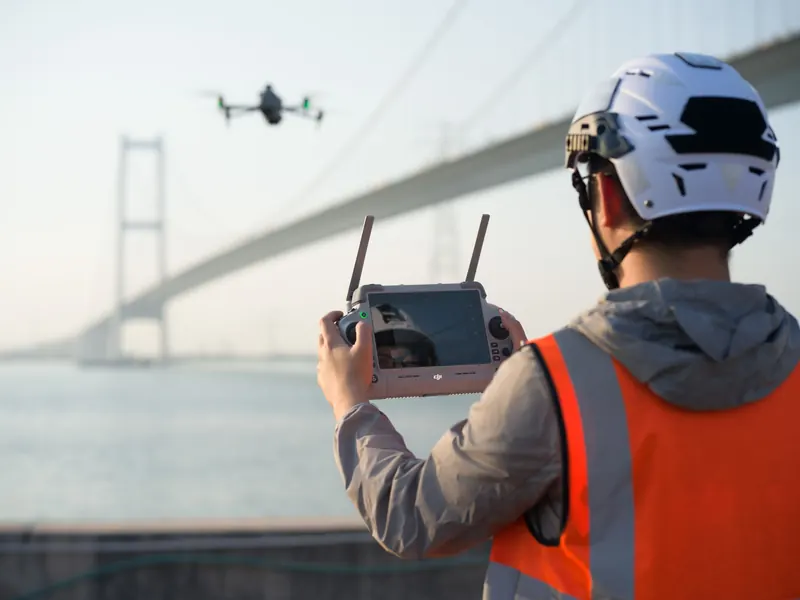
Inspector in a hard hat and safety vest flying a DJI Matrice 4E near a suspension bridge

Drone inspection: the FAA rules for roofs, towers and industrial sites

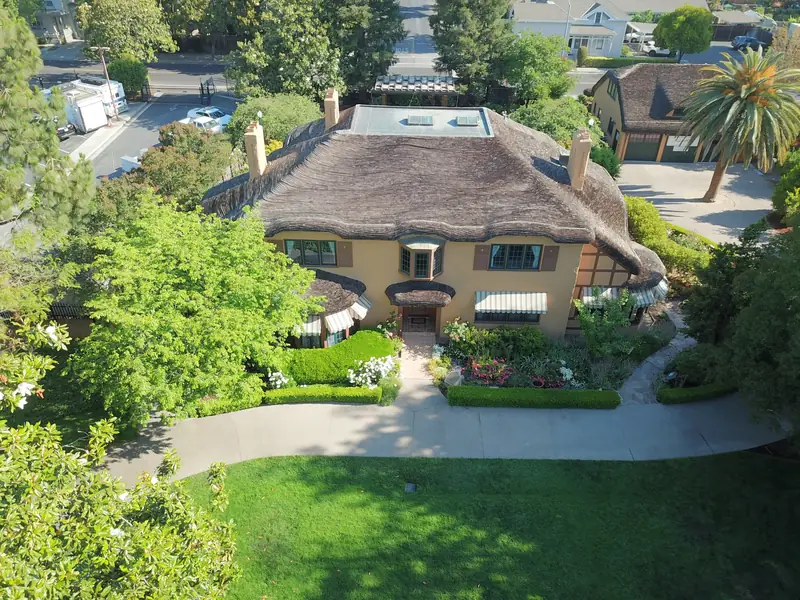
The FAA lists roof inspections among its examples of flights under Part 107.

From FAA, FCC, state and maker documents, checked November 14, 2026

Height limit above the ground; near a structure, above its top
400ft
Flight visibility from the control station, in statute miles
3mi
The FAA's aim for deciding a waiver request
90days
Part 107 registration, valid for three years
$5/ drone
Test or recurrent training current within
24months

Drone inspection rules at a glance

This guide gives the rules a drone inspection meets at a roof, a tower, an industrial site or a pipeline, with the section of the rule that says so, and marks what is only proposed.

The questions a drone inspection meets, each with the rule that answers it and where that rule is written. Every rule was read in its source on November 14, 2026; the sections below give the detail, and the state laws near critical infrastructure have their own table.

22 questions a drone inspection meets: the rule that answers each and where it is written. Read November 14, 2026.

  • Is a drone inspection for a client a Part 107 flight?

    Yes in the FAA's own list: its examples of non-recreational Part 107 operations include “roof inspections”. Compensation, or the lack of it, “is not what determines” whether a flight is recreational, and the FAA adds: “When in doubt, assume Part 107.”

    Where it is written

    FAA, Recreational Flyers and Community-Based Organizations

    Part 107
  • Can I inspect my own roof under the recreational rules?

    No FAA page we read rules on this case. The FAA names roof inspections as a Part 107 example; Advisory Circular 91-57D leaves out of recreational flying any flight “related to or in furtherance of a business”; and the FAA says: “When in doubt, assume Part 107.”

    Where it is written

    FAA Recreational Flyers page; AC 91-57D, paragraph 2.2.1.1

    Assume Part 107
  • What does the pilot need under Part 107?

    A remote pilot certificate (at least 16, knowledge test passed), with the test or recurrent training current within 24 calendar months; every drone registered, at $5 per drone for three years, and meeting the Remote ID rule.

    Where it is written

    14 CFR 107.12, 107.61, 107.65; FAA registration and Remote ID pages

    Certificate
  • Must the drone stay in sight during the inspection?

    Yes. The remote pilot, any visual observer and the person at the controls must be able to see it with their own eyes, corrective lenses allowed, throughout the flight; a visual observer stays in effective communication with the remote pilot.

    Where it is written

    14 CFR 107.31, 107.33

    In sight
  • Can I inspect beyond visual line of sight?

    Only with a certificate of waiver: 107.31 and 107.33 can be waived. Waiver requests go through the FAA's AIS Services, and the FAA aims to decide within 90 days. Part 108, the BVLOS rule proposed on August 7, 2025, has no final rule.

    Where it is written

    14 CFR 107.205; FAA Part 107 Waivers page; 90 FR 38212

    Waiver
  • How high may I fly to inspect a tower or tall structure?

    Up to 400 feet above the ground; within a 400-foot radius of a structure, up to 400 feet above its “immediate uppermost limit”. In Class G airspace this needs no prior coordination with air traffic control.

    Where it is written

    14 CFR 107.51(b); AIM 11-4

    400 ft
  • What weather minimum applies?

    Flight visibility from the control station of at least 3 statute miles; 107.51 can be waived.

    Where it is written

    14 CFR 107.51(c), 107.205(i)

    3 miles
  • May I fly over workers on the site?

    Only over people directly taking part, under a covered structure or inside a stationary vehicle, or under a category of subpart D. Category 3 allows a closed or restricted-access site where everyone is on notice, with a drone declared and labeled for Category 3.

    Where it is written

    14 CFR 107.39, 107.125

    Only if
14 more questions: roads, airports, restricted sites, night, facility zones, state laws, Remote ID
  • May I fly over traffic on a road or rail line?

    Over people in moving vehicles, in Categories 1 to 3, only inside a closed or restricted-access site where everyone is on notice, or with no sustained flight over moving vehicles.

    Where it is written

    14 CFR 107.145(b)

    Not sustained
  • May I fly from a moving vehicle along a pipeline or power line?

    Only over a sparsely populated area, and not while carrying another person's property for hire; never from a moving aircraft.

    Where it is written

    14 CFR 107.25

    Sparse areas
  • What must I check before each flight?

    The operating environment: local weather, local airspace and flight restrictions, people and property on the surface, and other ground hazards.

    Where it is written

    14 CFR 107.49(a)

    Every flight
  • The site is near an airport: what then?

    Class B, C or D airspace, or the surface area of Class E airspace at an airport, needs prior authorization from air traffic control; LAANC automates the application and approval, which can come in near-real time.

    Where it is written

    14 CFR 107.41; FAA UAS Data Exchange (LAANC)

    Authorization
  • Can I inspect a power plant or other security-sensitive site?

    Part 107 pilots must comply with the restrictions of 14 CFR 91.137 to 91.145 and 99.7. Drones are prohibited over designated national security sensitive facilities, such as certain nuclear power plants, from the ground up to 400 feet; the AIM says flights may be permitted in limited circumstances, after reviewing NOTAMs and seeking authorization.

    Where it is written

    14 CFR 107.47; FAA Critical Infrastructure and Public Venues; AIM 11-4-6 e

    Restricted
  • Can I inspect at night or at dusk?

    At night: the initial test or recurrent training taken after April 6, 2021, and anti-collision lighting visible for 3 statute miles. In civil twilight: the same lighting.

    Where it is written

    14 CFR 107.29

    Lights, training
  • Can a facility ask the FAA for a no-drone zone?

    Section 2209 of the FAA Extension, Safety, and Security Act of 2016 requires a process. The FAA proposed it as part 74 on May 6, 2026, and comments closed on August 5, 2026. It is a proposal: there is no final rule and no part 74 in the eCFR.

    Where it is written

    FAA Extension, Safety, and Security Act of 2016, section 2209 (a note to 49 U.S.C. 44802); 91 FR 24650; eCFR

    Proposed
  • Under the section 2209 proposal, could a Part 107 inspector still fly inside a facility restriction?

    Proposed, not law: under the May 6, 2026 proposal, only in a standard restriction, broadcasting Remote ID, crossing “in the shortest amount of time practicable”, as a Part 107 operation with an airman certificate, after notifying the site manager.

    Where it is written

    Proposed 14 CFR 74.250, 74.255 (91 FR 24650)

    Proposed
  • Would a restriction let the facility use counter-drone tools?

    No, under the May 6, 2026 proposal: a restriction would not authorize detection or mitigation technology. Airport counter-drone coordination is a separate law, 49 U.S.C. 44810, which ceases to be effective on September 30, 2028.

    Where it is written

    91 FR 24650 preamble; 49 U.S.C. 44810

    Proposed
  • Do state laws add rules near critical infrastructure?

    States may generally regulate outside aviation safety and airspace efficiency if their laws do not conflict with FAA rules; state or local laws affecting commercial drone operators are more likely to be preempted. The state laws have their own table below.

    Where it is written

    FAA and DOT fact sheet, July 14, 2023

    State law
  • Is there a 1:1 rule for drones?

    No. The phrase “1:1 rule” does not occur in Part 107.

    Where it is written

    14 CFR part 107, full text

    No such rule
  • What does Remote ID broadcast?

    The drone's serial number or a session ID, the position and altitude of the control station and of the drone, its velocity, a UTC time mark and its emergency status.

    Where it is written

    14 CFR 89.305

    ID and position
  • Do FAA rules differ for a DJI inspection drone?

    No. The FAA's registration and Remote ID rules go by weight, purpose and equipment, not by maker. The FCC Covered List, which has listed DJI and all other foreign-produced drones since December 22, 2025, is a separate matter and revokes no existing authorization.

    Where it is written

    14 CFR 48.15, part 89; FCC DA 25-1086

    No
  • Does the drone itself need an inspection?

    Before each flight the remote pilot checks that the small unmanned aircraft system is in a condition for safe operation. The final rule of November 10, 2026 on inspection programs, effective January 11, 2027, covers unmanned aircraft under parts 91 or 135 and amends no part of Part 107.

    Where it is written

    14 CFR 107.15; 91 FR 72397

    Before each flight

What this page is

This guide sets out what the rules of the Federal Aviation Administration (FAA) ask of a drone inspection at a roof, a tower, an industrial site or a pipeline, with the section of the rule that says so. Two rules inspectors hear about, for flights beyond visual line of sight and for no-drone zones over facilities, are only proposed, and the page marks them so, with their dates. Directories list drone inspection companies and drone inspection services; this page covers the rules that commercial drone inspections fly under. It gives no rates, no inspection methods and no pick of a best drone.

Under a bridge deck or beside a tower, the same Part 107 rules apply to the inspection flight.

Do drone inspection services fly under Part 107?

In the FAA's own list, yes: its examples of non-recreational operations under the FAA's Part 107 rule include “roof inspections”.

The recreational rules of 49 U.S.C. 44809 and Part 107 stay separate:

  • Flying for fun (49 U.S.C. 44809)

    The FAA's Advisory Circular 91-57D says recreational purposes leave out flights “related to or in furtherance of a business”.

    Not for business
  • Part 107

    Pay alone does not decide. The FAA says compensation, or the lack of it, “is not what determines” whether a flight is recreational.

    Part 107
  • When unsure

    The FAA's advice is “When in doubt, assume Part 107.”

    Assume Part 107

Someone inspecting their own roof is a case no FAA page we read names. What the FAA does say is above: roof inspections in its list of Part 107 examples, Advisory Circular 91-57D on flights in furtherance of a business, and its advice when in doubt.

A Part 107 flight needs a remote pilot in command who holds a remote pilot certificate.

A Part 107 flight needs a remote pilot in command who holds a remote pilot certificate, the FAA's name for what is often called a drone license; inspection listings that say “FAA Part 107 certified” refer to it.

  1. The remote pilot certificate

    16 or older

    You must be at least 16 and pass the FAA's knowledge test (14 CFR 107.12, 107.61).

    Drone license guide
  2. Staying current

    24 months

    To act as remote pilot in command you must have passed the test or finished recurrent training within the previous 24 calendar months (14 CFR 107.65).

  3. Registration

    $5 per drone

    Under Part 107 every drone is registered, whatever it weighs, at $5 per drone for three years.

    Registration helper
  4. Remote ID

    The drone must meet the Remote ID rule.

    Remote ID guide

Part 107 sets no insurance requirement: the word “insurance” does not occur in its text.

Our drone license guide covers the certificate step by step, the drone registration helper answers for your own drone, and the Remote ID guide covers the broadcast rule.

Keep the drone in sight: visual observers and waiver applications

Under 14 CFR 107.31, the remote pilot in command, any visual observer and the person at the controls must be able to see the drone with their own eyes, corrective lenses allowed, throughout the flight.

The rule says what that sight is for: to know where the drone is, its attitude, altitude and direction of flight, to watch the airspace for other traffic and hazards, and to see that the drone does not endanger anyone's life or property.

A visual observer, under 107.33, must stay in effective communication with the remote pilot and be able to see the drone in the same way.

  • Both rules can be waived

    107.31 and 107.33 are on the list of sections a certificate of waiver can cover (14 CFR 107.205).

    Waivable
  • One limit is written in

    No waiver of 107.31 is issued to carry another person's property for compensation or hire.

    Limit
  • Waiver applications

    Waiver applications go through the FAA's Aviation Integrated Safety (AIS) Services, while airspace authorizations stay in FAADroneZone.

    AIS Services
  • How long

    The FAA aims to decide a waiver request within 90 days and says the time varies with how complex and complete the request is.

    90 days
The remote pilot must be able to see the drone with their own eyes, corrective lenses allowed.

Drone inspection of towers and tall structures

The altitude rule has an exception written for structures.

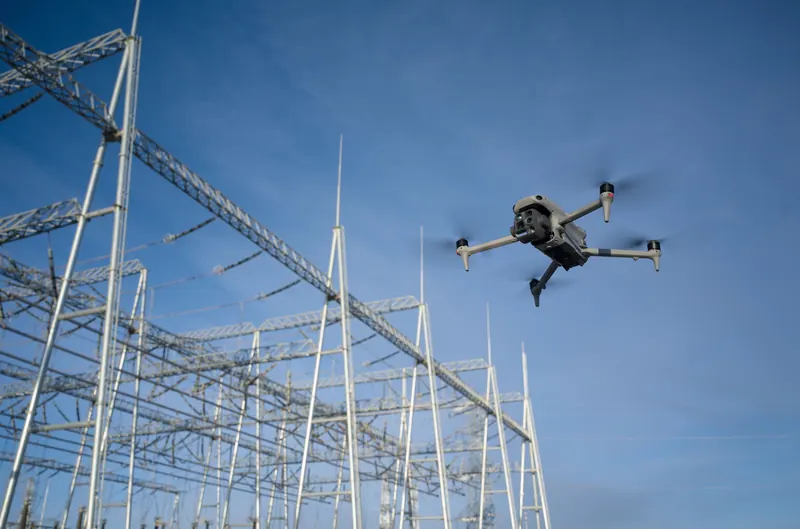
Under 14 CFR 107.51(b), a drone may fly no higher than 400 feet above the ground, unless it flies within a 400-foot radius of a structure and no higher than 400 feet above the structure's “immediate uppermost limit”. So next to a tall tower, stack or building, the drone can fly up to 400 feet above its top.

The FAA's Aeronautical Information Manual adds that in Class G airspace a Part 107 pilot may fly up to 400 feet, and within 400 feet of a structure, without prior coordination with air traffic control. Flight visibility from the control station must be at least 3 statute miles (107.51(c)), and 107.51 is one of the sections a waiver can cover. Our guide How high can a drone fly? gives the altitude rules in full.

Within 400 feet of a tower, a drone may fly up to 400 feet above its top.

Industrial drone inspections: over workers, roads and plant sites

For industrial drone inspections with workers on the ground, the rule is 14 CFR 107.39: a drone may fly over a person only if that person takes part directly in the operation, is under a covered structure or inside a stationary vehicle, or the flight meets one of the categories of subpart D.

  • A closed site (Category 3)

    Flight over people is allowed inside a closed or restricted-access site where everyone has been told a drone may fly over them, never over an open-air assembly, and only with a drone listed on an FAA-accepted declaration of compliance for Category 3 and labeled for it (107.125).

    Closed site
  • Moving vehicles on a road or rail line

    Over people in moving vehicles, in Categories 1 to 3, only inside a closed or restricted-access site where everyone is on notice, or with no sustained flight over moving vehicles (107.145(b)).

    Not sustained
  • Flying a drone from a vehicle along a pipeline or power line

    From a moving land or water vehicle only over a sparsely populated area, and not while carrying another person's property for hire; never from a moving aircraft (107.25).

    Sparse areas
  • Before each flight

    The remote pilot assesses the operating environment: local weather, local airspace and flight restrictions, people and property on the surface, and other ground hazards (107.49).

    Every flight
A worker below the drone: 14 CFR 107.39 decides when a drone may fly over people.

Drone operators near airports, TFRs and security-sensitive sites

Class B, C or D airspace, or the surface area of Class E airspace at an airport, needs prior authorization from air traffic control (14 CFR 107.41).

LAANC automates the application and approval in the apps of FAA Approved UAS Service Suppliers, and an approval can come in near-real time. Our guides to LAANC and airspace classes cover both.

A Part 107 pilot must also comply with temporary flight restrictions and the other NOTAM-designated restrictions of 14 CFR 91.137 through 91.145, and with the Special Security Instructions of 99.7 (107.47). The FAA says drones are prohibited over designated national security sensitive facilities from the ground up to 400 feet, for all types and purposes of flight; its examples include national landmarks and “certain critical infrastructure, such as nuclear power plants”. The Aeronautical Information Manual says operations in these areas may be permitted in limited circumstances, and that operators review NOTAMs and seek authorization first.

At night the remote pilot needs the initial test or recurrent training taken after April 6, 2021, and the drone needs anti-collision lighting visible for 3 statute miles; in civil twilight the same lighting is required (107.29).

Near an airport?

Look up the airspace, flight restrictions and security-sensitive sites over the inspection site first.

Check the site before the flight
At night and in civil twilight the drone needs anti-collision lighting visible for 3 statute miles.

Infrastructure inspection beyond visual line of sight: a waiver today, a proposed rule

Today a Part 107 flight beyond visual line of sight (BVLOS) needs a certificate of waiver of 107.31, and of 107.33 where it applies, as set out above.

No BVLOS rule is in force:

  • Proposed on August 7, 2025

    The FAA and the Transportation Security Administration (TSA) proposed BVLOS rules as a new part 108, “Normalizing Unmanned Aircraft Systems Beyond Visual Line of Sight Operations” (90 FR 38212, docket FAA-2025-1908). Comments closed on October 6, 2025; a request to extend that period was denied on September 29, 2025.

    Proposed
  • Comments reopened

    On electronic conspicuity and right-of-way, until February 11, 2026 (91 FR 3695); a request to extend that was denied (91 FR 5880).

  • No final rule

    On November 14, 2026 the Federal Register lists four documents for the proposal's RIN 2120-AL82, and the eCFR has no part 108.

    Not in force

The summary of the August 7, 2025 proposal names package delivery, agriculture, aerial surveying, civic interest, training, demonstration, recreation and flight testing; it does not use the word “inspection”.

An older law names inspection work. Section 2210 of the FAA Extension, Safety, and Security Act of 2016 told the FAA's application process to let a person apply to fly beyond visual line of sight, by day or night, for critical infrastructure work: activities “to inspect, repair, construct, maintain, or protect” pipelines, electric energy facilities, oil or gas facilities and other critical infrastructure as 18 U.S.C. 2339D defines it. Within Part 107 itself, the route is the waiver of 107.31.

Along a power line out of sight of the pilot: today that flight needs a waiver of 107.31.

Facility no-drone zones: the section 2209 proposal

Section 2209 of the same 2016 Act tells the FAA to set up a process for fixed site facilities to ask it to prohibit or restrict drone flights close to them.

Only these may count as fixed site facilities: critical infrastructure (energy production, transmission and distribution facilities, railroad facilities); oil refineries and chemical facilities; amusement parks; and State prisons. The FAA Reauthorization Act of 2024 added two deadlines to the section: a proposed rule within 90 days of that Act's enactment, and a final rule within 16 months after the proposal.

The FAA's proposal came on May 6, 2026 (91 FR 24650, RIN 2120-AL33, docket FAA-2026-4558): a new part 74 of “unmanned aircraft flight restrictions” (UAFR). Comments on the proposal were due July 6, 2026, and the period was extended to August 5, 2026. Everything in this list is proposed, not law:

  • Proposed 74.58

    A restriction's lateral boundary could not exceed the facility's property boundary.

    Proposed
  • Proposed 74.60

    The ceiling would be up to 400 feet above the ground; where the facility's tallest component tops 300 feet, up to its height plus 100 feet, rounded up to the next 50 feet.

    Proposed
  • Proposed 74.250

    Inside a standard restriction, a drone could fly only if it broadcasts Remote ID, crosses “in the shortest amount of time practicable” and is one of the listed operation types; a Part 107 operation with an airman certificate is one of them.

    Proposed
  • Proposed 74.255

    Anyone flying under proposed 74.250 in a restriction would notify the facility's site manager, giving the pilot, the certificate number, the Remote ID serial number, the registration number and more.

    Proposed
  • Proposed definition

    Critical infrastructure as 42 U.S.C. 5195c(e) defines it, including the 16 designated critical infrastructure sectors.

    Proposed
  • Proposed enforcement

    Breaking a standard restriction could lead to civil enforcement, and breaking a special restriction to civil or criminal enforcement; under the proposal a restriction would not authorize detection or mitigation technology.

    Proposed
Energy transmission and distribution facilities are among the fixed site facilities section 2209 names.

Proposed, not law

The proposal cites Executive Order 14305 (90 FR 24719, June 11, 2025). On November 14, 2026 the Federal Register lists only the proposal and the extension for RIN 2120-AL33, and the eCFR has no part 74: the proposal is not a final rule.

Counter-drone technology at airports is the subject of a different law. 49 U.S.C. 44810, “Airport safety and airspace hazard mitigation and enforcement”, has the FAA work with federal agencies so that their drone detection and mitigation systems do not interfere with safe airport operations, navigation, air traffic services or “the safe and efficient operation of the national airspace system”; it ceases to be effective on September 30, 2028. Under section 383, the FAA picked five airports on March 2, 2021 to test detection and mitigation technologies.

State drone regulations near critical infrastructure

States may generally regulate outside aviation safety and airspace efficiency if their laws do not conflict with FAA rules, a 2023 FAA and DOT fact sheet says; the same fact sheet says state or local laws affecting commercial drone operators are more likely to be preempted.

Each statute below names its own list of facilities. Some reach flight over or near a listed facility itself; others reach photographing, recording or data collection about it, or flights made to further a crime or cause harm.

Our state law table holds 16 rows on critical infrastructure; the 14 below bear on inspection flights, each read in the state's own code. A row with parts of the law not read in full says so. Every other state drone law is on drone laws by state.

Each state statute names its own list of facilities.
State laws on drones near critical infrastructure
State and lawWhat it saysRead
ArizonaAriz. Rev. Stat. 13-3729(B)Photographing or loitering over or near a critical facility (refineries, utilities, prisons, courts, some hospitals) to further a crime is a class 6 felony.November 14, 2026
ArkansasArk. Code 5-60-103(b), as amended by Act 597 of 2025Using a drone to watch, record or collect information about critical infrastructure without the owner's prior written consent is an offense.November 14, 2026
FloridaFla. Stat. 330.41(4)Flying over, touching or disturbing a listed critical infrastructure facility (power, water, ports, airports, prisons and more) is a third-degree felony, with exceptions.November 14, 2026
LouisianaLa. R.S. 14:337(A)(1)(a), (B)(6)Using a drone to surveil or record a targeted facility (refineries, chemical plants, schools, critical infrastructure) without written consent is a crime.November 14, 2026
Mississippi2021 H.B. 974, Mississippi Unmanned Aircraft Systems Protection Act of 2021, Sections 15-19Using a drone to surveil or record critical infrastructure or a prison without written consent is an offense.November 14, 2026; read in the 2021 bill; its codified section numbers were not read
MissouriRSMo 577.800.1(3)-(4)Using a drone inside a critical infrastructure facility's boundary, or within 400 feet above it to further a crime, is an offense.November 14, 2026
NevadaNev. Rev. Stat. 493.109No drone within 500 feet across or 250 feet above a critical facility without consent, or within 5 miles of an airport without authorization.November 14, 2026
New YorkN.Y. Penal Law 280.00(5), 280.05(2)Unapproved drone flight within 500 feet of listed sites (airports, prisons, critical infrastructure, schools, gatherings of 500 or more and others) is a class A misdemeanor.November 14, 2026
OhioOhio Rev. Code 4561.50(A), 4561.51(C)No photographing, recording or loitering near a critical facility (including prisons, courts, police stations, some hospitals) to cause harm or tamper with it.November 14, 2026
OregonOr. Rev. Stat. 837.372Flying at or below 400 feet over a fenced or posted critical facility (power, water, refineries, prisons) or touching it is a Class A violation.November 14, 2026; the exceptions in 837.372(3) were not read in full
TexasTex. Gov't Code 423.0045Flying at or below 400 feet over a fenced or posted critical facility, touching it, or disturbing its operation is an offense.November 14, 2026
VirginiaVa. Code 18.2-121.3(A)(ii), (B)Unauthorized flight over utilities, critical infrastructure or federally covered maritime facilities is a Class 4 felony.November 14, 2026; the exceptions after subsection (B) were not read in full
West VirginiaW. Va. Code 61-16-2(b)Over a targeted facility, no dropping objects, surveilling to cause harm, or gathering trade secrets or protected information by drone.November 14, 2026; the definition of “targeted facility” in 61-16-1 was not re-read
WyomingWyo. Stat. 19-13-503No photographing or loitering by drone over or near critical infrastructure (including prisons, courts, hospitals).November 14, 2026; read in the 2025 enrolled act; the compiled Title 19 was not read

14 state laws on drones near critical infrastructure, each as read in the state's own code, with any part not read in full.

Aerial inspections: four aircraft and their cameras and sensors

Four aircraft built for inspection work, each as its maker describes it on its own pages, read on November 14, 2026.

No prices and no pick: the FAA's registration and Remote ID rules go by weight, purpose and equipment, not by maker.

Skydio X10 flying beside the insulators and steel frames of an electrical substation

Skydio X10

Up to 40 minutes of flight and an IP55 rating. Its VT300-Z sensor package pairs a 64 MP narrow camera, a 48 MP telephoto (190 mm equivalent) and a radiometric thermal camera at 640×512 pixels; Skydio lists two other sensor packages. Skydio, headquartered in San Mateo, California, says the X10 is “Designed, assembled, and supported in the U.S.”, and its technical specs say “FAA & EASA remote ID compliant”.
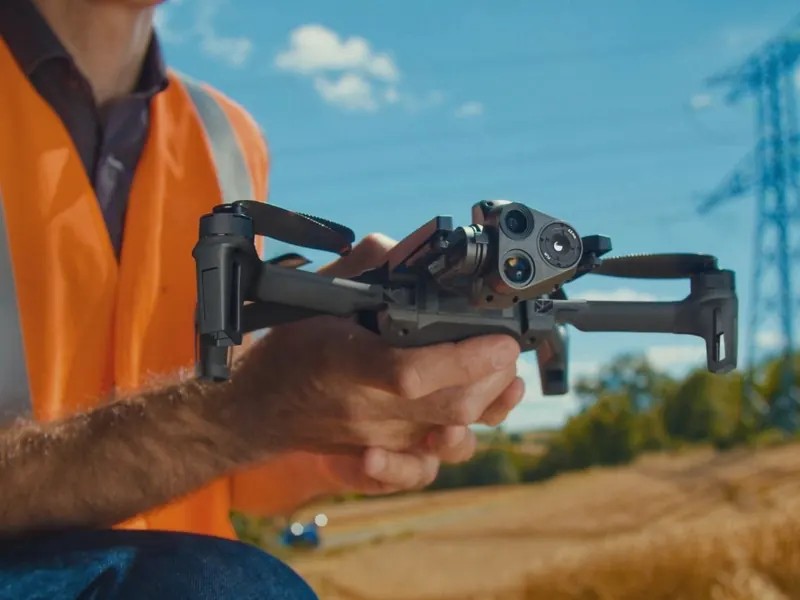
Parrot ANAFI USA unfolded in a worker's hands, showing its zoom and thermal cameras

Parrot ANAFI USA

1.1 lb (500 g), 32 minutes of flight, IP53, a FLIR Boson thermal sensor and “Digital zoom: 32x”, as Parrot's product sheet prints them. The sheet says “Made in the USA.”, and the FAA's list of Remote ID declarations of compliance holds the ANAFI USA (RID000000068).

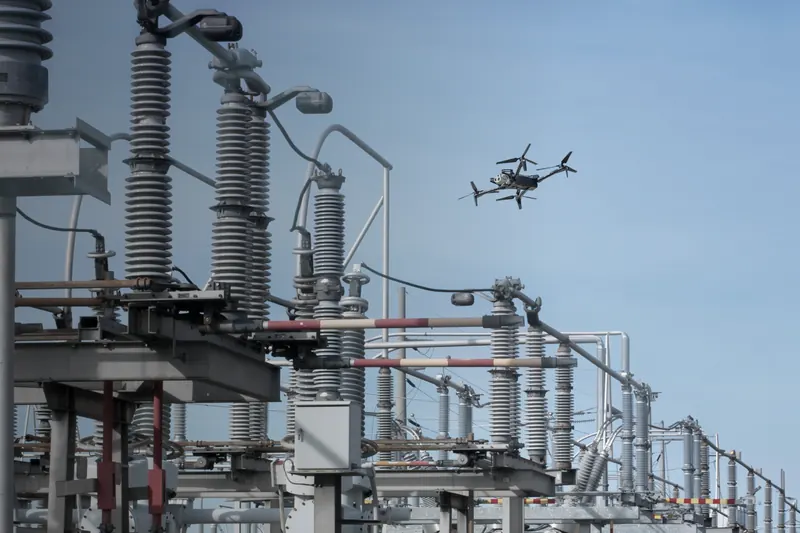
DJI Matrice 4T inspecting a high-voltage substation

DJI Matrice 4T

Wide, medium tele and telephoto cameras of 48 MP each, an uncooled VOx thermal imager at 640×512 and up to 49 minutes of flight with standard propellers, as DJI's Matrice 4 Series specs print them.

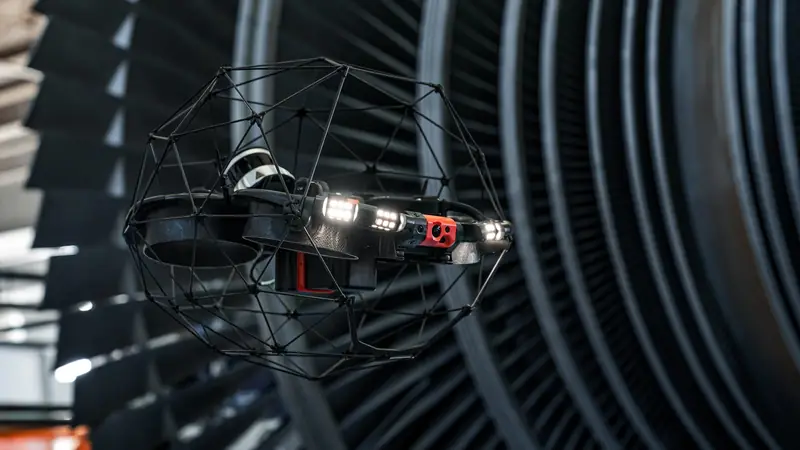
A Flyability Elios 3 caged drone with its lights on, flying in front of the blades of a turbine

Flyability Elios 3

A collision-tolerant caged drone for indoor and confined-space inspection, with payloads for visual and thermal inspection, ultrasonic thickness, radiation, gas detection and surveying. Flyability says findings captured in flight are mapped onto a 3D model of the asset. Flyability SA, founded in 2014 as an EPFL spin-off, is headquartered in Paudex, Lausanne.

U.S. status, as the FCC states it: DJI drones and all other foreign-produced drones have been on the FCC Covered List since December 22, 2025; models authorized earlier may still be imported and sold, and existing authorizations are not revoked. Flyability names its headquarters but not where the Elios 3 is produced, so this page does not call it foreign-produced or domestic. An FCC proposal of July 21, 2026 (DA 26-758) would end imports and sales of some previously authorized drones on the list; its categories include thermal imaging and LiDAR, and as of the Covered List's November 6, 2026 update no such proposal is a final order. Imported drones with thermal imagers carry a 100 percent section 232 duty from September 3, 2026.

Our DJI ban page covers the FCC listing in full, and American-made drones covers aircraft made in the U.S. Drone mapping and 3D models, thermal drones and drones for construction and infrastructure work are planned as guides of their own.

Check the site before the flight

Questions about drone inspection

What is the 1:1 rule for drones?

Part 107 has no “1:1 rule”: the phrase does not occur in its text. The figures Part 107 does set here are 400 feet above the ground, higher only within 400 feet of a structure, and a flight visibility of at least 3 statute miles.

Can FAA know you flew a DJI drone?

Standard Remote ID broadcasts what identifies the drone, its serial number or a session ID, and the position and altitude of the control station and of the drone, its velocity, a UTC time mark and its emergency status (14 CFR 89.305). The FAA's registration and Remote ID rules set their conditions by weight, purpose and equipment, not by manufacturer. The FCC's listing of DJI and other foreign-produced drones since December 22, 2025 is a separate matter, covered on our DJI ban page.

Does the drone itself need an inspection?

Before each flight the remote pilot must check that the small unmanned aircraft system is in a condition for safe operation, and must stop flying once it is not (14 CFR 107.15). A final rule of November 10, 2026 on inspection programs, effective January 11, 2027 (91 FR 72397), amends parts 91, 125, 135, 137 and 145, not Part 107; it describes its unmanned aircraft change as one for aircraft under parts 91 or 135, excluding Part 107 aircraft.

Can I use a drone to inspect my roof?

No FAA page we read rules on someone inspecting their own roof. The FAA lists “roof inspections” among its examples of Part 107 flights; Advisory Circular 91-57D leaves out of recreational flying any flight “related to or in furtherance of a business”; and the FAA says: “When in doubt, assume Part 107.”

Do I need a license for drone inspection?

For a flight under Part 107, yes: the remote pilot in command holds a remote pilot certificate, which takes being at least 16 and passing the FAA's knowledge test, with the test or recurrent training current within 24 calendar months. Our drone license guide sets out the steps.

Sources Documents are named, not linked. The rules were read on November 14, 2026, and the page's facts were last checked on November 14, 2026.

Rules

  • 14 CFR part 107: sections 107.12, 107.15, 107.25, 107.29, 107.31, 107.33, 107.39, 107.41, 107.47, 107.49, 107.51, 107.61, 107.65, 107.125, 107.145 and 107.205, and a full-text search of the part (eCFR, current to November 12, 2026)
  • 14 CFR 48.15, part 89 and 89.305: registration and Remote ID (eCFR)
  • FAA Advisory Circular 91-57D, Exception for Limited Recreational Operations of Unmanned Aircraft
  • FAA, Aeronautical Information Manual, chapter 11, section 4

Laws and the Federal Register

  • FAA Extension, Safety, and Security Act of 2016, sections 2209 and 2210, printed as notes under 49 U.S.C. 44802, and 49 U.S.C. 44810 (U.S. Code, 2024 edition)
  • FAA and TSA, Normalizing Unmanned Aircraft Systems Beyond Visual Line of Sight Operations, proposed rule, 90 FR 38212, and its notices of September 29, 2025, 91 FR 3695 and 91 FR 5880
  • FAA, Designation-Restrict the Operation of Unmanned Aircraft in Close Proximity to a Fixed Site Facility, proposed rule, 91 FR 24650, and its extension, 91 FR 39568
  • Inspection Programs for Single-Engine Turbine-Powered Airplanes and Unmanned Aircraft, final rule, 91 FR 72397
  • Proclamation 11055, 91 FR 53699

FAA and FCC pages

  • FAA, Recreational Flyers & Community-Based Organizations and FAA, Part 107 Waivers, both last updated October 29, 2026
  • FAA, Critical Infrastructure and Public Venues, last updated February 22, 2023, and FAA, Airport Safety and Airspace Hazard Mitigation and Enforcement (Section 383), last updated December 19, 2022
  • FAA, UAS Data Exchange (LAANC), last updated September 29, 2026; FAA, How to Register Your Drone and FAA, Remote Identification of Drones
  • FAA and DOT, State and Local Regulation of Unmanned Aircraft Systems (UAS) Fact Sheet, July 14, 2023
  • FCC Public Notices DA 25-1086, DA 26-742 and DA 26-758 and the FCC Covered List page, update of November 6, 2026

States and makers

  • Windhorse, drone laws by state: the 14 statutes above, each read in the state's own code
  • Skydio X10 page and technical specs, Parrot ANAFI USA product sheet (06/23), DJI Enterprise, Matrice 4 Series specs, Flyability Elios 3 page and company page
  • FAA, Remote ID declarations of compliance: the ANAFI USA entry

Photos: DJI press images. Product photos by Parrot, Skydio and Flyability. Wikimedia Commons: Grendelkhan (CC BY-SA 4.0).