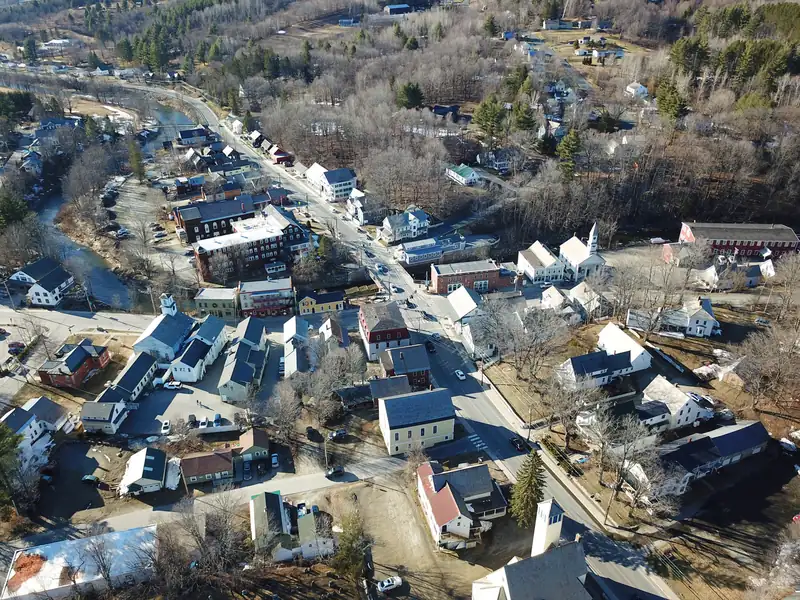
Can you fly a drone over private property? What drone laws say
Under federal law, yes: the air over private land is federal, and the FAA sets no minimum drone height over property.
- Federal minimum height over property
- None
- Federal ceiling above the ground
- 400ft
- Prison for shooting a drone down
- 20yrs max
- States and D.C. read in their own text
- 51
Who controls the air over your yard: federal law and the FAA
The air is federal, and the FAA writes its rules. Many states add drone trespass or privacy laws, so a low, lingering or recording flight can be illegal there.
- The air
Federal. Every citizen has a public right of transit through the navigable airspace, and drones are aircraft.
TransitThe exact rule
Federal law gives the U.S. Government exclusive sovereignty of the nation's airspace and gives every citizen a public right of transit through the navigable airspace. Drones are classified as aircraft: the federal definition of an aircraft is any contrivance designed to fly in the air. The Federal Aviation Administration (FAA) writes the rules of the sky, safe altitudes among them, and the law tells it to do so in part to protect people and property on the ground.
The United States Government has exclusive sovereignty of airspace of the United States.
A citizen of the United States has a public right of transit through the navigable airspace.
49 U.S.C. 40103(a)(1) and (a)(2), Sovereignty and public right of transit (U.S. Code, 2024 edition)What it means: a drone crossing private land uses air in which federal law gives a public right of transit, and the FAA has set no minimum drone height over property. States may still limit what a drone does there.
- State laws
Allowed outside safety and the airspace: privacy, trespass, harassment and land use, if they do not conflict with FAA rules.
VariesWhat states may add, in the FAA's view
The FAA and the Department of Transportation set out their view in a fact sheet of July 14, 2023. The FAA alone regulates aviation safety and the efficient use of the airspace, and state or local rules in those fields are preempted. Outside them, states may generally regulate, even with laws aimed at drones, as long as those laws do not conflict with FAA rules. Laws that reach commercial operators are more likely to be preempted than laws that reach hobby flyers.
The fact sheet says the FAA has not set minimum altitudes for drones and requires them to fly low, generally not above 400 feet above the ground. In the FAA's view the navigable airspace “extends to the ground”, which does not leave states powerless outside safety and efficiency.
- Likely preempted, in the FAA's view: state or local rules on drone altitude or flight paths set for safety, drone traffic control, drone “highways”, pilot licensing and training, and equipment such as geofencing; also a privacy-based ban on drones over a whole city.
- Generally not preempted: laws on privacy, voyeurism, harassment, trespass, land use and zoning, reckless endangerment, photos of particular facilities, police warrants for drone surveillance and hunting harassment; rules on where drones take off and land and where the pilot may stand; and limits on flights in the “immediate reaches” of property that substantially interfere with the owner's actual use and enjoyment of it. A low-altitude privacy limit over places such as parks or schools is more likely allowed than a citywide ban.
- Fixed heights
No court ruling found. The state heights on this page are state law as written.
As writtenThe Newton ordinance case
The fact sheet names, as raising preemption issues, a proposed law that would make any drone under 350 feet over private land without permission a trespasser. It also cites a 2017 federal court ruling (Singer v. City of Newton) that struck down a Newton, Massachusetts ordinance banning drones below 400 feet over private property without the owner's permission, because with the ordinance's other parts it worked as a citywide ban. We found no court ruling on the fixed state heights in the table below; they are state law as written.
- Enforcement
The FAA cannot hand its enforcement powers to states or cities. It relies on local police to detect and investigate unsafe drone flights.
Police
Can I fly here?
Airspace, ceilings and temporary no-fly zones for the spot and the hour you pick.
Can I fly here?How high is “your” air? What the Causby case decided
Causby gives no height in feet below which a drone is trespassing. A few states have set one for drones.
Heights as each state's statute sets them; we found no court ruling on them. Hawaii and Virginia set 50 feet from a dwelling, a distance with intent or after notice, not a height.
United States v. Causby (1946) is the Supreme Court case people cite for owning the air over their land. It asked whether low, frequent flights by government aircraft near a North Carolina airport had taken the owners' property, a Fifth Amendment taking. It is not a trespass rule for aircraft or drones.
- The Court said the old idea that land ownership reaches to the periphery of the universe has no place in the modern world, and that the air is a public highway.
- A landowner owns at least as much of the space above the ground as he can occupy or use in connection with the land, and has a claim to its “immediate reaches”.
- Flights over private land are a taking only when they are so low and so frequent that they directly and immediately interfere with the enjoyment and use of the land.
- The 83 feet people quote is a fact of the case, not a limit: the glide path to a runway crossed the farm at 83 feet, 67 feet above the house. The Court noted that no agency had set 83 feet as a minimum safe altitude.
- The Court sent the case back because the lower court had not described the easement taken: how often, how high, what aircraft and for how long.
What the Court said
We need not determine at this time what those precise limits are.United States v. Causby, 328 U.S. 256 (1946), opinion of the Court, part I
What it means: the Court never fixed where a landowner's “immediate reaches” end, so Causby gives no height in feet below which a drone is trespassing. A few states have set one for drones; their rows in the table give it.
FAA rules when you fly over private property
No FAA rule names private property. The rules that matter over a house are about height, people and care:
- The 400 feet ceiling
Under Part 107 a drone stays at or below 400 feet above the ground, except within 400 feet of a structure, and then no higher than 400 feet above its top (14 CFR 107.51).
400 ft - No minimum height
Part 107 sets no minimum height and no setback from houses or property lines; the only distances in it are the 400 feet ceiling and the cloud clearances.
None - People in the yard
A Part 107 pilot may not fly over a person unless that person is taking part, is under a covered structure or inside a stationary vehicle, or the flight fits one of four categories for flying over people (14 CFR 107.39).
LimitsThe four categories
Category 1 covers drones of 0.55 lb (249 g) or less with no exposed rotating parts that would cut skin; Categories 2 and 3 use kinetic-energy limits of 11 and 25 foot-pounds and an FAA-accepted declaration; Category 4 needs an airworthiness certificate.
- Cars on a driveway or street
Flying over people inside moving vehicles is barred unless the flight fits a category and, for Categories 1 to 3, stays over a closed or restricted-access site with notice or avoids sustained flight over moving vehicles (14 CFR 107.145).
Limits - Care
No careless or reckless drone operation that endangers the life or property of another, and no dropping objects that create an undue hazard (14 CFR 107.23).
Never
Flying for fun
Hobby flyers fly under the recreational exception in 49 U.S.C. 44809: strictly for fun, following a community-based organization's safety guidelines, in visual line of sight, giving way to crewed aircraft, with authorization in controlled airspace, at or below 400 feet in uncontrolled (Class G) airspace unless the FAA sets another ceiling, with The Recreational UAS Safety Test (TRUST) passed and the drone registered when required. The statute has no rule of its own about flying over people; that comes through the safety guidelines.
Registration and Remote ID
Register a drone unless you fly it only for recreation and it weighs 0.55 lb (249 g) or less. TRUST is free, and since September 16, 2023 a registered drone must broadcast Remote ID unless it flies inside an FAA-recognized identification area.
Can you fly a drone over private property in your state?
Of the 50 states and Washington, D.C., 10 have a drone trespass or overflight statute, 19 a drone surveillance or privacy statute and 3 both; 7 reach drones only at critical facilities, and 12 rely on general laws alone. In 17, state law limits local drone rules.
By the FAA's count, at least 44 states passed drone-related laws between 2013 and July 2023. The table shows which state laws reach drones over private land, each row read in the state's own statute or code on November 13 and 14, 2026.
Every state, read in its own text
The 50 states and Washington, D.C.: what each state's own law says about drones over private property, read November 13 and 14, 2026.
Alabama
Entering a critical infrastructure facility without authority is a crime; doing it while operating a drone carrying a weapon or explosive is a felony. Nothing on drones over homes.
The law, the limits and the date read
- Category
- Critical facility only
- The law
- Code of Ala. 13A-7-4.3
- Height or condition
- Only fenced or posted critical infrastructure facilities; drone provision needs an attached weapon, firearm, explosive, destructive device or ammunition
- Penalty or remedy
- Class A misdemeanor for unauthorized entry; Class C felony with an armed drone
- Not settled
- SB 54 (2025) was read as enrolled; the Governor's approval was not seen.
- Read
Alaska
Alaska's drone statutes govern only how police agencies may use drones; none restricts private flights over private property.
The law, the limits and the date read
- Category
- General law only
- The law
- Alaska Stat. 18.65.900-18.65.909 (police use only)
- Height or condition
- None for private flights
- Penalty or remedy
- None in the drone statutes; ordinary trespass, voyeurism and harassment laws apply
- Not settled
- The absence of a drone statute for private flights rests on a search, not a reading of the whole code.
- Read
Arizona
Crimes cover drone photography or loitering at critical facilities, commercial drones near ticketed events, and hobby drones low over posted school grounds. Nothing on drones over homes.
The law, the limits and the date read
- Category
- Critical facility only; local rules preempted
- The law
- Ariz. Rev. Stat. 13-3729
- Height or condition
- Critical facility: photographing or loitering in furtherance of a crime; schools: 200 feet or less over non-residential school property after posted notice and a request to leave; events: commercial drones within 5,280 feet
- Penalty or remedy
- Critical facility: class 6 felony (class 5 if repeated); event and FAA-rule violations: class 1 misdemeanor; school overflight: class 3 misdemeanor
- Not settled
- The local-rules preemption is in 2026 Laws ch. 215 and ch. 236; the compiled statute did not show it yet.
- Read
Arkansas
Using a drone to capture images of a person or private property to surveil them is a crime; owners or tenants can sue. Drone voyeurism is also covered.
The law, the limits and the date read
- Category
- Drone surveillance or privacy statute
- The law
- Ark. Code 5-60-103(e), 5-60-126, 16-118-119 (Act 597 of 2025); 5-16-101, 5-16-102 (Act 293 of 2015)
- Height or condition
- Purpose to conduct surveillance; Texas-style list of lawful uses; defense if the image is destroyed promptly and not shared; no height stated
- Penalty or remedy
- Class C misdemeanor (images); sharing such images Class B misdemeanor; civil: injunction, $5,000 per episode, $10,000 for disclosure, actual damages if shared with malice, costs and attorney fees
- Read
California
Entering land or the airspace above it without permission to capture images or sound of someone's private or family activity, offensively, is a physical invasion of privacy.
The law, the limits and the date read
- Category
- Drone surveillance or privacy statute
- The law
- Cal. Civil Code 1708.8
- Height or condition
- Any entry into the airspace above the land without permission; the purpose must be to capture private activity; no height stated
- Penalty or remedy
- Civil: up to three times general and special damages, plus possible punitive damages
- Read
Colorado
No Colorado statute addresses drones over private property; ordinary trespass, privacy, harassment and stalking laws apply. The one drone crime: using a drone as an obstacle to police, firefighters, EMS or rescuers, unless the pilot has their permission, stays in contact and follows their instructions.
The law, the limits and the date read
- Category
- General law only
- The law
- C.R.S. 18-8-104(2.5) and (5)(b) (drones named in obstructing public safety, HB18-1314); no drone overflight or privacy statute found
- Height or condition
- None for private property; the obstruction offense turns on interfering with an emergency response
- Penalty or remedy
- None drone-specific for private property; the obstruction grading is set in 18-8-104 (not read; the session law adds only the drone wording)
- Not settled
- The code could not be full-text searched; the penalty grading of 18-8-104 was not read.
- Read
- Legislative Council brief R24-899: read in an archived copy of February 8, 2026; it could not be opened on the state's own site on November 14, 2026.
Connecticut
No state statute restricts drones over private property; towns may not regulate commercial drones, except water companies over water-supply land.
The law, the limits and the date read
- Category
- General law only; local rules preempted
- The law
- Conn. Gen. Stat. 7-149b (local preemption, commercial drones only)
- Height or condition
- None for overflight; preemption covers only drones flown by FAA-certificated remote pilots
- Penalty or remedy
- None drone-specific; voyeurism (53a-189a) and other general laws apply
- Read
Delaware
Flying a drone to harass, or to invade the privacy of, a person on private property is a crime, as are flights over large events, critical infrastructure and emergency scenes.
The law, the limits and the date read
- Category
- Drone surveillance or privacy statute; local rules preempted
- The law
- 11 Del. C. 1334(b)(4)-(6), (e)
- Height or condition
- Harassment (11 Del. C. 1311(a)) or privacy violation (1335) of someone on private property; not a crime with the owner's or occupier's written permission; FAA-authorized commercial operators exempt
- Penalty or remedy
- Unclassified misdemeanor for a first offense; class B misdemeanor for a repeat; class A misdemeanor if someone is hurt or property damaged
- Read
District of Columbia
No District law addresses drones over private property; the general voyeurism and unlawful entry laws apply. Nearly all DC airspace is under federal flight restrictions.
The law, the limits and the date read
- Category
- General law only
- The law
- None found (official D.C. Code search); general crime D.C. Code 22-3531 (voyeurism)
- Height or condition
- None in District law
- Penalty or remedy
- None drone-specific; voyeurism (22-3531) is a misdemeanor, up to 1 year; distributing such images is a felony, up to 5 years
- Read
Florida
Using a camera drone to record private property or the people on it, intending surveillance, needs written consent. Separate crimes: harassing drone contact with private property; flying over agricultural land.
The law, the limits and the date read
- Category
- Drone surveillance or privacy statute; drone trespass or overflight statute; local rules preempted
- The law
- Fla. Stat. 934.50(3)(b), (5); Fla. Stat. 330.41(3), (6), (7)
- Height or condition
- 934.50: privacy presumed where a person cannot be seen from ground level; 330.41(7): drone contact with property with intent to harass; 330.41(6): any drone operation on agricultural land without owner consent
- Penalty or remedy
- 934.50: owner or occupant may sue for compensatory damages, injunction, attorney fees, possible punitive damages. 330.41(6),(7): second-degree misdemeanor, first-degree if repeated or if video recorded
- Read
Georgia
No Georgia statute found that restricts drones over private homes; counties and cities may not regulate drone testing or operation, with narrow exceptions.
The law, the limits and the date read
- Category
- General law only; local rules preempted
- The law
- O.C.G.A. 6-1-4
- Height or condition
- Local rules adopted on or before April 1, 2017 survive; localities may enforce FAA restrictions and regulate launch and landing on their own public property (not for commercial operators)
- Penalty or remedy
- None drone-specific; general eavesdropping and surveillance law (16-11-62) applies
- Not settled
- HB 58 (2025), which would add mass-gathering exceptions, was not confirmed in an official source; the codified code is vendor-hosted and was not searched, so the absence of a private-property drone statute rests on a search outside the official code.
- Read
Hawaii
Flying a drone across another's property line to within 50 feet of a home, to harass or intimidate, or after being told to stop, is a crime.
The law, the limits and the date read
- Category
- Drone trespass or overflight statute
- The law
- Haw. Rev. Stat. 711-1125
- Height or condition
- Crosses the property line and comes within 50 feet of a dwelling, with intent to coerce, intimidate or harass, or after actual notice to desist; not if a person with authority or lawfully present consented, nor for an operator flying lawfully under federal rules
- Penalty or remedy
- Misdemeanor
- Read
Idaho
No one may use a drone to deliberately surveil or record a targeted person, home and curtilage, farm, ranch or business property without written consent, or record someone for publication.
The law, the limits and the date read
- Category
- Drone surveillance or privacy statute
- The law
- Idaho Code 21-213
- Height or condition
- Targeted surveillance or recording without written consent; no height stated
- Penalty or remedy
- Civil: greater of $1,000 or actual and general damages, plus attorney fees and costs
- Note
- The statute's definition leaves out model aircraft flown purely for sport or recreation, so it may not reach hobby flights.
- Read
Illinois
No Illinois statute restricts private drone flights over private property; eavesdropping, trespass and recording laws apply. Since 2024 only the State may regulate drones: local rules, home-rule ones included, are preempted, except in municipalities over 1,000,000 people and for public recreational property.
The law, the limits and the date read
- Category
- General law only; local rules preempted
- The law
- 620 ILCS 5/42.1 (state preemption of drone regulation, P.A. 103-925); 725 ILCS 167 covers police drones only
- Height or condition
- None for private property
- Penalty or remedy
- None drone-specific for private property
- Read
Indiana
Since July 2026, flying a drone over another person's property without consent, intending to harass, disturb or injure a person or animal or to damage or disturb a crop, is remote aerial harassment; so is spraying a substance onto the property, or reckless flight over it that endangers other aircraft. Flying over or around an occupied home intending to peep and record people out of public view is remote aerial voyeurism.
The law, the limits and the date read
- Category
- Drone trespass or overflight statute; drone surveillance or privacy statute
- The law
- Ind. Code 35-45-10-6 (remote aerial harassment, as amended by P.L.158-2026); 35-45-4-5(g), (h) (remote aerial voyeurism)
- Height or condition
- No height; the overflight offense needs no consent plus that intent (or a dispersed substance, or endangered aircraft); voyeurism needs an occupied dwelling and a person out of public view
- Penalty or remedy
- Remote aerial harassment: Class A misdemeanor, Level 6 felony with a prior conviction; defenses for mechanical failure or avoiding greater harm. Remote aerial voyeurism: Class A misdemeanor; Level 6 felony if repeated or the images are published or shared
- Not settled
- Only Title 35 was searched for drone terms.
- Read
- The 2026 Indiana Code, Title 35: read in an archived copy of October 29, 2026; it could not be opened on the state's own site on November 14, 2026.
Iowa
Knowingly flying a drone and keeping it over someone else's rural homestead is intrusion; doing so with a camera is surveillance. Owners can seek an injunction.
The law, the limits and the date read
- Category
- Drone trespass or overflight statute
- The law
- Iowa Code 715E.3, 715E.4, 715E.5, 715E.6
- Height or condition
- Homestead: principal residence plus up to 400 feet of land, outside city limits; also secure farmsteads (400 feet around animals, equipment, structures); exceptions for consent, FAA-compliant commercial or agricultural use, government, utilities, railroads, flights above 400 feet
- Penalty or remedy
- Intrusion: simple misdemeanor (serious if repeated); surveillance: serious misdemeanor (aggravated if repeated); civil: temporary injunction up to 2 years, costs, attorney fees, destruction of recordings
- Read
Kansas
Repeated drone flights over or near a home, occupied vehicle or other place where one expects freedom from intrusion or surveillance can count as harassment for a civil protection order.
The law, the limits and the date read
- Category
- Drone surveillance or privacy statute
- The law
- Kan. Stat. Ann. 60-31a02(d)(1)
- Height or condition
- A course of conduct (two or more separate acts) over or near a dwelling, occupied vehicle or similar place, that seriously alarms, annoys, torments or terrorizes and serves no legitimate purpose
- Penalty or remedy
- Civil: protection from stalking order (the drone clause is in the definitions of the civil protection act; no criminal penalty in this section)
- Read
Kentucky
Drone users may not record images of private land or its occupants to surveil them or publish unauthorized images; occupants are presumed private if not visible from ground level.
The law, the limits and the date read
- Category
- Drone surveillance or privacy statute
- The law
- Ky. Rev. Stat. 500.130(12) and the new civil-action section in KRS chapter 411 (2025 Ky. Acts ch. 19, HB 19)
- Height or condition
- Applies to business, recreational and school operators; businesses may image private land only with express prior written permission or for listed uses (utilities, mapping, insurance, cargo)
- Penalty or remedy
- Civil action by owner, tenant, occupant, invitee or licensee: injunction, actual and punitive damages, costs and attorney fees, within 7 years
- Not settled
- Read in the 2025 act; compiled KRS 500.130 and 511.100 were not read.
- Read
Louisiana
Recording a person with a camera drone without consent, for a lewd purpose or where they expect privacy, is video voyeurism; refineries, schools, infrastructure and prisons have a separate crime.
The law, the limits and the date read
- Category
- Drone surveillance or privacy statute
- The law
- La. R.S. 14:283 (video voyeurism, drone named) and La. R.S. 14:337 (unlawful use of an unmanned aircraft system, targeted facilities)
- Height or condition
- No height; 14:283 turns on consent and a place with a reasonable expectation of privacy; 14:337 needs prior written consent of the facility owner
- Penalty or remedy
- 14:283 first conviction: fine up to $2,000 or up to 2 years, or both, plus sex offender registration; 14:337 first conviction: fine up to $500 or up to 6 months, drone seized
- Not settled
- Whether 2026 HB 265 changed 14:283 is not confirmed.
- Read
Maine
No drone rule for private property. The only drone crime for private pilots covers correctional facilities and jails: flying over one at or below 400 feet, landing on it or flying from it. The general privacy crime covers using any device outside a private place to see or record what is not ordinarily visible from outside.
The law, the limits and the date read
- Category
- Critical facility only
- The law
- 17-A M.R.S. 761 (drones over correctional facilities and jails); 25 M.R.S. 4501 (police drones); general crime 17-A M.R.S. 511 (violation of privacy)
- Height or condition
- Correctional facilities and jails: at or below 400 feet above the ground; the privacy crime turns on a private place, no height
- Penalty or remedy
- 761: civil violation, fine of not less than $500; a repeat is a Class D crime. Violation of privacy (511) is a Class D crime
- Read
Maryland
Only the State may regulate drone testing or operation; county and city drone rules are preempted. The drone crimes cover prisons only: flying over a correctional facility to photograph or record it without authorization, and delivering contraband by drone. Ordinary trespass, peeping and harassment laws apply elsewhere.
The law, the limits and the date read
- Category
- Critical facility only; local rules preempted
- The law
- Md. Code, Economic Development 14-301 (preemption); Correctional Services 8-804; Criminal Law 9-417.1
- Height or condition
- No height; 8-804 turns on flight over a correctional facility to photograph or record it
- Penalty or remedy
- 8-804 and 9-417.1: misdemeanor, up to 3 years or $1,000 or both; 14-301 none (preemption only)
- Not settled
- The enactment years of 8-804 and 9-417.1 were not confirmed.
- Read
Massachusetts
No enacted state drone overflight or drone privacy statute. A drone bill restricting surveillance of people and private property was still in Senate Ways and Means. General privacy and trespass law applies.
The law, the limits and the date read
- Category
- General law only
- The law
- No drone statute in the General Laws (official search); general civil right of privacy G.L. c. 214, s. 1B; pending S.3008 (194th General Court)
- Height or condition
- None enacted at state level; some towns have their own drone ordinances (not read)
- Penalty or remedy
- None drone-specific; c. 214, s. 1B lets the court stop an unreasonable invasion of privacy and award damages
- Not settled
- Town drone ordinances were not read.
- Read
Michigan
Using a drone to harass, break a restraining order, or record someone where they reasonably expect privacy is banned; cities and counties generally may not regulate drones.
The law, the limits and the date read
- Category
- Drone surveillance or privacy statute; local rules preempted
- The law
- MCL 259.322 and 259.305 (Unmanned Aircraft Systems Act, 2016 PA 436)
- Height or condition
- No height; turns on harassment, a court order, or a reasonable expectation of privacy
- Penalty or remedy
- Penalty is set elsewhere in the Act (not read); MCL 750.539j private-place surveillance is a separate crime
- Not settled
- The Act's penalty section was not read, so no penalty is shown.
- Read
Minnesota
No drone rule for private property. The only drone crime aimed at private pilots covers state prisons. General aeronautics law, which counts drones as aircraft, bars flight low enough to interfere with the existing use of land and landing on another's land without consent, and makes careless or endangering flight a misdemeanor; ordinary privacy, trespass and harassment crimes apply.
The law, the limits and the date read
- Category
- Critical facility only
- The law
- Minn. Stat. 243.552 (drones over state correctional facilities); general aeronautics 360.012, 360.075; general crimes 609.746 and 609.605
- Height or condition
- Prisons: airspace over a state correctional facility or its grounds without written consent; aeronautics clause: no fixed height
- Penalty or remedy
- 243.552: misdemeanor; gross misdemeanor if the drone records images or brings in items. 360.075: misdemeanor
- Not settled
- Aeronautics clauses like 360.012 were not tracked across the table.
- Read
Mississippi
Viewing by any means, drones named, into a bedroom, bathroom or other place where the occupant expects privacy, for a lewd purpose and without consent, is a felony. Since 2023 cities and counties may not regulate drone operation, and the law says a drone can be the instrument of a privacy tort. Drone surveillance of critical infrastructure or prisons is a separate crime.
The law, the limits and the date read
- Category
- Drone surveillance or privacy statute; local rules preempted
- The law
- Miss. Code Ann. 97-29-61(1)(b) (voyeurism, drones named); 61-21 (Uncrewed Aircraft Systems' Rights and Authorities Act, 2023); 97-47-1 to -9 (critical infrastructure, prisons)
- Height or condition
- No height; needs a lewd purpose and a place with a reasonable expectation of privacy
- Penalty or remedy
- Felony: up to 5 years (offender over 18); up to 10 years where a child under 16 is spied on by an offender over 21. Critical infrastructure or prison surveillance: misdemeanor, up to 1 year or $1,000
- Not settled
- Codification as chapter 61-21 rests on the Legislature's code-section indexes.
- Read
Missouri
No drone rule for private property. Drone crimes cover open-air venues for 500 or more people, critical infrastructure, prisons and jails, and state mental hospitals. The general invasion-of-privacy crime covers nonconsensual images of a person nude or partly nude in a private place, by any means.
The law, the limits and the date read
- Category
- Critical facility only
- The law
- RSMo 577.800 (open-air venues, critical infrastructure), 217.850 (prisons and jails), 632.575 (state mental hospitals); general crime 565.252
- Height or condition
- Open-air venues and critical infrastructure: within 400 feet of the ground inside the property line; no rule for private property
- Penalty or remedy
- 577.800: infraction; class D felony for delivering drugs and class B felony for delivering weapons (as amended 2026)
- Not settled
- No word search on the revisor's site; the finding rests on its 2024 Supplement index and recent-sections list.
- Read
Montana
Knowingly flying a drone 200 feet or lower over another person's property or residence without the owner's or resident's authorization is criminal trespass.
The law, the limits and the date read
- Category
- Drone trespass or overflight statute
- The law
- Mont. Code Ann. 45-6-210 (criminal trespass by unmanned aerial vehicle; 2025 Laws ch. 410, SB 493)
- Height or condition
- 200 feet or lower over the property or residence; exceptions for government and public safety, police, easements, utilities and broadband, and FAA-licensed pilots on legitimate business within FAA rules
- Penalty or remedy
- Fine of $500
- Read
Nebraska
Knowingly sending a drone into, onto or above another's property without privilege, to watch a person without consent in a place of solitude or seclusion, is criminal trespass.
The law, the limits and the date read
- Category
- Drone trespass or overflight statute
- The law
- Neb. Rev. Stat. 28-521(2) (second degree criminal trespass, drones named; Laws 2022, LB922)
- Height or condition
- No height; needs intent to observe a person without consent in a place of solitude or seclusion
- Penalty or remedy
- Class III misdemeanor (higher for repeat offenses under subsection 5)
- Read
Nevada
An owner or occupant may sue for trespass over a drone flown under 250 feet above the property after an earlier low flight and a notice refusing permission.
The law, the limits and the date read
- Category
- Drone trespass or overflight statute
- The law
- Nev. Rev. Stat. 493.103
- Height or condition
- Under 250 feet above the property, on at least the second occasion, after notice; exceptions for airport paths, take-off and landing, police and public agencies, Nevada businesses and surveyors operating under FAA approval without unreasonable interference
- Penalty or remedy
- Civil: treble damages for injury to person or property, attorney fees and costs, injunction
- Read
New Hampshire
Using a drone in a way that violates the state privacy crime, such as observing or recording inside a private place from outside without consent, or that interferes with police, firefighting or emergency response, is a misdemeanor (news media complying with Part 107 are exempt). Flying in violation of the FAA Part 107 rules is an offense, separate clauses cover airports, prisons and weapons, and drone video surveillance of lawful hunters, anglers or trappers without written consent is a violation.
The law, the limits and the date read
- Category
- Drone surveillance or privacy statute
- The law
- RSA 644:23 (unmanned aircraft offenses; III ties to RSA 644:9 violation of privacy); RSA 207:57 (hunters, anglers, trappers)
- Height or condition
- No height in 644:23 III; turns on the 644:9 elements (a private place, no consent)
- Penalty or remedy
- 644:23 III: misdemeanor; 644:23 II: violation, misdemeanor for a repeat; 207:57: violation
- Not settled
- Titles other than 644, 207 and 422 were not searched.
- Read
New Jersey
Drone flying that endangers another's life or property, or breaches a restraining order, is an offense. Nothing on overflight or filming private land; inconsistent local rules are preempted.
The law, the limits and the date read
- Category
- General law only; local rules preempted
- The law
- N.J.S.A. 2C:40-28 and 2C:40-29 (P.L. 2017, c. 315)
- Height or condition
- No height; 2C:40-28a turns on endangering life or property, judged against federal safe-operation standards
- Penalty or remedy
- Endangering: disorderly persons offense; separate convictions for harassment, stalking or invasion of privacy (2C:14-9) do not merge with a drone conviction
- Not settled
- Court rulings on local drone ordinances since 2026 were not read.
- Read
New Mexico
No drone rule for flying over or filming private property. A 2026 bill to penalize drone surveillance of people, property or infrastructure died in committee. General trespass and privacy law applies.
The law, the limits and the date read
- Category
- General law only
- The law
- None found (official NMSA search); 2026 SB 136 (unlawful use of unmanned aircraft) died
- Height or condition
- None drone-specific
- Penalty or remedy
- None drone-specific; general trespass and privacy law applies
- Read
New York
Since 2026, knowingly using a drone to harass, intimidate, stalk, surveil or menace another person in a way that would otherwise break state or local law is unlawful use of a drone; so is flying without approval in a prohibited space (near airports, prisons, police and fire stations, schools, critical infrastructure and gatherings of 500 or more). Secret imaging where a person expects privacy is also unlawful surveillance under the general law.
The law, the limits and the date read
- Category
- Drone surveillance or privacy statute
- The law
- N.Y. Penal Law 280.00, 280.05, 280.10 (unlawful use of a drone, 2026); general crime 250.45 (unlawful surveillance)
- Height or condition
- Prohibited space: within 500 feet horizontally of the listed sites, up to 400 feet above ground; no height for the surveillance clause
- Penalty or remedy
- Unlawful use of a drone: class A misdemeanor; law-abiding recreational, commercial and government flights are exempt unless reckless. Unlawful surveillance in the second degree (250.45): class E felony
- Not settled
- The chapter number and start date of the 2026 law were not confirmed in an official source; New York City rules were not read.
- Read
North Carolina
No person may use a drone to surveil a person, a dwelling and its curtilage, or private real property without consent, or photograph someone for publication without consent.
The law, the limits and the date read
- Category
- Drone surveillance or privacy statute
- The law
- N.C. Gen. Stat. 15A-300.1
- Height or condition
- Surveillance without consent of the person or of the owner, easement holder or lessee; publication photos exempt for newsgathering and events open to the public
- Penalty or remedy
- Civil: actual damages, or $5,000 per published photo or video instead, plus costs, attorney fees and injunction
- Read
North Dakota
Robots, remotely piloted aircraft included, count in the harassment and stalking crimes: using one for offensive conduct meant to frighten or harass is harassment, and tracking a person's movements or location with one without authorization is stalking. Earlier homestead-overflight drafts were dropped.
The law, the limits and the date read
- Category
- Drone surveillance or privacy statute
- The law
- N.D. Cent. Code 12.1-17-07 and 12.1-17-07.1 (as amended by 2025 HB 1429); ch. 29-29.4
- Height or condition
- No height; turns on intent to frighten or harass, or on unauthorized tracking
- Penalty or remedy
- Harassment (12.1-17-07): class B misdemeanor; stalking (12.1-17-07.1): class A misdemeanor, class C felony if aggravated
- Not settled
- The bill page shows the Governor's signature dated a day after filing; the compiled text was read.
- Read
Ohio
No Ohio rule on drone flights over, or filming of, private property. Flying a drone in a way that knowingly endangers people or property is an offense, and drones may not disrupt first responders or be used over critical facilities to further harm or tampering. A bill making drone trespass and unauthorized drone recording crimes has had no action since September 2025.
The law, the limits and the date read
- Category
- General law only
- The law
- R.C. 4561.15(A)(5) (drone flight endangering persons or property), 4561.51 (first responders, critical facilities), 4561.52 (local rules); pending HB 425 (136th GA)
- Height or condition
- None for private property
- Penalty or remedy
- 4561.15: up to $500 or 6 months; 4561.51: fourth-degree misdemeanor up to third-degree felony
- Read
Oklahoma
Drones may not enter private property or the airspace within 400 feet above ground to surveil anyone, record people where they expect privacy, or land on private land without consent.
The law, the limits and the date read
- Category
- Drone trespass or overflight statute
- The law
- 21 O.S. 1743 (Laws 2022, HB 3171)
- Height or condition
- Within 400 feet above ground level, with intent to eavesdrop or surveil; landing needs the owner's or lessee's consent; incidental capture by bona fide business or government flights excepted
- Penalty or remedy
- Misdemeanor
- Not settled
- Read in the 2022 enrolled act; later amendments were not checked.
- Read
Oregon
A landowner or occupant may sue someone who flies a drone over the property again after being told the owner does not want it flown there.
The law, the limits and the date read
- Category
- Drone trespass or overflight statute; local rules preempted
- The law
- Or. Rev. Stat. 837.380; 837.385
- Height or condition
- Any height (the current text sets no altitude); at least one earlier flight plus notice; not for take-off or landing on an airport flight path, nor FAA-authorized commercial operations
- Penalty or remedy
- Civil: treble damages for injury to person or property, injunction, attorney fees
- Read
Pennsylvania
Using a drone on purpose to surveil someone in a private place, or to put someone in reasonable fear of bodily injury, is an offense; municipalities may not regulate drones.
The law, the limits and the date read
- Category
- Drone surveillance or privacy statute; local rules preempted
- The law
- 18 Pa.C.S. 3505 and 53 Pa.C.S. 305 (Act 78 of 2018)
- Height or condition
- No height; turns on surveillance of a person in a private place or reasonable fear of bodily injury
- Penalty or remedy
- Summary offense, fine up to $300 (surveillance or fear); contraband delivery to prisons is a second-degree felony
- Read
Rhode Island
Drone flights must follow FAA requirements, and towns may not enact or enforce their own drone ordinances. No drone-specific overflight or privacy crime found; general law applies.
The law, the limits and the date read
- Category
- General law only; local rules preempted
- The law
- R.I. Gen. Laws 1-8-1.2 (P.L. 2023, ch. 125 and ch. 126)
- Height or condition
- None; compliance with FAA requirements
- Penalty or remedy
- Violations of the chapter are penalized under R.I. Gen. Laws 1-4-19 (not read)
- Read
South Carolina
From 2027 drones must follow FAA rules and stay 1,500 feet from prisons and military bases; local rules may not conflict. The act has no private-property privacy clause.
The law, the limits and the date read
- Category
- Critical facility only; local rules preempted
- The law
- S.C. Code 55-1-200 to 55-1-230 (Drone Regulation and Public Safety Act, 2026 Act No. 150, H.4679)
- Height or condition
- 1,500 feet horizontally from prisons, jails and military installations; local governments may still restrict takeoff and landing on public property
- Penalty or remedy
- Misdemeanor: first offense fine up to $1,000 or up to 6 months; higher for repeat offenses
- Note
- Act No. 150 takes effect January 1, 2027.
- Read
South Dakota
Drone surveillance of someone in a private place, or careless or harassing flight, is a misdemeanor; landing on others' land needs consent; local drone ordinances are barred.
The law, the limits and the date read
- Category
- Drone surveillance or privacy statute; local rules preempted
- The law
- S.D. Codified Laws 50-15-5, 50-15-5.1, 50-15-6, 50-15-7, 50-15-9
- Height or condition
- No height; private place with a reasonable expectation of privacy; landing on another's land or waters without consent
- Penalty or remedy
- Class 1 misdemeanor (privacy, careless or harassing flight, unconsented landing); 50-15-9 says a drone can be the means of a privacy or trespass tort
- Read
Tennessee
Capturing drone images of a person or private land with intent to surveil is an offense; trespass law also covers sending a drone into airspace above the owner's land that the FAA does not regulate as navigable airspace.
The law, the limits and the date read
- Category
- Drone surveillance or privacy statute
- The law
- Tenn. Code Ann. 39-13-903(a)(1) and 39-13-902 (Pub. Ch. 876 of 2014); Tenn. Code Ann. 39-14-405(d) (criminal trespass)
- Height or condition
- No height in feet; trespass covers airspace not regulated by the FAA as navigable airspace; 39-13-902 lists lawful image uses (for example owner consent, FAA-authorized commercial work)
- Penalty or remedy
- Surveillance offense: Class C misdemeanor; possessing such an image Class C, disclosing it Class B; defense if the image is promptly destroyed without sharing
- Not settled
- Whether the 2026 amendment (SB2434/HB2147) became law was not confirmed; the compiled section text was not read.
- Read
- Public Chapter 876 of 2014: read in an archived copy of May 13, 2026; it could not be opened on the state's own site on November 14, 2026.
Texas
Using a drone to capture an image of a person or privately owned real property with intent to conduct surveillance is a crime; owners and tenants can sue.
The law, the limits and the date read
- Category
- Drone surveillance or privacy statute; local rules preempted
- The law
- Tex. Gov't Code 423.003, 423.006, 423.009
- Height or condition
- Intent to conduct surveillance; long list of lawful uses in 423.002; defense if the image is destroyed promptly and not shared
- Penalty or remedy
- Class C misdemeanor; civil: injunction, $5,000 per episode of images, $10,000 for disclosure, actual damages if disclosed with malice, attorney fees
- Not settled
- A court challenge to these image limits (NPPA v. McCraw); its outcome was not read.
- Read
Utah
Drones entering and remaining over private property not open to the public are trespass if flown to annoy or injure, commit a crime, recklessly cause fear, or after notice.
The law, the limits and the date read
- Category
- Drone trespass or overflight statute
- The law
- Utah Code 76-6-206 (criminal trespass, drones named)
- Height or condition
- No height; the drone must remain over private property not open to the public without authorization; notice by personal communication, fencing or posting
- Penalty or remedy
- Class B misdemeanor; class A misdemeanor in a dwelling; defense if the property was open to the public
- Not settled
- 72-14-403 and 76-9-308 were not re-read.
- Read
Vermont
Hobby drones may not fly below 100 feet over private land without the owner's prior written consent; no drone may record private property or occupants to surveil them without consent.
The law, the limits and the date read
- Category
- Drone trespass or overflight statute
- The law
- 20 V.S.A. 4626 (2023 Act No. 161 (Adj. Sess.), sec. 40)
- Height or condition
- Below 100 feet above privately owned real property for hobby or recreational flights; occupants presumed private if not visible from ground level; utilities and police excepted
- Penalty or remedy
- Civil penalty up to $50 for a first violation and up to $250 for later violations
- Read
Virginia
Flying a drone onto property within 50 feet of a home to harass, or after being told to stop, is a crime; so is peeping into a home by drone.
The law, the limits and the date read
- Category
- Drone trespass or overflight statute; drone surveillance or privacy statute; local rules preempted
- The law
- Va. Code 18.2-121.3; 18.2-130.1; 15.2-926.3
- Height or condition
- Enters the property and comes within 50 feet of a dwelling, with intent to coerce, intimidate or harass, or after actual notice to desist
- Penalty or remedy
- Class 1 misdemeanor (both 18.2-121.3(A) and 18.2-130.1)
- Read
Washington
No drone overflight or drone privacy statute. The general voyeurism crime covers viewing, photographing or filming a person for sexual purposes, or intimate areas, without consent, by any means. Commercial drones must be registered with the state transportation department each year; hobby drones are exempt.
The law, the limits and the date read
- Category
- General law only
- The law
- No drone-specific private-use statute (full RCW search); general crime RCW 9A.44.115 (voyeurism); commercial drone registration RCW 47.68.250
- Height or condition
- None drone-specific
- Penalty or remedy
- Voyeurism in the first degree is a class C felony; second degree is a gross misdemeanor
- Not settled
- Some 2015-2026 drone bills are known only from news.
- Read
West Virginia
Drones may not record, view, follow or contact a person or their property without permission in a way that invades reasonable privacy, such as through a window, or harass anyone.
The law, the limits and the date read
- Category
- Drone surveillance or privacy statute
- The law
- W. Va. Code 61-16-2 (as amended by 2023 HB 3479)
- Height or condition
- No height for the privacy offense; news organizations flying above 400 feet over private property for newsgathering are excepted
- Penalty or remedy
- Misdemeanor: fine $100 to $1,000, up to one year in jail, or both; arming a drone with a deadly weapon is a felony
- Read
Wisconsin
Using a drone with intent to photograph, record or watch someone in a place where they have a reasonable expectation of privacy is a crime.
The law, the limits and the date read
- Category
- Drone surveillance or privacy statute
- The law
- Wis. Stat. 942.10 (2013 Wis. Act 213)
- Height or condition
- No height; turns on a place with a reasonable expectation of privacy
- Penalty or remedy
- Class A misdemeanor
- Not settled
- A reported state limit on local drone ordinances (s. 114.045) was not read, so local rules are not marked preempted.
- Read
Wyoming
Since 2025, flying a drone in a way that is not lawful under the state's low-or-dangerous-flight rule in 10-4-303(a) is a misdemeanor.
The law, the limits and the date read
- Category
- Drone trespass or overflight statute
- The law
- Wyo. Stat. 10-4-303(d) (added by 2025 Enrolled Act No. 58, SF0132); Wyo. Stat. 19-13-503 (critical infrastructure)
- Height or condition
- No height in feet. Under 10-4-303(a) a flight is lawful unless it is low enough to interfere with the existing use of the land or water or the space over it, imminently dangerous to people or property lawfully there, or against federal air rules
- Penalty or remedy
- Misdemeanor: up to 6 months, fine up to $750, or both; critical infrastructure offenses up to $2,500 first, felony on repeat
- Not settled
- Title 10 defines "unmanned aircraft" to leave out the FAA's "small unmanned aircraft", those under 55 pounds at takeoff, so whether this misdemeanor reaches most drones is not settled; no court ruling on it was read. The 2025 act took effect on becoming law; that day was not read.
- Read
- Read: the day the row was read in the state's own text. A document the state's own site would not open is named under the date: “read in an archived copy of” the day that copy was made.
- Height or condition: what turns a flight into an offense or a claim. “No height” means the law turns on purpose, place or notice, not on altitude.
- Federal rules apply in every state on top of the row: the 400 feet ceiling, the rules on flying over people, and the federal crimes in What not to do.
The states in each group
- Drone trespass or overflight statute (10): Hawaii, Iowa, Montana, Nebraska, Nevada, Oklahoma, Oregon, Utah, Vermont, Wyoming.
- Drone surveillance or privacy statute (19): Arkansas, California, Delaware, Idaho, Kansas, Kentucky, Louisiana, Michigan, Mississippi, New Hampshire, New York, North Carolina, North Dakota, Pennsylvania, South Dakota, Tennessee, Texas, West Virginia, Wisconsin.
- Both a drone trespass or overflight statute and a drone surveillance or privacy statute (3): Florida, Indiana, Virginia.
- Critical facility only (7): Alabama, Arizona, Maine, Maryland, Minnesota, Missouri, South Carolina.
- General law only (12): Alaska, Colorado, Connecticut, District of Columbia, Georgia, Illinois, Massachusetts, New Jersey, New Mexico, Ohio, Rhode Island, Washington.
- Local rules preempted (counted apart from the groups above) (17): Arizona, Connecticut, Delaware, Florida, Georgia, Illinois, Maryland, Michigan, Mississippi, New Jersey, Oregon, Pennsylvania, Rhode Island, South Carolina, South Dakota, Texas, Virginia.
What each group means
- Drone trespass or overflight statute: flying over or onto private property is itself restricted; the row gives the height or condition if the statute has one.
- Drone surveillance or privacy statute: capturing images or spying with a drone is restricted.
- Critical facility only: the state has drone statutes, but every drone crime aimed at private pilots names a facility, such as a prison, a venue or infrastructure; police-only drone laws do not count.
- General law only: no drone statute about private property was found, or the only drone offense is about safety or obstruction and says nothing of private property; ordinary trespass, peeping and harassment laws apply.
- Local rules preempted: a second flag, where state law stops cities and counties from making their own drone rules.
- Not settled: what the texts read leave open for that state. The row prints only what was read.
Heights, intent and notice: the strictest rules
Montana
Knowingly flying a drone 200 feet or lower over another person's property or residence without authorization is criminal trespass, with a $500 fine. FAA-licensed business flights are excepted; hobby flights are not.
MCA 45-6-210, 2025
Vermont
Hobby and recreational flights below 100 feet over private land need the owner's prior written consent; the civil penalty is up to $50, then up to $250.
20 V.S.A. 4626, in force June 6, 2024
Oklahoma
No drone trespass onto private property or into the airspace within 400 feet above the ground with intent to surveil, no recording people where they expect privacy, and no landing on private land without consent; a misdemeanor.
21 O.S. 1743, 2022
Iowa
Knowingly keeping a drone over someone else's rural homestead (the principal residence plus up to 400 feet of land, outside city limits) is a simple misdemeanor; flights above 400 feet are excepted.
Iowa Code chapter 715E
Hawaii and Virginia
A drone that comes within 50 feet of a dwelling is a crime only with intent to harass or intimidate, or after notice to stop.
Haw. Rev. Stat. 711-1125; Va. Code 18.2-121.3
Indiana
Flying a drone over another person's property without consent, intending to harass, disturb or injure a person or animal or to damage or disturb a crop, is remote aerial harassment, a Class A misdemeanor.
Ind. Code 35-45-10-6, since July 1, 2026
New York
Using a drone to harass, stalk or surveil a person where that would otherwise break the law is a class A misdemeanor; lawful hobby and business flights are exempt unless reckless.
Penal Law 280.00 to 280.10, 2026
New Hampshire
Flying a drone in a way that breaks the state's violation-of-privacy law is a misdemeanor.
RSA 644:23, since January 1, 2026
New Jersey
A general-law state. Drone flying that endangers another's life or property is an offense, nothing addresses overflight or filming private land, and local drone rules that conflict are preempted.
N.J.S.A. 2C:40-28
Laws that preempt local drone rules include those of Texas, Florida, Pennsylvania and Michigan. Illinois (620 ILCS 5/42.1, 2024) exempts cities of more than 1,000,000 people and public recreational property.
A drone is over my house: documenting and reporting it
Note what you see, then report it: local police first if it looks dangerous or criminal, the FAA if it breaks FAA rules.
-
Note what you see
Time, place, pilotNote what you can see: the time, the place, how long the drone stayed, which way it came and went, and where the pilot seems to be. Photos or video taken from the ground help. Then report it the way the FAA splits it:
-
Local police first
Danger or a crimeLocal law enforcement first if the drone looks dangerous or is being used to commit a crime, such as peeping, harassment or trespass. The FAA's own page says to report those to local police first.
-
The FAA
Breaks FAA rulesThe FAA's local Flight Standards District Office if the drone is not following FAA rules; its investigators may follow up with the operator.
The FAA's guidance to police says drone complaints may involve other offenses such as reckless endangerment, voyeurism or harassment, and that officers should find the operator, ask about the flight and refer violations to the FAA through an incident report. Unsafe or unauthorized drone flights can bring FAA civil penalties, action against a pilot certificate and criminal charges under federal, state or local law.
Remote ID: how the operator can be found
A drone flying with Remote ID broadcasts identification and location data that others can receive, including the location of its control station or take-off point. The FAA says this helps the FAA and law enforcement find the control station of a drone flown unsafely. The FAA page does not say whether a member of the public can learn the owner's name from it.
Suing over a drone
Some states give owners and occupants a civil claim of their own:
Nevada
A trespass suit over a drone flown under 250 feet above the property after an earlier low flight and a notice refusing permission; treble damages.
NRS 493.103
Oregon
A suit against someone who flies over the property again after being told the owner does not want it; no height; treble damages.
ORS 837.380
California
Entering the airspace above land without permission to capture images or sound of private or family activity, in an offensive way, is a physical invasion of privacy; up to three times the damages.
Civil Code 1708.8
Kentucky
Occupants may sue over drone recording of private land or its occupants to surveil them, with punitive damages possible; a person who cannot be seen from ground level is presumed private.
2025 Ky. Acts ch. 19
Texas, Florida, Idaho, North Carolina and Arkansas
Give a civil claim over drone images or aerial surveillance of a person or their property. The amounts differ; each state's row gives them.
What not to do about a drone: shooting, jamming, lasers, nets
Shooting a drone down is a federal crime. A drone over your yard is still an aircraft under federal law, and taking it down is not a homeowner's remedy.
Years in prison, at most, for damaging or disabling an aircraft; drones count.
Years in prison, at most, for aiming a laser pointer at an aircraft.
Exceptions for personal use of a jammer, even inside a home.
Powers the SAFER SKIES Act gives private people to stop a drone: call the police.
- Shooting it down
Willfully damaging, destroying or disabling an aircraft in U.S. jurisdiction is a federal crime with up to 20 years in prison (18 U.S.C. 32). The FAA, the Justice Department, the FCC and Homeland Security say in a joint advisory that this law covers drones.
Crime - Jamming it
Using a jammer in the U.S. without federal authorization is illegal, even on private property and inside a home (FCC Enforcement Advisory 2014-05).
IllegalWhat the FCC says
The FCC says operating, selling or importing jammers, including ones aimed at a drone's control or payload signals, breaks federal law with no exception for personal use; penalties include large fines, seizure and prison.
- Lasers
Knowingly aiming a laser pointer at an aircraft or its flight path is a federal crime with up to 5 years in prison (18 U.S.C. 39A). The federal advisory counts drones as aircraft under these laws and lists lasers among the measures that can break them.
Crime - Nets, projectiles or hacking
The same advisory says nets, projectiles, spoofing and hacking can also break federal criminal laws. It does not cover state law or civil liability for the damage.
Risky
Call the police
The FY2026 National Defense Authorization Act (the SAFER SKIES Act), as the FCC summarizes it, lets trained and certified state and local police and state prisons detect, track and mitigate dangerous drones under federal oversight. It gives private people no such power: call the police instead.
Drone myths about private property, corrected
What people say about drones over private land, and what the documents say, read on November 13 and 14, 2026.
- Own the air
“You own the air up to a set height.” No federal statute or FAA rule gives a landowner a set height. Causby left the limit open, and the FAA says it has set no minimum altitude for drones. A few states set heights for drones; see your state's row.
False - 100 feet
“The FAA says 100 feet from a house.” Part 107 has no such distance, and neither does the recreational statute. Distances near homes come from some state laws, such as Virginia's 50 feet from a dwelling with intent to harass (Va. Code 18.2-121.3).
False - 83 feet
“83 feet is the legal limit.” It is a fact of the Causby case: the height at which an airport's glide path crossed one farm. The Court never set it as a limit.
False - Shoot it down
“I can shoot it down over my own yard.” No. Damaging or disabling an aircraft is a federal crime with up to 20 years in prison, and federal agencies say drones count.
No - Police warrant
“Police need a warrant to fly over me.” That is a separate state-law question about police drones. The FAA lists warrant rules for police drone surveillance among state laws that are generally not preempted.
State law
If you fly a drone over private property: what pilots should check
No federal rule bars crossing private land as such, but the state laws in the table turn on a few things, each in the pilot's control.
- Height
Montana sets 200 feet over another person's property or residence (MCA 45-6-210); Vermont 100 feet for hobby flights over private land (20 V.S.A. 4626); Nevada 250 feet for its civil claim after notice (NRS 493.103); Oklahoma 400 feet with intent to surveil (21 O.S. 1743); Iowa protects rural homesteads from drones below 400 feet (Iowa Code 715E).
100–400 ft - Staying or coming back
Iowa's offense is keeping a drone over a homestead; the Nevada and Oregon claims need an earlier flight and a notice; Hawaii and Virginia reach a flight after notice to stop.
Notice - Purpose
Intent to surveil, harass or record private activity is what most privacy statutes turn on, among them those of Texas, Florida, Oklahoma, California, Kentucky and Indiana.
Intent - Take-off and landing
The FAA says state rules on where drones take off and land, and where the pilot stands, are generally not preempted; Oklahoma bars landing on private land without consent.
Consent - People and cars below
Part 107's rules on flying over people and moving vehicles apply over private land as anywhere else.
Part 107
Many of these laws turn on the owner's consent, so asking first settles most of them. For the airspace, ceilings and flight restrictions at a spot, use Can I fly here?
Can I fly here?
Check the airspace, ceilings and flight restrictions at your spot before you take off.
Can I fly here?Related pages
By state
Every state's drone laws, topic by topic.
Before you fly
The ceiling, the place and the job.
Keep up
What changes next, and every rule in one place.
Questions about drones over private property
Is it trespassing to fly a drone over private property?
Not under federal law by itself: federal law gives a public right of transit through the navigable airspace, and the FAA sets no minimum drone height. Some states make low or targeted overflight an offense: Montana at 200 feet or lower (MCA 45-6-210); Oklahoma within 400 feet with intent to surveil; Iowa over rural homesteads; Vermont below 100 feet for hobby flights; Hawaii and Virginia within 50 feet of a home, to harass or after notice; Indiana over another's property without consent, to harass.
How low can you fly a drone over private property?
There is no federal minimum; the federal ceiling is 400 feet above the ground (14 CFR 107.51 for Part 107, 49 U.S.C. 44809 for hobby flyers). Flying too low is a state question: Montana sets 200 feet, Vermont 100 feet for hobby flights, Nevada 250 feet for its civil claim and Oklahoma 400 feet with intent to surveil. Causby left the landowner's limit open.
Can someone fly a drone over my house?
Under federal law, yes, if they follow FAA rules. Your state may make a low, repeated or spying flight an offense or give you a claim; check your state. If the flight looks dangerous or criminal, call local police first.
Is it illegal to shoot down a drone over private property?
Yes. Willfully damaging, destroying or disabling an aircraft is a federal crime with up to 20 years in prison (18 U.S.C. 32), and the FAA, the Justice Department, the FCC and Homeland Security say drones count as aircraft under it.
Can you shoot down a drone looking in your window?
No: the same federal crime applies. Call the police instead. Peeping and voyeurism laws reach drones in many states, for example Va. Code 18.2-130.1, La. R.S. 14:283 and Wis. Stat. 942.10.
Can a laser pointer take down a drone?
Aiming a laser pointer at an aircraft or its flight path is a federal crime with up to 5 years in prison (18 U.S.C. 39A), and federal agencies count drones as aircraft and list lasers among the measures that can break federal criminal law.
Can I find out who is flying a drone over my house?
Remote ID broadcasts a drone's location and the location of its control station or take-off point, and the FAA says this helps police and the FAA find the operator. Give the police the time, the place and any photos. The FAA page does not say the public can look up an owner's name.
Can drones be used for surveillance of my home?
Aerial surveillance of a person or a home by drone is a crime or a civil wrong in many states, for example Texas (Gov't Code 423), Florida (Stat. 934.50), Kentucky (2025), New York (Penal Law 280, 2026) and New Hampshire (RSA 644:23). Police use of drones is a separate state-law question.
Can you fly over private property and take pictures?
The FAA rules on this page say nothing about photos of private property. State privacy laws may apply, and the FAA says such laws are generally not preempted; the privacy rows in the table say what each state restricts.
Can a drone fly over private property in California?
California Civil Code 1708.8 makes entering the airspace above land without permission, to capture images or sound of private or family activity in an offensive way, a physical invasion of privacy. It is a civil claim, with up to three times the damages, and sets no height.
Can a drone fly over private property in Texas?
Capturing an image of a person or private property by drone with intent to conduct surveillance is a Class C misdemeanor, and owners and tenants can sue for $5,000 per episode of images and $10,000 if the images were disclosed (Gov't Code chapter 423). Cities and counties may not make their own drone rules.
Sources Named, not linked. Checked November 14, 2026.
Documents are named, not linked. The state laws were read in each state's own official text on November 13 and 14, 2026, and the FAA and FCC pages whose dates could move were read again on November 14, 2026.
Federal law
- 49 U.S.C. 40102 and 40103: aircraft and navigable airspace defined; sovereignty and the public right of transit (U.S. Code, 2024 edition)
- 49 U.S.C. 44809: the exception for limited recreational operations
- 14 CFR Part 107: sections 107.23, 107.39, 107.51 and 107.110 to 107.145 (eCFR)
- 18 U.S.C. 32 and 39A: destruction of aircraft; aiming a laser pointer at an aircraft
- United States v. Causby, 328 U.S. 256 (1946)
FAA and FCC
- FAA and DOT fact sheet, State and Local Regulation of Unmanned Aircraft Systems (July 14, 2023; its FAA page last updated July 19, 2023)
- FAA, Recreational Flyers & Community-Based Organizations (last updated October 29, 2026)
- FAA, How do I report a drone sighting? (last updated December 16, 2024)
- FAA, Understanding Your Authority: Handling Sightings and Reports (last updated April 10, 2026)
- FAA, Remote Identification of Drones (last updated March 19, 2025)
- FAA, DOJ, FCC and DHS advisory on drone detection and mitigation technologies (August 2020)
- FCC Enforcement Advisory 2014-05, DA 14-1785: jammer use is prohibited
- FCC, Jammer Enforcement (updated September 16, 2026), with its summary of the SAFER SKIES Act
State law
- The statute or code named in each state's row, read in the state's official code, session law or bill text; a document the state's own site would not open is named in its row with “read in an archived copy of” the day of that copy
Report an error: support@windhorse.aero