Skip to content
Rulebook
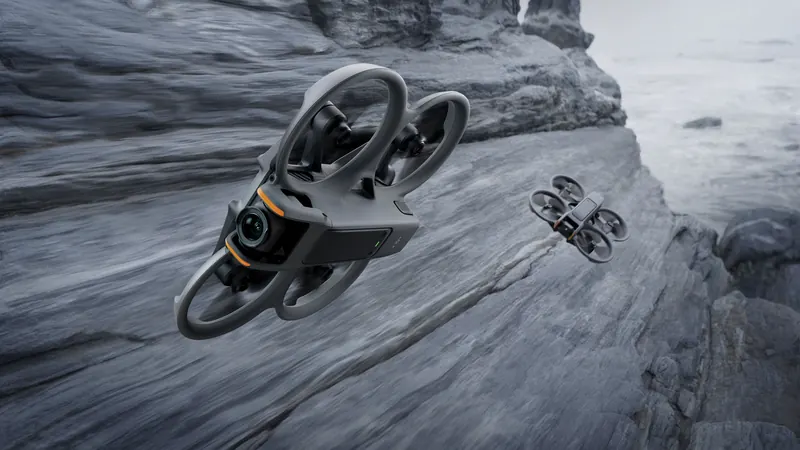
A DJI Avata 2 flying low over wet rock, a second Avata 2 behind it

What is FPV? First-person view drones explained

FPV stands for first-person view: you fly the drone while you watch the live video from its camera, usually in goggles.

Makers' documents read November 14, 2026; rules checked November 14, 2026

Rulebooks on who must see it
3
Register over, flying for fun
0.55lb
Avata 2 in Beginner mode
2.2mph
Goggles apart beside analog racers
3.3ft

What does FPV stand for? FPV means first-person view

An FPV drone sends live video from its camera to goggles or a screen, so you fly it from the drone's point of view.

FPV stands for first-person view. DJI calls its Avata 2 “an FPV (first-person view) drone”, and the FAA describes FPV devices as ones “which allow a view from an onboard camera but limit the operator's ability to scan the surrounding airspace”. DJI's goggles have two screens, “giving you a real-time FPV experience”.

What makes an FPV drone different, in DJI's words: the Avata 2 “requires a DJI Goggles series product, a DJI RC Motion series product, or a DJI FPV Remote Controller product to operate”. Antigravity draws the line another way: “camera drones and FPV drones limit your view to the flight path”, while its own FreeMotion mode lets you look around without changing course.

This page explains what FPV is in the words of the makers and the FAA, and quotes each U.S. rule on who must still see the drone. It names no shop, league or kit, and recommends no product.

Goggles put the drone's live view on two screens in front of your eyes.

How an FPV system works: FPV camera, video link and goggles

Three parts: the camera on the drone, a video transmitter that sends its live video, and the goggles that show it.

Three parts make an FPV system: the FPV camera on the drone, a video transmitter that sends its live video, and the goggles, the video receiver that shows it on two screens in front of your eyes. Before each FPV flight DJI asks you to make sure the goggles work “and display the video transmission” from the drone. If the control signal or the video feed is lost, the Avata 2 starts its failsafe return to home, when it is set to do so.

Goggles block your view of the world around you. DJI Goggles 3 “are equipped with binocular cameras”, so you can see your surroundings, which DJI calls Real View, without taking the goggles off.

One FPV system: the drone with its camera, the goggles and a motion controller.
Real View: the goggles' own cameras show what is around you.

FPV drone components on a self-built drone

On a self-built FPV drone, the camera and the video transmitter can come as one unit.

DJI's FAQ for its FPV air units lists a “camera module” and an “image transmission module”, wired to the drone's flight controller, and says they work only with DJI's own goggles and remote controllers: “Third-party flight goggles are not supported.” For drone racing, the same FAQ says these units have a racing mode on the race-band frequencies of analog video systems, and advises keeping goggles at least 3.3 ft (1 m) apart when you fly beside analog racing drones.

A drone you build yourself does not have to be made with Remote ID. What that means when you fly it is in the Remote ID section below.

A ready-made FPV kit: the drone, goggles, controller, batteries and charging hub.

Racing beside analog drones

DJI's air units have a racing mode on the analog race bands. Keep goggles at least 3.3 ft (1 m) apart.

Types of FPV drones, as the makers describe them

One FPV drone first and foremost, two small drones that also fly with goggles, and a drone with a 360° camera.

The drones in our records that their makers describe for flying with goggles: one FPV drone first and foremost, two small drones that also fly with goggles, and a drone with a 360° camera flown with goggles. Each card keeps the maker's own description.

  • Remote ID in the U.S.: “Built in” means the FAA has accepted a Remote ID declaration for the drone; “Only with” a named battery means the maker says it broadcasts only with that battery; “No FAA declaration” means the FAA list has none.
  • Weight at takeoff: the line on each weight bar is 0.55 lb (249 g): above it, a drone flown for fun is registered.
DJI Avata 2: built-in propeller guards, flown only with goggles.

4 drones flown with goggles, as their makers describe them, read November 14, 2026. Weight and Remote ID from our drone records.

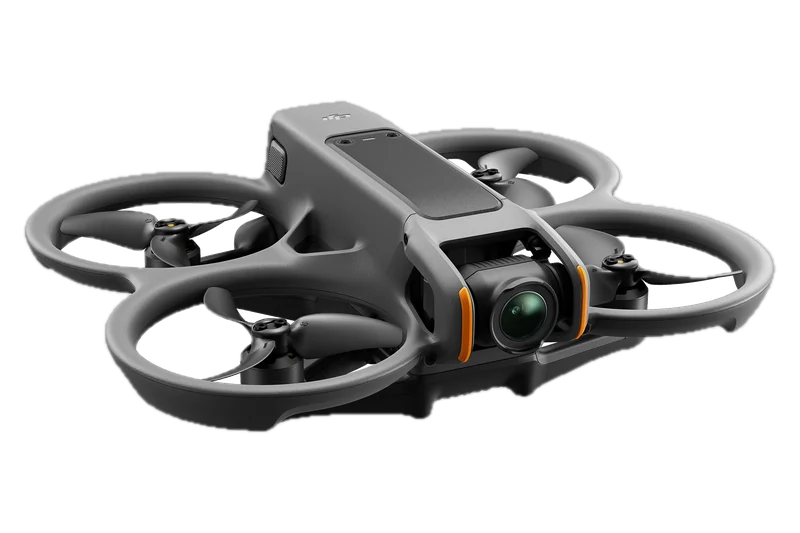
FPV droneThe DJI Avata 2 cinewhoop from the front quarter, with built-in propeller guards and the camera in its nose.Guards built in

DJI Avata 2

“A compact and portable FPV camera drone equipped with built-in propeller guards”

Weight at takeoff

About 377 g (13.3 oz)

Remote ID in the U.S.
Built in
Goggles
DJI Goggles 3, Goggles N3, Goggles 2 or Goggles Integra
Controllers
DJI RC Motion 2 or 3, or DJI FPV Remote Controller 2 or 3; Manual mode needs the FPV Remote Controller
Flies without goggles
No. DJI's FAQ: “Can I use DJI Avata 2 without the goggles? No.”
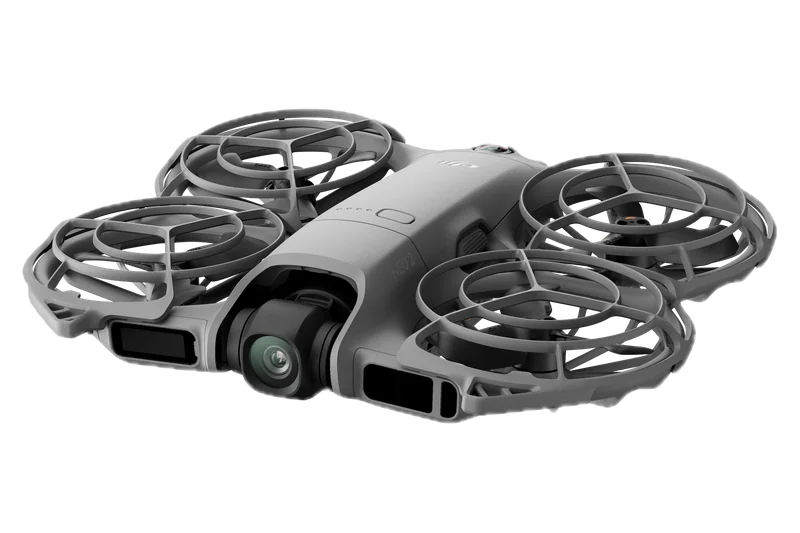
Small droneThe DJI Neo 2 from the front quarter, its four propellers inside full cages and the camera between the front sensors.Guards built in

DJI Neo 2

A small drone flown with the phone, the DJI RC-N3 controller or your palm, or with goggles and a motion controller

Weight at takeoff

151 g (5.3 oz); 160 g (5.6 oz) with the DJI Neo 2 Digital Transceiver

Remote ID in the U.S.
No FAA declaration
Goggles
DJI Goggles N3
Controllers
DJI RC Motion 3, with the DJI Neo 2 Digital Transceiver installed; also the DJI RC-N3 or the phone
Flies without goggles
Yes: with the RC-N3, the phone or your palm
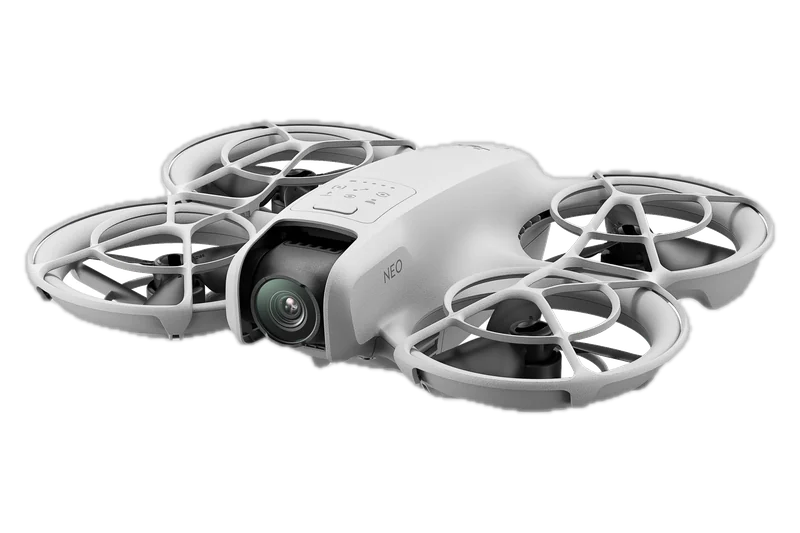
Small droneDJI Neo studio cutout with its full propeller guardsGuards built in

DJI Neo

A small drone flown with the phone or your palm; its manual also refers to goggles

Weight at takeoff

About 135 g (4.8 oz)

Remote ID in the U.S.
No FAA declaration
Goggles
Its manual refers to goggles but names no model
Controllers
None named in its manual
Flies without goggles
Yes: with the phone or your palm
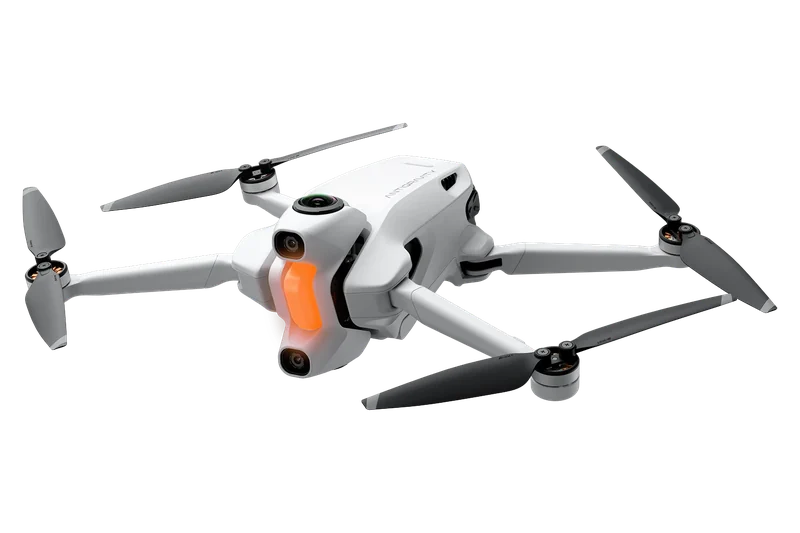
360° camera droneA white Antigravity A1 with its arms unfolded and 360 lenses above and belowGuards optional

Antigravity A1

A drone that “combines advanced hand-eye coordination technology with an immersive flying experience”, with a camera that records 8K 360° video

Weight at takeoff

249 g (8.8 oz); 291 g (10.3 oz) with the High-Capacity Flight Battery

Remote ID in the U.S.
Only with the High-Capacity Flight Battery
Goggles
Antigravity Vision goggles
Controllers
Antigravity Grip Motion controller, in FreeMotion mode or FPV mode
Flies without goggles
Not stated in the documents we read

How to fly FPV: motion controller or remote control

Two ways: steer with one hand on a motion controller, or fly with a remote control.

The makers' FPV drones are flown in one of two ways. With a motion controller, such as DJI's RC Motion or Antigravity's Grip Motion, you steer with one hand: Antigravity calls its FreeMotion mode “Just point and fly”, and adds, “For more direct control, switch to FPV mode.” The other way is a remote control: on the Avata 2, Manual mode is “Classic FPV aircraft control mode with the highest maneuverability”, and it needs the DJI FPV Remote Controller.

DJI sets the Avata 2's first flight to Beginner mode by default, at no more than 2.2 mph (1 m/s). Our guide to how to fly a drone covers the sticks, the checklist, takeoff and landing from the makers' manuals.

Motion controller: point and fly.
Remote control: Manual mode.

Yes, but someone must be able to see the drone. Each U.S. rulebook says in its own words who must still be able to see the drone, and this page quotes all three, side by side but never merged.

Each U.S. rulebook says in its own words who must be able to see the drone when you fly FPV. They are quoted here one by one, not combined: which one applies depends on how you fly.

  • Flying for fun

    A visual observer next to you. The law lets someone beside you keep the drone in sight, and the FAA says one is necessary when you fly with goggles.

    Observer
    The exact rule
    The aircraft is flown within the visual line of sight of the person operating the aircraft or a visual observer co-located and in direct communication with the operator. 49 U.S.C. 44809(a)(3), Exception for limited recreational operations of unmanned aircraft

    What it means: the FAA's guidance for recreational flyers says, “The use of a VO is necessary if the recreational flyer wants to use first person view (FPV) devices” (AC 91-57D, 2.2.3.1). A VO is a visual observer, and co-located means close enough to talk to you directly “without the use of technological assistance”; the FAA's recreational page says “co-located (physically next to)”.

  • Part 107

    The pilot keeps the ability to see it. Goggles may be used, but they don't meet the line-of-sight rule; a visual observer may do the watching.

    In sight
    The exact rule
    With vision that is unaided by any device other than corrective lenses, the remote pilot in command, the visual observer (if one is used), and the person manipulating the flight control of the small unmanned aircraft system must be able to see the unmanned aircraft throughout the entire flight … 14 CFR 107.31(a), Visual line of sight aircraft operation; and 14 CFR 107.33, Visual observer

    What it means: the watching may be done by the remote pilot in command and the person at the controls, or by a visual observer (107.31(b)). With an observer, all of them keep effective communication at all times and keep track of the drone “through direct visual observation” (107.33). The FAA's Part 107 guidance: “First person view devices may be used during operations, but do not satisfy the VLOS requirement”, and the pilot and the person at the controls “must maintain the capability to see the small unmanned aircraft” (AC 107-2A, 5.9.1 and 5.9.2). The FAA can waive 107.31 and 107.33 (107.205).

  • Remote ID module or FRIA

    The person at the controls sees it at all times, when the drone broadcasts through a module, or flies without Remote ID at a FRIA.

    At the controls
    The exact rule
    The person manipulating the flight controls of the unmanned aircraft system must be able to see the unmanned aircraft at all times throughout the operation. 14 CFR 89.115(a)(2)(ii), Remote identification broadcast modules; the same words in 89.115(b)(2), FAA-recognized identification areas

    What it means: this sentence applies when a drone broadcasts Remote ID through a broadcast module, and when a drone without Remote ID flies inside an FAA-recognized identification area (FRIA). In part 89 the words “able to see” appear only in this section, so a drone with built-in Remote ID has no such sentence. The FAA says the Remote ID rule “does not relieve any existing visual-line-of-sight requirements”, and that it adds a separate one for drones with a broadcast module (86 FR 4411).

The FAA also suggests guidelines for clubs that support FPV: an FPV pilot should be proficient without FPV first, preflight the FPV video, control, power and mechanical systems, and fly with observers who watch the drone and the airspace at all times. These are suggestions for community-based organizations, not rules on the flyer (AC 91-57D, 3.3.2.3.1).

The pilot flies by video; the person beside them keeps the drone in sight.

Can I fly here?

Who must see the drone is one rule. Where you may fly is another: check the place first.

Can I fly here?

What the makers say about FPV goggles and line of sight

DJI says goggles don't satisfy line of sight; Antigravity says a visual observer near you is essential in FPV mode.

What each maker's own documents say about flying with goggles:

  • DJI, in the Avata 2 and Neo 2 manuals (p. 11 and p. 12): “Using the goggles does not satisfy the requirement of visual line of sight (VLOS). Some countries or regions require a visual observer to assist during flight.”
  • DJI, for the Neo: No note on goggles in its manual; DJI's Neo FAQ says to “fly within a visual line of sight”.
  • Antigravity, in the A1 manual (p. 113): “While the operator is controlling the aircraft in FPV mode, it is essential to have a visual observer situated near the operator.”

DJI's flight-limits notes for the Avata 2 add: “Only fly the aircraft within a visual line of sight.”

Goggles on, someone beside you watching the drone.

Remote ID and registration for an FPV drone, home-built included

A drone that is registered, or has to be, must broadcast Remote ID.

Every drone must be registered with the FAA, except one of 0.55 lb (249 g) or less flown only for fun under the recreational exception; under Part 107 a drone is registered whatever it weighs. A drone that is registered, or has to be, must broadcast Remote ID: built in, with a broadcast module, or with neither only inside a FRIA.

  • DJI Avata 2

    Built in. Built-in Remote ID that “meets the requirements of 14 CFR Part 89” and broadcasts automatically from takeoff to shutdown.

    Built in
  • Antigravity A1

    By battery. In the U.S., with the Standard Flight Battery, Remote ID broadcasting is not required; with the High-Capacity Flight Battery, Remote ID is switched on automatically. Antigravity adds: “in the United States, Remote ID is required for commercial purposes, even for drones weighing under 250 g”.

    By battery
  • DJI Neo and Neo 2

    No statement. Neither manual makes a Remote ID statement, and both weigh under 0.55 lb. Flown only for fun they need no registration; flown under Part 107 they must be registered, and then the Remote ID rule applies.

    Part 107
  • A home-built drone

    A module or a FRIA. “Home-built unmanned aircraft means an unmanned aircraft that an individual built solely for education or recreation.” Remote ID's design and production rules do not apply to it, but its operating rules do: “a home-built unmanned aircraft without remote identification can only be operated in an FAA-recognized identification area”, unless it carries, for example, a broadcast module. So if it must be registered, it flies with a broadcast module or inside a FRIA.

    Module or FRIA
The Avata 2’s Remote ID is built in and broadcasts from takeoff to shutdown.

Remote ID, model by model

Our Remote ID guide explains the three ways to comply and lists every model we cover.

Does my FPV drone need Remote ID?

Questions about FPV

What does FPV stand for?

First-person view: you fly the drone while you watch the live video from its camera, usually in goggles.

What makes a drone an FPV drone?

You fly it by the live view from its camera. The FAA describes FPV devices as ones that give a view from an onboard camera but limit your ability to scan the airspace around you, and DJI says its Avata 2 needs DJI goggles, a DJI motion controller or a DJI FPV remote controller to operate.

What is the difference between a drone and an FPV drone?

An FPV drone is built to be flown by its camera view: DJI says the Avata 2 needs its goggles. Some small camera drones can be flown either way: DJI's Neo 2 flies with the phone, a controller or your palm, or with DJI Goggles N3 and a motion controller.

Is it illegal to fly an FPV drone?

Not as such, but each rulebook asks for someone who can see the drone. Flying for fun, the FAA says a visual observer next to you is “necessary” for FPV. Under Part 107, FPV devices “may be used during operations, but do not satisfy the VLOS requirement”. With a broadcast module or at a FRIA, the person at the controls must be able to see the drone.

Can you fly the DJI Avata 2 without goggles?

No. DJI's own FAQ asks “Can I use DJI Avata 2 without the goggles?” and answers “No.”

Do I need a license to fly FPV?

The same as any drone: flying only for fun, pass the FAA's free TRUST test before you fly; for anything else, you need the remote pilot certificate under Part 107, explained in our drone license guide.

Sources Named, not linked. Read November 14, 2026.

Documents are named, not linked. Each was read on November 14, 2026, and the rule texts, the advisory circulars' status and our drone records were read again on November 14, 2026.

Law and regulations

  • 49 U.S.C. 44809, Exception for limited recreational operations of unmanned aircraft: (a)(3) (U.S. Code, 2024 edition)
  • 14 CFR 107.3, 107.31, 107.33 and 107.205 (eCFR)
  • 14 CFR part 89, Remote Identification of Unmanned Aircraft: sections 89.1, 89.101, 89.105, 89.110, 89.115 and 89.501 (eCFR)
  • 14 CFR 48.15, registration (eCFR)
  • FAA final rule, Remote Identification of Unmanned Aircraft, 86 FR 4390 (January 15, 2021): 86 FR 4401 and 4411

FAA guidance and pages

  • FAA Advisory Circular 91-57D, Exception for Limited Recreational Operations of Unmanned Aircraft, June 24, 2025: 2.2.3.1 and 3.3.2.3.1
  • FAA Advisory Circular 107-2A, Small Unmanned Aircraft System (Small UAS), February 1, 2021: 5.9
  • FAA, Recreational Flyers & Community-Based Organizations, last updated October 29, 2026
  • FAA, How to Register Your Drone, last updated March 18, 2024

Makers

  • DJI Avata 2 User Manual v1.0 (May 2024) and DJI's Avata 2 FAQ
  • DJI Neo 2 User Manual v1.2 (December 2025)
  • DJI Neo User Manual v1.2 (November 2024), DJI's Neo specs page and Neo FAQ
  • Antigravity A1 User Manual V2.0 and Antigravity's U.S. product page for the A1, with its FAQ
  • DJI, FAQ for its FPV air units
  • Our drone records: weight and Remote ID for each model, from each maker's own pages and the FAA list of Remote ID declarations

Photos: DJI press images. Product photos by Antigravity.