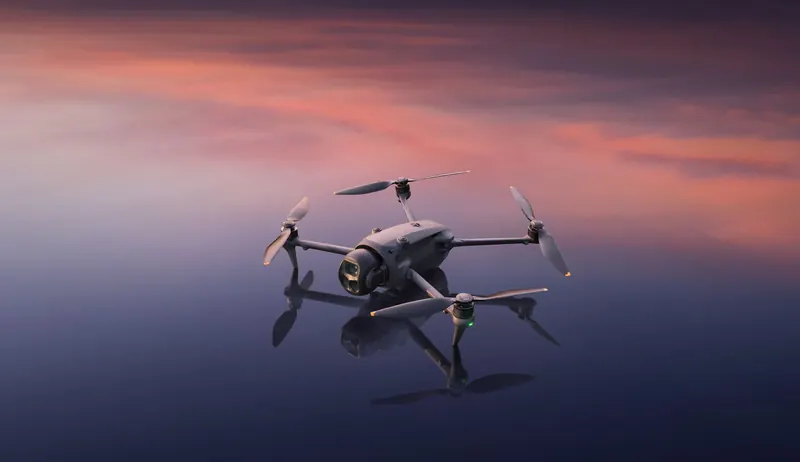
DJI ban in the U.S.: can you still buy and fly DJI drones?
Yes, you can keep flying a DJI drone you own: FAA rules treat it like any other drone.
- On the FCC Covered List since
- Dec 222025
- DJI Remote ID declarations the FAA accepted
- 55
- Import duty, drones of 55 lb or less
- 25%
- Update waiver runs to at least
- 2029
DJI drones in the U.S.: status on November 13, 2026
Models that received FCC authorization before December 22, 2025 may still be imported and sold, but new DJI models cannot get one, and DJI's own U.S. online store sells no drones.
If you own one
It's legal to fly it under the usual FAA rules. The FCC listing does not revoke the authorization of DJI drones already sold, and the FCC says even its proposed import bans would not affect continued use of drones people already bought.
What owners needIf you want to buy one
DJI drones and every other foreign-made drone have been on the FCC Covered List since December 2025, so new DJI products cannot get FCC equipment authorization and cannot be legally marketed or imported. Models that received FCC authorization before the listing may still be imported or sold, but DJI's own U.S. online store lists no drones at all.
Where to buyWhat you hear, and what is true
What people say about the DJI ban, and what the documents say on November 13, 2026.
- “DJI is banned”
Not for owners. The FCC listing stops new authorizations; it does not revoke existing ones, and FAA flying rules do not name any maker.
Owners fly - “No new FCC approval”
True since December 22, 2025: equipment on the Covered List cannot get a new FCC equipment authorization, so new DJI drone models cannot be legally marketed or imported.
True - “DJI stopped selling here”
True of DJI's own U.S. online store, which lists no drones, and DJI's U.S. site has no page for six newer models. Models authorized before the listing may still be imported or sold, even if DJI does not sell them.
Partly - “Held at customs”
A separate track: DJI says U.S. Customs and Border Protection has held some DJI imports under a forced-labor law; DJI denies using forced labor. DJI is not on the DHS UFLPA Entity List.
Separate - “Illegal to fly”
False for private owners: FAA rules do not name any maker. Some federal and state laws limit which drones government agencies may buy and fly; they do not bind private owners.
False - “DJI recall”
There is none: the U.S. Consumer Product Safety Commission's recall database lists no recall naming DJI.
None
Find your DJI drone model
Each line of DJI drones, with what DJI's own sites and the FAA showed on November 13, 2026. Every model in the table can be flown under the usual FAA rules.
| Model | Sold by DJI in the U.S. | DJI's U.S. site | Built-in Remote ID (FAA) | Can you fly it |
|---|---|---|---|---|
| DJI Mini 4K | No | Product page | None on file | Yes, under FAA rules |
| DJI Mini 5 Pro | No, never released here | None; DJI's UK site has one | Yes, FAA accepted | Yes, under FAA rules |
| DJI Mini 4 Pro | No | Product page | Yes, FAA accepted | Yes, under FAA rules |
| DJI Mini 3 Pro | No | Support page only | Yes, FAA accepted | Yes, under FAA rules |
| DJI Mini 3 | No | Product page | Yes, FAA accepted | Yes, under FAA rules |
| DJI Mini 2 / Mini 2 SE / Mini SE | No | Mini 2 SE: product page shared with the Mini 4K; Mini 2 and Mini SE: support page only | None on file | Yes, under FAA rules |
| DJI Mavic Mini | No, discontinued | Support page only | None on file | Yes, under FAA rules |
| DJI Neo 2 | No, never released here | None; DJI's UK site has one | None on file | Yes, under FAA rules |
| DJI Neo | No | Product page | None on file | Yes, under FAA rules |
| DJI Flip | No | Product page | None on file | Yes, under FAA rules |
| DJI Air 3S | No | Product page | Yes, FAA accepted | Yes, under FAA rules |
| DJI Air 3 | No | Product page | Yes, FAA accepted | Yes, under FAA rules |
| DJI Air 2S | No | Support page only | Yes, FAA accepted | Yes, under FAA rules |
| DJI Mavic Air 2 | No, discontinued | Support page only | Yes, FAA accepted | Yes, under FAA rules |
| DJI Mavic Air | No, discontinued | Support page only | None on file | Yes, under FAA rules |
| DJI Mavic 4 Pro | No, never released here | None; DJI's UK site has one | Yes, FAA accepted | Yes, under FAA rules |
| DJI Mavic 3 Enterprise / Thermal / Multispectral | Unknown | Enterprise line, sold by dealers | Yes, FAA accepted | Yes, under FAA rules |
| DJI Mavic 3 Pro | No | Product page | Yes, FAA accepted | Yes, under FAA rules |
| DJI Mavic 3 / Classic / Cine | No | Mavic 3 Classic: product page; Mavic 3: support page only; Cine: none | Yes, FAA accepted | Yes, under FAA rules |
| DJI Mavic 2 Pro / Zoom | No, discontinued | Support page only | Yes, FAA accepted | Yes, under FAA rules |
| DJI Mavic Pro / Platinum | No, discontinued | Support page only | None on file | Yes, under FAA rules |
| DJI Avata 360 | No | None; DJI's UK site has one | Yes, FAA accepted | Yes, under FAA rules |
| DJI Avata 2 (and Avata) | No | Avata 2: product page; Avata: support page only | Yes, FAA accepted | Yes, under FAA rules |
| DJI FPV (2021) | No | Support page only | Yes, FAA accepted | Yes, under FAA rules |
| DJI Inspire 3 (and Inspire 2/1) | No | Inspire 3: product page; Inspire 2 and Inspire 1: support page only | Only Inspire 3 | Yes, under FAA rules |
| DJI Phantom 3/4 series | No | Phantom 4 Pro V2.0: support page only | Only Phantom 4 Pro V2.0 and Phantom 4 RTK | Yes, under FAA rules |
| DJI Spark | No, discontinued | Support page only | None on file | Yes, under FAA rules |
| DJI Matrice 4T / 4E / 4TD | Unknown | Enterprise line, sold by dealers | Yes, FAA accepted | Yes, under FAA rules |
| DJI Matrice 400 | Unknown | Enterprise line, sold by dealers | Yes, FAA accepted | Yes, under FAA rules |
| DJI Matrice 30 / 30T | Unknown | Enterprise line, sold by dealers | Yes, FAA accepted | Yes, under FAA rules |
| DJI Matrice 350 RTK (and 300) | Unknown | Enterprise line, sold by dealers | Yes, FAA accepted | Yes, under FAA rules |
| DJI Agras (T40/T50/T100) | Unknown | Farm line, sold by dealers | Yes, FAA accepted | Yes, under FAA rules |
| DJI FlyCart 30/100 | Unknown | Product page | Yes, FAA accepted | Yes, under FAA rules |
- Sold by DJI: “No” means DJI's own U.S. online store does not list it. Enterprise and farm lines are sold through dealers, so the table says “Unknown”.
- Remote ID: “None on file” means the FAA lists no accepted declaration for that model. When the drone must be registered (any flight that is not only for recreation, or a drone over 0.55 lb), fly it with a Remote ID broadcast module or inside an FAA-recognized identification area.
- Not in the table: the DJI Lito X1 and Lito 1, which DJI's UK site lists and its U.S. site does not; their FCC status was not settled for this page. FCC grant dates are left out too: the FCC's own equipment authorization search could not be read.
- New DJI drone models need a new FCC equipment authorization, which DJI cannot get while it is on the Covered List.
Current DJI drones: if you already own one
Yes, fly it. The FAA sets its rules by weight, purpose and equipment, never by maker.
- Flying it
Legal, under the same FAA rules as any other drone.
FliesWhy it's legal
It's legal to fly a DJI drone you own. FAA rules for registration and Remote ID set conditions by weight, purpose and equipment, never by maker, and the FCC listing did not revoke the authorization of existing DJI drones. The FCC says even its pending import proposals would not affect continued use of drones you already bought, and DJI says owners can keep using the DJI products they already have.
- Registration and Remote ID
Register it unless you fly it only for recreation and it weighs 0.55 lb (249 g) or less at takeoff, and broadcast Remote ID when it is registered or must be.
Over 0.55 lbThe exact rule
Register a drone unless you fly it only for recreation and it weighs 0.55 lb (249 g) or less at takeoff. A drone that is registered, or has to be, must broadcast Remote ID: built in, with an FAA-accepted declaration of compliance for the model, or through a listed Remote ID broadcast module. Without either it may fly only inside an FAA-recognized identification area (FRIA), with the drone and the person at the controls inside it and the drone within visual line of sight.
Except as otherwise authorized by the Administrator or as provided in § 89.120, after September 16, 2023, no person may operate an unmanned aircraft within the airspace of the United States unless the operation meets the requirements of § 89.110 or § 89.115.
14 CFR 89.105, Remote identification requirement (eCFR)What it means: a drone that is registered, or must be, flies with Remote ID built in (section 89.110), with a broadcast module, or only inside an FAA-recognized identification area (section 89.115), whoever made it.
Which DJI models have Remote ID
The FAA lists 55 accepted DJI Remote ID declarations, and it accepted a new one, for the Avata 360, on February 13, 2026, after DJI was listed: the FAA process has not changed for DJI. DJI models with no declaration include the Neo, Neo 2, Flip, Mini 4K, Mini 2, Mini 2 SE, Mini SE, Mavic Mini, Spark, Mavic Air, Mavic Pro and Inspire 2.
- Firmware updates and repairs
Updates keep coming to drones authorized before December 22, 2025, and DJI's own service system handles repairs.
ContinueWhere this comes from
DJI drones authorized before December 22, 2025 may keep receiving software and firmware updates that mitigate harm to U.S. consumers, under an FCC waiver that runs to at least January 1, 2029, and that waiver stays in effect under the FCC's July 2026 order. DJI's U.S. store says DJI's own service system handles technical diagnosis, warranty assessment and repair for U.S. customers.
Can I fly here?
Check the place and the hour before you take off: airspace, temporary no-fly zones and parks.
Can I fly here?If you want to buy a new DJI drone
New DJI drones are harder to find in the U.S. Models authorized before the listing can still be sold, though DJI's own U.S. store lists no drones.
- DJI's U.S. store
102 products and no drone.
No dronesWhere this comes from
DJI's own U.S. online store lists 102 products, from handheld cameras and gimbals to microphones and power stations, and no drone. The store is run by BRICART Inc., founded in 2026, which handles sales and returns. On DJI's U.S. site the Mini 4 Pro page still has a Buy Now link, but it ends on the store's account page.
- Older models
Can still be sold if they received FCC authorization before the listing.
On saleThe exact rule
DJI drones that received FCC authorization before the listing can still be sold. The only FCC import and marketing ban in force covers equipment added to the Covered List in 2024 or earlier, and the FCC said that ban does not affect equipment added in 2025 or 2026, such as foreign-made drones. Such models may still be imported or sold, even if DJI does not sell them here.
- Six newer models
No page on DJI's U.S. site: the Mini 5 Pro, Mavic 4 Pro, Neo 2, Lito X1, Lito 1 and Avata 360.
Not hereWhere this comes from
Six newer models have no page on DJI's U.S. site, while DJI's UK site, outside the U.S., has one for each: the Mini 5 Pro, Mavic 4 Pro, Neo 2, Lito X1, Lito 1 and Avata 360. The FAA has accepted Remote ID declarations for the Mavic 4 Pro (May 2025) and the Mini 5 Pro (September 10, 2025).
- Online marketplaces
Must show the FCC ID of certified devices at the point of sale.
Since Oct 13The exact rule
Since October 13, 2026, online marketplaces count as marketing under FCC rules and must show the FCC ID of certified devices at the point of sale.
- Import duty
25 percent on drones of about 55 lb (25 kg) or less, 100 percent on heavier ones.
25%The exact rule
Import duties: since September 3, 2026, drones of about 55 lb (25 kg) or less imported into the U.S. carry a 25 percent section 232 duty; heavier drones, drones with thermal imagers, docking stations and listed parts carry 100 percent.
Looking at other makers?
Drones that are not DJI, model by model, with their weight and Remote ID.
DJI alternativesHow the DJI ban happened: the NDAA and a national security determination
A 2024 defense law gave the government a year to review DJI. Two days before the deadline, a determination put DJI, and every foreign-made drone, on the FCC’s list.
-
A one-year review
Dec 23, 2024The FY2025 National Defense Authorization Act became law. If no agency finished the review of DJI and Autel equipment in a year, the FCC had to list it anyway.
The exact rule
The FY2025 National Defense Authorization Act became law on December 23, 2024. Its section 1709 gave an appropriate national security agency one year to decide whether communications or video surveillance equipment from DJI and Autel, and from their subsidiaries, affiliates, partners, joint ventures and licensees, poses an unacceptable risk. If no agency completed the review by December 23, 2025, the law said the FCC must add that equipment to its Covered List anyway.
Public Law 118-159, section 1709 -
No agency named
Nov 2025DJI said in November 2025 that the law named no agency to do the review and that none had stepped forward.
-
A national security determination
Dec 21, 2025On December 21, 2025 a White House-convened interagency body issued a National Security Determination: drones and drone parts produced in any foreign country, and all section 1709 equipment, pose unacceptable risks.
-
What the list does
On the Covered List
Dec 22, 2025The FCC added both to the Covered List the next day, December 22, 2025.
-
Toy drones off the list, not DJI’s
Jun 15, 2026On June 15, 2026 the FCC took small toy drones (5.3 oz, 150 g, or less, with no camera, no GPS and more) off the list, but not ones made by a section 1709 company such as DJI.
Two parts
So the listing has two parts: one by place of production, which takes in every foreign-made drone model, and one by maker, which names DJI and Autel.
Exemptions DJI can’t use
The FCC exempted drones on the Blue UAS list and U.S.-made (Buy American) drones, now until January 1, 2028, but those exemptions do not cover section 1709 devices such as DJI's. Other foreign makers can get an FCC Conditional Approval; no DJI product holds one.
What the FCC Covered List does: blocking new foreign drone authorizations
The Federal Communications Commission's listing stops new authorizations; it does not revoke existing ones.
- New DJI models
No FCC equipment authorization, so they cannot be marketed or imported.
BlockedThe exact rule
All equipment on the Covered List, as established pursuant to § 1.50002 of this chapter, is prohibited from obtaining an equipment authorization under this subpart.
47 CFR 2.903(a), Prohibition on authorization of equipment on the Covered List (eCFR)What it means: a new drone model needs an FCC equipment authorization before it can be marketed or imported, and DJI equipment cannot get one.
- Authorized drones
Existing drones may continue to be marketed, imported and used: the FCC’s July 2026 change looks forward only.
Still OKThe exact rule
The FCC's July 2026 change to its component rules looks forward only: previously authorized equipment may continue to be marketed, imported and used. That order, the Federal Communications Commission's Third Report and Order (FCC 26-50), took effect on October 13, 2026.
FCC 26-50; 91 FR 57798 - Changes to a model
A full new certification for any change to an authorized device.
New filingThe exact rule
It also requires Covered List makers such as DJI to get a full new certification for any change to an authorized device; DJI had told the FCC it opposed a blanket ban on such changes.
FCC 26-50
Three pending FCC proposals
None of these had become a final order at the FCC's November 6, 2026 Covered List update:
July 17, 2026
Ending imports and sales of previously authorized drones from nine named companies, eight small brands plus XAG. DJI itself is not named.
July 21, 2026
Ending imports and sales of previously authorized foreign drones in six categories, including drones of 55 lb or more, drones that can spray pesticides, thermal imaging, LiDAR and docking stations. Comments closed September 2, 2026, and the FCC refused to extend the deadline. DJI says the proposal could reach its FlyCart, agricultural, enterprise and dock products.
August 10, 2026
Ending imports and sales of Anzu Robotics drones, named as a section 1709 partner.
The FCC says these proposals would not affect continued use of drones people already bought.
Customs holds, drone imports and tariffs: separate tracks
Customs holds and import duties are not part of the FCC listing. They come from other agencies, on their own clock.
Duty on drones of about 55 lb (25 kg) or less, since September 3, 2026.
On heavier drones, drones with thermal imagers, docking stations and listed parts.
Lower cap when critical components are certified from listed allied countries; 10 percent for the UK.
On listed drone components, from February 9, 2027.
DJI says U.S. Customs and Border Protection has held some DJI drone imports under the Uyghur Forced Labor Prevention Act. DJI denies using forced labor, says it makes its drones in Shenzhen or Malaysia and calls the holds “a customs matter, not a ban”. DJI is not on the DHS UFLPA Entity List, last updated October 28, 2026.
Tariffs come from Commerce and the President, not the FCC. Commerce opened a section 232 national security investigation into drone imports on July 1, 2025, and Proclamation 11055, signed August 13, 2026, set the duties in force since September 3, 2026. Lower caps (15 percent, 10 percent for the UK) apply when critical components are certified from listed allied countries. A further 25 percent duty on listed drone components starts February 9, 2027.
Commerce's separate drone supply-chain action is still only an advance notice from January 3, 2025: no proposed or final rule has been published.
Government limits on Chinese drones: not a consumer drone ban
These rules bind agencies and federally funded buyers, not private owners.
Federal agencies
May not buy drones made or assembled by a covered foreign entity, and since December 22, 2025 may not operate them.
Florida agencies
Buy drones only from makers on a state-approved list.
Mississippi agencies
No drones made or assembled from Chinese parts.
Arkansas public entities
Stop operating drones from covered foreign entities.
Texas
The 2025 bill (HB 41) did not pass.
Private owners
None of these laws apply to you.
The American Security Drone Act, enacted December 22, 2023, bars federal executive agencies from buying drones made or assembled by a “covered foreign entity”. Since December 22, 2025, federal agencies may not operate such drones, and federal funds may not buy or operate them. A covered foreign entity is one on a Federal Acquisition Security Council list, which is to include entities domiciled in China. These rules bind agencies and federally funded buyers, not private owners.
The state laws in full
Some states limit their own agencies, for example:
- Florida: state and local government agencies may buy drones only from makers on a state-approved list, and had to stop using other drones by January 1, 2023.
- Mississippi: small drones the state buys must be made in the U.S. by an American-owned company; state agencies may not buy or operate drones made or assembled from Chinese parts (in force July 1, 2023).
- Arkansas: public entities may not buy small drones made or assembled by a covered foreign entity, and may not operate them from May 1, 2027.
- Texas: a 2025 bill on government use of certain foreign equipment (HB 41) did not pass.
Court cases and what is still pending for future DJI drones
DJI's request to the FCC had no decision as of mid-October 2026. These are the next dates already known.
DJI asked the FCC to reconsider its listing (ET Docket 26-22); oppositions were due April 6, 2026 and replies May 11, 2026. The FCC was still adding material to that docket on October 14 and 15, 2026, so no decision had been issued then. DJI also asked the Ninth Circuit to review the listing (No. 26-1029); on March 6, 2026 the FCC moved to dismiss that petition as premature while the reconsideration is pending.
| Date | What happens |
|---|---|
| A 25 percent duty on listed drone components begins. | |
| Arkansas public entities may no longer operate small drones made or assembled by a covered foreign entity. | |
| The FCC exemptions for Blue UAS and Buy American drones end. | |
| The earliest end of the FCC firmware and software update waiver. |
DJI ban timeline: what changed, and when
Every dated event with a primary source, newest first.
Open the timeline
| Date | What happened |
|---|---|
| DJI's U.S. online store (us.store.dji.com, operated by BRICART Inc.) lists 102 products and no drones; DJI's U.S. site has no product pages for Mini 5 Pro, Mavic 4 Pro, Neo 2, Lito X1, Lito 1 or Avata 360, which its UK site listsSource: DJI U.S. online store catalog; DJI U.S. and UK product pages | |
| FCC Covered List page updated; import and marketing prohibitions in force apply only to equipment added in 2024 or earlier; no DJI Conditional Approval listedSource: FCC Covered List page | |
| FCC places a letter from Senator Rick Scott supporting the listing into the DJI and Autel docketsSource: FCC Public Notice DA 26-1112 | |
| FCC Third Report and Order published as a final rule, effective October 13, 2026Source: Federal Register 91 FR 57798 (doc. 2026-18535) | |
| Section 232 drone duties take effect for goods entered from 12:01 a.m. Eastern (later date for Blue UAS and Conditional Approval products)Source: Proclamation 11055, clauses (1) and (7) | |
| FCC Anzu Robotics proposal (DA 26-832) published; comments due September 23, 2026Source: Federal Register 91 FR 54713 (doc. 2026-17193) | |
| Presidential Proclamation 11055 sets section 232 duties on imported drones: 100 percent on drones over 55 lb (25 kg), drones with thermal imagers, docking stations and listed parts; 25 percent on drones of 55 lb (25 kg) or less (published August 19, 2026)Source: Proclamation 11055, 91 FR 53699 | |
| FCC revokes the equipment authorizations of Odyssey Robot LLC (drone and controller) after a false U.S.-production claimSource: FCC Covered List page, Documents list (order August 11, 2026) | |
| FCC proposes ending import and marketing of previously authorized Anzu Robotics equipment (section 1709 partner)Source: FCC Public Notice DA 26-832, PS Docket 26-184 (91 FR 54713) | |
| FCC copycat-drone import and marketing proposal (DA 26-742) published; comments due August 31, 2026Source: Federal Register 91 FR 48108 (doc. 2026-15418) | |
| FCC Third Report and Order (adopted July 22, 2026): closes the component-part loophole, extends marketing rules to online marketplaces, requires Covered List entities to get full certification for device changes; the drone firmware-update waiver to January 1, 2029 stays in effectSource: FCC Third Report and Order FCC 26-50, ET Docket 21-232 | |
| FCC extends the Blue UAS and Buy American exemptions to January 1, 2028 and removes the end date for Conditional ApprovalsSource: FCC Public Notice DA 26-761 and FCC fact sheet July 21, 2026 | |
| FCC proposes ending import and marketing of previously authorized drones from nine named companies: eight small brands (Cogito, Fikaxo, Lyno Dynamics, Skyhigh Tech, Spatial Hover, SZ Knowact, WaveGo, Xtra) and XAG; DJI itself is not named; use of owned units unaffectedSource: FCC Public Notice DA 26-742, PS Docket 26-184 | |
| FCC ends import and marketing of previously authorized equipment added to the Covered List in 2024 or earlier; states this does not affect equipment added in 2025 or 2026 such as foreign-produced dronesSource: FCC Public Notice DA 26-635, PS Docket 26-72 | |
| FCC removes Toy Drones (5.3 oz, 150 g or less, no camera, no GPS, no app link and more) from the Covered List; drones made by section 1709 entities such as DJI are excluded from this exemptionSource: FCC Public Notice DA 26-588 | |
| FCC OET extends the firmware and software update waiver for drones authorized before December 22, 2025 to at least January 1, 2029 and widens it to Class II permissive changesSource: FCC Public Notice DA 26-454 | |
| FCC reply in support of its motion to dismiss DJI's Ninth Circuit petitionSource: FCC reply, Ninth Circuit No. 26-1029 (DktEntry 24.1) | |
| FCC proposes ending import and marketing of previously authorized equipment that was added to the Covered List in 2024 or earlier (not drones)Source: FCC Public Notice DA 26-294, PS Docket 26-72 | |
| First Conditional Approvals for foreign-produced drones received (SiFly, Mobilicom, ScoutDI, Verge); none for DJISource: FCC Covered List page, Conditional Approvals tab | |
| FCC and United States move to dismiss DJI's court petition as premature because the reconsideration petition is pending at the agencySource: FCC motion to dismiss, Ninth Circuit No. 26-1029 (DktEntry 17.1) | |
| FCC sets deadlines on DJI petition and Autel application: oppositions April 6, 2026, replies May 11, 2026Source: FCC Public Notice DA 26-223 | |
| FAA accepts DJI's Remote ID declaration for the Avata 360 (DVN3NT; DVN3XT on February 27, 2026), after DJI's listing: FAA Remote ID acceptance does not depend on the FCC Covered ListSource: FAA UAS Declarations of Compliance, RID000002650 | |
| FCC OET waiver: drones authorized before December 22, 2025 may keep receiving software and firmware updates that mitigate harm to U.S. consumers, at least until January 1, 2027Source: FCC Public Notice DA 26-69 | |
| DJI files a petition for reconsideration at the FCC (later ET Docket 26-22); Autel files an application for review (ET Docket 26-23)Source: FCC Public Notice DA 26-223 | |
| FCC exempts drones on the Blue UAS Cleared List and Buy American domestic end products until January 1, 2027; the determination does not apply to section 1709 (DJI, Autel) devicesSource: FCC Public Notice DA 26-22 | |
| Statutory one-year deadline in FY2025 NDAA section 1709(a) (one year after the December 23, 2024 enactment)Source: Public Law 118-159, section 1709(a) | |
| FCC adds foreign-produced UAS and UAS critical components and all section 1709 (DJI, Autel) equipment and services to the Covered List; covered equipment cannot receive new FCC equipment authorizationsSource: FCC Public Notice DA 25-1086 | |
| White House-convened interagency body issues a National Security Determination that UAS and UAS critical components produced in any foreign country pose an unacceptable risk, including all section 1709 (DJI, Autel) equipmentSource: FCC Public Notice DA 25-1086, Appendix B | |
| DJI says new-product launches could be blocked if listed and that owners could keep using drones they already own; calls customs holds a customs matter, not a banSource: DJI ViewPoints blog, What's Going On with DJI in the U.S.? | |
| DJI updates its customs post: some products still hard to get in the U.S.; it is working with the U.S. government to show UFLPA complianceSource: DJI ViewPoints blog, Navigating U.S. Customs (July 2025 update) | |
| Commerce opens a section 232 national security investigation into imports of drones and their parts (notice published July 16, 2025)Source: Federal Register 90 FR 31958 (doc. 2025-13365) | |
| FAA accepts DJI's Remote ID declarations for the Mavic 4 Pro (512 GB version May 16, 2025, 64 GB version May 27, 2025), naming FCC ID SS3-L3AB2410; DJI's U.S. site has no Mavic 4 Pro pageSource: FAA UAS Declarations of Compliance, RID000002376 and RID000002375 | |
| Commerce (BIS) publishes an advance notice of proposed rulemaking on foreign-adversary technology in drones (ICTS, RIN 0694-AJ72), comments to March 4, 2025; no proposed or final rule has followed in the Federal Register as of November 13, 2026Source: Federal Register 90 FR 271 (doc. 2024-30209) | |
| FY2025 NDAA enacted (Pub. L. 118-159); section 1709 gives a national security agency one year to decide whether DJI and Autel communications or video surveillance equipment poses an unacceptable risk; if no agency decides, the FCC must add that equipment to the Covered ListSource: Public Law 118-159, section 1709 (GPO govinfo) | |
| DJI says U.S. Customs and Border Protection is holding some DJI drone imports, citing the Uyghur Forced Labor Prevention Act; DJI denies any Xinjiang link and calls it a customs matter, not a ban (post first published October 2024, exact day not shown; CBP's own statement not found)Source: DJI ViewPoints blog, Navigating U.S. Customs (July 2025 update of the October 2024 post) | |
| American Security Drone Act of 2023 enacted (FY2024 NDAA, Pub. L. 118-31, secs. 1821-1832): federal agencies may not buy drones made or assembled by a covered foreign entity; federal operation and federal-funds bans start two years after enactmentSource: Public Law 118-31, sections 1823-1825 (GPO govinfo) |
Related pages
Fly it
Rules that apply to any drone, DJI included.
Buy one
DJI models and the drones that are not DJI.
Keep up
What changes next, and every rule in one place.
Questions about the DJI ban
What's going on with DJI in the U.S.?
Since December 22, 2025, DJI drones have been on the FCC Covered List, so new DJI models cannot get FCC authorization. Drones you already own still fly, and models authorized before the listing may still be sold. DJI has asked the FCC to reconsider and has gone to court.
Is the DJI ban lifted?
No. The FCC's Covered List, last updated November 6, 2026, still lists DJI, and no DJI product holds a Conditional Approval. DJI's request for reconsideration had no decision as of mid-October 2026.
Why is DJI banned in the U.S.?
The FY2025 National Defense Authorization Act set a one-year national security review of DJI and Autel equipment, with listing by default if no agency acted. On December 21, 2025 a White House-convened interagency body found that foreign-made drones, and all DJI and Autel equipment, pose unacceptable risks, and the FCC listed them the next day. DJI had said that no agency stepped forward to do the review.
What is on the DJI ban list?
The list people mean is the FCC Covered List. It names DJI and Autel equipment and every drone and drone part produced outside the U.S., and being on it blocks new FCC equipment authorizations. The model table shows where each DJI drone stands.
What happened with the DJI ban in 2025?
Commerce opened a section 232 investigation into drone imports on July 1, 2025, and DJI's July 2025 customs update said U.S. customs had held some DJI drone imports. In November DJI said no agency had stepped forward to do the NDAA review. The national security determination came on December 21 and the FCC listing on December 22, 2025, a day before the law's deadline.
What did the FCC do to DJI?
It added DJI equipment to the Covered List, which blocks new equipment authorizations. The listing does not revoke existing authorizations, and the FCC's July 2026 rule change leaves previously authorized equipment free to be marketed, imported and used.
Is the DJI Mini 4 Pro banned?
No. Nothing in the FCC listing stops you flying a Mini 4 Pro you own, and the FAA has accepted its Remote ID declaration. DJI's U.S. site still has its product page, but DJI's own U.S. online store no longer lists it: the Buy Now link ends on the store's account page.
What is the latest DJI ban update?
The FCC's Covered List page, updated November 6, 2026, still lists DJI, still limits the import ban in force to equipment listed in 2024 or earlier, and shows no DJI Conditional Approval. On November 13, 2026, DJI's own U.S. online store still listed no drones.
Is there a DJI recall?
No. The U.S. Consumer Product Safety Commission's recall database lists no recall naming DJI, and the FCC listing does not revoke the authorization of DJI drones already sold.
Can I still fly my DJI drone?
Yes. FAA rules apply to DJI drones exactly as to any other brand: register it unless you fly only for fun and it weighs 0.55 lb (249 g) or less, and fly with Remote ID when it is registered or must be.
Will my DJI drone still get firmware updates?
Yes, for now. An FCC waiver lets drones authorized before December 22, 2025 receive software and firmware updates that mitigate harm to U.S. consumers until at least January 1, 2029.
Sources Named, not linked. Checked November 13, 2026.
Documents are named, not linked. Each was read on November 13, 2026, and every date, deadline and status that could have moved was read again on November 13, 2026.
FCC
- FCC Covered List page: the November 6, 2026 update, its exemptions, prohibitions in force and Conditional Approvals
- FCC Public Notice DA 25-1086 and its Appendix B, the National Security Determination of December 21, 2025
- FCC Public Notices DA 26-22, DA 26-588 and DA 26-635: the Blue UAS and Buy American exemptions, toy drones, and the 2024-or-earlier import ban
- FCC Public Notices DA 26-69 and DA 26-454: the firmware and software update waiver
- FCC Third Report and Order, FCC 26-50, its public draft, and Federal Register 91 FR 57798
- FCC Public Notices DA 26-742, DA 26-758, DA 26-832 and Order DA 26-892: the three pending import proposals
- FCC Public Notices DA 26-223, DA 26-1106 and DA 26-1112: DJI's petition for reconsideration
- FCC motion to dismiss, Ninth Circuit No. 26-1029
Laws and regulations
- Public Law 118-159, section 1709 (FY2025 National Defense Authorization Act)
- Public Law 118-31, sections 1822 to 1825 (American Security Drone Act)
- 47 CFR 2.903: equipment on the Covered List
- 14 CFR 48.15 and 14 CFR 89.101, 89.105, 89.110, 89.115: registration and Remote ID
- Florida Statutes 934.50, Mississippi SB 2853 (2023), Arkansas Act 525 of 2023 and the Texas HB 41 (2025) bill history
Trade, customs and safety
- Proclamation 11055, 91 FR 53699: section 232 duties on drones
- Federal Register 90 FR 31958: the section 232 investigation
- Federal Register 90 FR 271: Commerce's drone supply-chain advance notice (RIN 0694-AJ72)
- DHS UFLPA Entity List
- U.S. Consumer Product Safety Commission recall database
- FAA UAS Declaration of Compliance list: Remote ID declarations
DJI's own pages
- DJI U.S. online store: its product catalog and About Us page
- DJI U.S. and UK product pages
- DJI ViewPoints: “What's Going On with DJI in the U.S.?” (November 20, 2025), “Navigating U.S. Customs” (July 2025 update) and the post of August 7, 2026
Report an error: support@windhorse.aero