Best drones for beginners
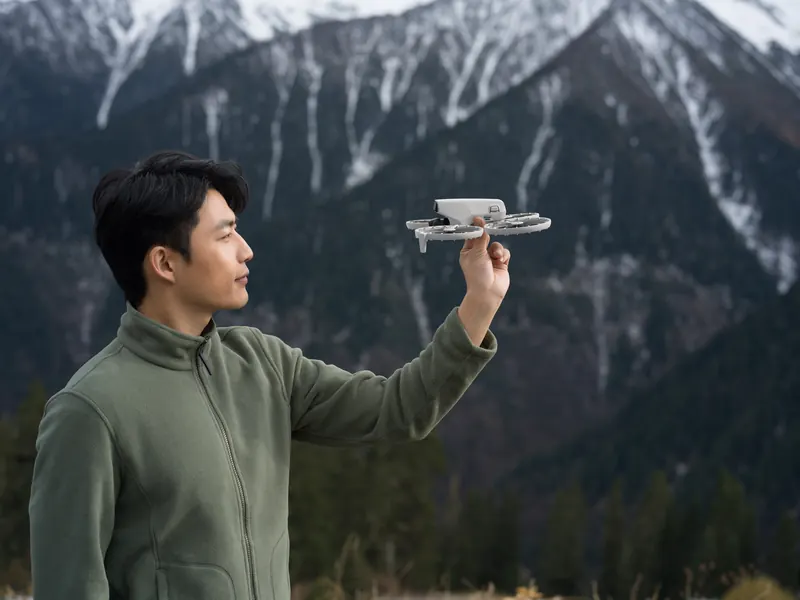
For a first drone, pick one under 0.55 lb with a Level 5 wind rating and guarded propellers: our first pick is the DJI Flip.
- Picks, in order
- 5
- No registration for fun up to
- 0.55lb
- Level 5 wind rating
- 23.9mph
- Longest flight, DJI Mini 4 Pro
- 34min
- FAA TRUST test, for every pilot
- Free
The best beginner drone for each kind of first flight
Five drones from the records our flight check uses, picked by the criteria below and placed in order.
 Guards built in
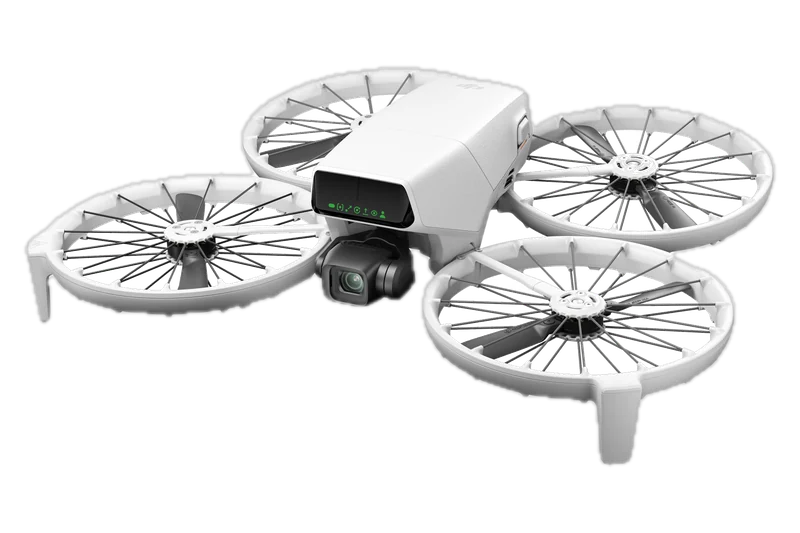
DJI Flip
Its propeller guard is built in, and it senses obstacles ahead and the ground below.
Under 8.8 oz (249 g) at takeoff
- Wind rating
- Level 5, 23.9 mph
- Flight time
- 31 min
- Senses
- Forward and downward
- Remote ID
- No FAA declaration
 Guards sold separately
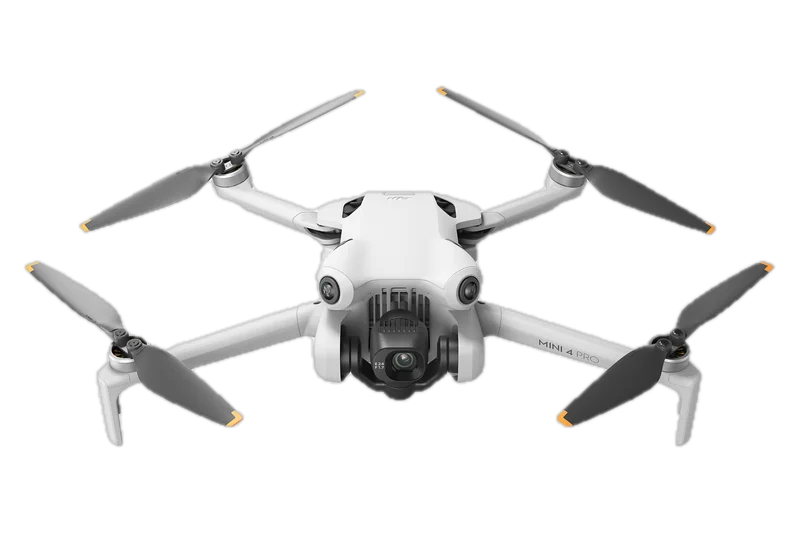
DJI Mini 4 Pro
All-round obstacle sensing and a 1/1.3-inch 48 MP camera.
Under 8.8 oz (249 g) at takeoff
- Wind rating
- Level 5, 23.9 mph
- Flight time
- 34 min
- Senses
- All directions
- Remote ID
- Only with Battery Plus
 Guards sold separately
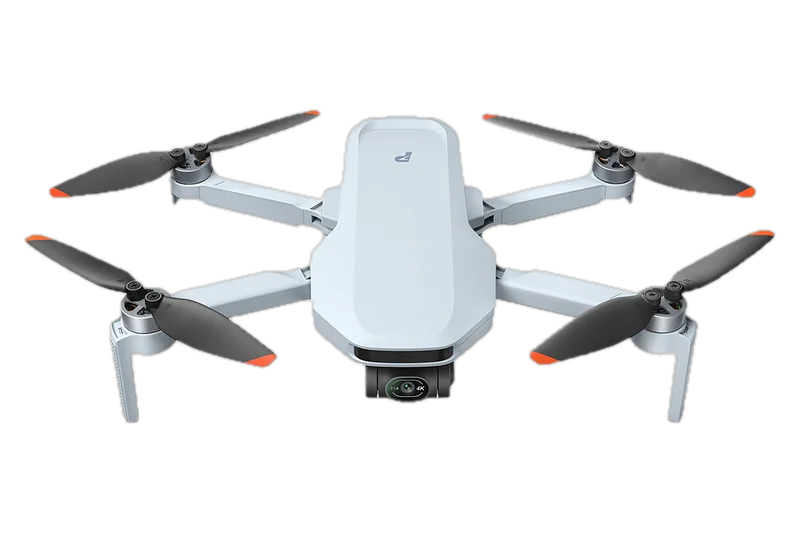
Potensic ATOM 2
Remote ID built in, so flying for work later needs no module.
Under 8.8 oz (249 g) at takeoff
- Wind rating
- Level 5, 23.6 mph
- Flight time
- 32 min
- Senses
- Downward only
- Remote ID
- Built in
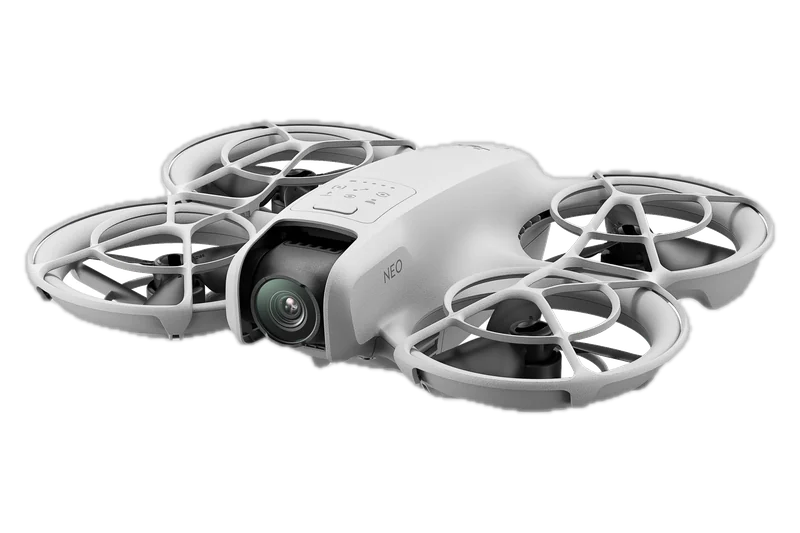 Guards in the box
DJI Neo
About 135 g, guards in the box and takeoff from your palm.
About 4.8 oz (135 g) at takeoff
- Wind rating
- Level 4, 17.9 mph
- Flight time
- About 18 min
- Senses
- Downward only
- Remote ID
- No FAA declaration
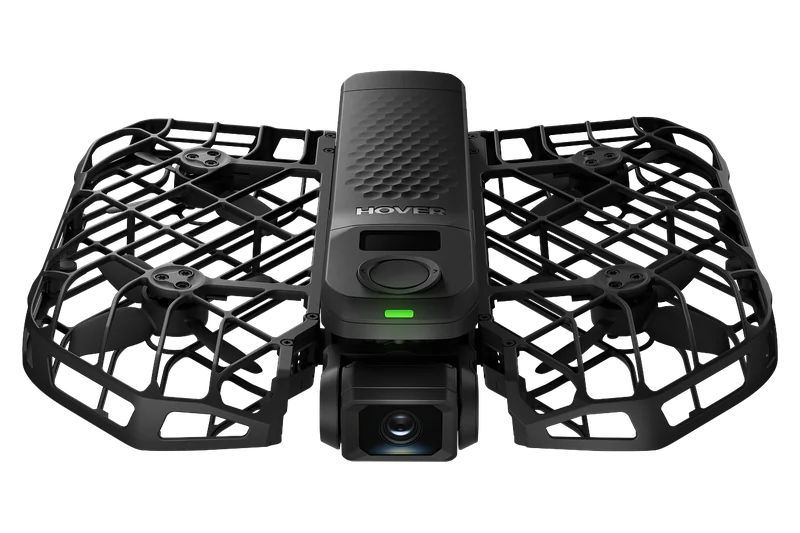 No guard named
HOVERAir X1 PRO
Takes off from the palm and needs no remote control.
6.8 oz (192 g) at takeoff
- Wind rating
- Level 5, 23.9 mph
- Flight time
- 16 min
- Senses
- Behind only
- Remote ID
- Built in
The line on each weight bar is 0.55 lb (249 g). Each weighs 0.55 lb (249 g) or less, so flown for fun it needs no FAA registration and no Remote ID; every pilot who flies for fun still needs the free TRUST test.
1. DJI Flip: the most forgiving first drone
Why: its foldable full-coverage propeller guard is built in, a first for DJI, and it senses obstacles ahead with 3D infrared and the ground below with vision and infrared. It weighs under 249 g, has a Level 5 wind rating (23.9 mph) and flies 31 minutes. DJI says that with the guard “even beginner pilots can navigate the skies with confidence”.
Rules: for fun, no registration and no Remote ID. The Flip has no FAA Remote ID declaration, so flown for work under Part 107 it needs a broadcast module or an FAA-recognized identification area (FRIA). Every figure and how DJI says to fly it by palm, app, voice or remote: DJI Flip.
Not known
Not known: whether stores other than DJI's still sell it. DJI's own U.S. online store lists no drones; Flips already bought fly legally.
2. DJI Mini 4 Pro: the camera drone to grow into
Why: all-round obstacle sensing, a 1/1.3-inch 48 MP camera, a Level 5 wind rating (23.9 mph) and 34 minutes in the air, at under 249 g. Its Normal and Cine modes hold it to 26.8 mph (12 m/s); only Sport mode reaches 35.8 mph (16 m/s). DJI calls it “an ideal choice for beginners”.
Rules: for fun with the standard battery, no registration and no Remote ID. Its built-in Remote ID is on only with the Intelligent Flight Battery Plus, which takes it over 0.55 lb; its propeller guard is sold separately and also takes it over 0.55 lb, so either one means registering it. The details are on our DJI Mini 4 Pro page.
Not known
Not known: whether stores other than DJI's still sell it. DJI's own U.S. store does not, and DJI's U.S. product page showed it out of stock on November 13, 2026.
3. Potensic ATOM 2: the non-DJI pick with Remote ID built in
Why: under 249 g, 32 minutes, a Level 5 wind rating (23.6 mph, Potensic's 38 km/h) and built-in Remote ID with an FAA-accepted declaration (RID000002237, March 7, 2025), so a pilot who later flies for work needs no module. Potensic's page says “Beginner? Professor!”.
Rules: for fun, no registration and no Remote ID; for work, register it, and the built-in Remote ID covers the broadcast.
Not known
Not known: whether it is still sold in the U.S.: the FCC listing of December 22, 2025 covers every foreign-made drone, not only DJI's, and this page did not check other makers. Potensic also says it “doesn't have obstacle avoidance”: it holds its place with a downward vision system, and guards are an accessory.
4. DJI Neo: the smallest, guards in the box
Why: about 135 g, propeller guards in the box and takeoff from your palm.
Rules: for fun, no registration and no Remote ID. It has no FAA Remote ID declaration, so flown for work it needs a broadcast module or a FRIA. Every figure and what DJI and the FAA say about flying it indoors: DJI Neo.
Not known, and its limits
Not known: whether stores other than DJI's still sell it; DJI's own U.S. store lists no drones. Its limits are known: a Level 4 wind rating (17.9 mph), one level below the other picks, so fly it on calm days only; about 18 minutes (about 17 with the guards); and DJI says it “does not support obstacle avoidance”.
5. HOVERAir X1 PRO: no controller, launch from the palm
Why: 192 g, a Level 5 wind rating, takeoff from the palm and no remote control needed (HOVERAir: “No Controller Required”); a rear ToF and vision sensor detect collisions behind it. HOVERAir calls its motion control “beginner friendly”.
Rules: for fun, no registration and no Remote ID. Its maker, Zero Zero Robotics, has two FAA-accepted Remote ID declarations, for models ZZ-H-1-003 and ZZ-H-1-004.
Not known
Not known: which of the two declarations is the X1 PRO, whether it is still sold in the U.S. (not checked), and whether a propeller guard exists: HOVERAir's page names none. It flies 16 minutes and senses only behind it.
Two alternates
Two alternates are in the table below: the DJI Mini 4K, the simplest of the DJI line with in-app flying tutorials, but downward sensing only and no Remote ID declaration; and the DJI Mini 3, with 38 minutes in the air, downward sensing only and Remote ID only with Battery Plus.
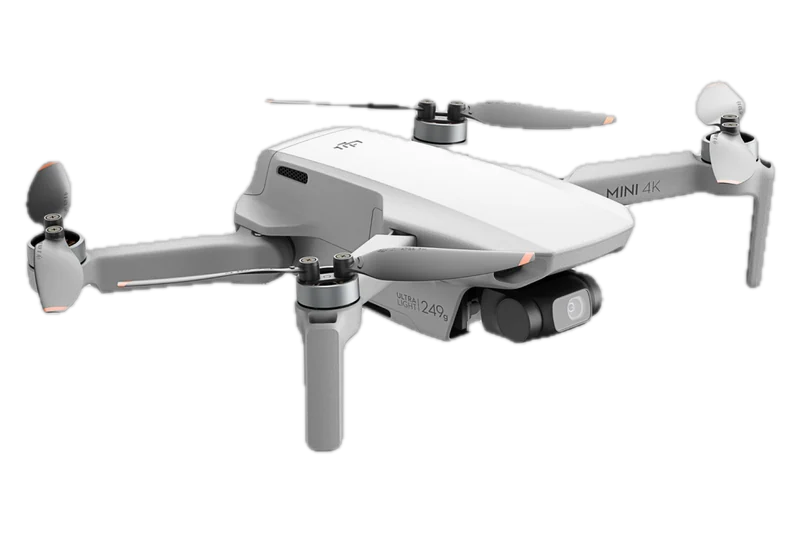
DJI Mini 4K
8.7 oz · 31 min
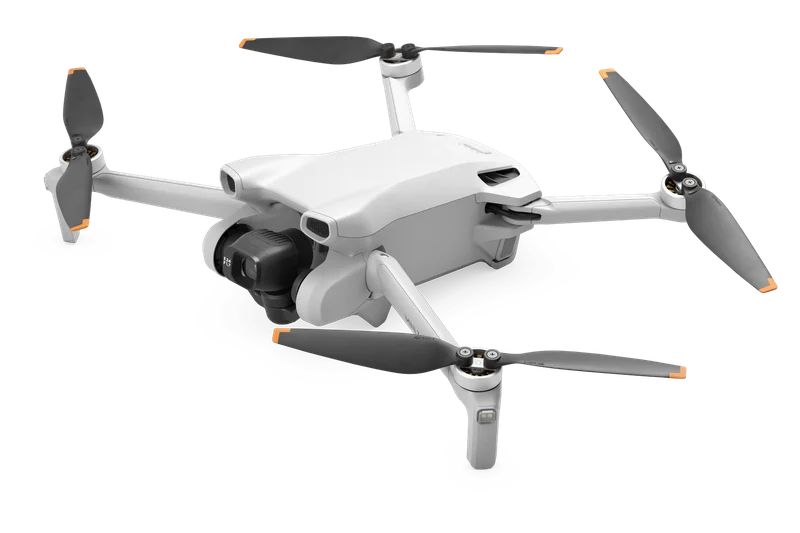
DJI Mini 3
8.7 oz · 38 min
How we choose the best drones for beginners
Seven criteria, applied in this order. The first three put a drone in or out of the list; the other four place it.
- 0.55 lb (249 g) or less at takeoff, as sold. Flown for fun, such a drone needs no FAA registration and no Remote ID. 0.55 lb is 249.48 g, so a maker's “under 249 g” is inside the line. DJI lists the Mini 5 Pro at 249.9 g, plus or minus 4 g: its range crosses the line.
- Released in the U.S. DJI models that DJI never released here are out. Whether other makers' models are on sale in the U.S. was not checked.
- Flown by sight, without goggles. Flying for fun, you keep the drone in sight or have a visual observer next to you, so a drone flown through goggles needs a second person.
- Wind rating: Level 5, 23.9 mph (10.7 m/s), or better. A Level 4 drone is for calm days only.
- Propeller guards: built in or in the box first, then sold separately, then not stated.
- Forgiveness: how much around it the drone senses, palm takeoff or no controller, in-app tutorials.
- Remote ID: a declaration matters only once the drone must be registered, for work or a heavier set-up, so it is a plus for a beginner who may fly for work later.
Ask the drone picker
The drone picker asks five questions about how you will fly and ranks every drone in our records by printed rules built on most of these criteria; answered for a first drone flown for fun near houses, it puts the DJI Flip first too. The table below shows how each pick here answers them.
Answer five questionsBeginner drones side by side: weight, wind, guards and Remote ID
All seven weigh 0.55 lb or less as sold; they differ in wind rating, guards, obstacle sensing and Remote ID.
| Drone | Weight at takeoff | Flight time | Wind rating | Propeller guards | Obstacle sensing | Built-in Remote ID | Sold in the U.S. |
|---|---|---|---|---|---|---|---|
| DJI Flip | Under 249 g (8.8 oz) | 31 min | 23.9 mph, Level 5 | Built in | Forward and downward | No FAA declaration | Not sold by DJI |
| DJI Mini 4 Pro | Under 249 g (8.8 oz) | 34 min (45 min with Battery Plus) | 23.9 mph, Level 5 | Sold separately; over 250 g fitted | All directions | Only with the Intelligent Flight Battery Plus | Not sold by DJI |
| Potensic ATOM 2 | Under 249 g (8.8 oz) | 32 min | 23.6 mph, Level 5 | Sold separately | Downward only | Built in | Not checked |
| DJI Neo | About 135 g (4.8 oz) | About 18 min (17 min with guards) | 17.9 mph, Level 4 | In the box | Downward only | No FAA declaration | Not sold by DJI |
| HOVERAir X1 PRO | 192 g (6.8 oz) | 16 min | 23.9 mph, Level 5 | Not stated | Behind only | Built in | Not checked |
| DJI Mini 4K Alternate | 246 g (8.7 oz) | 31 min | 23.9 mph, Level 5 | Sold separately, some countries | Downward only | No FAA declaration | Not sold by DJI |
| DJI Mini 3 Alternate | 248 g (8.7 oz) | 38 min (51 min with Battery Plus) | 23.9 mph, Level 5 | Sold separately | Downward only | Only with the Intelligent Flight Battery Plus | Not sold by DJI |
- Weight at takeoff: with the standard battery, as each maker prints it. Flown only for fun, 0.55 lb (249 g) or less needs no registration.
- Wind rating: the maker's maximum wind speed resistance in mph, with its Level. Level 5 is 23.9 mph (10.7 m/s).
- Built-in Remote ID: “Built in” means the FAA has accepted a Remote ID declaration for the drone; “Only with” a named battery means the maker's manual says it broadcasts only with that battery; “No FAA declaration” means the FAA list has none.
- Sold in the U.S.: “Not sold by DJI” means DJI's own U.S. online store does not list it; other stores were not checked. “Not checked” means this page did not research the model's U.S. availability.
Rules for first-time flyers before you fly a drone in the U.S.
Whatever you fly for fun, pass the FAA's free TRUST test first. The drone decides only part of it.
Everyone who flies for fun meets the same few rules; flying for work is Part 107.
-
TRUST certificate
Pass TRUST, free and online
FreeThe law requires every recreational flyer to pass the FAA's aeronautical knowledge and safety test, TRUST, and to carry proof, whatever the drone weighs. It is free and online, through any FAA-approved test administrator. Makers say no training is needed “in most countries and regions” (DJI) or that you can fly “without training or certification” (Potensic); in the U.S., TRUST is still required.
-
Do I have to register?
Register only over 0.55 lb, or for work
$5 for 3 yearsFlown only for fun, a drone of 0.55 lb (249 g) or less, everything on board included, needs no FAA registration. Over that, or for any flight that is not only for fun, register it: $5 for 3 years, at 13 or older, with the number marked on the drone. A recreational registration covers all your drones; under Part 107 each drone is registered.
-
Remote ID
Remote ID follows registration
Built in, a module or a FRIAA drone that is registered, or must be, broadcasts Remote ID in one of three ways: built in, through a broadcast module, or by flying only inside an FAA-recognized identification area (FRIA). So for fun, none of the picks needs registration or Remote ID; for work, the Flip, the Neo and the Mini 4K, which have no FAA declaration, need a module or a FRIA.
-
Can I fly here?
Where and how high
400 ft in Class GFlying for fun, keep the drone in sight, or have a visual observer next to you, and stay at or below 400 ft in uncontrolled (Class G) airspace. Controlled airspace needs FAA authorization first, through LAANC or DroneZone. You are responsible for knowing where it is and is not safe to fly; the FAA's B4UFLY service, offered through FAA-approved companies, shows where you can fly, including temporary flight restrictions.
-
Drone license
For fun or for work: when in doubt, assume Part 107
Part 107 at 16Recreational flying means strictly for fun, following a community-based organization's safety guidelines. Anything else is Part 107: a remote pilot certificate at 16 or older, a knowledge test, and recurrent training every 24 calendar months. The FAA's own advice: “When in doubt, assume Part 107.”
Drones for beginners we left out, and why
Over or on the 0.55 lb line, not on DJI's U.S. site, flown through goggles, or short of the figures we need.
-
DJI Mini 5 Pro
DJI lists it at 249.9 g, plus or minus 4 g, a range that crosses the 0.55 lb line, so the exemption for the lightest drones cannot be counted on; and DJI never released it in the U.S.
On the line -
DJI Neo 2
DJI calls it “Easy to fly for beginners”, with built-in guards and a Level 5 wind rating, but DJI's U.S. site has no page for it.
No U.S. page -
DJI Avata 2
About 377 g, so it must be registered, and it is an FPV drone flown through goggles, which for fun means a visual observer next to you.
Goggles -
Antigravity A1
249 g, but flown with a grip controller and goggles, and it broadcasts Remote ID only with its High-Capacity battery, which takes it to 291 g.
Goggles -
DJI Air 3S and DJI Mavic 4 Pro
724 g and about 1063 g, so every flight needs registration; DJI never released the Mavic 4 Pro in the U.S.
Register -
Ryze Tello and Ruko F11GIM2
Not in our records. The Tello weighs about 80 g and flies 13 minutes, but its maker states no wind rating and it has no FAA Remote ID declaration; Ruko states no takeoff weight, so the F11GIM2 cannot be placed against the 0.55 lb line.
No figures
Check where you can fly your first drone
Before the first flight, check the spot.
Can I fly here?
Our flight check takes a place and one of these drones and gives one verdict with its reasons: no-fly zones, airspace, the ceiling, wind against the drone's rating, and daylight.
Check where you can fly itNot sure these fit how you will fly? Answer five questions in the drone picker for a list ranked by your answers, with the reason for every place.
Related pages
The other lists, each pick's own page, and the rules a first-time pilot meets.
Questions about drones for beginners
Do I need a license to fly a drone with a camera?
A camera changes nothing: drones with cameras follow the same rules as any other drone, and the purpose decides. Flying for fun needs no license, but you must pass the free TRUST test and carry proof. Flying for work needs a Part 107 remote pilot certificate, at 16 or older, with a knowledge test.
Are DJI drones illegal in the U.S.?
No. Owning and flying them is legal, and the FCC says its measures do not affect drones people already bought. Since December 22, 2025, DJI and all other foreign-made drones have been on the FCC Covered List: new models cannot get FCC authorization, models authorized before may still be sold, and DJI's own U.S. online store lists no drones. The details are on our DJI ban page.
Is it difficult to learn to fly a drone?
Makers build in help for new pilots: downward vision positioning (Flip, Neo, ATOM 2, Mini 4K), guards built in or in the box (Flip, Neo), palm takeoff (Neo, HOVERAir), in-app flying tutorials (Mini 4K) and DJI's Virtual Flight practice simulator. The FAA's free TRUST test covers the safety basics.
What is the smallest drone you can fly without a license?
Flying for fun, no drone needs a license, and none is small enough to skip TRUST. A drone under 0.55 lb flown for fun also needs no registration and no Remote ID. The smallest in our records is the DJI Neo, at about 135 g; the Ryze Tello, which we do not list, is about 80 g.
Sources Named, not linked.
Documents are named, not linked. Each was read on November 13, 2026; the FAA list of Remote ID declarations, DJI's U.S. online store and DJI's Mini 4 Pro page (U.S.) were read again on November 13, 2026.
Makers' pages
- DJI Flip specs and product page (U.S.)
- DJI Mini 4 Pro specs and product page (U.S.), DJI Mini 4 Pro User Manual v1.4 and DJI Mini 4 Pro Propeller Guard User Guide v1.4
- Potensic ATOM 2 specs and product page
- DJI Neo specs and product page (U.S.)
- HOVERAir X1 PRO and PROMAX product page
- DJI Mini 4K / Mini 2 SE specs and product page (U.S.), DJI Mini 3 specs and product page (U.S.) and DJI Mini 3 User Manual v1.2
- DJI Mini 5 Pro, Neo 2 and Mavic 4 Pro pages (UK), DJI Avata 2 and Air 3S pages (U.S.), Antigravity A1 specs and product page (U.S.), Ryze Tello specs page and Ruko F11GIM2 product page
FAA
- FAA UAS Declaration of Compliance list: Remote ID declarations
- FAA TRUST, Recreational Flyers, How to Register Your Drone, Remote ID, Where Can I Fly?, B4UFLY and Become a Drone Pilot pages
Laws and regulations
- 14 CFR 48.15, 14 CFR 89.101 and 14 CFR 107.12
- 49 U.S.C. 44809: the recreational exception and TRUST
U.S. status of DJI models
- FCC Public Notice DA 25-1086, FCC Covered List page and FCC Public Notice DA 26-742
- DJI U.S. online store and DJI U.S. and UK product pages