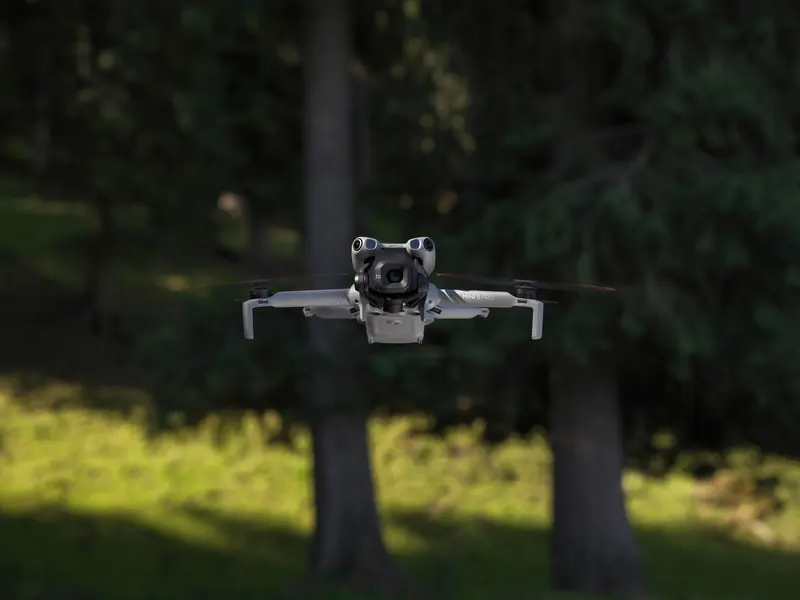
Drone Remote ID: what the FAA's Remote ID rule asks of your drone
Remote ID is a broadcast of a drone's identity and position, and of the pilot's or the take-off point's position, that phones nearby can receive.
- Flying for fun, Remote ID over
- 0.55lb
- Ways to comply
- 3
- Elements a standard drone sends
- 8
- Position within, 95% of the time
- 100ft
- Messages a second, at least
- 1
What is Remote ID? Remote identification of drones in one paragraph
The FAA defines Remote ID as “the ability of a drone in flight to provide identification and location information that can be received by other parties”, and calls it a “digital license plate” for drones.
- What is sent
It is a broadcast from the drone itself: identity, position, altitude and speed, and the position of the pilot or of the take-off point, sent from takeoff to shutdown.
Broadcast - The rule
The rule is 14 CFR part 89, “Remote Identification of Unmanned Aircraft”, published on January 15, 2021 (86 FR 4390) and in effect since April 21, 2021.
In forceThe exact rule
… after September 16, 2023, no person may operate an unmanned aircraft within the airspace of the United States unless …
14 CFR 89.105, Remote identification requirement (eCFR)What it means: since that date a drone that falls under part 89 flies one of three ways: as a standard Remote ID drone (89.110), with a Remote ID broadcast module (89.115(a)), or with no Remote ID equipment inside an FAA-recognized identification area (89.115(b)). Flights only for aeronautical research or to show compliance may be authorized without it (89.120).
- Why
Its purpose, in the FAA's words, is to help the FAA, law enforcement and other federal agencies “locate the control station when a drone appears to be flying in an unsafe manner or where it is not allowed to fly”.
Safety - Not ADS-B
Remote ID is not ADS-B: a drone may not use ADS-B Out to meet the Remote ID rule (89.125), and part 89 does not apply to part 91 flights that transmit ADS-B Out under 91.225 (89.101(b)).
No ADS-B
Your drone, your spot
Check what your drone needs and where you can fly it in Can I fly here? before you fly.
Can I fly here?Does my drone need Remote ID? Which drones must comply
A drone that is registered, or has to be, must broadcast it: built in, with a module and in sight, or with neither only inside an FAA-recognized identification area. Flown only for fun at 0.55 lb (249 g) or less, a drone needs no registration, so no Remote ID.
Part 89 applies to drones “registered or required to be registered under part 47 or 48” (89.101(a)), and to foreign civil drones flown in the U.S. The FAA's Remote ID page says it the same way: “Drones which are required to be registered or are registered, including those flown for recreation, business, or public safety, must comply”. So the Remote ID requirements turn on registration, and recreational flying and Part 107 answer that differently.
registered, so Remote ID
~135 g
<249 g
~377 g
724 g
~1063 g
Weights at takeoff with the standard battery, as the makers give them (~ about, < under). Under Part 107 every drone is registered, whatever it weighs.
The exact rule
… is operated exclusively in compliance with 49 U.S.C. 44809 and weighs 0.55 pounds or less on takeoff …14 CFR 48.15(b), on registering small drones (eCFR)
What it means: a drone of 0.55 lb (249 g) or less at takeoff, everything on board, flown only for fun under 49 U.S.C. 44809, needs no registration, so part 89 does not reach it. Every other drone is registered, and a registered drone broadcasts Remote ID. Part 89 has no other weight exemption (89.101).
Flying only for fun (49 U.S.C. 44809)
At 0.55 lb (249 g) or less at takeoff, no registration is needed, so no Remote ID. Over 0.55 lb, the drone is registered and must broadcast. A drone you registered anyway is registered, and the FAA's page says it must comply. Section 44809 keeps the FAA's power to set “the standards for remotely identifying owners and operators” (44809(f)(3)).
249 g or 250 g?
The rule's line, 0.55 pounds, is 249.48 g; the FAA's recreational page words it “You must register if your drone weighs 250 grams (0.55 lbs) or more.” The two differ only between 249.48 g and 250 g.
Flying under Part 107
No weight exemption: 48.15(b) covers only flights under section 44809, so every drone flown under Part 107 is registered and falls under part 89, whatever it weighs. The FAA's summary of the rule says the same: for drones of 0.55 lb or less, Remote ID “is only required if the UA is operated under rules that require registration, such as part 107”. Part 107 pilots register every drone; the drone license guide covers the certificate.
Drone license guideThree ways to be Remote ID compliant
Built in, with a broadcast module and the drone in sight, or with neither only inside an FAA-recognized identification area (FRIA).
Standard Remote ID drone
The drone broadcasts by itself from takeoff to shutdown, and cannot take off unless it is broadcasting. Its own serial number goes on the registration.
Remote ID broadcast module
A module sends the broadcast for a drone without built-in Remote ID. You keep the drone in sight for the whole flight, and the module's serial number goes on the registration.
No Remote ID, inside a FRIA
No broadcast equipment at all: the drone and you stay inside an FAA-recognized identification area, and you keep the drone in sight.
Each way in detail: the broadcast, the pilot, the registration, the rule's words
Each card is one way part 89 allows: what the drone broadcasts, where the person at the controls must be, what goes on the registration, and the rule's own words. Visual line of sight comes from the flight rules in every case, 49 U.S.C. 44809(a)(3) for recreational flyers and 14 CFR 107.31 under Part 107; the module and FRIA ways add a sight condition of their own in part 89.
| Way to comply | What is broadcast | Where the pilot must be | Registration | The rule's words |
|---|---|---|---|---|
| Standard Remote ID drone | The 8 message elements of 89.305, listed in the next table. Broadcast from takeoff to shutdown; the drone must not be able to take off unless it is broadcasting (89.310(i)). | Part 89 adds no pilot-position limit for this way. The control station position in the broadcast must correspond to the location of the person at the flight controls (89.310(a)). Visual line of sight still comes from the flight rules: 49 U.S.C. 44809(a)(3) for recreational flyers; 14 CFR 107.31 for Part 107. | The drone's own serial number must be on its Certificate of Aircraft Registration (89.110(b)(4); 48.110(a)(6)); that serial may not be on more than one certificate at the same time (48.110(a)(6)). Recreational flyers register once and the one number covers every device in the inventory; Part 107 pilots register each device separately, each with its own number (the FAA's Remote ID page). The serial must also be listed on an FAA-accepted declaration of compliance (89.110(b)(1)). | “From takeoff to shutdown, the standard remote identification unmanned aircraft must broadcast the message elements of § 89.305” (14 CFR 89.110) |
| Remote ID broadcast module | The 7 message elements of 89.315, listed in the next table. No control station position and no emergency status (compare 89.305). Broadcast from takeoff to shutdown, directly from the drone (89.115(a)(2)(i)). | The person at the flight controls must be able to see the drone at all times throughout the flight (89.115(a)(2)(ii)). The FAA's toolkit sheet says the module is limited to visual line of sight operations. This holds under Part 107 and under 44809 alike. | The module's serial number must be on the drone's Certificate of Aircraft Registration (89.115(a)(1)(ii); 48.110(a)(7)); an applicant may submit more than one module serial number (48.110(a)(7)). The module serial must be listed on an FAA-accepted declaration of compliance (89.115(a)(1)(i)). Recreational flyers (the FAA's Remote ID page): list the module serial for each drone without Standard Remote ID in the inventory; this permits moving the module from one drone to another so long as each make and model is listed in the same inventory. Part 107 pilots: each device is registered separately with its own number (the FAA's Remote ID page). | “The person manipulating the flight controls of the unmanned aircraft system must be able to see the unmanned aircraft at all times throughout the operation” (14 CFR 89.115(a)) |
| No Remote ID, inside a FRIA | Nothing is required: the rule lets a drone fly there without remote identification equipment (89.115(b)). A Standard Remote ID drone or a drone with a module flown at a FRIA must still broadcast (the FAA's FRIA page). | Both the drone and the person at the flight controls must stay within the FRIA's boundaries for the whole flight, and that person must be able to see the drone at all times (89.115(b)(1)-(2)). | No Remote ID serial number is needed on the registration for this way (89.115(b) sets no equipage condition). The drone is still registered under part 48 unless it is exempt (48.15(b): flown only under 44809 and 0.55 lb or less). FRIAs are set up only on request of an FAA-recognized community-based organization or an educational institution (89.205) and last 48 calendar months (89.225(a)). The list: the FAA's FRIA Locations Map on its UAS Data Delivery System; 2,730 FRIAs on that map on November 13, 2026. | “The unmanned aircraft and the person manipulating the flight controls … remain within the boundaries of an FAA-recognized identification area throughout the operation” (14 CFR 89.115(b); part 89 subpart C) |
The 3 ways in 14 CFR part 89 to meet the Remote ID rule. Sections are of 14 CFR unless named; read November 13, 2026.
- Before takeoff
A standard Remote ID drone tests itself before takeoff and “must not be able to take off” if its Remote ID is not working or not broadcasting (89.310(i)).
No takeoff - In flight
If the broadcast stops in flight, with built-in Remote ID or a module, the pilot must land “as soon as practicable” (89.110(a)(2), 89.115(a)(4)).
Land - Modules
The FAA's toolkit sheet on modules says they are “Limited to Visual Line of Sight Operations”.
In sight - By letter
The FAA also issues Remote ID Letters of Authorization on request, for research, compliance testing and some other cases its Remote ID page names (89.120).
On request
Which way is yours?
A drone with an FAA-accepted declaration broadcasts built in. With no accepted declaration, it flies with a broadcast module or inside a FRIA.
Check your droneWhat a Remote ID drone broadcasts: public data, serial number or session ID
A standard Remote ID drone sends eight message elements and a broadcast module seven.
The difference that matters to a pilot: a module never sends the pilot's position, only the take-off point, while a standard drone sends the control station's position, which “must correspond to the location of the person manipulating the flight controls” (89.310(a)).
| Message element | Standard Remote ID drone (89.305) | Broadcast module (89.315) |
|---|---|---|
| Identity | The drone's serial number, or a session ID (89.305(a)) | The module's serial number (89.315(a)) |
| Drone latitude and longitude | Yes (89.305(d)) | Yes (89.315(b)) |
| Drone altitude (geometric) | Yes (89.305(e)) | Yes (89.315(c)) |
| Drone velocity | Yes (89.305(f)) | Yes (89.315(d)) |
| Control station (pilot) latitude and longitude | Yes (89.305(b)) | No |
| Control station (pilot) altitude (geometric) | Yes (89.305(c)) | No |
| Take-off point latitude and longitude | No | Yes (89.315(e)) |
| Take-off point altitude (geometric) | No | Yes (89.315(f)) |
| Time mark (UTC) | Yes (89.305(g)) | Yes (89.315(g)) |
| Emergency status | Yes (89.305(h)) | No |
What each way broadcasts, element by element: 8 elements from a standard Remote ID drone, 7 from a broadcast module (14 CFR 89.305 and 89.315).
Your position goes out too
With a standard Remote ID drone, the broadcast carries where the controller is, not only where the drone is.
What the rule sets for the broadcast
- Accuracy and rate
What the rule sets for the broadcast: position within 100 feet and drone altitude within 150 feet (95% of the time), control station altitude within 15 feet, data no older than 1.0 second, at least one message per second, on a non-proprietary broadcast using spectrum compatible with personal wireless devices (89.310(g)-(h)).
1 a second - Radio
The rule names no radio technology; the FAA's summary expected it to be “likely Wi-Fi or Bluetooth”.
Not named - Range
No range is set: it “may vary”, and each drone must be designed to maximize it.
Not set
Who can read it, and what stays private
- Public
The FAA calls the message elements “publicly available information”.
Public - Receivers
The final rule expects phones, tablets “or other similar commercially available devices” to receive them “without reliance on an internet connection”.
No internet - Your name
Linking a serial number to a person takes the registration database, and the rule's preamble says “no member of the public may have access to FAA's database”; the FAA's summary says that match is limited to the FAA and can be shared with authorized law enforcement and national security personnel on request.
FAA only - Session ID
Session ID, a broadcast ID used in place of the serial number, is in the rule but not offered yet. The FAA's page: “In the future, operators of Standard Remote ID drones may be able to choose”.
Not yet
Remote ID compliance: how to check your drone
Look the drone or module up on the FAA's list of accepted declarations, find its serial number, check the battery on a Mini 4 Pro or Mini 3, and put the serial number on your registration.
-
Drones we track
Step 1: Look it up on the FAA list
Public listThe FAA's own check: “Visit our Declaration of Compliance System to determine if your drone or broadcast module is on an FAA-accepted Remote ID Declaration of Compliance.” The list is public and held 487 accepted Remote ID declarations on November 13, 2026: 397 for drones and 90 for broadcast modules. Entries are added as makers file, so look a model up on the day you check. An owner cannot add a model: “Those submissions may only come from manufacturers.”
Where: the FAA UAS Declaration of Compliance system. From: the FAA's Remote ID page.
-
Step 2: Find the serial number
The serial number for registration is, in the FAA's words, “on the device, the controller, or displayed on one of the controller start up menus” for a standard drone; for a module, “this may be listed on the device”.
From: the FAA's Remote ID page.
-
Which battery
Step 3: Check the battery
Mini 4 Pro, Mini 3Some drones broadcast only with a named battery. On a DJI Mini 4 Pro or Mini 3 the built-in Remote ID works only with the Intelligent Flight Battery Plus.
From: the DJI Mini 4 Pro and Mini 3 user manuals.
-
Registration
Step 4: Put it on your registration
FAADroneZoneIn FAADroneZone you add the device, answer “Yes” to the Remote ID question, choose a module or Standard Remote ID, and enter the serial number; a drone listed earlier with “No” gets a new listing.
Where: FAADroneZone. From: the FAA's Remote ID page.
DJI entries on the list, by tracking number: Mini 4 Pro (RID000000713), Mini 3 (RID000000062), Mini 3 Pro (RID000000001), Mini 5 Pro (RID000002581), Avata 2 (RID000001376) and Air 3S (RID000002046); none for the Neo, Flip or Mini 4K.
The drones in our records, the same ones the home flight check uses:
| Drone | Weight at takeoff | Built-in Remote ID | Registration, flown only for fun |
|---|---|---|---|
| Antigravity A1 | 249 g (8.8 oz); 291 g (10.3 oz) with High-Capacity Flight Battery | Only with the High-Capacity Flight Battery | Not needed at this weight; needed with the High-Capacity Flight Battery |
| DJI Air 3S | 724 g (25.5 oz) | Built in | Needed: over 0.55 lb |
| DJI Avata 2 | About 377 g (13.3 oz) | Built in | Needed: over 0.55 lb |
| DJI Flip | Under 249 g (8.8 oz) | No FAA declaration | Not needed at this weight |
| DJI Mavic 4 Pro | About 1063 g (37.5 oz) | Built in | Needed: over 0.55 lb |
| DJI Mini 3 | 248 g (8.7 oz); about 290 g (10.2 oz) with Intelligent Flight Battery Plus | Only with the Intelligent Flight Battery Plus | Not needed at this weight; needed with the Intelligent Flight Battery Plus |
| DJI Mini 3 Pro | Under 249 g (8.8 oz); about 290 g (10.2 oz) with Intelligent Flight Battery Plus | Built in | Not needed at this weight; needed with the Intelligent Flight Battery Plus |
| DJI Mini 4 Pro | Under 249 g (8.8 oz) | Only with the Intelligent Flight Battery Plus | Not needed at this weight; needed with the Intelligent Flight Battery Plus |
| DJI Mini 4K | 246 g (8.7 oz) | No FAA declaration | Not needed at this weight |
| DJI Mini 5 Pro | 249.9 g (8.8 oz) | Built in | Needed at the listed weight; DJI gives plus or minus 4 g |
| DJI Neo | About 135 g (4.8 oz) | No FAA declaration | Not needed at this weight |
| DJI Neo 2 | 151 g (5.3 oz); 160 g (5.6 oz) with DJI Neo 2 Digital Transceiver | No FAA declaration | Not needed at this weight |
| HOVERAir X1 PRO | 192 g (6.8 oz); 192.1 g (6.8 oz) with ND filter | Built in | Not needed at this weight |
| Potensic ATOM 2 | Under 249 g (8.8 oz) | Built in | Not needed at this weight |
14 drones, sorted by name: Remote ID as our drone records have it, from each maker's own pages and the FAA list of Remote ID declarations, read November 13, 2026. Weights with the standard battery.
- Built in: a standard Remote ID drone. Only with the named battery: the built-in broadcast works with that battery only. No FAA declaration: no accepted declaration for the model, so where Remote ID applies it flies with a broadcast module or inside a FRIA.
- Registration, flown only for fun: the weight at takeoff against the rule's line of 0.55 lb (249.48 g). Under Part 107 every drone is registered, whatever it weighs.
- The DJI Mini 5 Pro, at 249.9 g, is over the rule's line and under the 250 g of the FAA's recreational page.
Registration for recreational and Part 107 drone operations
Registration is where Remote ID meets the paperwork: the serial number of the standard drone or of the module goes on the drone's registration.
- Cost
Registration costs $5 and lasts three years. A step-by-step registration walk-through is planned as a page of its own.
$5, 3 years - Flying only for fun
Register once: one number covers every drone in your inventory. List the serial number of each standard Remote ID drone or module. Listing a module's serial number with each drone “will permit you to move the module from one drone ... to another”, as long as each make and model is listed in the same inventory.
One number - Flying under Part 107
“Register each individual device ... separately”, each with its own registration number.
Each drone - The rule
In the rule, for both: a standard drone's serial number may not be on more than one registration at the same time, and more than one module serial number may be submitted (48.110(a)(6)-(7)).
One at a time
Do I have to register?
The registration tool goes through the same weight line and rulebooks for your drone.
Registration toolDJI Mini 4 Pro and Mini 3: Remote ID only with the Battery Plus
The FAA list has an accepted declaration for both models, but DJI's own manuals limit the built-in broadcast to one battery.
The rules side by side.
- For fun, standard battery
Flown only for fun with the standard battery, the drone is 0.55 lb or less and needs no registration (48.15(b)), so part 89 does not reach it.
Not needed - For fun, Battery Plus
With the Battery Plus it is over 0.55 lb, so it is registered and must broadcast, and with that battery it does.
Broadcasts - Part 107
Under Part 107 it is registered at any weight, and DJI says the built-in broadcast is off with the standard battery: the three ways above are what remain, the Battery Plus, a broadcast module, or a FRIA.
Plus onlyWhat the maker says
… the Remote ID system is ONLY activated when using the Intelligent Flight Battery Plus.
DJI Mini 4 Pro User Manual v1.4 (June 2024), “FAR Remote ID Compliance Information”What it means: with the standard battery the Mini 4 Pro “does not activate Remote ID system”. The Mini 3 manual (v1.2, January 2024) says the same two things, and gives the Mini 3's weight with the Battery Plus as about 290 g.
In our drone records, 3 models broadcast Remote ID only with a named battery: Antigravity A1 (High-Capacity Flight Battery), DJI Mini 3 (Intelligent Flight Battery Plus) and DJI Mini 4 Pro (Intelligent Flight Battery Plus). Each is in the table above.
Flying without Remote ID: FRIAs, home-built and FPV drones
A drone that falls under part 89 and has no Remote ID equipment flies only inside an FAA-recognized identification area (FRIA), or with an FAA authorization under 89.120.
FAA-recognized identification areas
- Inside a FRIA
You and the drone stay inside the FRIA for the whole flight, and you keep the drone in sight.
Stay insideThe exact rule
(1) The unmanned aircraft and the person manipulating the flight controls of the unmanned aircraft system remain within the boundaries of an FAA-recognized identification area throughout the operation; and (2) The person manipulating the flight controls of the unmanned aircraft system must be able to see the unmanned aircraft at all times throughout the operation.
14 CFR 89.115(b), Operations at FAA-recognized identification areas (eCFR)What it means: inside a FRIA the drone and you both stay inside it for the whole flight, and you keep the drone in sight. A standard Remote ID drone, or a drone with a module, flown at a FRIA still broadcasts.
- Who may ask
Only an FAA-recognized community-based organization or an educational institution (a school, trade school, college or university) may apply for a FRIA (89.205), and the statute tells the FAA to give priority to requests at recreational fixed sites (44809(c)(4)).
Clubs, schools - How long
A FRIA lasts 48 calendar months, and its renewal is due no later than 120 days before it ends (89.225).
48 months - Where they are
The list lives on the FAA's FRIA Locations Map, on its UAS Data Delivery System; it held 2,730 FRIAs on November 13, 2026: 2,060 at community-based organization sites and 670 at educational institutions. On August 18, 2023, the FAA had approved 412. The list changes weekly, so check the map on the day you fly.
Check the map - The name
The FAA's recreational page spells the name “Federally-Recognized”; the rule says “FAA-recognized”.
Same thing
Home-built drones
The final rule's preamble: “a home-built unmanned aircraft without remote identification can only be operated in an FAA-recognized identification area”, unless it is fitted with Remote ID equipment such as a broadcast module. The design and production rules of part 89 do not apply to home-built drones or to drones of 0.55 lb or less (unless built as standard Remote ID drones); the operating rules still do (89.501(c)).
FPV drones
The rule applies to an FPV drone as to any other (89.101): a registered FPV drone without built-in Remote ID flies with a broadcast module or inside a FRIA. For FPV drone pilots, both ways require that the person at the controls “must be able to see the unmanned aircraft at all times throughout the operation” (89.115(a)(2)(ii), 89.115(b)(2)). For recreational flyers, 44809(a)(3) also requires visual line of sight of the operator or of a visual observer co-located with the operator.
What is FPV?Remote ID regulations: dates, enforcement and what may change
Drone operators have had to comply since September 16, 2023. What may change: a review Congress ordered in 2024, and a proposed rule for part 108 flights.
- January 15, 2021
The final rule is published (86 FR 4390).
Published - April 21, 2021
The rule takes effect, after the FAA moved the date from March 16, 2021 (86 FR 13629).
In effect - September 16, 2022
Compliance date for drone producers (89.510, 89.515).
Makers - September 16, 2023
Compliance date for operators (89.105, 89.110, 89.115 and subpart C).
Pilots - September 15, 2023
The FAA's notice (88 FR 63518): for noncompliance “which occurs on or before March 16, 2024”, it would weigh all the circumstances, mainly the supply and cost of broadcast modules and delays in FRIA approvals, before acting. The notice “creates no individual right of action and establishes no precedent”.
Ended - May 16, 2024
The FAA Reauthorization Act of 2024, section 907, tells the FAA to review the Remote ID rule for alternative means of compliance, “including through network-based remote identification”, and to report to Congress within one year.
Review - August 7, 2025
The FAA's proposed part 108 for flights beyond visual line of sight (90 FR 38212) would change 89.305 for part 108 flights only. It is a proposal, not in force; no final rule had been published when we checked on November 14, 2026.
Proposed - November 3, 2025
Section 89.5 is removed and reserved; the operating sections, 89.101 to 89.130, are unchanged since April 21, 2021.
Unchanged
Enforcement
On enforcement, the FAA's stated approach is a program “that includes legal enforcement action, including civil penalties and certificate actions, as appropriate”. Neither the final rule's preamble nor the FAA's Remote ID page gives a dollar figure.
On the knowledge test
Remote ID is on the Part 107 knowledge test: task UA.I.F, “Remote Identification (RID)”, in the FAA's Airman Certification Standards; try it in the practice test.
Practice testRelated pages
Checking your drone and your spot, registering it, the license, and FPV.
Your drone
The rules
FPV and the test
Questions about drone Remote ID
Does my drone need a Remote ID?
Yes, if it is registered or has to be. Flown only for fun at 0.55 lb (249 g) or less, it needs no registration and so no Remote ID; flown under Part 107, it is registered and needs Remote ID whatever it weighs. Check your own drone and spot with Can I fly here?
How do I find the Remote ID serial number on my drone?
For a standard Remote ID drone the FAA says it is “on the device, the controller, or displayed on one of the controller start up menus”. For a broadcast module, “this may be listed on the device”. That serial number goes on your registration in FAADroneZone.
What is a Remote ID module?
A broadcast module fitted to a drone without built-in Remote ID. It must be on an FAA-accepted declaration, its serial number on the drone's registration, and it sends seven elements, with the take-off point in place of the pilot's position. You must see the drone at all times. Flying only for fun, you can move one module between drones listed in the same inventory.
Is there a Remote ID app?
Sending needs no app: the drone or module broadcasts by itself. To receive, the final rule expects phones, tablets “or other similar commercially available devices” to read the broadcast “without reliance on an internet connection”. We have not tested receiver apps, so this page names none.
Can a drone under 250 g skip Remote ID?
Flown only for fun at 0.55 lb (249.48 g) or less, yes, because it needs no registration; registered anyway, it must comply. Under Part 107, no: every drone is registered. The rule's line is 0.55 pounds, and the FAA's recreational page says 250 grams, so a drone between 249.48 g and 250 g is over the rule's line.
Can the FAA know I flew a DJI drone?
The broadcast is public: anyone nearby with a suitable phone can receive a drone's serial number and positions. Matching that serial number to a person takes the FAA's registration database, which the public cannot see; the FAA says it can share the match with authorized law enforcement and national security personnel on request. This is the same for every maker.
Sources Named, not linked.
Documents are named, not linked. Each was read on November 13, 2026, and the counts, the FAA pages and the rule's version history were read again on November 14, 2026.
Laws and regulations
- 14 CFR part 89, Remote Identification of Unmanned Aircraft, sections 89.101 to 89.130, 89.205, 89.225, 89.305 to 89.315, 89.501, 89.510 and 89.515 (eCFR, and its version history)
- 14 CFR part 48, sections 48.15, 48.30, 48.100, 48.105 and 48.110: registration
- 49 U.S.C. 44809, Exception for limited recreational operations of unmanned aircraft, and 14 CFR 107.31, Visual line of sight aircraft operation
- Public Law 118-63, FAA Reauthorization Act of 2024, section 907
Federal Register
- 86 FR 4390 (January 15, 2021): the final rule and its preamble
- 86 FR 13629 (March 10, 2021): the effective date moved to April 21, 2021
- 88 FR 63518 (September 15, 2023): the FAA's policy on operator compliance
- 90 FR 38212 (August 7, 2025): the proposed part 108, and a search of the FAA's later documents
FAA pages and lists
- FAA “Remote Identification of Drones” (last updated March 19, 2025) and “FAA-Recognized Identification Areas” (August 7, 2024)
- FAA “Recreational Flyers & Community-Based Organizations” (October 29, 2026)
- FAA Remote ID Executive Summary (December 28, 2020) and the Remote ID toolkit sheet “Broadcast Module”
- FAA UAS Declaration of Compliance system: the public list of accepted Remote ID declarations
- FAA FRIA Locations Map on the UAS Data Delivery System
- Remote Pilot - Small Unmanned Aircraft Systems Airman Certification Standards, FAA-S-ACS-10B, Area I, Task F
Makers
- DJI Mini 4 Pro User Manual v1.4 (June 2024) and DJI Mini 3 User Manual v1.2 (January 2024)
- Our drone records: each maker's own pages and the FAA list of Remote ID declarations