Drones in agriculture: how agricultural drones help farmers
Drones in agriculture scout and map fields, monitor livestock, and spray or spread, and U.S. rules treat looking and spraying apart.
- Large crop-producing family farms that adopted drones, 2023
- 12%
- Drone adopters naming higher yields as a reason
- 40%
- Weight with the load that splits the spraying rules
- 55lb
- Lead time for the FAA exemption petition, at least
- 120days
How agricultural drones help farmers: what USDA counts
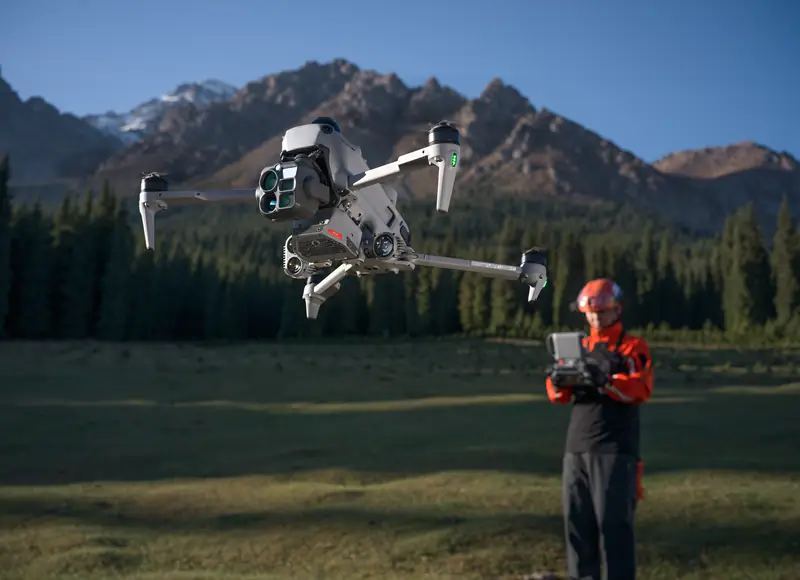
USDA counts drones among the precision agriculture technologies: they collect field imagery, or carry out field work such as pesticide spraying.
USDA's Economic Research Service (ERS) counts drone technology among the precision agriculture technologies. It defines them as small unmanned aerial vehicles “used to collect field imagery” for farm management practices, or to carry out field operations like pesticide spraying.
In the ERS report on precision agriculture, drones, aircraft and satellite imagery are used on farms mostly for crop mapping, livestock monitoring, land surveying, crop spraying and crop dusting. With satellite positioning, drones can georeference farmland and help farmers spot land features or vegetation patterns that are easier to see from above.
When ERS asked the farms that had adopted drones in 2023 why, the reasons named most were to increase yields and to save labor time, 40 percent each. Then came improving soils or reducing environmental impacts (29 percent), reducing purchased input costs (25) and reducing operator fatigue (23). These shares describe drone users only, not all farms, and they are the reasons the farms gave, not results anyone measured.
ERS also names what may hold drone adoption down: technological complexity, expense, and a perception that drones have few uses on the farm.
Where this page comes from
This page takes the uses of drones on farms from USDA, the rules from the FAA and EPA, and the aircraft from their makers' own pages. It promises no yield or savings, compares no vendors and gives no prices. For the rules of each kind of flight, go to crop scouting or spraying.
Two kinds of farming operations: looking at crops and spraying them
A flight that only looks falls under Part 107 unless it is strictly for recreation. Spraying or spreading is also an agricultural aircraft operation under Part 137: the operator needs an FAA exemption and an operator certificate, and the pesticide label still governs.
Part 137 of the FAA's rules defines an agricultural aircraft operation as dispensing: any economic poison; any substance for plant nourishment, soil treatment, propagation of plant life or pest control; or any dispensing that directly affects agriculture, horticulture or forest preservation. Releasing live insects is left out. An economic poison is a substance meant to prevent, destroy, repel or mitigate insects, rodents, nematodes, fungi, weeds or other declared pests, or a plant regulator, defoliant or desiccant.
The definition is about dispensing only: a flight that only takes pictures, to scout, map or count, is not an agricultural aircraft operation. The FAA says Part 137 governs aircraft, “including drones”, that dispense or spray substances, disinfectants included, though not every substance falls under it; it treats chemicals used as disinfectants for viruses as economic poisons.
So the rules split farm drone work in two. Looking flights are in the next section; spraying and spreading for crop protection or plant nourishment are in the one after it, with pesticide law beside them.
Looking: scouting, mapping, counting
Part 107, unless the flight is strictly for recreation. No Part 137 certificate.
Crop scouting rulesSpraying or spreading
Part 137: an FAA exemption first, then the operator certificate, and the pesticide label on every load.
Spraying rulesCrop scouting and field mapping for crop health: Part 107 and recreational rules
Scouting a crop, mapping a field or monitoring livestock from the air falls under Part 107 unless the flight is strictly for recreation.
Each row below is one rule of one rulebook; the recreational exception of 49 U.S.C. 44809 has a row of its own and is never mixed with the Part 107 rows.
Flights that only look (scouting, field mapping, monitoring livestock), one rule per row: Part 107 (14 CFR part 107) for any flight that is not strictly for recreation, and the recreational exception (49 U.S.C. 44809) in a row of its own.
- Which rules apply
Part 107: Part 107 covers civil small drones in the U.S. but not aircraft flown under 49 U.S.C. 44809, nor operations an exemption holder elects to fly under a 44807 exemption.14 CFR 107.1
Our guide: Drone license guide
- Which rules apply
Flying for fun (49 U.S.C. 44809): Flying without FAA certification is allowed only when the flight is strictly recreational and keeps every limit of the section.49 U.S.C. 44809(a)(1)
Our guide: TRUST certificate
- Who flies
Part 107: Whoever works the controls holds a remote pilot certificate with a small UAS rating, or is directly supervised by a remote pilot in command who can take control at once.14 CFR 107.12(a)
Our guide: Drone license guide
- Weight
Part 107: The drone weighs less than 55 pounds on takeoff, everything on board or attached included.14 CFR 107.3
Our guide: Drone license guide
- Height
Part 107: No higher than 400 feet above ground level, except within a 400-foot radius of a structure.14 CFR 107.51(b)
Our guide: How high can a drone fly
- Line of sight
Part 107: The remote pilot, any visual observer and the person at the controls can see the drone for the whole flight with unaided eyes (corrective lenses allowed).14 CFR 107.31(a)
Our guide: Line of sight and range
- Airspace near airports
Part 107: Prior authorization from Air Traffic Control in Class B, C or D airspace or an airport's Class E surface area.14 CFR 107.41
Our guide: LAANC authorization
- Over people
Part 107: No flight over a person who is not taking part, under cover or in a stationary vehicle, unless the flight meets an operational category.14 CFR 107.39
Our guide: Drone license guide
For field mapping itself, from overlapping photos to orthomosaics and how much ground one pixel covers, see our drone mapping guide. The recreational test is in our TRUST certificate guide.
Before a farm flight
Fields near an airport may sit in controlled airspace. Look up the airspace over the field first.
Can I fly here?Agriculture spraying with drones: Part 137, the exemption and 44807
Spraying or spreading from a drone needs an FAA exemption first and a Part 137 operator certificate after it; the drone's weight with its load decides which rules it flies under.
Spraying or spreading a substance from a drone for pest control, plant nourishment or soil treatment is an agricultural aircraft operation, and no one may conduct one without an agricultural aircraft operator certificate under Part 137. The applicant, or its chief supervisor, shows knowledge and skill: the steps before starting work, including a survey of the area; safe handling of economic poisons and disposal of their containers; their effects on plants, animals and persons; and the symptoms of poisoning.
The FAA's route to that certificate starts with an exemption, and which rules the drone flies under depends on its weight with the substance on board:
Under 55 lb
The drone flies under Part 107 with an exemption from 107.36, which bars carrying hazardous material, and from several Part 137 rules. It is registered with an FA-number through FAADroneZone.
55 lb or more
The drone flies under Parts 91 and 137 with exemptions from several rules in Parts 61, 91 and 137. It gets an N-number through the FAA's online registry service (CARES) or by mail.
The FAA says Part 107 applies only to drones under 55 lb at takeoff; a heavier drone needs an exemption under 14 CFR part 11 and 49 U.S.C. 44807. Under 44807 the FAA uses “a risk-based approach”, weighing size, weight, speed, operational capability, nearness to airports and populated areas, flight over people, line of sight, and day or night. That authority ends September 30, 2033; an exemption in effect then stays in effect until 3 years after the termination date it names, unless the FAA finds a safety risk. The FAA's 44807 page points to a list of drones approved under 44807 on regulatory docket FAA-2023-1271. We could not open that list, so this page does not say which spray drones are on it.
The order of the steps is fixed. The petition goes in at least 120 days before the exemption must take effect, filed as a comment on the shell docket FAA-2007-0001-0001. With the exemption granted, the applicant files FAA Form 8710-3 with the exemption number for the operator certificate, which is still required. Requests outside routine agricultural operations, or for aircraft without prior 44807 approval, “may take longer to review”.
Every spraying rule, one per row
Flights that spray or spread, one rule per row: Part 137 and the FAA's exemption route by the drone's weight with its load, 49 U.S.C. 44807, the operator certificate and the FAA's current notice.
- What counts as agricultural
Part 137: An agricultural aircraft operation is dispensing an economic poison, any substance for plant nourishment, soil treatment, propagation of plant life or pest control, or dispensing that directly affects agriculture, horticulture or forest preservation; live insects excluded.14 CFR 137.3
- Operator certificate
Part 137: No agricultural aircraft operation without an agricultural aircraft operator certificate (government public aircraft excepted).14 CFR 137.11(a)
- Knowledge and skill
Part 137: The applicant, or its chief supervisor, shows knowledge and skill: steps before starting, safe handling of economic poisons and disposal of containers, their effects on plants, animals and persons, symptoms of poisoning.14 CFR 137.19(e)
- The pesticide label
Part 137: No registered economic poison may be dispensed for a use other than its registration, contrary to the safety instructions or use limits on its label, or against any federal law.14 CFR 137.39(a)
- Supervisor and pilot
Part 137: A supervisor meets the knowledge and skill requirements of 137.19(e); a pilot in command holds the certificate and rating that 137.19 names.14 CFR 137.41(b)-(c)
- Drones and disinfectants
FAA guidance: Part 137 governs aircraft, drones included, that dispense or spray substances, disinfectants included; the FAA treats chemicals used as disinfectants for viruses as economic poisons under 137.3.FAA, Dispensing Chemicals and Agricultural Products (Part 137) with UAS
- Hazardous material
Part 107: A small drone may not carry hazardous material as defined in 49 CFR 171.8.14 CFR 107.36
- Under 55 lb with its load
Part 107 with exemptions: Flown under Part 107 with an exemption from 107.36 (hazardous material) and from several Part 137 rules; registration number (FA-number) through FAADroneZone.FAA, Dispensing Chemicals and Agricultural Products (Part 137) with UAS
Our guide: Registration helper
- 55 lb or more
Parts 91 and 137 with exemptions: Flown under Parts 91 and 137 with exemptions from several rules in Parts 61, 91 and 137; N-number through the FAA's online registry service (CARES) or by mail; aircraft without prior 44807 approval may take longer to review.FAA, Dispensing Chemicals and Agricultural Products (Part 137) with UAS
- 55 lb or more: 44807
49 U.S.C. 44807: The FAA decides by a risk-based approach how such drones may fly safely, weighing size, weight, speed, capability, nearness to airports and populated areas, flight over people, line of sight and day or night; the authority ends September 30, 2033.49 U.S.C. 44807(a), (b), (d)
- First the exemption
14 CFR part 11, as the FAA applies it: Petition at least 120 days before the exemption must take effect (14 CFR 11.63(d)), by commenting on the shell docket FAA-2007-0001-0001.FAA, Dispensing Chemicals and Agricultural Products (Part 137) with UAS
- Then the certificate
FAA guidance: With the exemption granted, the applicant files FAA Form 8710-3 and the exemption number; no documents go to the local Flight Standards office; the operator certificate is still required.FAA, Dispensing Chemicals and Agricultural Products (Part 137) with UAS
- Notice: the tests
FAA Notice N 8900.773 (effective May 15, 2026 to May 15, 2027): The 137.19(e) knowledge and skill tests may be self-administered, documented and shown to the FAA on request.N 8900.773, para. 6.a(2)
- Notice: the pilot
FAA Notice N 8900.773 (effective May 15, 2026 to May 15, 2027): Pilots in command for operators that fly only unmanned aircraft hold at least a Remote Pilot Certificate; a third-class medical certificate is required for night operations not flown in autonomous mode.N 8900.773, para. 6.d(1)-(2)
Our guide: Drone license guide
- Notice: manuals
FAA Notice N 8900.773 (effective May 15, 2026 to May 15, 2027): An operations manual and training program when the exemption's conditions require them; operators certificated before June 13, 2023 are excepted.N 8900.773, para. 6.b
- Notice: aircraft
FAA Notice N 8900.773 (effective May 15, 2026 to May 15, 2027): The operator may use all aircraft previously approved under 44807 and any drone under 55 lb, payload included, with a valid exemption.N 8900.773, para. 6.c
What the FAA changed for drone spraying, and when
The current notice, N 8900.773, runs from May 15, 2026 to May 15, 2027: applicants no longer send documents to their local Flight Standards office, and the knowledge and skill tests may be self-administered.
The FAA's dispensing page says “There's a new streamlined process” for the Part 137 drone certificate, for line-of-sight operations within the exemption's altitude and airspeed limits: applicants no longer send documents to their local Flight Standards District Office and file FAA Form 8710-3 with their exemption number instead. The page gives no start date for it. The dated steps are the FAA's notices and one final rule:
- June 13, 2023
Notice N 8900.659 on Part 137 drone certification took effect. It was cancelled June 13, 2024.
- June 9, 2025
Notice N 8900.741, since reissued and cancelled by N 8900.773.
- May 15, 2026
Notice N 8900.773 took effect. It is the current notice and carries a cancellation date of May 15, 2027.
- November 10, 2026
A final rule (FR Doc. 2026-22953) widens the inspection program options for unmanned aircraft and revises 137.53(c), effective January 11, 2027.
In N 8900.773 the FAA says it has “approved hundreds of these requests with few incidents” and is shifting to a risk-based approach for these lower-risk operators. What the notice changes:
- Tests
The 137.19(e) knowledge and skill tests may be self-administered, documented and shown to the FAA on request. This does not change the pilot-in-command rule of 137.41(c).
- Certificate
No Letters of Authorization are issued; the FAA's Safety Assurance Branch (AFS-760) issues the operating certificate. New applicants petition for the exemption on regulations.gov under 14 CFR part 11, wait for the grant, then send the exemption number to AFS-760.
- Surveillance
Annual surveillance under FAA Order 1800.56 is not required for certificate holders that fly only unmanned aircraft; it still applies to mixed and manned operators.
- Manuals
Part 137 itself does not require an operations manual or a training program; the notice requires both when the exemption's conditions do. Operators certificated before June 13, 2023 do not need them; their requirements will appear in future grants of exemption.
- Aircraft
The operator may use all aircraft previously approved under 44807, and any drone under 55 lb, payload included, with a valid exemption.
- Pilot
For an operator that flies only unmanned aircraft, the pilot in command holds at least a Remote Pilot Certificate, not a Commercial Pilot Certificate. No medical certificate is needed for autonomous operations; a third-class medical certificate is needed for night operations not flown in autonomous mode.
The pilot's certificate
The Remote Pilot Certificate is the Part 107 certificate. Our drone license guide shows who needs one and how to get it, and our Part 107 study guide covers the knowledge test.
How to get the Part 107 certificatePesticide labels and applicator certification beside the FAA rules
The FAA rules do not replace pesticide law: the label governs every load, and restricted use pesticides also need a certified applicator.
Part 137 ties every load to the label: no registered economic poison may be dispensed from an aircraft for a use other than its registration, contrary to the safety instructions or use limits on its label, or against any federal law or regulation.
For restricted use pesticides, EPA's rules on applicator certification (40 CFR part 171) apply beside the FAA's. In 2017 EPA finalized stronger standards for people who use restricted use pesticides: the rule requires specialized certification for two application methods, fumigation and aerial, and sets a recertification interval of at most 5 years for commercial and private applicators. Applicators are certified by states, territories, tribes and some federal agencies with EPA-approved certification plans. EPA's crop pest control category covers commercial applicators who use restricted use pesticides in producing agricultural commodities.
Pesticide law beside the aviation rules: what EPA asks of aerial applicators of restricted use pesticides, and its word on drones and disinfectants.
- Aerial category
EPA, 40 CFR part 171: The aerial pest control category covers commercial applicators who use or supervise restricted use pesticides applied by fixed or rotary wing aircraft.40 CFR 171.101(o)
- What aerial applicators know
EPA, 40 CFR part 171: Aerial applicators show practical knowledge of aerial label limits (spray volumes, buffers and no-spray zones, wind and inversions) and of aerial application equipment.40 CFR 171.103(d)(15)
- Certification
EPA certification rule (2017): Specialized certification for aerial application; recertification at most every 5 years; certifying authorities are states, territories, tribes and some federal agencies.EPA, Revised Certification Standards for Pesticide Applicators
- Disinfectants by drone
EPA guidance: Unless the product label includes directions for application via drones, EPA does not recommend drones to apply disinfectants and has not evaluated methods the label does not address.EPA, Can I use fogging, fumigation, or electrostatic spraying, or drones to help control COVID-19?
Not settled
EPA's aerial category is written for restricted use pesticides “applied by fixed or rotary wing aircraft”. No EPA page or rule we read says whether that covers drones, and this page does not settle it.
Precision farming figures: how many farms use drones
In 2023, 12 percent of large-scale crop-producing family farms and 13 percent of nonfamily farms had adopted drones; USDA's older figures count drones together with aircraft and satellites.
USDA, the FAA and EPA publish figures that each measure something different, so the table gives each with its year and exactly what it measures. Of USDA's shares, only those for 2023 count drones alone.
| Figure and year | What it measures | Source |
|---|---|---|
| 7.0 percent2016 | Share of corn planted acres on which drone, aircraft or satellite imagery was used (the survey cannot separate the three). | USDA ERS, EIB-248 Precision Agriculture in the Digital Era (February 2023), from ARMSp. 14, text and Figure 9 with its note |
| 9.8 percent2018 | Same measure, soybean planted acres. | USDA ERS, EIB-248 (February 2023)p. 14, Figure 9 |
| 3.5 percent2017 | Same measure, winter wheat planted acres. | USDA ERS, EIB-248 (February 2023)p. 14, Figure 9 |
| 2.8 percent2019 | Same measure, cotton planted acres. | USDA ERS, EIB-248 (February 2023)p. 14, Figure 9 |
| 4.6 percent2019 | Same measure, sorghum planted acres. | USDA ERS, EIB-248 (February 2023)p. 14, Figure 9 |
| 12 percent2023 | Share of large-scale crop-producing family farms that adopted drones (farms without harvested cropland left out). | USDA ERS, EIB-283 America's Farms and Ranches at a Glance, 2024 Edition (December 2024), from the 2023 ARMSp. 24, bullet on drones |
| 13 percent2023 | Share of nonfamily crop-producing farms that adopted drones. | USDA ERS, EIB-283 (December 2024)p. 24, bullet on drones |
| about 14,7002023 | Farms in the 2023 ARMS sample behind EIB-283. | USDA ERS, EIB-283 (December 2024)p. 3, box on the farm typology and its data |
| 40 percent2023 | Share of drone-adopting farms naming the reason: increase yields. | USDA ERS, EIB-283 (December 2024)p. 25, Table 4, Drones column |
| 40 percent2023 | Share of drone-adopting farms naming the reason: save labor time. | USDA ERS, EIB-283 (December 2024)p. 25, Table 4, Drones column |
| 29 percent2023 | Share of drone-adopting farms naming the reason: improve soils or reduce environmental impacts. | USDA ERS, EIB-283 (December 2024)p. 25, Table 4, Drones column |
| 25 percent2023 | Share of drone-adopting farms naming the reason: reduce purchased input costs. | USDA ERS, EIB-283 (December 2024)p. 25, Table 4, Drones column |
| 23 percent2023 | Share of drone-adopting farms naming the reason: reduce operator fatigue. | USDA ERS, EIB-283 (December 2024)p. 25, Table 4, Drones column |
| 7 percent2023 | Share of drone-adopting farms naming the reason: broadband internet access. | USDA ERS, EIB-283 (December 2024)p. 25, Table 4, Drones column |
| 4 percent2023 | Share of drone-adopting farms naming the reason: came standard on equipment. | USDA ERS, EIB-283 (December 2024)p. 25, Table 4, Drones column |
| 27 percent2023 | U.S. farms using precision agriculture practices to manage crops or livestock; the question lists drones for scouting fields or monitoring livestock among other practices and does not separate them; Alaska and Hawaii excluded. | USDA NASS, Technology Use (Farm Computer Usage and Ownership), August 2025p. 12, Farm Precision Agriculture Practices, United States row |
| 22 percent2025 | Same measure. | USDA NASS, Technology Use (Farm Computer Usage and Ownership), August 2025p. 12, Farm Precision Agriculture Practices, United States row |
| 1222023 | Certificated Part 137 drone operators as of March 22, 2023, with no reported accidents or injuries; the notice is cancelled and no later count was found. | FAA Notice N 8900.659 (effective June 13, 2023, cancelled June 13, 2024)Background and exemption text |
| hundreds (no number)2026 | Part 137 drone certificate requests the FAA has approved, with few incidents in the FAA's words. | FAA Notice N 8900.773 (effective May 15, 2026)para. 5, Background |
| about one millionnot stated (page last updated March 6, 2026) | Pesticide applicators in the U.S. certified to use restricted use pesticides, all methods (not a drone figure); about 930,000 noncertified applicators besides. | EPA, Revised Certification Standards for Pesticide ApplicatorsWho does this rule affect, and how? |
Official figures on drones and farms, each with the year it describes, what it measures and the document it comes from.
How to read these figures
- 2016 to 2019: the survey wording cannot separate drones from aircraft and satellites. USDA's chart note of August 24, 2023 repeats these shares under the title “Aerial imagery remains mostly grounded on U.S. farms”.
- 2023 farm shares: in 2023 drone adoption plateaued at 12 percent of large-scale crop-producing family farms and 13 percent of nonfamily farms. Farms that harvested no cropland are left out of the estimate, which rests on about 14,700 farms in the 2023 Agricultural Resource Management Survey, run by NASS and ERS.
- NASS: the question asks whether the farm used precision agriculture practices in the last 12 months and lists “use of drones for scouting fields or monitoring livestock” among them, so drones are not counted on their own.
- The FAA's count: 122 certificated Part 137 drone operators as of March 22, 2023 is the only number the FAA published that we found, and it comes from a notice cancelled June 13, 2024. The current notice says only “hundreds” of approved requests. No newer count was found.
- EPA: about one million certified applicators of restricted use pesticides counts every method, not drones.
Agricultural drones as their makers describe them
Each aircraft below is described in its maker's own words and figures, read on the maker's own pages.
This page compares none of them and gives no prices.
Hylio ATLAS and PHOTON
Hylio lists four drones: PEGASUS (2.5 or 4 gal), ARES (13 or 20 gal), ATLAS (30 or 45 gal) and PHOTON, a scout drone. Hylio says ATLAS is designed for high application rates, 8 to 10 gallons per acre, for spraying, seeding and fertilizing over wide areas. For crop health, Hylio says PHOTON flies 55+ minutes with multispectral and high-resolution RGB cameras to detect crop stress, nutrient deficiencies and disease, and that its prescription maps support variable-rate application planning.
DJI Agras T100
DJI's U.S. specs page gives the Agras T100 a weight for spraying of 165 lb (75 kg) with the standard two nozzles and a maximum takeoff weight for spraying of 386 lb (175 kg). Its standard spraying system has a 26.4 gal (100 L) spray tank, a 220 lb (100 kg) operating payload and a spray width of 16 to 43 ft (5 to 13 m). Its spreading system has a 39.6 gal (150 L) tank that holds up to 220 lb (100 kg).
DJI's farm drones and the FCC
DJI drones, with all other foreign-produced drones, have been on the FCC Covered List since December 22, 2025. New DJI models cannot get FCC equipment authorization, so they cannot be legally marketed or imported; models authorized before the listing may still be imported and sold. A July 21, 2026 FCC proposal (DA 26-758) would end imports and sales of some previously authorized foreign drones by category, among them drones of 55 lb or more and drones that can dispense pesticides, and DJI says it could reach its agricultural drones. A July 17, 2026 proposal (DA 26-742) names XAG among nine companies whose previously authorized drones would no longer be imported or sold. As of the FCC's November 6, 2026 Covered List update, none of these proposals is a final order.
This page did not check whether the Agras T100 holds an FCC authorization from before the listing. Our DJI ban guide follows the FCC record.
Related pages
The pilot's certificate, more drone work, and the rules for where a farm drone can fly.
Where you can fly
Certificates and registration
Questions about drones in agriculture
How do farmers use drones?
To look and to dispense. USDA defines farm drones as small unmanned aerial vehicles that collect field imagery for management practices or carry out field operations like pesticide spraying, and names crop mapping, livestock monitoring, land surveying, crop spraying and crop dusting as the main uses of drone, aircraft and satellite imagery on farms.
Why are drones good for farming?
In USDA's 2023 survey, the farms that had adopted drones most often named increasing yields and saving labor time, 40 percent each, then improving soils or reducing environmental impacts (29 percent) and reducing purchased input costs (25). Those are the drone users' reasons, not a measured result and not our claim.
Do I need a license to fly a drone on my farm?
To scout, map or monitor livestock, yes, unless the flight is strictly for recreation: under Part 107 whoever works the controls holds a remote pilot certificate or is directly supervised by a remote pilot in command. To spray or spread, the operator also needs an FAA exemption and an agricultural aircraft operator certificate under Part 137, and the pesticide label still governs.
Can a drone spray pesticides in the U.S.?
Yes, as an agricultural aircraft operation under Part 137, with an FAA exemption first and the operator certificate after it. No registered pesticide may be dispensed against its label. Restricted use pesticides also need a certified applicator: certification is by states, territories, tribes and some federal agencies, and EPA's rule requires a specialized certification for aerial application, though no EPA text we read says whether its aerial category covers drones.
Is the DJI Agras banned in the U.S.?
New DJI models cannot get FCC equipment authorization, since DJI drones, with all other foreign-produced drones, have been on the FCC Covered List since December 22, 2025; models authorized before the listing may still be imported and sold. A July 21, 2026 FCC proposal would also reach drones that can dispense pesticides, but as of the November 6, 2026 Covered List update it is not a final order. Our DJI ban guide has the details.
Sources Documents are named, not linked. The research data was read on November 14, 2026, and the page was last checked on November 14, 2026.
USDA
- USDA Economic Research Service, America's Farms and Ranches at a Glance: 2024 Edition (EIB-283), December 2024
- USDA Economic Research Service, Precision Agriculture in the Digital Era: Recent Adoption on U.S. Farms (EIB-248), February 2023
- USDA Economic Research Service, Chart of Note: Aerial imagery remains mostly grounded on U.S. farms, August 24, 2023
- USDA National Agricultural Statistics Service, Technology Use (Farm Computer Usage and Ownership), August 2025
FAA and federal law
- 14 CFR 107.1, 107.3, 107.12, 107.31, 107.36, 107.39, 107.41 and 107.51 (eCFR, current to November 12, 2026)
- 14 CFR 137.3, 137.11, 137.19, 137.39 and 137.41 (eCFR, current to November 12, 2026)
- FAA, Dispensing Chemicals and Agricultural Products (Part 137) with UAS, last updated October 28, 2026
- FAA, Section 44807: Special Authority for Certain Unmanned Systems, last updated June 10, 2026
- FAA Notice N 8900.773, Title 14 CFR Part 137 Unmanned Aircraft Systems (UAS) Certification, effective May 15, 2026
- FAA Notice N 8900.659, Part 137 Unmanned Aircraft Systems (UAS) Certification, effective June 13, 2023, cancelled June 13, 2024
- 49 U.S.C. 44807 and 44809, Office of the Law Revision Counsel, release point Public Law 119-142
- Federal Register, FR Doc. 2026-22953, 91 FR 72397, November 10, 2026
EPA
- 40 CFR 171.101 and 171.103 (eCFR)
- EPA, Revised Certification Standards for Pesticide Applicators, last updated March 6, 2026
- EPA, Can I use fogging, fumigation, or electrostatic spraying, or drones to help control COVID-19?, last updated August 5, 2026
Makers and the FCC
- Hylio home page, Hylio ATLAS page and Hylio PHOTON page
- DJI Agras T100 specs page, U.S. page
- FCC Public Notice DA 25-1086 and FCC Covered List, update of November 6, 2026
- FCC Public Notice DA 26-758, July 21, 2026, and FCC Public Notice DA 26-742, July 17, 2026
- DJI ViewPoints, DJI's own blog, August 7, 2026
Photos: DJI press images. USDA (public domain).