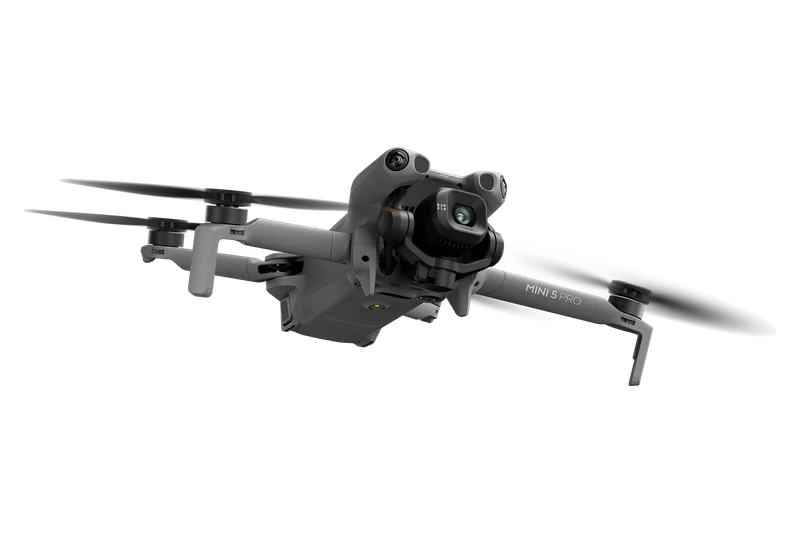
Air 3S or Mini 5 Pro?
The same 1-inch wide camera in a much smaller drone, but no tele. About 249.9 g, right at the line.
249.9 g · 36 min · 1 camera
Side by side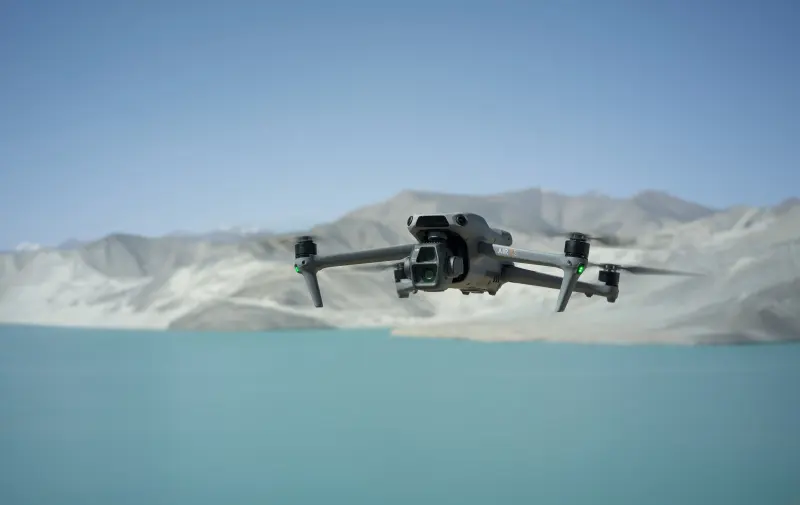
DJI's 724 g folding travel drone with two cameras: a 1-inch 50 MP wide-angle and a 1/1.3-inch 48 MP medium tele at 70 mm. At that weight it must be registered whether you fly for fun or for work, and it flies up to 45 minutes.
Yes, you can fly it for fun. It is over the 0.55 lb (250 g) line, so register it and pass the free TRUST test first. Remote ID is built in.
Yes, for work under Part 107. Register it, hold a Part 107 certificate, and keep it away from people who aren't part of the flight.
The FAA rules follow the weight at takeoff and the reason you fly, never the brand. At 724 g the Air 3S is far over the 0.55 lb line, so it is registered under both rulebooks, and as a registered drone it must broadcast Remote ID, which it does on its own.
Register it before the first flight. $5 for 3 years, and one number covers every drone you own. Write the number on the drone.
Register it before the first flight. Under Part 107 every drone is registered on its own: $5 per drone for 3 years.
NeededThe aircraft is operated exclusively in compliance with 49 U.S.C. 44809 and weighs 0.55 pounds or less on takeoff, including everything that is on board or otherwise attached to the aircraft14 CFR 48.15(b), Requirement to register (eCFR)
What it means: only a drone flown for fun at 0.55 lb (249.48 g, or 8.8 ounces) or less, with everything attached, skips FAA registration. DJI lists the Air 3S at 724 g, 474.52 g over the line, so that exception never applies to it, for fun or for work.
Flown for fun, the Air 3S is registered under the exception for limited recreational operations: the registration costs $5, lasts 3 years and covers every drone you own. Flown for work under Part 107, every drone is registered on its own, at $5 per drone for 3 years. Either way the owner must be 13 or older. The step-by-step answer for any drone: do I have to register my drone?
Built in, nothing to buy. Its built-in Remote ID, under the FAA's accepted declaration RID000002046, covers the broadcast from takeoff to shutdown, and it won't take off if its self-test fails. Add its serial number when you register.
Built inThe Remote ID rule applies to drones that are registered or must be (14 CFR 89.101), so it applies to every Air 3S flight. Such a drone flies as a standard Remote ID drone, with a broadcast module, or only inside an FAA-recognized identification area (FRIA). The FAA has accepted DJI's declaration for the Air 3S: RID000002046, FCC ID SS3-CZ3SCL24, revision 0, created October 17, 2024 and updated October 21, 2024. On November 14, 2026 the FAA's list had 487 accepted records, 55 of them from DJI. The public record leaves its serial-number fields blank, and the FAA tells owners to check its declaration system and list each standard Remote ID drone's serial number when they register.
DJI's user manual v1.0 says the Air 3S Remote ID system meets 14 CFR Part 89 and broadcasts from takeoff to shutdown; it runs a self-test before takeoff, and the drone cannot take off if the test fails. With a controller that has no satellite receiver of its own, which DJI names as the DJI RC-N3 and the DJI Goggles 2, the broadcast takes its location from the connected phone or tablet, with DJI Fly in the foreground and location allowed. For fun or for work, the registered Air 3S flies on its built-in broadcast, with its serial number on the registration.
14 CFR 89.101 · FAA declaration RID000002046 · DJI Air 3S User Manual v1.0Pass TRUST, the FAA's free online safety test, once. Keep proof that you passed with you when you fly.
Hold a Part 107 certificate. You must be 16 or older and pass the FAA knowledge test, about $175.
NeededA recreational flyer passes the aeronautical knowledge and safety test and shows proof when the FAA or police ask.
A Part 107 pilot in command holds a remote pilot certificate with a small UAS rating.
TRUST for fun, Part 107 for work. Flying for fun, pass the FAA's free online TRUST test and keep proof that you passed. Flying for work needs a Part 107 remote pilot certificate: at least 16 years old and a passed knowledge test.
49 U.S.C. 44809(a)(7)14 CFR 107.12 and 107.61Up to 400 ft above the ground, always in sight. Near airports, ask permission first; a LAANC app usually approves it in near real time.
400 ftSame ceiling for both rulebooks. Flying for fun, fly within your visual line of sight, at or below 400 ft in uncontrolled (Class G) airspace; controlled airspace needs FAA authorization. Part 107 flights stay at or below 400 ft above the ground, at no more than 100 mph (87 knots), with 3 statute miles of visibility.
Controlled airspace near airports (Class B, C, D and the airport's Class E surface area) needs FAA authorization first.
49 U.S.C. 44809(a)(3), (a)(5) and (a)(6) · 14 CFR 107.31, 107.41 and 107.51Not over people who aren't part of your flight. It is over the Category 1 weight, and the FAA has no declaration for it in Category 2 or 3.
NoUnder Part 107, flying over people in Category 1 takes a drone of 0.55 lb or less, everything attached included, with no exposed rotating parts that would lacerate human skin (14 CFR 107.110(a)); Categories 2 and 3 need an FAA-accepted declaration. At 724 g the Air 3S is over the Category 1 weight, and the FAA's list of operations-over-people declarations (29 accepted records) has no Air 3S record.
14 CFR 107.39 and 107.110(a)Drones you own keep flying. DJI went on the FCC Covered List on December 22, 2025. That stops new DJI approvals, not drones already bought.
FliesDJI drones have been on the FCC Covered List since December 22, 2025, which stops new FCC authorizations for DJI. Existing authorizations are not revoked, and the only import and marketing ban in force covers equipment added to the list in 2024 or earlier. The FCC says even its proposed import and marketing bans would not affect drones people already bought, and DJI says owners can keep using the DJI products they have. On November 14, 2026, DJI's U.S. site still had Air 3S product, specs, FAQ, downloads and support pages, and its camera-drone listing still showed an Air 3S tile; DJI's own U.S. online store listed no drones. Last listed on DJI's U.S. page: $1,099 (DJI RC-N3), marked out of stock (read November 14, 2026).
Updates: DJI's U.S. specs page prints no “Guaranteed software updates” date for the Air 3S, though it does for the Air 3, Mini 4 Pro and Mavic 3 Pro (2026/12/31). The newest Air 3S firmware is V01.00.1900 of November 13, 2026, and an FCC waiver lets DJI drones authorized before the listing get firmware updates until at least January 1, 2029. Every DJI model's U.S. status: DJI drones; the whole story: DJI ban in the U.S.
FCC DA 25-1086, DA 26-742, DA 26-69 and DA 26-454| How you fly it | FAA registration | Remote ID | Pilot test |
|---|---|---|---|
| For fun | Needed: 724 g, over 0.55 lb; $5 covers every drone you own for 3 years | Needed: built in, on from takeoff to shutdown | TRUST |
| For work, under Part 107 | Needed for every drone: $5 per drone for 3 years | Needed: built in, on from takeoff to shutdown | Part 107 certificate |
What the FAA rules ask of an Air 3S: from 14 CFR 48.15, 89.101 and 89.110, the FAA's registration and Remote ID pages, DJI's user manual v1.0 and the FAA's Remote ID declaration RID000002046.
That depends on the place, the hour and the airspace, not the drone, and as the pilot you are responsible for knowing where it is and is not safe to fly. Our flight check takes a place and the Air 3S and returns one verdict with its reasons: no-fly zones, airspace, the ceiling, wind against the Air 3S's 26.8 mph rating, and daylight. The FAA's B4UFLY service, offered through FAA-approved companies, also shows where recreational flyers can fly, including temporary flight restrictions.
Check a placeThe Air 3S carries two cameras on one 3-axis gimbal: a 1-inch 50 MP wide-angle camera for landscapes, and a 1/1.3-inch 48 MP medium tele camera at 70 mm that brings far things closer without flying closer.
Tap a photo to see it large.
The wide-angle camera has a 1-inch CMOS sensor with 50 MP effective, behind a 24 mm equivalent lens at f/1.8 with an 84° field of view. The medium tele camera has a 1/1.3-inch CMOS sensor with 48 MP effective, a 70 mm equivalent lens at f/2.8 and a 35° field of view. Digital zoom runs 1 to 2.9x on the wide camera and 3 to 9x on the tele. DJI gives a dynamic range of up to 14 stops on each camera, in Auto mode only and not for vertical or slow-motion video. Both cameras shoot 9:16 vertical video at up to 2.7K and 60 fps.
Both cameras record 4K at up to 60 fps. 4K at 120 fps and 1080p at 240 fps are slow-motion rates, only in Slow Motion mode, and slow-motion and 4K recording use H.265. Color modes are Normal, HLG and D-Log M; HLG and D-Log M record 10-bit 4:2:0. Video is MP4 (H.264 or H.265) at up to 130 Mbps.
At 724 g it weighs nearly three times the 0.55 lb (250 g) line where registration starts for hobby flyers, and DJI rates it at 45 minutes in the air.
Flying for work under Part 107, every drone is registered, whatever it weighs.
The figures that decide a flight, from DJI's U.S. specs page, read November 14, 2026.
DJI's 45 minutes come from its own test, flying forward at a constant 20.1 mph (32.4 km/h) with no wind at sea level; hovering, DJI gives 41 minutes. One battery covers 19.9 mi (32 km) of flight. The 47.0 mph (21 m/s) top speed is DJI's figure at sea level with no wind in Sport mode; DJI also prints 60.4 mph (27 m/s) with a 6 m/s tailwind, and 42.5 mph (19 m/s) in the EU. The Air 3S climbs and descends at up to 32.8 ft/s (10 m/s), takes off from up to 19,685 ft (6000 m) above sea level, and is not waterproof. DJI's propeller guards add 43 g, which makes 767 g (1.69 lb), and Nifty mode is not available with them fitted.
The drawing shows the drone's size unfolded, without propellers, at one scale.
Below are DJI's figures for the drone, both cameras, sensing, the video link, the battery, storage and the controllers, and the FAA's record on Remote ID. The key ones first; the full sheet is one click away.
| Flight time | 45 min forward at 20.1 mph; 41 min hovering |
|---|---|
| Top speed | 47.0 mph, Sport mode |
| Wind it handles | 26.8 mph |
| Climb and descent | 32.8 ft/s |
| Highest takeoff | 19,685 ft above sea level |
| Temperature | 14 to 104 °F |
| Satellites | GPS, Galileo, BeiDou |
| Water | Not waterproof; land if it rains |
| Wide camera | 1-inch, 50 MP, 24 mm, f/1.8 |
|---|---|
| Tele camera | 1/1.3-inch, 48 MP, 70 mm, f/2.8 |
| Video | 4K up to 60 fps; 4K 120 fps slow motion |
| Vertical video | 2.7K, 1512 × 2688 |
| Bitrate | Up to 130 Mbps |
| Color | 10-bit D-Log M and HLG |
| Storage | 42 GB inside, plus microSD |
| Video link | DJI O4, 12.4 mi (FCC) |
DJI pairs omnidirectional binocular vision with a forward-facing LiDAR and a downward infrared sensor. Forward, the vision system measures from 1.6 to 59.1 ft (0.5 to 18 m) at flight speeds up to 33.6 mph (15 m/s), and needs surfaces with texture and lighting above 1 lux. DJI calls the LiDAR's part nightscape omnidirectional obstacle sensing, says to keep the LiDAR clean, and says it does not work properly in bright light. GPS, Galileo and BeiDou give the position.
The Air 3S's Intelligent Flight Battery is a 4276 mAh, 62.5 Wh Li-ion 4S pack at 14.6 V that weighs about 247 g: 45 minutes of flight time and 41 of hovering in DJI's test. It charges in about 80 minutes with the DJI 65W Portable Charger, or about 60 minutes with the DJI 100W USB-C Power Adapter and the battery charging hub. The hub charges three batteries in sequence, takes Air 3 and Air 3S batteries, and can move charge from the lower-charged batteries to the highest-charged one.
DJI O4 carries a 1080p live view at 30 or 60 fps on the 2.4, 5.1 and 5.8 GHz bands, with about 120 ms latency. DJI rates it at up to 12.4 mi (20 km) one way under the FCC rating, unobstructed and free of interference, 6.2 mi (10 km) under CE, and about 0.9 to 2.5 mi (1.5 to 4 km) in a city. Flown for fun or for work, the drone still has to stay within your visual line of sight.
The Air 3S has 42 GB of internal storage and a microSD slot; DJI recommends Lexar 1066x and Kingston Canvas Go! Plus microSDXC cards from 64 to 512 GB. Files download at 10 MB/s over O4 with the DJI RC-N3 or DJI RC 2, or at up to 30 MB/s over Wi-Fi, and the drone has Bluetooth 5.2.
| Takeoff weight | 724 g (25.5 oz, 1.60 lb) |
|---|---|
| Dimensions folded (without propellers) | 8.4 × 4.0 × 3.5 in (214.19 × 100.63 × 89.17 mm) |
| Dimensions unfolded (without propellers) | 10.5 × 12.8 × 4.2 in (266.11 × 325.47 × 106.0 mm) |
| Max ascent speed | 32.8 ft/s (10 m/s) |
| Max descent speed | 32.8 ft/s (10 m/s) |
| Max horizontal speed | 47.0 mph (21 m/s) at sea level with no wind, Sport mode; 60.4 mph (27 m/s) with a 13.4 mph (6 m/s) tailwind; 42.5 mph (19 m/s) in the EU region |
| Max takeoff altitude | 19,685 ft (6000 m) |
| Max flight time | 45 minutes, flying forward at a constant 20.1 mph (32.4 km/h) with no wind at sea level, Obstacle Avoidance set to Brake, Photo mode |
| Max hovering time | 41 minutes, no wind, sea level |
| Max flight distance | 19.9 mi (32 km), flying at 30.2 mph (48.6 km/h) |
| Max wind speed resistance | 26.8 mph (12 m/s) |
| Max pitch angle | 36 degrees |
| Operating temperature | 14 to 104 °F (−10 to 40 °C) |
| GNSS | GPS + Galileo + BeiDou |
| Hovering accuracy, vertical | ±0.3 ft (0.1 m) with vision positioning; ±1.6 ft (0.5 m) with satellite positioning |
| Hovering accuracy, horizontal | ±1.0 ft (0.3 m) with vision positioning; ±1.6 ft (0.5 m) with satellite positioning |
| Internal storage | 42 GB |
| Water resistance | Not waterproof; DJI says to avoid water and to return and land if it rainsSource: DJI's Air 3S FAQ page, Is DJI Air 3S waterproof? |
| App | DJI Fly only; the DJI RC 2 comes with DJI Fly installedSource: DJI's Air 3S FAQ page, app question |
| Image sensors | Wide-angle camera: 1-inch CMOS, 50 MP effective; medium tele camera: 1/1.3-inch CMOS, 48 MP effective |
|---|---|
| Lens, wide-angle camera | FOV 84 degrees; 24 mm equivalent; f/1.8; focus 1.6 ft (0.5 m) to infinity |
| Lens, medium tele camera | FOV 35 degrees; 70 mm equivalent; f/2.8; focus 9.8 ft (3 m) to infinity |
| Dynamic range | Up to 14 stops on each camera (DJI footnote: Auto mode, not vertical or slow-motion video)Source: DJI's Air 3S FAQ page, improvements over DJI Air 3, item 1 and footnote |
| ISO range, video | Normal 100-12800; D-Log M and HLG 100-3200; slow motion: Normal 100-6400, D-Log M and HLG 100-3200 |
| ISO range, photo | 100-6400 (12 MP); 100-3200 (48 MP and 50 MP) |
| Shutter speed, wide-angle camera | 12 MP: 1/8000-2 s (2.5-8 s simulated long exposure); 50 MP: 1/8000-2 s |
| Shutter speed, medium tele camera | 12 MP: 1/16000-2 s (2.5-8 s simulated long exposure); 48 MP: 1/8000-2 s |
| Max image size | Wide-angle 8192x6144; medium tele 8064x6048 |
| Still photography modes | Single shot 12 MP and 50 MP (tele 12 MP and 48 MP); burst 12 MP 3/5/7 frames, 50 or 48 MP 3/5 frames; AEB 12 MP 3/5/7 frames, 50 or 48 MP 3/5 frames at 0.7 EV step; timed 12 MP 2-60 s, 50 or 48 MP 5-60 s |
| Photo format | JPEG / DNG (RAW) |
| Video resolution, both cameras | 4K 3840x2160 at 24/25/30/48/50/60 fps and 120 fps slow motion; FHD 1920x1080 at 24/25/30/48/50/60 fps and 120/240 fps slow motion; 2.7K vertical 1512x2688 at 24/25/30/48/50/60 fps |
| Slow motion and codec note | 120 and 240 fps are recording frame rates that play back as slow motion; slow-motion and 4K recording are H.265 only |
| Video format | MP4 (MPEG-4 AVC/H.264, HEVC/H.265) |
| Max video bitrate | 130 Mbps (H.264/H.265) |
| Color mode and sampling | Normal FHD/2.7K: 8-bit 4:2:0 (H.264) or 10-bit 4:2:0 (H.265); HLG and D-Log M FHD/2.7K: 10-bit 4:2:0; Normal, HLG and D-Log M 4K: 10-bit 4:2:0 (H.265) |
| Digital zoom | Wide-angle 1-2.9x; medium tele 3-9x |
| File system | exFAT |
| Stabilization | 3-axis mechanical gimbal (tilt, roll, pan) |
|---|---|
| Mechanical range | Tilt −135 to 70 degrees; roll −50 to 50; pan −27 to 27 |
| Controllable range | Tilt −90 to 60 degrees; pan −5 to 5 |
| Max control speed and vibration | Tilt 100 degrees/s; angular vibration ±0.0037 degrees |
| Vertical shooting | Both cameras shoot 9:16 vertical, up to 2.7K at 60 fpsSource: DJI's Air 3S FAQ page, vertical shooting question |
| Sensing type | Omnidirectional binocular vision, plus forward-facing LiDAR and a downward infrared sensor |
|---|---|
| Forward | Measurement 1.6-59.1 ft (0.5-18 m); detection 1.6-656 ft (0.5-200 m); at flight speeds up to 33.6 mph (15 m/s); FOV 90 degrees horizontal, 72 vertical |
| Backward and lateral | Backward 1.6-59.1 ft (0.5-18 m), lateral 1.6-98.4 ft (0.5-30 m), both at flight speeds up to 31.3 mph (14 m/s) |
| Upward and downward | Upward 1.6-59.1 ft (0.5-18 m), downward 1.0-45.9 ft (0.3-14 m), both at flight speeds up to 13.4 mph (6 m/s) |
| Operating environment | Surfaces with discernible patterns and lighting above 1 lux; downward also needs diffuse reflectivity above 20% |
| 3D infrared sensors | Forward LiDAR at night 1.6-82.0 ft (0.5-25 m); downward infrared 1.0-26.2 ft (0.3-8 m); reflectivity above 10% |
| LiDAR limits | Keep the LiDAR clean; it does not work properly in bright lightSource: DJI's Air 3S FAQ page, LiDAR question |
| System and live view | DJI O4; 1080p/30fps and 1080p/60fps |
|---|---|
| Operating frequencies and power | 2.4 GHz, 5.1 GHz and 5.8 GHz bands; EIRP under 33 dBm (FCC) at 2.4 and 5.8 GHz |
| Max range, no interference | 12.4 mi (20 km) FCC; 6.2 mi (10 km) CE, SRRC, MIC; one-way, unobstructed |
| Range with interference | Urban about 0.9-2.5 mi (1.5-4 km); suburban about 2.5-6.2 mi (4-10 km); suburb or seaside about 6.2-12.4 mi (10-20 km); FCC, unobstructed |
| Range obstructed | Behind buildings about 0.0-0.3 mi (0-0.5 km); behind trees about 0.3-1.9 mi (0.5-3 km) |
| Download speed | O4 10 MB/s with the DJI RC-N3 or DJI RC 2; Wi-Fi 5 up to 30 MB/s |
| Latency and antennas | About 120 ms; 6 antennas, 2T4R |
| Wi-Fi and Bluetooth | Wi-Fi 802.11 a/b/g/n/ac at 2.4 and 5.8 GHz; Bluetooth 5.2 |
|---|
| Capacity and energy | 4276 mAh; 62.5 Wh |
|---|---|
| Weight | About 247 g (8.71 oz) |
| Voltage and type | 14.6 V nominal; 17.2 V max charging; Li-ion 4S |
| Charging temperature | 41 to 104 °F (5 to 40 °C) |
| Charging time | About 80 minutes with the DJI 65W Portable Charger; about 60 minutes with the DJI 100W USB-C Power Adapter and the charging hub |
| Chargers | DJI 65W Portable Charger, 65 W; DJI 100W USB-C Power Adapter, 100 W total, 82 W max per port when both ports are used |
|---|---|
| Charging hub | Charges three batteries in sequence; takes DJI Air 3 and DJI Air 3S batteries |
| Hub power accumulation | Power accumulation: lower-charged batteries pass their charge to the highest-charged one; external discharge through USB-C to phones and tablets at up to 82 WSource: DJI's Air 3S FAQ page, charging hub question |
| Car charger | 65 W rated, 12.7-16 V car input |
| Recommended microSD cards | Lexar 1066x and Kingston Canvas Go! Plus, each 64/128/256/512 GB V30 U3 A2 microSDXC |
|---|
| Controllers DJI names | DJI RC-N3, DJI RC-N2 and DJI RC 2Source: DJI's Air 3S FAQ page, Which remote controllers are compatible with DJI Air 3S? |
|---|---|
| Controller firmware in the release notes | DJI RC Pro 2, DJI RC 2, DJI RC-N2 and DJI RC-N3; the RC Pro 2 first appears in the entry of July 30, 2026Source: DJI Air 3S release notes, entries November 13, 2026 and July 30, 2026 |
| DJI RC-N3 operating time | 3.5 hours; 1.5 hours while charging a phone |
| DJI RC-N3 weight and size | About 320 g (11.29 oz); 4.1 × 5.9 × 1.8 in (104.2 × 150 × 45.2 mm) |
| DJI RC-N3 phone size and ports | Phones up to 7.1 × 3.4 × 0.4 in (180 × 86 × 10 mm); Lightning, USB-C and Micro-USB (the Micro-USB cable is sold separately) |
| DJI RC-N3 battery and charging | 9.36 Wh (3.6 V, 2600 mAh); 2 hours with a 5V/2A charger |
| DJI RC 2 | Fast charging at 9V/3A in about 1.5 hours; third-party apps are not supportedSource: DJI's Air 3S FAQ page, DJI RC 2 questions |
| FAA declaration of compliance | RID000002046, model Air 3S, accepted; FCC ID SS3-CZ3SCL24; revision 0; created October 17, 2024, updated October 21, 2024; means of compliance ASTM F3586-22 with corrections (accepted); serial fields blank in the public recordSource: FAA Remote ID declaration RID000002046, record fields |
|---|---|
| Manual statement | Meets 14 CFR Part 89; broadcasts from takeoff to shutdown; runs a pre-flight self-test and cannot take off if it fails; monitored in flightSource: DJI Air 3S User Manual v1.0, PDF pp.92-93, 7.12 FAR Remote ID Compliance Information |
| Location source | Controllers without GNSS (DJI names the RC-N3 and Goggles 2) need a connected phone or tablet running DJI Fly in the foreground with location allowedSource: DJI Air 3S User Manual v1.0, PDF pp.92-93, first bullet and footnote [1] |
| Newest aircraft firmware | V01.00.1900 of November 13, 2026 (DJI Fly v1.21.18); Fixed some known issuesSource: DJI Air 3S release notes, first entry |
|---|---|
| Oldest entry | v01.00.0300 of October 15, 2024Source: DJI Air 3S release notes, last entry |
| Propellers | 8747F; 6.4 g (0.23 oz) eachSource: DJI Air 3S User Manual v1.0, PDF p.88, List of Items |
|---|---|
| ND filters and wide-angle lens | ND 8/32/128 set, 2.9 g (0.10 oz) each; wide-angle lens 11.8 g (0.42 oz); sold separatelySource: DJI Air 3S User Manual v1.0, PDF p.88, List of Items |
| Propeller guards | 43 g (1.52 oz); 22.9 × 19.8 × 4.1 in (581.5 × 502 × 105 mm); sold separatelySource: DJI Air 3S User Manual v1.0, PDF p.88, List of Items |
| Propeller guards and Nifty mode | Nifty mode is not available with the propeller guards fittedSource: DJI Air 3S User Manual v1.0, PDF p.51, Nifty mode notes |
| Cellular dongle | DJI Cellular Dongle 2 (IG831T) about 11.5 g plus a nanoSIM about 0.5 g; sold separatelySource: DJI Air 3S User Manual v1.0, PDF p.88, List of Items |
| Air 3 parts that fit | Air 3 Low-Noise Propellers, Air 3 Battery Charging Hub and the Air 3 battery (no Off-State QuickTransfer with the Air 3 battery)Source: DJI's Air 3S FAQ page, compatibility question |
85 figures, from DJI's Air 3S specs page (U.S.) unless a row names another document. Data read November 14, 2026.
Every figure is DJI's or the FAA's. The table follows DJI's Air 3S specs page for the U.S. unless a row names another document: DJI's user manual v1.0, its FAQ page, its release notes of November 13, 2026, its product and downloads pages, or the FAA's Remote ID declaration RID000002046. DJI's U.S. specs page prints metric figures, apart from temperatures; the imperial figures are our conversions. We read them all on November 14, 2026.
The Air 3S comes in one version with one battery type. Last listed on DJI's U.S. page: $1,099 (DJI RC-N3), marked out of stock (read November 14, 2026). No Fly More Combo appears in that page's data.
DJI's documents name a different number of controllers each, and DJI lists add-ons that each count toward the takeoff weight.
| Controller | Named in | What DJI lists |
|---|---|---|
| DJI RC-N3 | DJI's specs page; DJI's FAQ; DJI's release notes | 3.5 hours, 1.5 hours while charging a phone; about 320 g (11.29 oz) |
| DJI RC 2 | DJI's specs page; DJI's FAQ; DJI's release notes | DJI Fly installed; charges at 9V/3A in about 1.5 hours; third-party apps not supported |
| DJI RC-N2 | DJI's FAQ; DJI's release notes | No figures from DJI |
| DJI RC Pro 2 | DJI's release notes | Firmware in the release notes since July 30, 2026; no line that adds support |
The controllers each DJI document names for the Air 3S, read November 14, 2026: the specs page (U.S.), the FAQ page (U.S.) and the release notes.
| Part | Weight | What DJI says |
|---|---|---|
| Propeller guards | 43 g (1.52 oz) | 767 g (27.1 oz) on the drone; Nifty mode is not available with them fitted |
| ND 8, ND 32 and ND 128 filters | 2.9 g (0.10 oz) each | Sold separately |
| Wide-angle lens | 11.8 g (0.42 oz) | Sold separately |
| DJI Cellular Dongle 2 | About 11.5 g, plus a nanoSIM of about 0.5 g | Sold separately |
The add-ons DJI lists for the Air 3S and what each weighs, from its user manual v1.0, read November 14, 2026. Each part counts toward the takeoff weight.
DJI's FAQ says the Air 3S currently supports three remote controllers: the DJI RC-N3, the DJI RC-N2 and the DJI RC 2. The specs page names the RC-N3 and the RC 2, and details only the RC-N3, which holds a phone of up to 7.1 × 3.4 × 0.4 in (180 × 86 × 10 mm). DJI's release notes also carry DJI RC Pro 2 firmware since the entry of July 30, 2026, with no line that adds support. The DJI RC 2 comes with DJI Fly installed, charges at 9V/3A in about 1.5 hours and does not support third-party apps.
DJI says the Air 3 Low-Noise Propellers, the Air 3 Battery Charging Hub and the Air 3 battery fit the Air 3S; with the Air 3 battery, Off-State QuickTransfer does not work.
Its closest neighbors, and the one difference that should decide it.
The same 1-inch wide camera in a much smaller drone, but no tele. About 249.9 g, right at the line.
249.9 g · 36 min · 1 camera
Side by side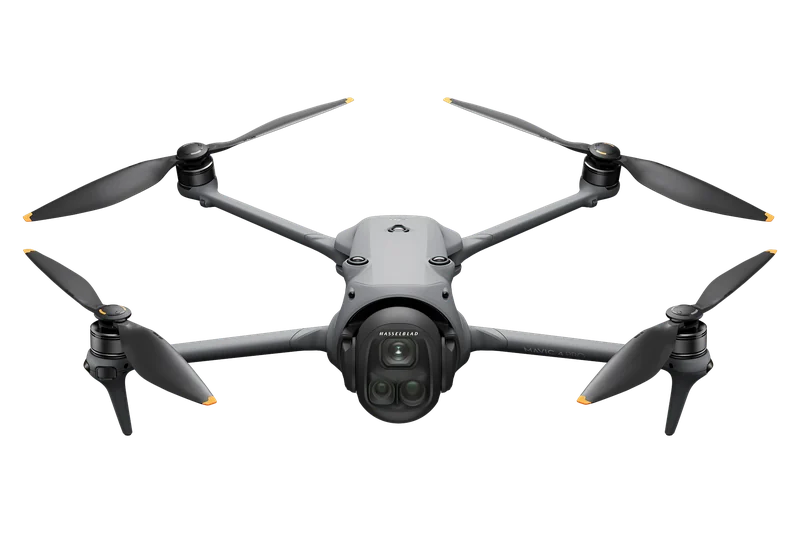
A bigger 4/3 Hasselblad camera plus two teles, and 6 more minutes in the air. Heavier, at about 1063 g.
1063 g · 51 min · 3 cameras
Side by side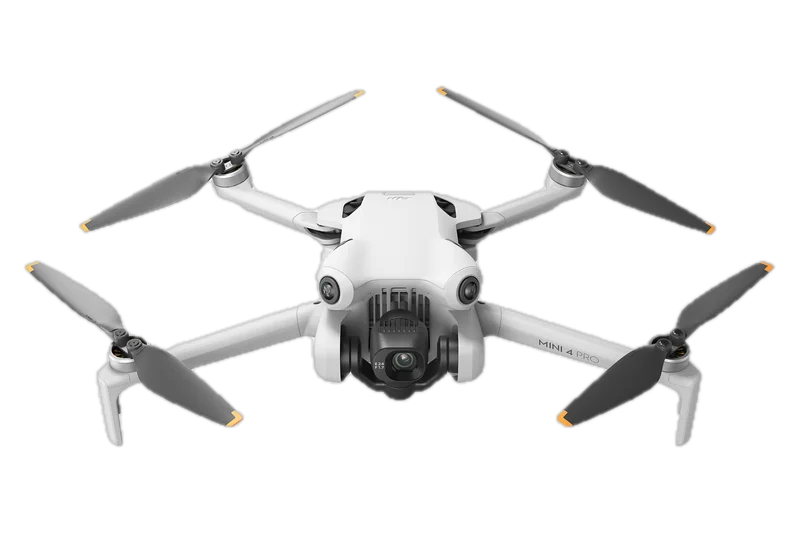
Under 249 g with the standard battery, so no registration when you fly for fun. One 48 MP camera.
249 g · 34 min · 1 camera
Side by sideDJI's own list of Air 3S gains over the Air 3: a 1-inch primary camera with up to 14 stops of dynamic range, 4K/120 slow motion, Free panorama, a forward LiDAR for nightscape omnidirectional sensing, a next-generation Smart RTH and DJI O4 transmission. The Air 3 weighs 720 g and flies 46 minutes, with two 1/1.3-inch 48 MP cameras, 8 GB inside and the same 47.0 mph (21 m/s) top speed; the FAA accepted its Remote ID declaration RID000000714.
Air 3S or Mini 5 Pro? The DJI Mini 5 Pro has the same wide camera spec as the Air 3S, a 1-inch 50 MP sensor behind a 24 mm f/1.8 lens with an 84° view, the same 42 GB inside and the same 12.4 mi (20 km) FCC rating, and flies 36 minutes. DJI lists it at about 249.9 g, plus or minus 4 g, and it has no tele camera. DJI's U.S. site has no Mini 5 Pro page. Side by side in the tool: Mini 5 Pro vs Air 3S.
Air 3S or Mavic 4 Pro? The DJI Mavic 4 Pro weighs about 1063 g and flies 51 minutes, with a Hasselblad 4/3 100 MP camera plus a 48 MP medium tele and a 50 MP tele, and a video link rated at 18.6 mi (30 km) under the FCC. DJI's U.S. site has no Mavic 4 Pro page. Side by side: Air 3S vs Mavic 4 Pro.
Air 3S or Mini 4 Pro? The DJI Mini 4 Pro weighs under 249 g with the standard battery and flies 34 minutes, or 45 with the Battery Plus, with one 1/1.3-inch 48 MP camera, omnidirectional vision with a 3D infrared sensor and a 12.4 mi (20 km) FCC rating. Its built-in Remote ID is on only with the Intelligent Flight Battery Plus. To weigh these drones against your own needs: which drone should I buy?
In flight the Air 3S broadcasts Remote ID from takeoff to shutdown: its serial number, its position, altitude and speed, the controller's position, a time mark and an emergency status. Anyone with a receiver in range can pick it up, and the serial number on your registration links that broadcast to your FAA record. The FAA says Remote ID helps it, law enforcement and other federal agencies find the pilot of a drone flying unsafely or where it is not allowed.
DJI gives 47.0 mph (21 m/s) at sea level with no wind in Sport mode, the same figure as the Air 3, and 42.5 mph (19 m/s) in the EU. With a 6 m/s tailwind DJI prints 60.4 mph (27 m/s). Under Part 107 a flight stays at or below 100 mph (87 knots).
In DJI's test, 45 minutes of flight, flying forward at a constant 20.1 mph with no wind at sea level, and 41 minutes of hovering. One battery charges in about 60 to 80 minutes, depending on the charger.
DJI's own U.S. online store listed no drones on November 14, 2026, and its Air 3S page showed $1,099 with the DJI RC-N3, marked out of stock. Drones already sold can still be flown and updated.
Documents are named, not linked. Each was read on November 14, 2026; DJI's U.S. product, specs and downloads pages, the release notes, the FAA list and record and the FCC Covered List page were checked again for this page on November 14, 2026.
Photos: DJI press images. Wikimedia Commons: DJI Air 3S by Jacek Halicki (CC BY-SA 4.0).