Phone or beacon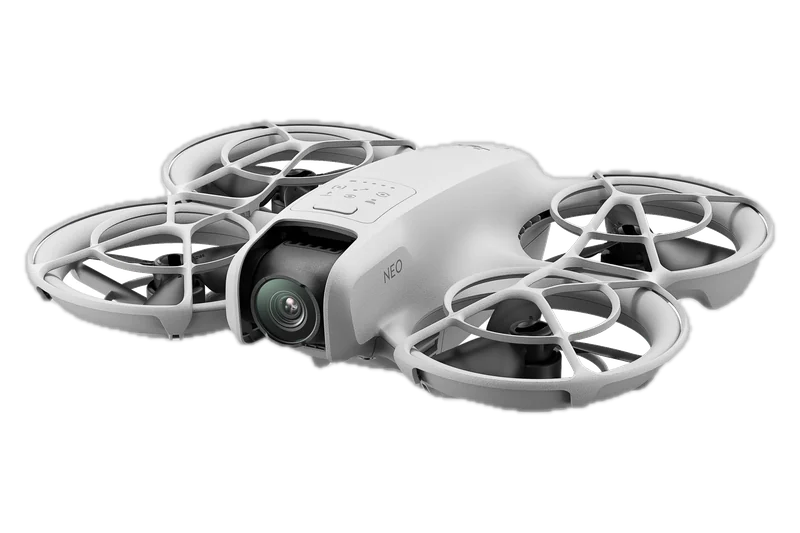
DJI Neo
- Flight time
- About 18 min
- Max flight distance
- 4.3 mi(7 km)
- Transmission range
- 164 ft(50 m), no standard named
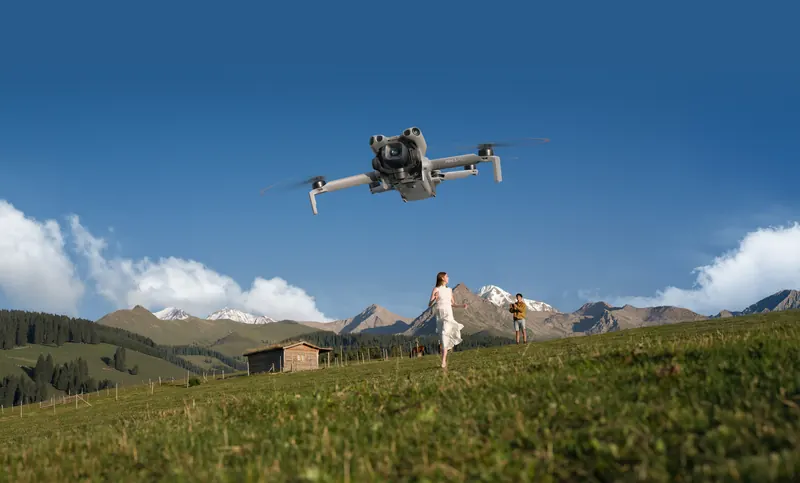
The law sets no distance in feet or miles: the drone must stay within visual line of sight, close enough for you or a visual observer to see it with your own eyes.
Two answers, kept apart on this page. The makers print how long and how far a drone flies on one battery and how far its signal reaches, each measured in their own test conditions.
What the makers measured. For the 14 consumer drones in our data, flight time on one battery runs from 16 to 52 minutes, measured in still air until the battery was empty. 11 of them print a transmission range under the U.S. (FCC) standard; for a remote controller or goggles link it runs from 6.2 to 18.6 miles (10 to 30 km), measured one way with no interference. Flown from a phone over Wi-Fi, the figures are far shorter: 164 feet (50 m) for the DJI Neo and 1,640 feet (500 m) for the DJI Neo 2.
Test figureWhat the law allows. Neither the recreational exception in 49 U.S.C. 44809 nor Part 107 sets a distance in feet or miles for how far a drone can go. Under both, the drone must stay within visual line of sight: you, or a visual observer, must be able to see it with your own eyes, glasses or contact lenses allowed, throughout the flight. That is the rule limiting how far you can fly.
In sightHeight is a separate limit, 400 feet above the ground in most cases: our page on how high a drone can fly covers it.
The makers' figures on this page were read on their own pages, and the rules in the statute and the FAA's regulations, on November 14, 2026. No maker's figure here is a legal distance, and no rule quoted here sets a distance in miles.
Line of sight is one rule. Airspace and height depend on where you stand.
Check your spotThe drone range on a spec sheet is its transmission range: how far the radio link between the drone and its remote controller, goggles or phone reaches.
DJI's footnote says the figure is “Measured in an unobstructed outdoor environment free of interference” and “shows the farthest communication range for one-way, non-return flights under each standard”. Antigravity's footnote for the A1 says the same in its words: “Data reflects maximum one-way transmission distance without return-to-home under each standard.”
So the range figure is not how far the drone will fly. DJI's user manual for the Mini 4K draws that line itself: the transmission distance is how far the aircraft can still send and receive, and “It does not refer to the maximum distance the aircraft can fly in a single flight.” DJI's pages for the Flip and the Mavic 4 Pro add: “The actual max transmission distance during flight is limited by the drone's max flight distance.” The manual also says where the figure is reached: in a wide-open area with no electromagnetic interference, with the drone at about 400 ft (120 m).
The same drone prints a different range under each radio standard. DJI rates the Air 3S at 12.4 miles (20 km) under FCC and 6.2 miles (10 km) under CE, SRRC and MIC. DJI's Mini 3 Pro page lists the United States, with Australia and Canada, under FCC, so the FCC figure is the one for a U.S. pilot. The table below gives the FCC figure and, beside it, the others the maker prints.
The makers print smaller figures for real conditions. Two things affect how far the link reaches in them, and both make a real difference:
DJI's own manual on the transmission distance: “It does not refer to the maximum distance the aircraft can fly in a single flight.”
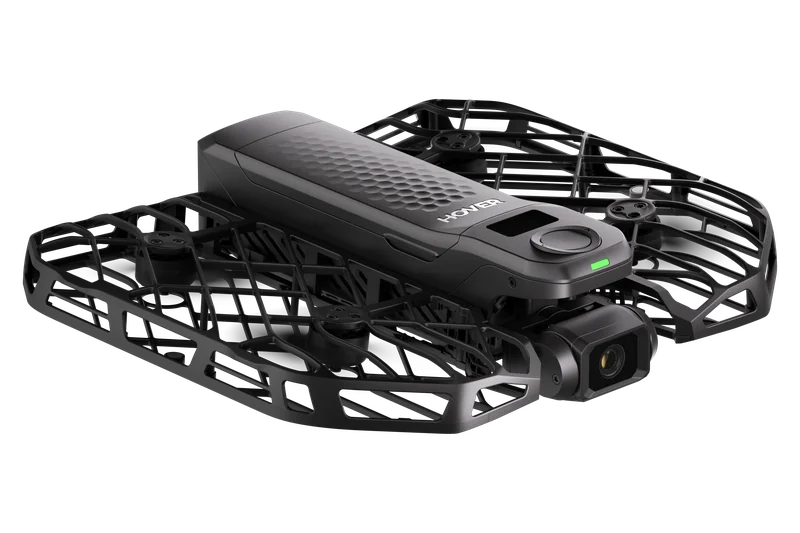
Drones flown from a phone or a beacon are rated at far shorter ranges. HOVERAir prints, for the X1 PRO with its Beacon and JoySticks, 98 to 394 feet (30 to 120 m) in city centers, 328 to 984 feet (100 to 300 m) in suburban areas and parks, and 984 to 2,625 feet (300 to 800 m) in open suburban areas; up to 0.6 miles (1 km) only “under optimal conditions”.
The radio bands: of the makers' pages we read for them, the Neo 2, A1 and HOVERAir X1 PRO list the 2.4 GHz band (2.400-2.4835 GHz), a band at 5.170-5.250 GHz and the 5.8 GHz band (5.725-5.850 GHz); the Potensic ATOM 2 lists the 2.4 GHz band only. DJI notes: “Operating frequency allowed varies among countries and regions.”
A maker's flight time is a test result. For the drones in our data it runs from 16 to 52 minutes on one battery, each flown at one constant speed in still air until the battery ran out.
DJI measures it “in a controlled wind tunnel environment under conditions equivalent to windless operation and sea-level altitude”, flying forward at one constant speed with the camera in Photo mode, “until a forced landing due to battery depletion”. DJI adds: “Actual experience may vary depending on the environment, usage, and firmware version.” Antigravity tested the A1 windless at 77 °F (25 °C), flying forward at 13.4 mph (6 m/s) below 164 ft (50 m) until its low-battery auto-landing; Potensic measured the ATOM 2 at 11.2 mph (5 m/s) in low-altitude, windless conditions; HOVERAir prints no test conditions.
The test speed is not the same for every drone: from 4.5 mph (2 m/s) for the Neo to 20.1 mph (32.4 km/h) for the Air 3S and the Mavic 4 Pro. So two drones' minutes were not measured the same way, and even one drone's can differ: DJI's 36 minutes for the Mini 5 Pro on its standard battery was measured at 13.4 mph (21.6 km/h), its Battery Plus figure at 15.7 mph (25.2 km/h).
Which drone has the longest flight time in our data? The longest figure is 52 minutes, for the DJI Mini 5 Pro with Battery Plus; on a standard battery, 51 minutes, for the DJI Mavic 4 Pro. The shortest is 16 minutes, for the HOVERAir X1 PRO. None reaches 2 hours.
A larger battery is the makers' way to extend your drone's flight: DJI's Intelligent Flight Battery Plus for four Mini models and Antigravity's High-Capacity Flight Battery for the A1, each with its own figure in the table below. Propeller guards reduce flight time: DJI rates the Neo at about 18 minutes, and about 17 with its propeller guards. Hovering is a separate figure: DJI rates the Air 3S at 41 minutes of hovering, measured in a windless environment at sea level, against 45 minutes of forward flight.
52 minutes, for the DJI Mini 5 Pro with Battery Plus; on a standard battery, 51 minutes, for the DJI Mavic 4 Pro.
Max flight distance answers how far the drone can actually go on one battery.
DJI measures it the same way as flight time, at a higher constant speed: the Air 3S flew 19.9 miles (32 km) at 30.2 mph (48.6 km/h) in the wind tunnel, until a forced landing due to battery depletion. Our reading: it is the distance one full battery covers to empty, with nothing kept for a way back. On a flight out and back, the turning point can be no farther than half of it, even in the maker's still air.
Of the 14 drones in our data, 11 print a max flight distance; the longest is 25.5 miles (41 km), for the DJI Mavic 4 Pro. Some drones fly farther on a larger battery; the table gives both figures where the maker prints them. The Mini 4K, HOVERAir X1 PRO and Potensic ATOM 2 print none on the pages we read.
Max flight distance is one full battery flown to empty. Out and back, turn around before you reach half of it.
Here's a quick view of the makers' figures for every drone in our data.
Three kinds of drones show up in it, by how they are flown: with a remote controller (the Mini, Air, Mavic and Flip models and the ATOM 2), with goggles or a motion controller (the Avata 2 and the A1), and from a phone or a beacon (the Neo, the Neo 2 without its transceiver, and the HOVERAir X1 PRO). Under FCC, the consumer drones here flown with a remote controller or goggles typically have a range of 6.2 to 18.6 miles (10 to 30 km); the longest is 18.6 miles (30 km), for the DJI Mavic 4 Pro. If you are choosing a drone, compare any two side by side, or start from drones suitable for beginners.
Each figure is the maker's own test: flight time and max flight distance on one battery, in still air until the battery is empty; transmission range one way, with no interference. How far you may fly is a different answer: visual line of sight.
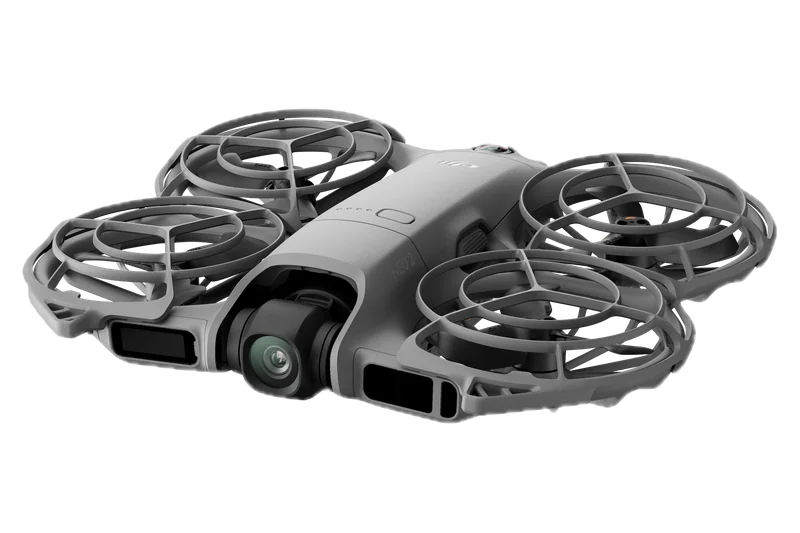
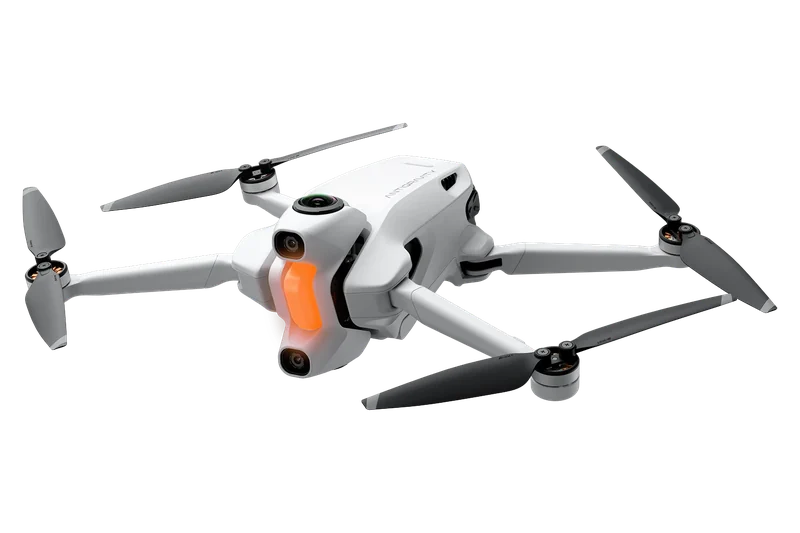
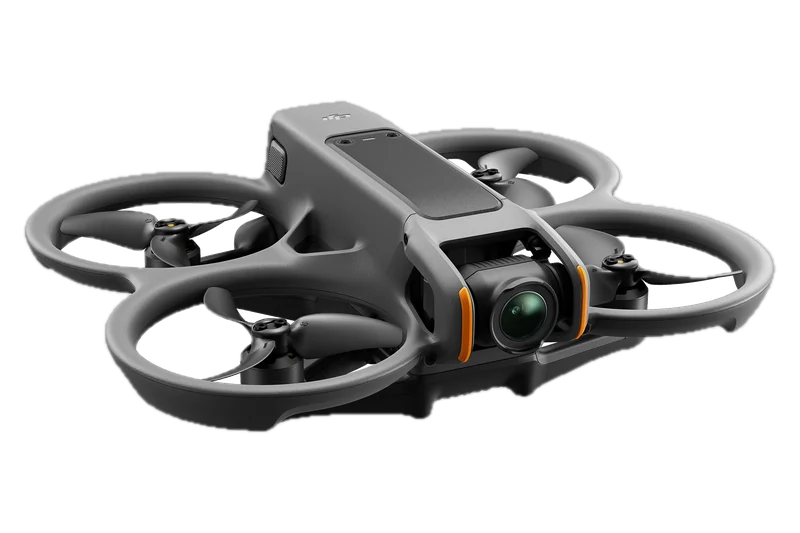
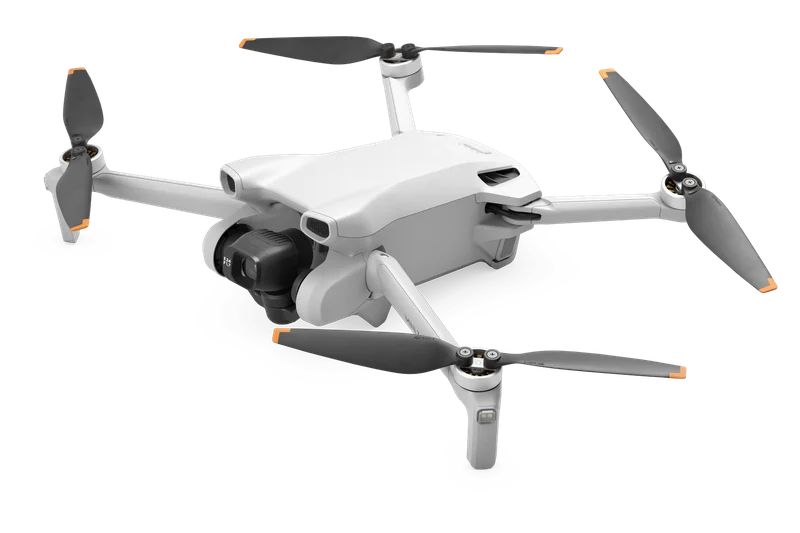
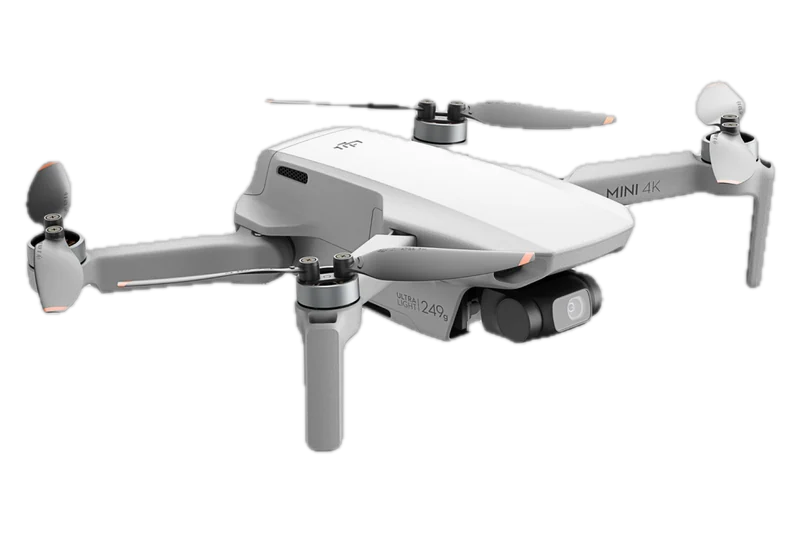
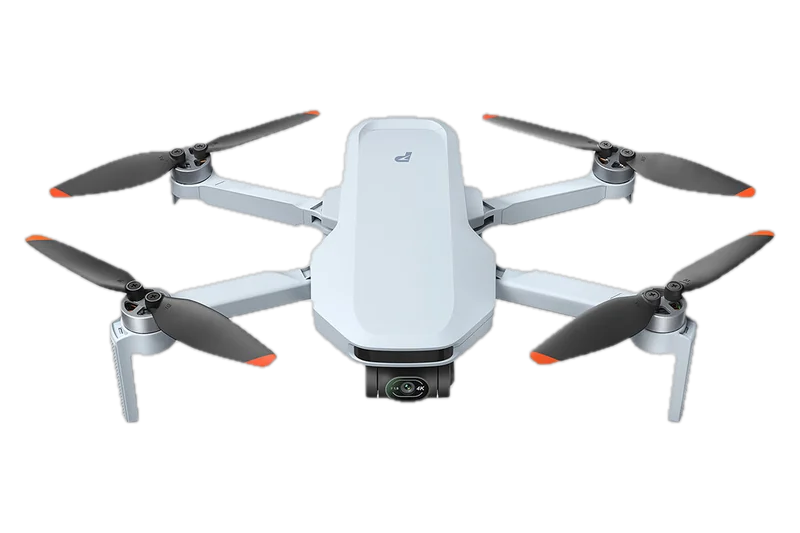
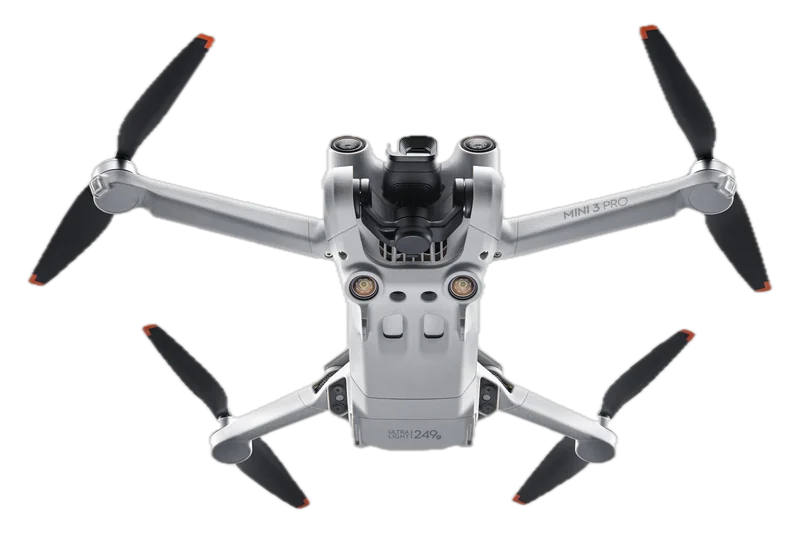
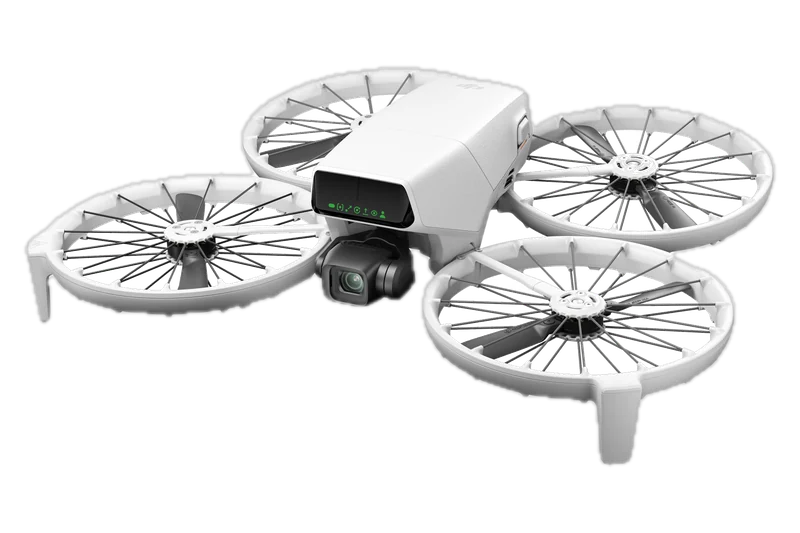
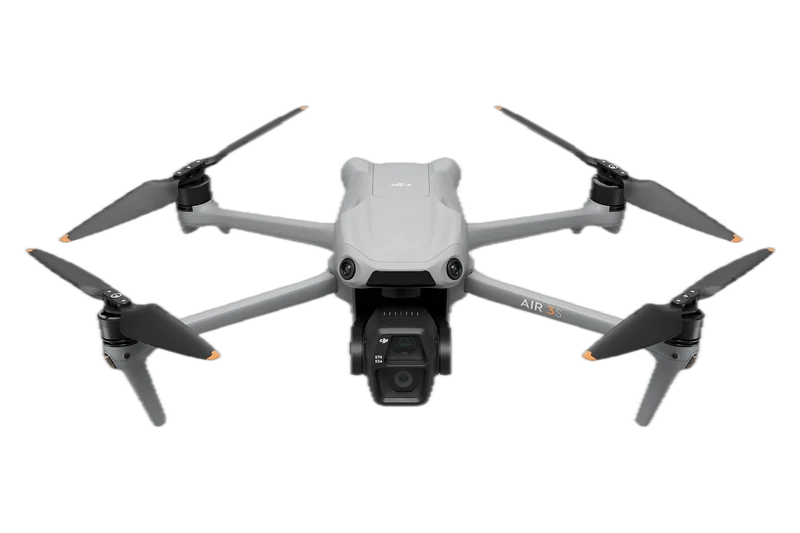
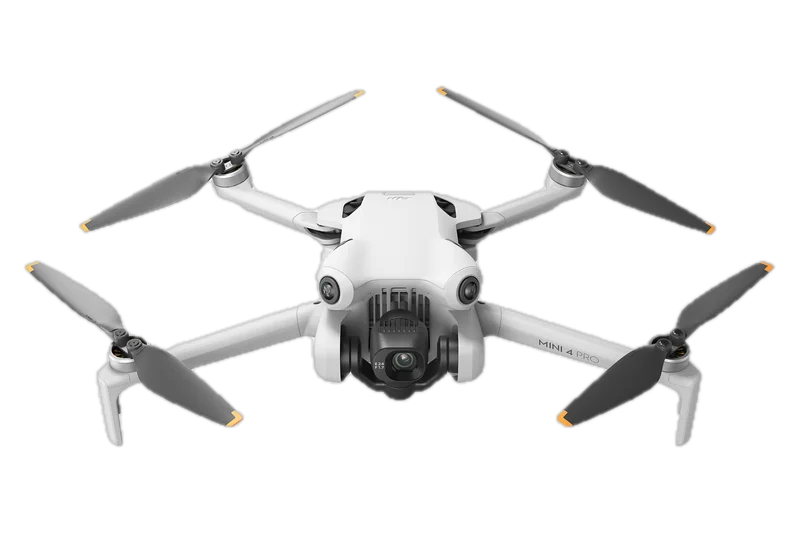
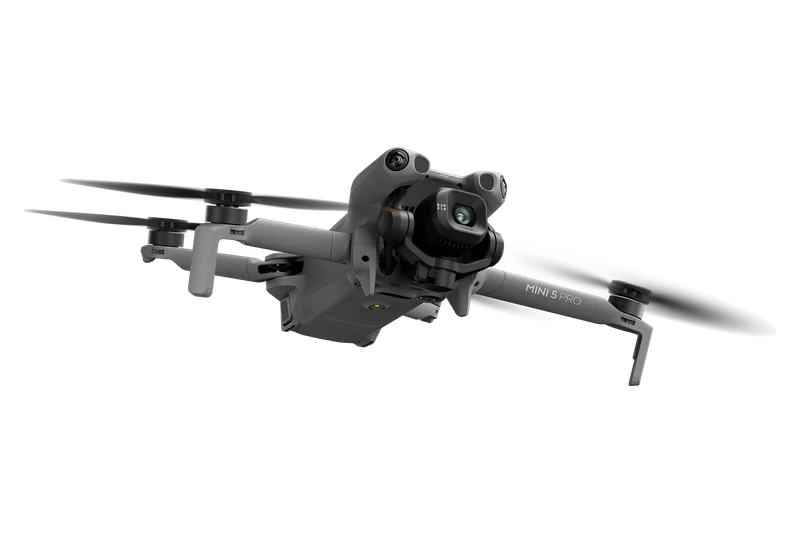
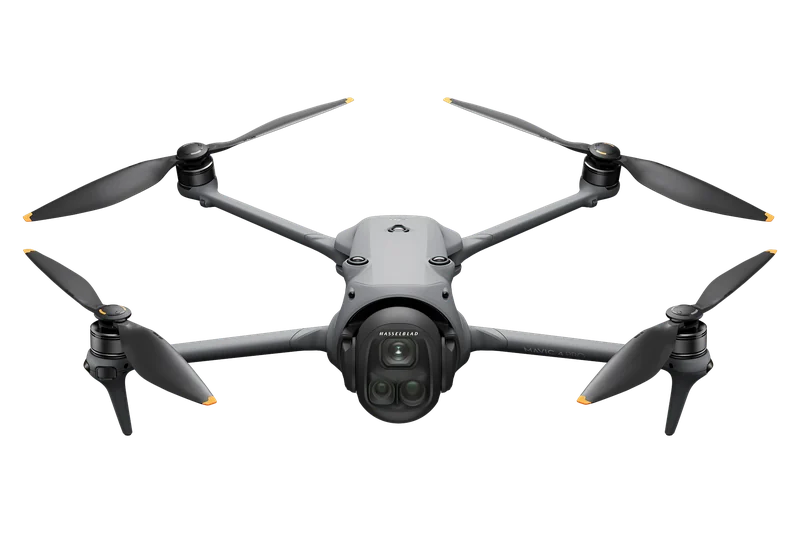
| Drone | Flight time | Max flight distance | Transmission range | Standard | Maker's page |
|---|---|---|---|---|---|
| Antigravity A1 | 24 min; 39 min with High-Capacity Flight Battery | 8.1 mi (13 km); 14.3 mi (23 km) with High-Capacity Flight Battery | 6.2 mi (10 km) | FCC. Other standards: SRRC 5.0 mi (8 km); CE 3.7 mi (6 km); MIC 2.5 mi (4 km) | Antigravity A1 specs page (U.S.) |
| DJI Air 3S | 45 min | 19.9 mi (32 km) | 12.4 mi (20 km) | FCC. Other standards: CE, SRRC and MIC 6.2 mi (10 km) | DJI Air 3S specs page (U.S.) |
| DJI Avata 2 | About 23 min | 8.1 mi (13 km) | 8.1 mi (13 km) | FCC. Other standards: CE, SRRC and MIC 6.2 mi (10 km) | DJI Avata 2 specs page (U.S.) |
| DJI Flip | 31 min | 8.7 mi (14 km) | 8.1 mi (13 km) | FCC. Other standards: CE, SRRC and MIC 5.0 mi (8 km) | DJI Flip specs page (U.S.) |
| DJI Mavic 4 Pro | 51 min | 25.5 mi (41 km) | 18.6 mi (30 km) | FCC. Other standards: CE, SRRC and MIC 9.3 mi (15 km) | DJI Mavic 4 Pro specs page (UK English; no U.S. page) |
| DJI Mini 3 | 38 min; 51 min with Battery Plus | 11.2 mi (18 km); 15.5 mi (25 km) with Battery Plus | 6.2 mi (10 km) | FCC. Other standards: CE, SRRC and MIC 3.7 mi (6 km) | DJI Mini 3 specs page (U.S.) |
| DJI Mini 3 Pro | 34 min; 47 min with Battery Plus | 11.2 mi (18 km); 15.5 mi (25 km) with Battery Plus | 7.5 mi (12 km) | FCC. Other standards: CE, SRRC and MIC 5.0 mi (8 km) | DJI Mini 3 Pro support page with specs (U.S.) |
| DJI Mini 4 Pro | 34 min; 45 min with Battery Plus | 11.2 mi (18 km); none printed for Battery Plus | 12.4 mi (20 km) | FCC. Other standards: CE, SRRC and MIC 6.2 mi (10 km) | DJI Mini 4 Pro specs page (U.S.) |
| DJI Mini 4K | 31 min | Not printed on the maker's pages we read | 6.2 mi (10 km) | FCC. Other standards: CE, SRRC and MIC 3.7 mi (6 km) | DJI Mini 4K user manual v1.0 (English), pages 14 and 49-51; DJI U.S. support page for the Mini 2 SE, whose spec table also lists the Mini 4K |
| DJI Mini 5 Pro | 36 min; 52 min with Battery Plus | 13.0 mi (21 km); 19.9 mi (32 km) with Battery Plus | 12.4 mi (20 km) | FCC. Other standards: CE, SRRC and MIC 6.2 mi (10 km) | DJI Mini 5 Pro specs page (UK English; no U.S. page) |
| DJI Neo | About 18 min (about 17 min with propeller guards) | 4.3 mi (7 km) | 164 ft (50 m), Wi-Fi to a phone | None named | DJI Neo specs page (U.S.) |
| DJI Neo 2 | About 19 min (about 17 min with propeller guards) | 4.3 mi (7 km) | 1,640 ft (500 m), Wi-Fi to a phone; 6.2 mi (10 km) with the Digital Transceiver and a remote controller or goggles | FCC for both. With the transceiver, other standards: CE, SRRC and MIC 3.7 mi (6 km) | DJI Neo 2 specs page (UK English; no U.S. page) |
| HOVERAir X1 PRO | 16 min | Not printed on the maker's page we read | 0.6 mi (1 km) with the Beacon and JoySticks; 1,640 ft (500 m) with the Hover app | None named | HOVERAir X1 PRO and PROMAX product page with specs, at an address with no region |
| Potensic ATOM 2 | 32 min | Not printed on the maker's page we read | 6.2 mi (10 km) | None named | Potensic ATOM 2 specs page, at an address with no region |
DJI's Intelligent Flight Battery Plus. DJI says the Mini 4 Pro's “is not sold in Europe”; the Mini 3 Pro page says it is only available in select countries.
The Mavic 4 Pro, Mini 5 Pro and Neo 2 have no DJI U.S. page. Their figures come from DJI's UK English pages, which print the FCC figure.
The remote controller or goggles link needs the optional DJI Neo 2 Digital Transceiver; DJI measured the flight time and distance without it.
DJI says the transmission range in flight is limited by the drone's max flight distance on the Flip, Mavic 4 Pro, Neo 2 and Avata 2.
The makers' top speeds for our drones run from 26.2 to 60.4 mph (11.7 to 27 m/s); the fastest is the DJI Avata 2, 60.4 mph (27 m/s).
Each is the maker's top horizontal speed in the fastest mode, at sea level in still air. DJI gives the Avata 2's figure for its Manual mode, and prints faster figures with a tailwind for the Air 3S, Flip and Mavic 4 Pro, not used here.
100 mph over the ground at most. The law sets its own limit for Part 107 flights, apart from any maker's figure.
100 mphThe groundspeed of the small unmanned aircraft may not exceed 87 knots (100 miles per hour).14 CFR 107.51(a), Operating limitations for small unmanned aircraft
What it means: under Part 107, the drone's speed over the ground may not go above 100 mph.
No speed in the statute. The text of 49 U.S.C. 44809, the recreational exception, names no speed.
None namedU.S. law answers how far you can fly with a condition, not a number.
Flying for fun and flying under Part 107 put it in different words.
You, or an observer standing next to you and talking with you, must be able to see the drone.
In sightThe aircraft is flown within the visual line of sight of the person operating the aircraft or a visual observer co-located and in direct communication with the operator.49 U.S.C. 44809(a)(3), Exception for limited recreational operations of unmanned aircraft
With your own eyes, glasses or contact lenses allowed, you must see the drone well enough to know where it is, how high it is and which way it flies, to watch for other aircraft and hazards, and to see that it endangers no one.
In sightWith vision that is unaided by any device other than corrective lenses, the remote pilot in command, the visual observer (if one is used), and the person manipulating the flight control of the small unmanned aircraft system must be able to see the unmanned aircraft throughout the entire flight …14 CFR 107.31(a), Visual line of sight aircraft operation
At all times. A drone flown with a Remote ID broadcast module has the same condition in one more rule: it must stay where the person at the controls can see it “at all times throughout the operation”.
At the controlsThe person manipulating the flight controls of the unmanned aircraft system must be able to see the unmanned aircraft at all times throughout the operation.14 CFR 89.115(a)(2)(ii), Remote identification broadcast modules
Neither text states a distance in feet or miles: the limit is what the person can see unaided. The FAA's recreational page gives the reason, that flyers keep the drone in sight “so they can see if other aircraft are near them and safely avoid”. Its Part 107 guidance, AC 107-2A, asks pilots to fly “closely enough to ensure visibility requirements are met”; brief glances away are allowed, but “no specific time interval exists”.
Neither the statute nor Part 107 names feet or miles. The drone stays where you, or your observer, can see it.
The FAA's guidance answers the common questions about keeping the drone within visual line of sight, for each rulebook in its own cell.
A flight follows one rulebook or the other.
| Case | Flying for fun | Part 107 |
|---|---|---|
| Who must see the drone | You, or a visual observer co-located and in direct communication with you.49 U.S.C. 44809(a)(3) | The remote pilot in command and the person at the controls, or a visual observer.14 CFR 107.31(b) |
| How they must see it | With vision unaided by any device other than corrective lenses, and the airspace around the drone too, throughout the flight.AC 91-57D, para 2.2.3.1 | With vision unaided by any device other than corrective lenses, throughout the entire flight.14 CFR 107.31(a) |
| Binoculars | In the FAA's guidance for community-based organizations' FPV flying: only momentarily, to enhance situational awareness.AC 91-57D, para 3.3.2.3.1 | Only momentarily.AC 107-2A, para 5.9.1 |
| FPV goggles | A visual observer is necessary.AC 91-57D, para 2.2.3.1 | May be used, but do not satisfy the line of sight requirement.AC 107-2A, para 5.9.1 |
| Talking with the observer | Close enough to talk directly, without technological assistance.AC 91-57D, para 2.2.3.1 | Effective communication at all times; a handheld radio may be used from a distance.14 CFR 107.33(a); AC 107-2A, para 5.9.2.2 |
| Beyond visual line of sight | Not under the exception: such a flight must comply with all the rules generally applicable to drones. The exception has no waiver of its own.49 U.S.C. 44809(b) | Only with a certificate of waiver of 107.31.14 CFR 107.205(c) |
Binoculars do not replace your own eyes: the FAA's words in both advisory circulars are “may be used only momentarily”. FPV goggles are the same case: under Part 107, “First person view devices may be used during operations, but do not satisfy the VLOS requirement.” A visual observer who keeps the drone in sight is optional in both rulebooks, but necessary for a recreational flight with goggles. Under Part 107 the pilot, the person at the controls and the observer keep track of the drone “through direct visual observation”, and one person may not fly or observe more than one drone at the same time.
Drones must stay within visual line of sight under both rulebooks: if you can't see your drone with your own eyes and your observer can't either, it is beyond visual line of sight.
Flying for fun, there is no waiver; under Part 107 the FAA may waive the line of sight rule. Part 108, a rule for such flights, is proposed, not adopted.
No waiver of its own. The recreational exception has no waiver process of its own. A flight that does not meet its limits, such as one beyond visual line of sight, “must comply with all statutes and regulations generally applicable” to drones.
No waiverWith a waiver. The FAA may issue a certificate of waiver “if the Administrator finds that a proposed small UAS operation can safely be conducted” under its terms, and the request needs a complete description and justification. A waiver is how Part 107 can allow drones to fly beyond visual line of sight: the FAA's waiver page lists, under 107.31, the request to “Fly a small UAS beyond your ability to clearly determine the position, altitude, attitude, and movement of the sUA”. Applications go through the FAA's Aviation Integrated Safety (AIS) Services, and “You do not need a waiver to fly a drone when complying with all part 107 regulations.” A guide to Part 107 waivers is planned.
WaiverSection 107.31—Visual line of sight aircraft operation. However, no waiver of this provision will be issued to allow the carriage of property of another by aircraft for compensation or hire.14 CFR 107.205(c), List of regulations subject to waiver
What it means: the line of sight rule can be waived under Part 107, but not to carry someone else's property for pay.
The visual observer rule (107.33) and the one-drone-at-a-time rule (107.35) are on the same list of rules that can be waived.
On August 7, 2025, the FAA proposed a new part 108, “Normalizing Unmanned Aircraft Systems Beyond Visual Line of Sight Operations” (FR Doc 2025-14992, 90 FR 38212). The proposal “proposes performance-based regulations to enable the design and operation of” drones “at low altitudes beyond visual line of sight (BVLOS)”, for uses it names, among them package delivery, agriculture, aerial surveying, recreation and flight testing. Comments were due October 6, 2025; the comment period was reopened on January 28, 2026 and closed on February 11, 2026.
On November 14, 2026, part 108 was proposed, not adopted: the Federal Register listed no final part 108 rule, the eCFR had no part 108 in Title 14, and an FAA final rule published November 10, 2026 still spoke of the part 108 rulemaking as one to be completed. This page says nothing about when a final rule may come. A guide to flying beyond visual line of sight is planned.
A DJI drone does what you set in the app, Return to Home, Land or Hover, and the FAA expects you to plan for a lost drone before the flight.
What the maker's drone does. DJI's Mini 4K manual: in the DJI Fly app the pilot chooses what the drone does when the remote controller signal is lost, Return to Home, Land or Hover. Failsafe Return to Home starts “after the remote controller signal is lost for more than 11 seconds”, if the Home Point was recorded, the GPS signal is good and the compass works. Return to Home also starts when the battery level is low. DJI's spec pages add: “Always pay attention to RTH reminders in the app during your flight.”
Set it firstWhat the FAA expects. If you can't see your drone and cannot regain sight of it, the FAA's Part 107 guidance, AC 107-2A, says to follow procedures set before the flight; its examples are landing at once, hover mode or a return-to-home sequence. Before each flight, a Part 107 pilot must also make sure there is “enough available power” for the intended operational time.
Plan firstThe rules, the tools and the guides this page draws on.
Not one of the 14 drones in our data. The makers' longest flight time is 52 minutes, for the DJI Mini 5 Pro with Battery Plus, and the longest on a standard battery is 51 minutes, for the DJI Mavic 4 Pro, both measured in still air until the battery was empty.
On a DJI drone, what you set in the app: Return to Home, Land or Hover. DJI's failsafe Return to Home starts after the controller signal has been lost for more than 11 seconds. Separately, the FAA's Part 107 guidance expects procedures set before the flight for a drone you can no longer see.
By the makers' figures, as far as the link reaches: under FCC, 6.2 to 18.6 miles (10 to 30 km) for the remote controller and goggles links in our data, measured one way with no interference, and far less in town. How far you may fly from the controller is a separate question, and the answer is visual line of sight.
16 to 52 minutes for the drones in our data, by the makers' figures, each measured at one constant speed in still air until a forced landing. DJI says actual experience may vary with the environment, usage and firmware.
Among the drones in our data, by the makers' FCC figures, the longest transmission range is 18.6 miles (30 km), for the DJI Mavic 4 Pro. The table above gives every drone's figure and the page it was read on; a figure is one way and with no interference.
DJI rates the Avata 2, flown with goggles, at 8.1 miles (13 km) under FCC, one way, with a max flight distance of 8.1 miles (13 km). The law is what limits an FPV flight: under Part 107 goggles do not satisfy visual line of sight, and a recreational flight with goggles needs a visual observer.
Through Remote ID, in most cases: since September 16, 2023, a drone may fly in U.S. airspace only if the flight meets the standard Remote ID rule or the broadcast module rule, unless the FAA authorizes otherwise or the flight is at an FAA-recognized identification area. With a broadcast module, the drone must stay where the person at the controls can see it. Our page on drone Remote ID has the rest.
This page answers the line of sight part only: the drone must stay where you, or a visual observer, can see it. Airspace and height depend on where you stand, which Can I fly here? checks, and our page on flying over private property covers the land below.
Only momentarily, in the FAA's words in both its recreational and its Part 107 guidance. Seeing the drone has to be done with your own eyes, glasses or contact lenses allowed.
Documents are named, not linked. Each was read on November 14, 2026 for the research; the makers' pages, the statute, the eCFR sections and the Federal Register records were read again for this page on November 14, 2026.
Photos: DJI press images. Product photos by HOVERAir, Antigravity, DJI and Potensic.