Skip to content
Rulebook
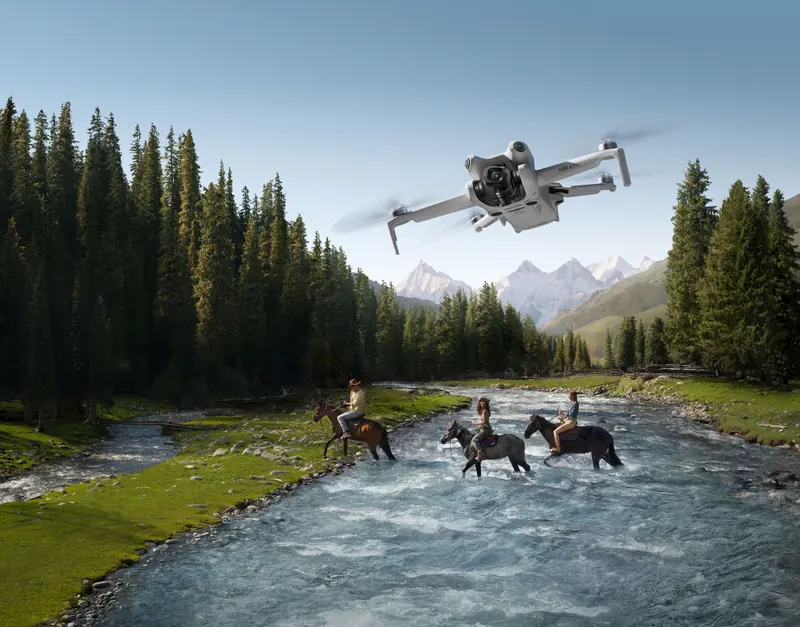
A DJI Mini 4 Pro flying over riders crossing a mountain river

DJI Mini 4 Pro

A camera drone that takes off under 249 g, inside the 0.55 lb line, with all-round obstacle sensing and a 1/1.3-inch sensor. DJI's own U.S. store no longer sells it; drones already owned fly legally.

Specs from DJI's U.S. specs page, read November 13, 2026Photos: DJI press images

Weighs under
249g
Flight time
34min
Wind it handles
23.9mph
Video range (FCC)
12.4mi
Camera
48MP

Rules for flying the DJI Mini 4 Pro in the U.S.

Flown for fun on the standard battery: no registration and no Remote ID, only the free TRUST test. Fit the Battery Plus or the propeller guard and it is over 0.55 lb, so register it.

Flown for work under Part 107: register it, hold a Part 107 certificate, and give it Remote ID: the Battery Plus turns the built-in one on.

  • Register

    Not on the standard battery, flown for fun. It takes off under 249 g, inside the 0.55 lb line. With the Battery Plus or the propeller guard it is over the line, so register it, even for fun. For work, register it whatever it weighs.

    Depends
    The exact rule
    The aircraft is operated exclusively in compliance with 49 U.S.C. 44809 and weighs 0.55 pounds or less on takeoff, including everything that is on board or otherwise attached to the aircraft 14 CFR 48.15(b), Requirement to register (eCFR)

    What it means: flown only for fun, a drone of 0.55 lb (249 g) or less, with everything attached, needs no FAA registration. 0.55 lb is 249.48 g, so the Mini 4 Pro's “under 249 g” is inside the line; with Battery Plus or the guard it is outside.

    Weight and registration. With the standard battery, the propellers and a microSD card, the Mini 4 Pro weighs under 249 g, so flown only for fun it needs no FAA registration. With the Intelligent Flight Battery Plus, DJI's manual says it weighs more than 249 g and gives no exact figure; the battery alone weighs about 121 g against about 77.9 g. With DJI's propeller guard fitted, DJI says it weighs over 250 g. Either way it is over 0.55 lb, so register it, even for fun. DJI's FAQ adds that it also goes over 249 g with the Mini 3 Pro's standard battery.

    Registration costs $5 and lasts 3 years. You must be 13 or older, carry the certificate when you fly and mark the drone with the number. A recreational registration covers every drone you own; under Part 107 each drone is registered.

  • Remote ID

    Built in, but on only with the Battery Plus. On the standard battery it broadcasts nothing, which is fine flown for fun, when it needs no registration. For work, fly with the Battery Plus, or add a broadcast module.

    Battery Plus
    The exact rule

    Remote ID: on only with Battery Plus. The FAA has accepted DJI's Remote ID declaration for the Mini 4 Pro (RID000000713). But DJI's user manual v1.4 says on page 126: “Note that the Remote ID system is ONLY activated when using the Intelligent Flight Battery Plus.” DJI's release notes date the change to firmware v01.00.0300 of December 21, 2023, which added “automatically activating the US Remote ID only when the aircraft is used with an Intelligent Flight Battery Plus”. With the standard battery, the Mini 4 Pro does not broadcast Remote ID.

    The Remote ID rule applies to drones that are registered or must be (14 CFR 89.101), and such a drone flies with Remote ID built in, with a broadcast module, or only inside an FAA-recognized identification area (FRIA). Neither the FAA nor DJI puts the two together for this drone; read side by side, they mean:

    • For fun with the standard battery: no registration, so no Remote ID is needed, and none is broadcast.
    • For fun with Battery Plus: the drone must be registered, so it must broadcast, and the built-in Remote ID is on.
    • With the propeller guard: the drone must be registered, but DJI says not to fit the guard with Battery Plus, so the built-in Remote ID stays off and you need a broadcast module or a FRIA.
    • For work under Part 107: every drone is registered, so on the standard battery you need a broadcast module or a FRIA, or you fly with Battery Plus.
  • Pilot test

    Pass TRUST, the FAA's free online test, and keep proof that you passed, whatever the drone weighs.

    Hold a Part 107 certificate: 16 or older, a passed knowledge test, and recurrent online training every 24 calendar months.

    Needed
    The exact rule

    TRUST for fun, Part 107 for work. Flying for fun, pass the FAA's free online TRUST test and keep proof that you passed, whatever the drone weighs; if you lose the certificate, you take the test again. DJI's specs page says no training or examination is needed “in most countries and regions”; in the U.S., recreational pilots still need TRUST. Fly within sight, or with a visual observer next to you, at or below 400 ft in uncontrolled (Class G) airspace; controlled airspace needs FAA authorization through LAANC or DroneZone.

    Flying for work needs a Part 107 remote pilot certificate: at least 16 years old, a passed knowledge test and recurrent online training every 24 calendar months. Part 107 flights stay at or below 400 ft above the ground (higher only near a structure), at no more than 100 mph, with 3 statute miles of visibility.

    49 U.S.C. 44809 · 14 CFR 107.12
  • Height

    Up to 400 ft, always in sight. Near airports, in controlled airspace, get FAA authorization first, through LAANC or DroneZone.

    400 ft
    The exact rule

    The same ceiling under both rulebooks: flying for fun, at or below 400 ft in uncontrolled (Class G) airspace; under Part 107, at or below 400 ft above the ground, higher only near a structure.

    49 U.S.C. 44809 · 14 CFR 107.51
  • Over people

    Not shown to qualify for Category 1 under Part 107: its propellers are exposed, and with the guard fitted it is over 0.55 lb.

    Not shown
    The exact rule

    Over people: not shown to qualify for Category 1. Under Part 107, flying over people in Category 1 takes a drone that weighs 0.55 lb or less on takeoff and throughout the flight, everything attached included, and has no exposed rotating parts that would lacerate human skin on impact (14 CFR 107.110(a)). Neither DJI nor the FAA says whether the Mini 4 Pro passes that second test: its propellers are exposed, and with the guard fitted it is over 0.55 lb. So it is not shown to qualify. Sustained flight over open-air assemblies of people also needs Remote ID, built in or from a module (107.110(b)).

    14 CFR 107.110
  • DJI ban

    Drones you own keep flying. DJI is on the FCC Covered List: that stops new approvals, not drones already bought. DJI's U.S. store no longer sells it.

    Flies
    What the FCC said

    U.S. status: on the FCC Covered List, owned drones fly. DJI drones have been on the FCC Covered List since December 22, 2025. The listing blocks new FCC authorizations; it does not revoke existing ones, and models authorized before it may still be imported and sold. The FCC says its measures do not affect drones people already bought, and DJI says owners can keep using the DJI products they have. On November 13, 2026, DJI's own U.S. online store listed no drones, and DJI's U.S. product page showed the Mini 4 Pro as out of stock.

    Updates: DJI guarantees software updates until December 31, 2026, and its newest firmware is v01.00.1200 of November 13, 2026. An FCC waiver lets DJI drones authorized before the listing get firmware updates until at least January 1, 2029. The whole story, model by model: DJI ban in the U.S.

    FCC DA 25-1086, DA 26-742, DA 26-69 and DA 26-454
Keep it in sight the whole flight, under either rulebook.

Can I fly my DJI Mini 4 Pro here today?

That depends on the place, the hour and the airspace, not the drone, and as the pilot you are responsible for knowing where it is and is not safe to fly. Our flight check takes a place and the Mini 4 Pro and returns one verdict with its reasons: no-fly zones, airspace, the ceiling, wind against the Mini 4 Pro's 23.9 mph rating, and daylight. The FAA's B4UFLY service, offered through FAA-approved companies, also shows where recreational flyers can fly, including temporary flight restrictions.

Check where you can fly it

The same drone, four set-ups

The FAA rules follow the weight at takeoff and the reason you fly, never the brand. The same drone moves to another row when you fit the larger battery or the propeller guard.

By set-up
How you fly itFAA registrationRemote IDPilot test
For fun, standard batteryNot needed: under 0.55 lbNot needed, and none is broadcastTRUST
For fun, Battery PlusNeeded: over 0.55 lbNeeded: built in, on with this batteryTRUST
For fun, propeller guard fittedNeeded: over 0.55 lbNeeded: built-in stays off, so a broadcast module or a FRIATRUST
For work, under Part 107Needed for every droneNeeded: Battery Plus, or a broadcast module or a FRIAPart 107 certificate

What the FAA rules ask of a Mini 4 Pro, by set-up: from 14 CFR 48.15 and 89.101 and DJI's user manual v1.4.

DJI Mini 4 Pro limits: flight time, wind and range

The figures that decide a flight, from DJI's own specs page, read November 13, 2026. The drawing shows the drone unfolded, at one scale.

100 mm · 1 px = 1 mm · Unfolded, with propellers
100 mm · 1 px = 2 mm · Unfolded, with propellers
Takeoff weight
Under 249 g (8.8 oz)
Flight time
34 min (45 min with Battery Plus)
Wind rating
23.9 mph (10.7 m/s)
Top speed
35.8 mph (16 m/s), Sport mode
Video range
12.4 mi (20 km), FCC
Temperature
14 to 104 °F
Camera
1/1.3-inch, 48 MP

DJI's 34 minutes come from its own test: flying forward at 13.4 mph (21.6 km/h) in still air at sea level until the battery forced a landing. Hovering, DJI gives 30 minutes. The Intelligent Flight Battery Plus gives 45 minutes but takes the drone over 249 g, which changes the rules above. The Mini 4 Pro is not waterproof.

Folded, without propellers: 5.83 × 3.70 × 2.52 in.

Full DJI Mini 4 Pro specs: image quality, video mode and obstacle avoidance

The Mini 4 Pro's camera pairs a 1/1.3-inch, 48 MP sensor with an f/1.7 lens, films 4K/100fps and records 10-bit D-Log M and HLG.

The gimbal rolls 90 degrees for true vertical shooting, and omnidirectional obstacle avoidance comes from binocular vision on every side plus a 3D infrared sensor underneath. Below is every figure DJI gives for photos and videos, flight, the battery and the DJI RC-N2 and DJI RC 2 remote controllers.

Where these numbers come from

Every figure is DJI's or the FAA's: DJI's Mini 4 Pro specs page (U.S.), unless the row names DJI's user manual v1.4 of June 2024, its propeller guard user guide v1.4, its FAQ page, its release notes or the FAA list of Remote ID declarations. The manual and the release notes are on DJI's U.S. downloads page. We read them on November 13, 2026 and read the release notes, the downloads page, DJI's U.S. product page and the FAA list again on November 13, 2026.

DJI disagrees with itself in two places. Its specs page says the flight-time test ran with obstacle avoidance set to Brake, the manual says Off, and both give 34 minutes. The guard weighs about 84 g in its own guide and about 87 g in the manual, so this page gives only DJI's “over 250 g” with the guard fitted.
Camera
Image sensor1/1.3-inch CMOS, 48 MP effective
LensFOV 82.1 degrees; 24 mm equivalent; f/1.7; focus 3.3 ft (1 m) to infinity
ISO, video100-6400 normal; 100-1600 D-Log M and HLG; Night 100-12800
ISO, photo12 MP 100-6400; 48 MP 100-3200
Shutter speed12 MP 1/16000-2 s (2.5-8 s simulated long exposure); 48 MP 1/8000-2 s
Max image size8064 × 6048
Photo formatJPEG / DNG (RAW)
Video resolution4K 3840 × 2160 at 24/25/30/48/50/60/100 fps; FHD 1920 × 1080 up to 200 fps (100 and 200 fps play as slow motion)
Codec note4K/100fps, HLG and D-Log M record in H.265 only
Max video bitrate150 Mbps (H.264/H.265)
Color sampling8-bit 4:2:0 normal; 10-bit 4:2:0 HLG and D-Log M
Digital zoom12 MP photo 1-3x; 4K 1-3x; FHD 1-4x
Obstacle sensing
Sensing typeOmnidirectional binocular vision plus a 3D infrared sensor underneath
ForwardMeasures 1.6-59.1 ft (0.5-18 m); detects 1.6-656 ft (0.5-200 m); works up to 26.8 mph (12 m/s)
Backward and lateralBackward 1.6-49.2 ft (0.5-15 m); lateral 1.6-39.4 ft (0.5-12 m); up to 26.8 mph (12 m/s)
Upward and downwardUpward 1.6-49.2 ft (0.5-15 m); downward 1.0-39.4 ft (0.3-12 m); up to 11.2 mph (5 m/s)
3D infrared sensor0.3-26.2 ft (0.1-8 m), reflectivity over 10%
Sensing with propeller guard fittedObstacle sensing unavailable; FocusTrack cannot be usedSource: DJI Mini 4 Pro Propeller Guard User Guide v1.4, safety notes
Video transmission
SystemDJI O4
Live viewUp to 1080p/60fps
Max range, FCC (U.S.) rating12.4 mi (20 km), unobstructed and free of interference
Range with interference (FCC)Urban 0.9-2.5 mi (1.5-4 km); suburban 2.5-6.2 mi (4-10 km); suburb or seaside 6.2-12.4 mi (10-20 km)
Range when obstructedBuildings 0-0.3 mi (0-0.5 km); trees 0.3-1.9 mi (0.5-3 km)
Frequencies2.4, 5.1 and 5.8 GHz bands
Lowest latencyAbout 120 ms (aircraft + remote controller)
Show 50 more figures
Aircraft
Takeoff weight (standard battery)Under 249 g (8.8 oz); 0.55 lb = 249.48 g
What the takeoff weight includesIntelligent Flight Battery, propellers and a microSD card
Takeoff weight with Intelligent Flight Battery PlusMore than 249 g (8.8 oz); no figure publishedSource: DJI Mini 4 Pro User Manual v1.4, PDF p.10 note; p.110 footnote [1]
Dimensions folded (without propellers)5.83 × 3.70 × 2.52 in (148 × 94 × 64 mm)
Dimensions unfolded (with propellers)11.73 × 14.69 × 3.98 in (298 × 373 × 101 mm)
Max ascent speed16.4 ft/s (5 m/s) in S and N mode; 9.8 ft/s (3 m/s) in C mode
Max descent speed16.4 ft/s (5 m/s) in S and N mode; 9.8 ft/s (3 m/s) in C mode
Max horizontal speed35.8 mph (16 m/s) in S mode; 26.8 mph (12 m/s) in N and C mode
Max takeoff altitude (standard battery)13,123 ft (4000 m)
Max takeoff altitude (Mini 3 Series Battery Plus)9,843 ft (3000 m)
Max takeoff altitude with propeller guard (standard battery)4,921 ft (1,500 m)Source: DJI Mini 4 Pro User Manual v1.4, PDF p.19, flight limits note
Max flight time (standard battery)34 min
Max flight time (Battery Plus)45 min
Flight time test conditions (spec page)13.4 mph (21.6 km/h) forward, windless, sea level, Obstacle Avoidance set to Brake, photo mode, to forced landing
Flight time test conditions (manual)13.4 mph (21.6 km/h), Obstacle Avoidance set to Off, 100% to 0% batterySource: DJI Mini 4 Pro User Manual v1.4, PDF p.110 footnote [4]
Max hovering time30 min (standard battery); 39 min (Battery Plus)
Max flight distance11.2 mi (18 km) standard battery at 25.3 mph (40.7 km/h); 15.5 mi (25 km) Battery Plus at 27.5 mph (44.3 km/h)
Max wind speed resistance23.9 mph (10.7 m/s)
Max pitch angle35 degrees
Operating temperature14 to 104 °F (−10 to 40 °C)
Satellite systemsGPS + Galileo + BeiDou
Hovering accuracy, vertical±0.3 ft (0.1 m) with vision positioning; ±1.6 ft (0.5 m) with GNSS
Internal storage2 GB
EU classC0 (EU); the U.S. has no class label
EU class with Battery PlusC1, max takeoff mass 342 g (12.1 oz), model MT4MFVDB; standard model MT4MFVD is C0 at 249 gSource: DJI Mini 4 Pro User Manual v1.4, PDF p.120, C0/C1 class notes
Gimbal
Stabilization3-axis mechanical (tilt, roll, pan)
Controllable rangeTilt −90 to 60 degrees; roll −90 or 0 degrees (True Vertical Shooting)
Max control speed (tilt)100 degrees/s
Battery
Capacity2590 mAh standard; 3850 mAh Plus
WeightAbout 77.9 g (2.7 oz) standard; about 121 g (4.3 oz) Plus
Energy18.96 Wh standard; 28.4 Wh Plus
Charging temperature41 to 104 °F (5 to 40 °C)
Charging time, standard battery, DJI 30W USB-C charger70 min in the aircraft; 58 min in the Two-Way Charging Hub
Charging time, Battery Plus, DJI 30W USB-C charger101 min in the aircraft; 78 min in the hub
Battery Plus availability noteNot sold in Europe (manual: sold separately, select countries)
Remote controllers
Supported controllersDJI RC-N2 and DJI RC 2Source: DJI's Mini 4 Pro FAQ page, remote controller question
DJI RC-N2 operating time6 h; 3.5 h when charging a phone
DJI RC-N2 max phone size7.09 × 3.39 × 0.39 in (180 × 86 × 10 mm)
DJI RC-N2 weight375 g (13.2 oz)Source: DJI Mini 4 Pro User Manual v1.4, PDF p.110, DJI RC-N2 specs
DJI RC 2 screen and storage5.5-inch 1920 × 1080, 700 nits; 32 GBSource: DJI Mini 4 Pro User Manual v1.4, PDF p.109, DJI RC 2 specs
DJI RC 2 weight and run timeAbout 420 g (14.8 oz); 3 hSource: DJI Mini 4 Pro User Manual v1.4, PDF p.109, DJI RC 2 specs
Remote ID (U.S.)
FAA declarationAccepted, RID000000713, FCC ID SS3-MT4MFVD23, updated March 1, 2024Source: FAA list of Remote ID declarations, record RID000000713
When the built-in Remote ID broadcastsOnly with the Intelligent Flight Battery Plus; not with the standard batterySource: DJI Mini 4 Pro User Manual v1.4, PDF p.126, FAR Remote ID
Firmware that added itv01.00.0300 (December 21, 2023): U.S. Remote ID activates only with Battery PlusSource: DJI Mini 4 Pro release notes, entry December 21, 2023
Propeller guard
In the boxNo: not in the original package; product page: not in combos, sold separatelySource: DJI Mini 4 Pro User Manual v1.4, PDF p.121 list of items, footnote
Weight with guardOver 250 g (guide); so over 0.55 lbSource: DJI Mini 4 Pro Propeller Guard User Guide v1.4, safety notes
Limits with guard (standard battery)Max takeoff altitude 4,921 ft (1500 m), max flight height 394 ft (120 m), max distance 1,640 ft (500 m); not in windy conditions; never with Battery PlusSource: DJI Mini 4 Pro Propeller Guard User Guide v1.4, safety notes
Software
Latest aircraft firmwarev01.00.1200, released November 13, 2026 (DJI Fly v1.21.18)Source: DJI Mini 4 Pro release notes, entry November 13, 2026
Guaranteed software updatesUntil December 31, 2026
Launch firmwareFirst release September 25, 2023Source: DJI Mini 4 Pro release notes, entry September 25, 2023

75 figures, from DJI's Mini 4 Pro specs page (U.S.) unless a row names another document. Data read November 13, 2026.

DJI Mini 4 Pro versions: batteries, remote controller and DJI Fly

For U.S. rules, the version that matters is the battery. This page lists no bundle contents: no DJI page we could read lists them as text.

Standard battery or Battery Plus
FigureStandard batteryIntelligent Flight Battery Plus
Takeoff weightUnder 249 g (8.8 oz)More than 249 g (8.8 oz), no exact figure published
Max flight time34 min45 min
Max hovering time30 min39 min
Max flight distance11.2 mi (18 km) at 25.3 mph (40.7 km/h)15.5 mi (25 km) at 27.5 mph (44.3 km/h)
Capacity2590 mAh3850 mAh
Energy18.96 Wh28.4 Wh
Battery weightAbout 77.9 g (2.7 oz)About 121 g (4.3 oz)
Charging time, DJI 30W USB-C charger70 min in the aircraft; 58 min in the Two-Way Charging Hub101 min in the aircraft; 78 min in the hub
Built-in Remote ID (U.S.)Off: does not broadcastOn: broadcasts

The two batteries, from DJI's Mini 4 Pro specs page and user manual v1.4, read November 13, 2026.

DJI sells the Intelligent Flight Battery Plus separately and only in some countries; it is not sold in Europe. It adds 11 minutes and turns the built-in Remote ID on, but it takes the drone over 0.55 lb, so the drone must be registered even for fun. DJI says not to fit the propeller guard with Battery Plus. The Mini 4 Pro also takes the Mini 3 Pro's batteries.

The drone with the DJI RC 2, spare batteries, a charging hub and a bag, as DJI's press photo lays them out.

Remote controllers and the DJI Fly app

The Mini 4 Pro flies with the DJI Fly app only. DJI's FAQ names two remote controllers. The DJI RC-N2 holds your phone; it weighs 375 g (13.2 oz) and runs 6 hours, or 3.5 hours while it charges the phone. The DJI RC 2 has a built-in 5.5-inch 1920 × 1080 screen at 700 nits, 32 GB of storage and DJI Fly pre-installed; it weighs about 420 g (14.8 oz) and runs 3 hours. Later firmware added the DJI RC-N3 (September 5, 2024) and the DJI RC Pro 2 (May 13, 2025). The drone also works with DJI Goggles 2, Goggles Integra and Goggles 3 with the RC Motion 2 or 3; flying for fun through goggles, keep a visual observer next to you.

Accessories and the propeller guard

DJI sells a wide-angle lens, an ND filter set and a 360° propeller guard separately; none is in the combos. With the guard fitted, obstacle sensing is off, FocusTrack is unavailable and DJI says not to fly in wind. On the standard battery, DJI limits a guarded flight to a takeoff altitude of 4,921 ft (1,500 m), a height of 394 ft (120 m) and a distance of 1,640 ft (500 m).

The DJI RC 2: its own 5.5-inch screen, with DJI Fly built in.
Flying for fun through goggles, keep a visual observer next to you.

Four close relatives, and what sets each one apart.

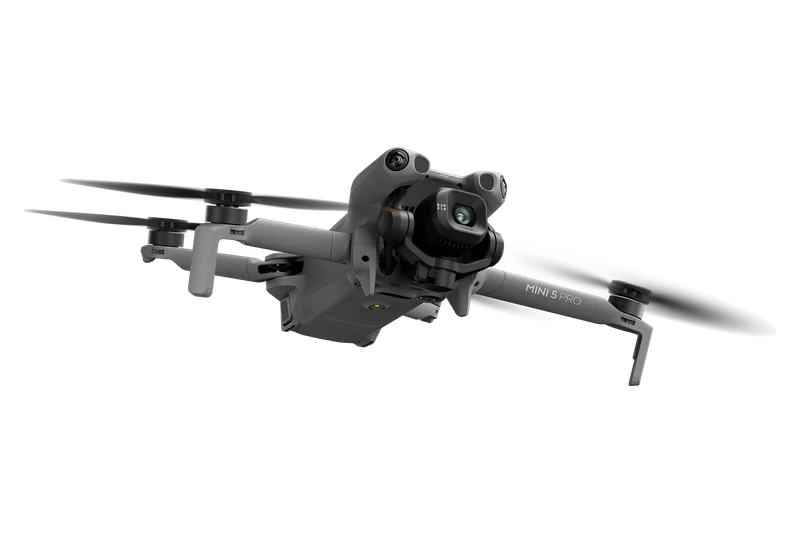
A grey DJI Mini 5 Pro in flight, seen from the front

Mini 4 Pro or Mini 5 Pro?

The Mini 5 Pro has a bigger 1-inch, 50 MP sensor, films 4K up to 120 fps, flies 36 minutes, resists 26.8 mph wind and adds forward LiDAR to all-round vision. But DJI lists it at 249.9 g, plus or minus 4 g, around the 0.55 lb line above which even a drone flown for fun must be registered, and DJI never released it in the U.S.: DJI's U.S. site has no Mini 5 Pro page. The FAA accepted its Remote ID declaration on September 10, 2025.

249.9 g · 36 min · 50 MP

DJI Mini 5 Pro
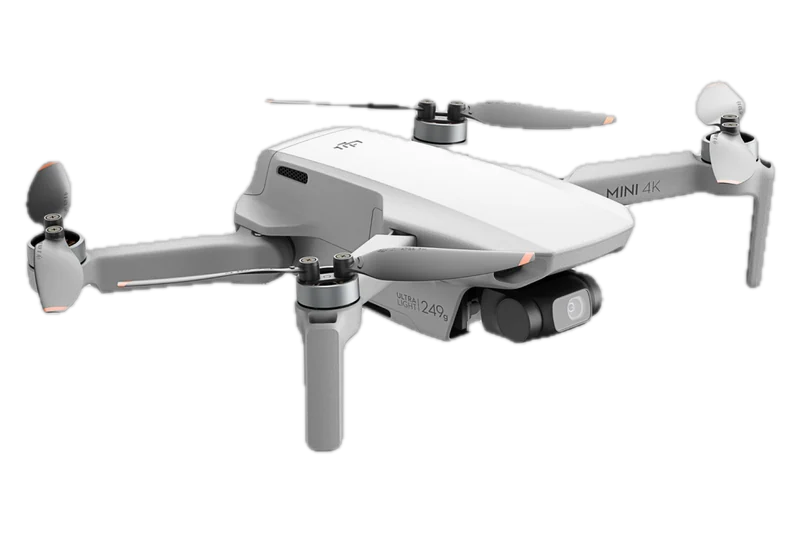
A light grey DJI Mini 4K with its arms unfolded, seen from the side

Mini 4 Pro or Mini 4K?

The Mini 4K is the simpler drone: 246 g, 31 minutes and the same 23.9 mph wind rating, but a 1/2.3-inch 12 MP sensor, 4K up to 30 fps, downward sensing only and 6.2 mi (10 km) of FCC video range. It has no FAA Remote ID declaration, so flown for work it needs a broadcast module or a FRIA.

246 g · 31 min · 12 MP

DJI Mini 4K
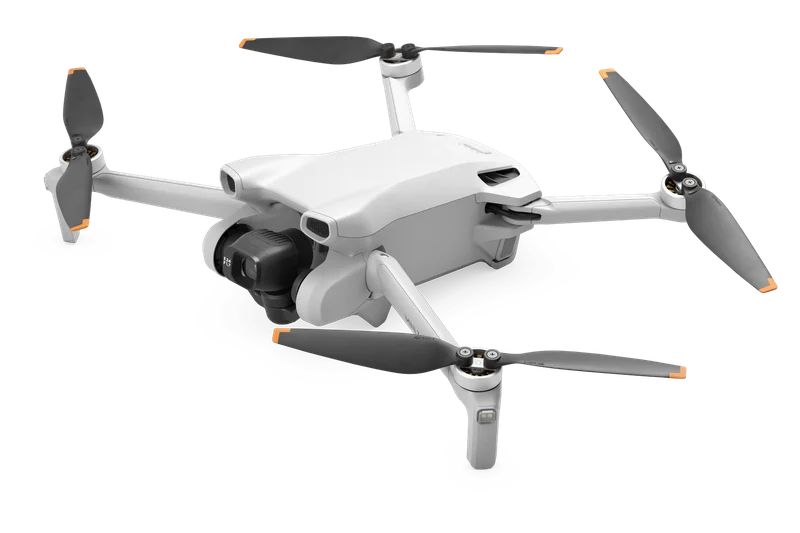
A white DJI Mini 3 with its arms unfolded, seen from the front and above

Mini 4 Pro or Mini 3?

The Mini 3 has the same 1/1.3-inch 48 MP sensor size but films 4K up to 30 fps and senses downward only. It flies longer, 38 minutes (51 with Battery Plus), weighs 248 g and, like the Mini 4 Pro, broadcasts Remote ID only with Battery Plus. DJI guarantees its software updates only until December 31, 2026, too.

248 g · 38 min · 48 MP

DJI Mini 3
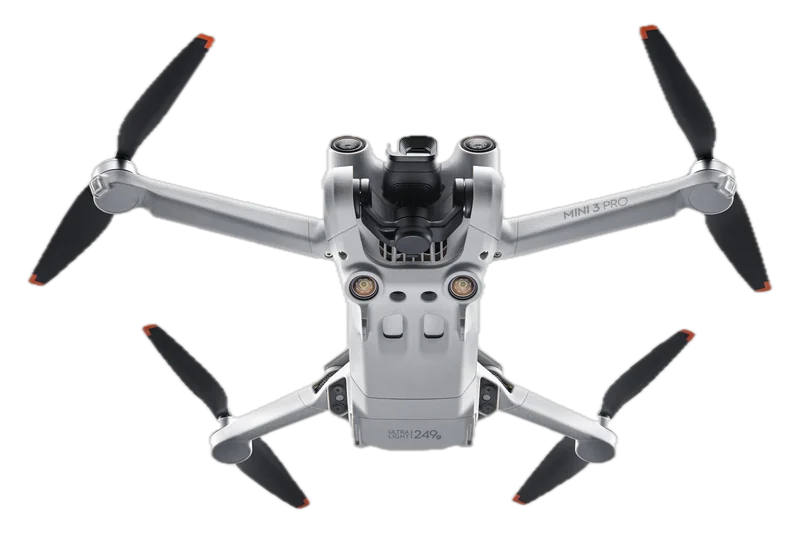
A grey DJI Mini 3 Pro with its arms unfolded, seen from below

Mini 4 Pro or Mini 3 Pro?

DJI's own comparison on the Mini 4 Pro page sets it against the Mini 3 Pro: O3 video transmission with 7.5 mi (12 km) of range against O4 with 12.4 mi (20 km), and sensing forward, backward and downward with APAS 4.0 against all-round sensing. DJI's own U.S. store sells none of these models.

Under 249 g · 34 min · 48 MP

DJI Mini 3 Pro

Questions about the DJI Mini 4 Pro

What sensors does the DJI Mini 4 Pro have?

Binocular vision sensors on every side, for omnidirectional obstacle sensing, plus a 3D infrared sensor underneath, and GPS, Galileo and BeiDou for position. The vision sensors need light above 15 lux; forward sensing works up to 26.8 mph, upward and downward up to 11.2 mph.

How far can the DJI Mini 4 Pro fly?

Its video link reaches up to 12.4 mi (20 km) under the U.S. FCC rating, unobstructed and free of interference; in a city DJI expects about 0.9 to 2.5 mi (1.5 to 4 km). One standard battery covers 11.2 mi (18 km) of flight. Flown for fun it must stay in your sight, or in sight of an observer next to you.

Where is the serial number on the DJI Mini 4 Pro?

The DJI Fly app shows the aircraft serial number (SN) under Settings, then About. For a drone with standard Remote ID, the FAA says the Remote ID serial number may be on the drone, on the controller or in a start-up menu, and you list it when you register.

Folded: the arms swing in against the body.
Sources Named, not linked. Read November 13, 2026.

Documents are named, not linked. Each was read on November 13, 2026; DJI's release notes and downloads page, DJI's U.S. product page and online store, and the FAA list of Remote ID declarations were read again on November 13, 2026.

DJI

  • DJI Mini 4 Pro specs page (U.S.): every figure in the tables unless a row names another document
  • DJI Mini 4 Pro User Manual v1.4 (June 2024): Remote ID on page 126, the Battery Plus weight, the controllers
  • DJI Mini 4 Pro Release Notes (newest entry November 13, 2026): firmware v01.00.0300 and v01.00.1200, controller and goggles support
  • DJI Mini 4 Pro Propeller Guard User Guide v1.4
  • DJI Mini 4 Pro product, FAQ and downloads pages (U.S.)
  • DJI Mini 5 Pro specs page (UK), DJI Mini 4K / Mini 2 SE specs page (U.S.), DJI Mini 3 specs page (U.S.) and DJI Mini 3 User Manual v1.2
  • DJI U.S. online store and DJI ViewPoints: “What's Going On with DJI in the U.S.?”

FAA

  • FAA UAS Declaration of Compliance list: Remote ID declarations RID000000713 (Mini 4 Pro), RID000000062 (Mini 3) and RID000002581 (Mini 5 Pro)
  • FAA How to Register Your Drone, Recreational Flyers, TRUST, Remote ID, Operations Over People, Become a Drone Pilot, Where Can I Fly? and B4UFLY pages

Laws and regulations

  • 14 CFR 48.15: registration
  • 14 CFR 89.101, 89.105, 89.110 and 89.115: Remote ID
  • 14 CFR 107.12, 107.51 and 107.110: the Part 107 certificate, its limits and Category 1
  • 49 U.S.C. 44809: the recreational exception and TRUST

FCC

  • FCC Public Notice DA 25-1086: the Covered List entry of December 22, 2025
  • FCC Covered List page and FCC Public Notice DA 26-742: authorized models and drones already bought
  • FCC Public Notices DA 26-69 and DA 26-454: the firmware update waiver

Photos: DJI press images. Product photos by DJI.