First kit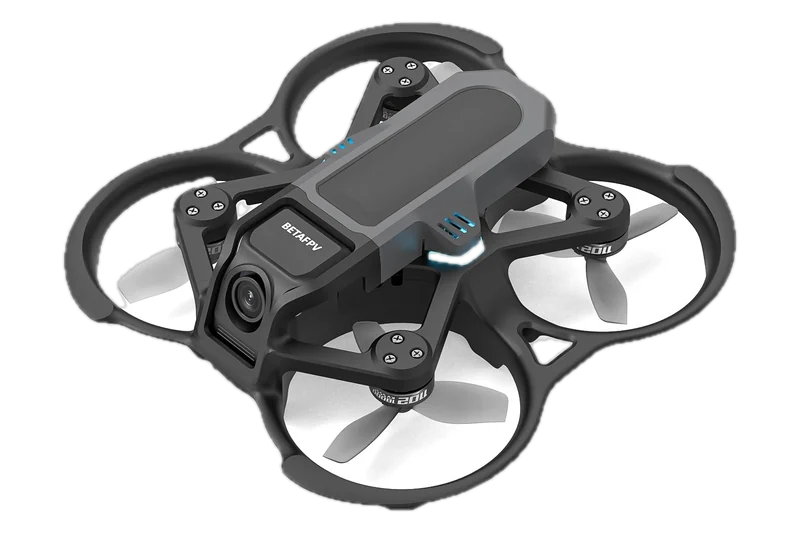 Ducted props
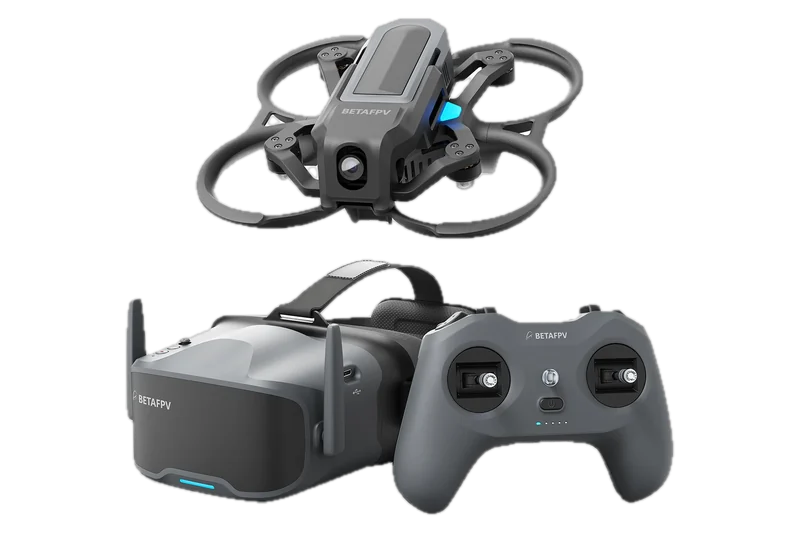
BetaFPV Aquila16
It holds its height in N mode, so the first flights are about steering.
72.5 g on takeoff
- Video
- Analog
- Goggles
- VR03, in the box
- Flight time
- 8 min
- Price
- $219.99
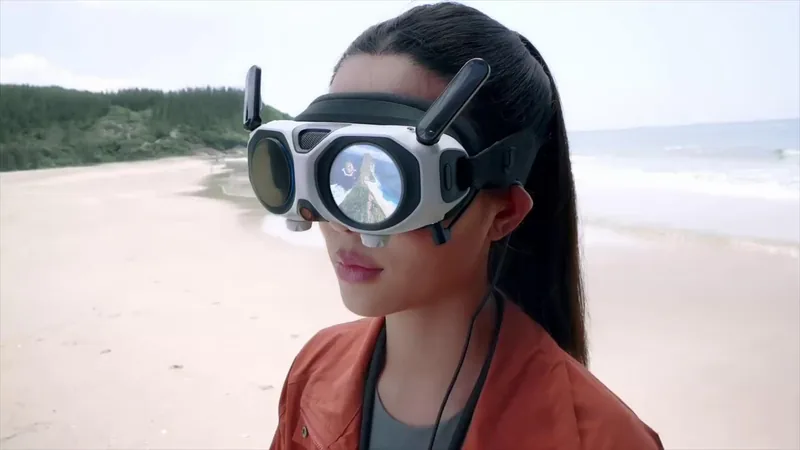
Ten FPV drones, each picked by a stated criterion rather than taste.
The order follows the sections below; it is not a ranking. The right drone is the one whose use is yours.
Ducted propsIt holds its height in N mode, so the first flights are about steering.
72.5 g on takeoff
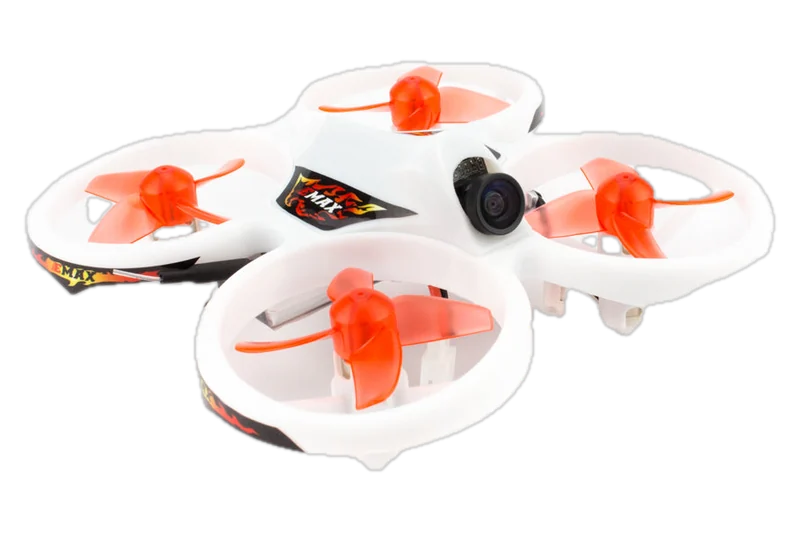 Prop guards
The lowest list price of the ten, with a height assist in the beginner modes.
Weight not stated by EMAX
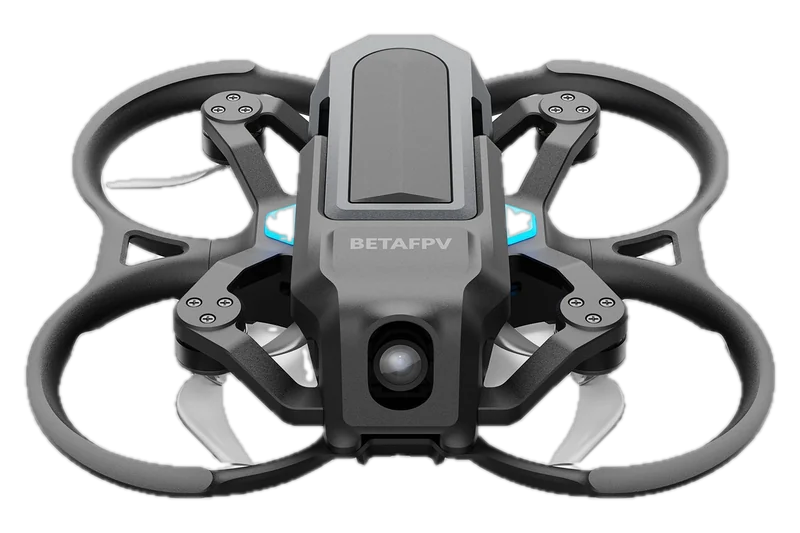 Ducted props
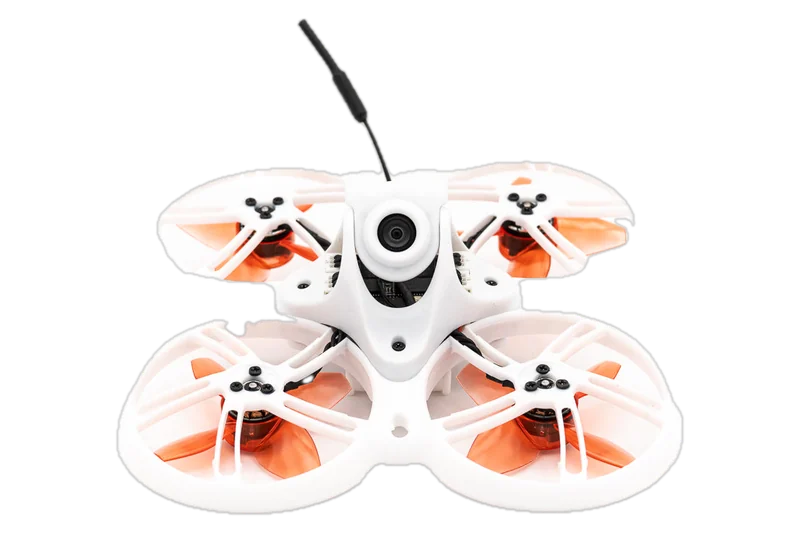
Analog video and glasses-friendly goggles, about 10 minutes a pack.
122 g on takeoff
 Ducted props
The same frame with 1080p digital video, for $100 more.
127 g on takeoff
 Ducted props
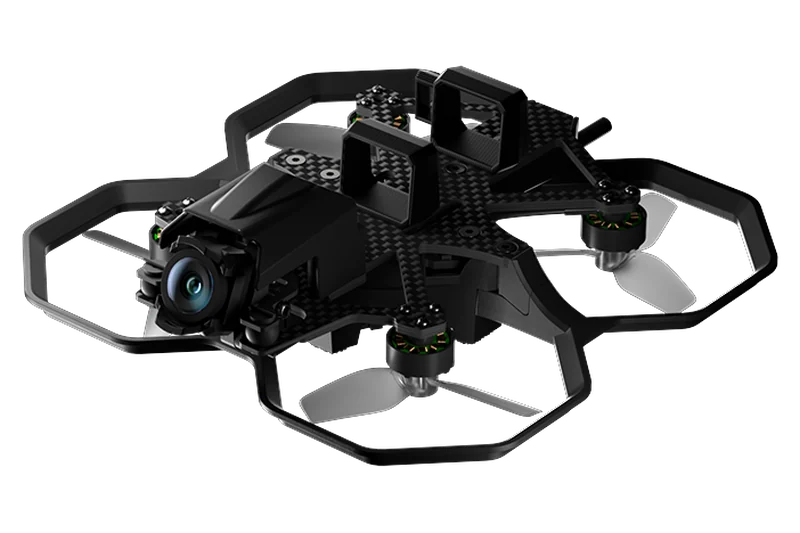
An indoor micro racer, 76 mm motor to motor.
32.5 g* without the battery
 Guards come off
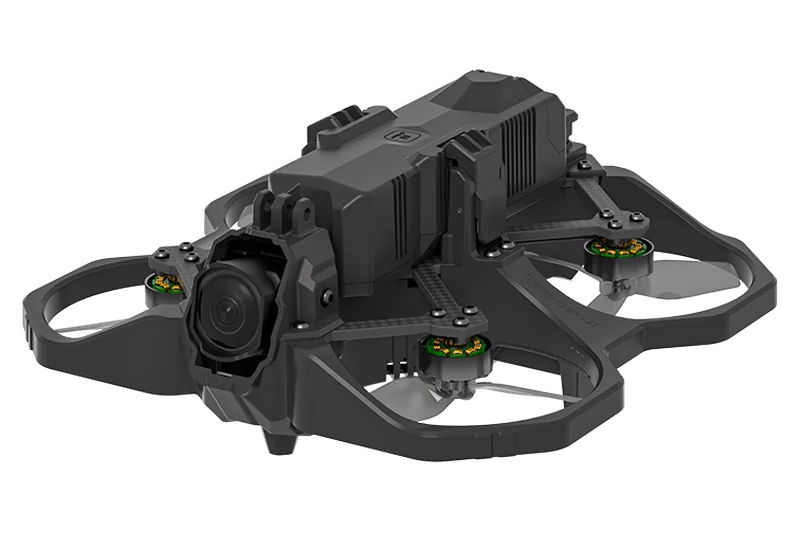
DJI O4 video and DJI Goggles N3 under 0.55 lb.
About 110 g on takeoff
 Built-in guards
DJI Goggles 3 in the box, under 0.55 lb with the 550mAh battery.
240 or 280 g with the 550 or the 900mAh battery
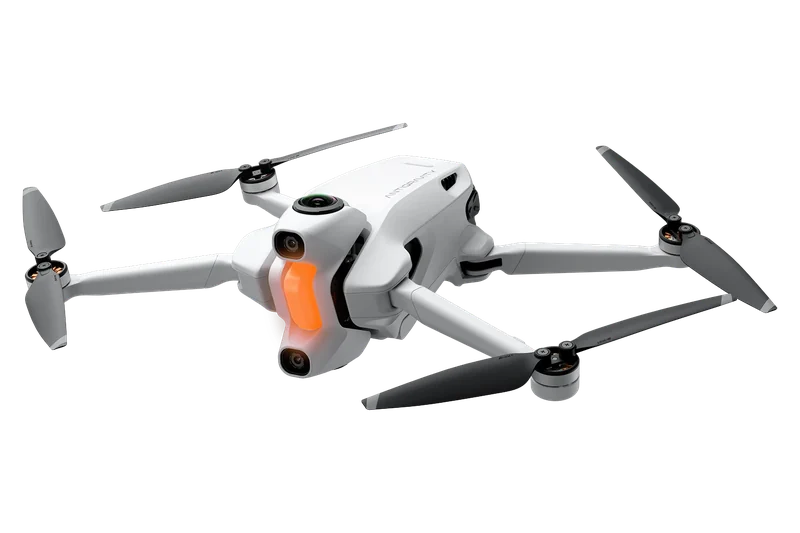
GPS hold and the longest flight of the ten.
249 or 291 g with the small or the big battery
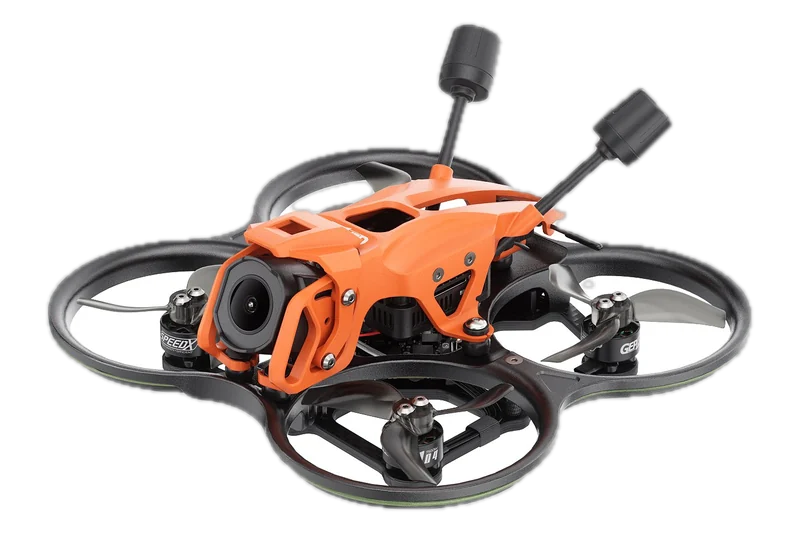 Prop guard
Bind-and-fly, for pilots who already own DJI goggles.
126.8 g†
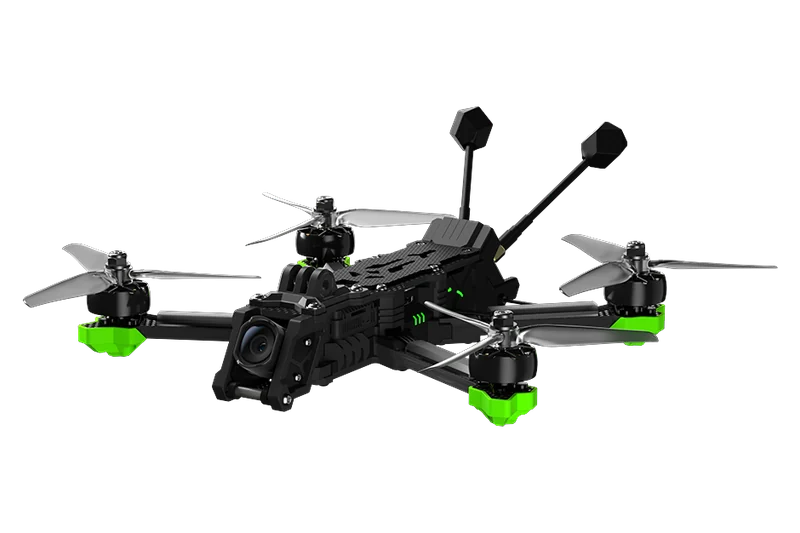 Open props
Over 0.55 lb: register it before the first flight.
About 736 g on takeoff
The line on each weight bar is 250 g (0.55 lb): above it, a drone flown for fun is registered. *Without the battery; EMAX does not give the weight with it. †GEPRC does not say whether the battery is included. Prices are the makers' U.S. list prices on November 14, 2026.
The ten picks in one table, each with the use it is picked for and the features that decide it, all from the makers' own pages read November 14, 2026.
| Pick, and the use it is picked for | Goggles in the box | Weight, as the maker states it | Against 0.55 lb | Propeller guards | Fallback mode | Video | Flight time, as stated |
|---|---|---|---|---|---|---|---|
| BetaFPV Aquila16 FPV Kit First FPV kit with a height hold, analog | Yes: VR03 FPV Goggles | 72.5 g (2.6 oz); takeoff weight with the 1100mAh battery, 47.1 g (1.7 oz) without | 0.55 lb or less | Yes: “duct guard design ... protecting the propellers” | N mode: barometer height hold, auto-hover; “position hold function is only available in N mode”; S and M modes | Analog: Aquila 25-350mW VTX; range 262 ft (80 m) at 25 mW, 656 ft (200 m) at 350 mW | 8 min with the 1100mAh battery (4.35-3.4 V) |
| EMAX EZ Pilot Beginner Indoor Racing Drone RTF Lowest list price for a kit with goggles and a height hold | Yes: Transporter 5.8G FPV Goggles | Not stated by the maker | Not stated by the maker | Yes: “safe for indoor use with prop guards” | 3 modes; gyroscopic self-leveling; “Smart Height Assist” altitude hold in beginner modes | 5.8 GHz live video (EMAX does not say analog or digital) | About 4 min with the 450mAh 1S battery |
| BetaFPV Aquila20 FPV Kit (analog) Analog kit with glasses-friendly goggles and a 10-minute pack | Yes: VR04 FPV Goggles | 122 ± 1.0 g (4.3 oz); takeoff weight | 0.55 lb or less | Ducted whoop: “inverted duct design” (BetaFPV does not use the word guard) | N mode: “Altitude Hold & Stable Hover”; S and M modes; turtle mode | Analog VTX, 350 mW, range above 656 ft (200 m) | About 10 min |
| BetaFPV Aquila20 HD FPV Kit Digital HD kit under 250 g (8.8 oz) with a height hold | Yes: VR04 HD FPV Goggles | 127 ± 1.0 g (4.5 oz); takeoff weight | 0.55 lb or less | Ducted whoop: “inverted duct design” (BetaFPV does not use the word guard) | N mode: “Altitude Hold & Stable Hover”; S and M modes; turtle mode | Digital: P1 HD VTX (ArtLynk), 1080p at 60fps, about 60 ms latency, 200 mW, range above 1,312 ft (400 m) | About 10 min |
| EMAX Tinyhawk III Plus RTF Kit (Analog or HDZero) 76 mm ducted whoop for indoor racing, analog or HDZero digital | Yes: Transporter II; Transporter II HD with HDZero | 32.5 g (1.1 oz), Analog; about 35.5 g (1.3 oz), HDZero; without battery; with-battery weight not stated | Not stated with a battery fitted | Yes: one-piece ducted frame, “molded prop guards” | Self-level beginner mode; semi-self-level; full manual (acro) | Analog (RunCam Nano 6, VTX 0-200 mW) or digital HDZero (Nano Lite, Whoop Lite VTX) | About 4 min per 1S HV 650mAh pack |
| iFlight Defender 20 Lite X 2S HD RTF DJI O4 video and DJI Goggles N3 in the box, under 250 g (8.8 oz), guards | Yes: DJI Goggles N3 | About 110 ± 3 g (3.9 oz); takeoff weight with the 520mAh battery, 75 ± 3 g (2.6 oz) without | 0.55 lb or less | Yes: quick-release prop guards, removable for open props | None named (speed spec names “Manual Mode”); iFlight: no autonomous flight | Digital: DJI O4 Wide Air Unit (4K/60fps recording, 159°) | Max hover about 6 min with 2S 520mAh |
| iFlight Defender 25 4S HD RTF (G3) DJI Goggles 3 in the box, under 250 g (8.8 oz) with the stock battery, built-in guards | Yes: DJI Goggles 3 | 240 ± 5 g (8.5 oz), 550mAh; 280 ± 5 g (9.9 oz), 900mAh; maximum takeoff mass with each battery, aircraft 170 ± 5 g (6.0 oz) | 0.55 lb or less with the 550mAh battery; over with the 900mAh battery | Yes: “built-in 2.5inch propeller guards” | None named (speed spec names “Manual Mode”) | Digital: DJI O4 Air Unit Pro | Max hover about 6 min (550mAh), 10 min (900mAh) |
| Antigravity A1 Standard Bundle GPS hold, 360 camera and the longest flight time of the picks | Yes: Vision Goggles, Grip Motion Controller | 249 g (8.8 oz), Flight Battery; 291 g (10.3 oz), High-Capacity Flight Battery; takeoff weight | 0.55 lb or less with the standard Flight Battery; over with the High-Capacity battery | Not in the goggle bundles; sold as an accessory and included in the Follow Me bundles (no goggles) | N, S and C modes; hovering accuracy ±1.6 ft (±0.5 m) with GNSS, ±0.3 ft (±0.1 m) with vision positioning | Digital, Antigravity's own link to the Vision Goggles; 8K 360 camera | 24 min (Flight Battery); 39 min (High-Capacity), tested windless at 77 °F (25 °C), forward at 13.4 mph (6 m/s) |
| GEPRC DarkStar22 O4 Pro CineWhoop (BNF) Bind-and-fly O4 whoop for pilots who already own DJI Goggles 3 or N3 | No: bind-and-fly, goggles not included | 126.8 g (4.5 oz); ELRS 2.4G version; GEPRC does not say with or without battery | Not stated with a battery fitted | Yes: “1 x Prop Guard” in the box | None named | Digital: DJI O4 Air Unit Pro | 6 min 45 s on a 3S 720mAh LiHV, “tested under smooth cruising” |
| iFlight Nazgul Evoque F5 V3 O4 HD RTF (N3) Full-size 5-inch freestyle with DJI Goggles N3: over 250 g (8.8 oz), so registration and Remote ID apply | Yes: DJI Goggles N3 | About 736 ± 5 g (26.0 oz); takeoff weight with the 1480mAh battery, 492 ± 5 g (17.4 oz) without | Over 0.55 lb | None listed | None named; iFlight: no autonomous flight | Digital: DJI O4 Air Unit Pro | Max hover about 12-13 min (no load, 6S 1480mAh) |
Ten FPV drones, each picked by a stated criterion rather than taste: goggles in the box, 0.55 lb or less by the maker's figure, propeller guards, a mode that holds height, analog or digital video.
Choosing the best FPV drone comes down to the use. Each pick stands under a criterion you can check on its maker's own page before you buy an FPV drone, not under a taste:
Prices are each maker's own list prices in U.S. dollars, with the stock state its page showed on the day we read it. Where a maker's page showed a lower price next to a struck-through one, this page prints the struck-through list price and says that the store showed a lower price that day; the lower figure is not printed. None of the 26 maker pages we read says where the product is made.
249 or 291 g, the Antigravity A1
The line across the bar is 250 g (0.55 lb). Flown only for fun, a drone at or under it needs no registration. Amber is the weight over the line, or with the bigger battery: two picks take a bigger battery for longer flight times, and it takes them over the line.
Of the FPV drones for beginners here, two kits come with a mode that holds their height, each named by its maker, and with goggles, a radio and a flight battery in the box.
The Aquila16 has N, S and M modes, and a barometer holds its height; in BetaFPV's words, “The position hold function is only available in N mode.” It weighs 72.5 g (2.6 oz) at takeoff with its 1100mAh battery and flies 8 minutes on it. BetaFPV says “The duct guard design ensures safe flights by protecting the propellers”. Its video is analog: the Aquila 25-350mW video transmitter reaches 262 ft (80 m) at 25 mW and 656 ft (200 m) at 350 mW by BetaFPV's figures, and the VR03 analog FPV goggles in the box work with most analog video transmitters and record to a microSD card. The camera tilt adjusts from 15° to 30°.
EMAX's U.S. store listed the EZ Pilot Beginner Indoor Racing Drone RTF at $144.99 on November 14, 2026, the lowest list price of the ten picks. It has gyroscopic self-leveling with 3 modes: “Smart Height Assist” holds the altitude in the beginner modes, and the advanced mode gives full manual throttle. EMAX calls it “safe for indoor use with prop guards” and recommends it for ages 14+. It flies about 4 minutes on the included 450mAh 1S battery and sends its live video feed at 5.8 GHz to the included Transporter goggles. EMAX states no weight, and its page does not say whether the video is analog or digital.
BetaFPV calls it N mode; EMAX calls it Smart Height Assist. Either way the drone keeps its height, which makes it easier to learn how to fly and steer: in a beginner FPV drone, the feature to look for first.
Same maker, same frame: the HD kit costs $100 more than the analog kit, and BetaFPV gives its video link twice the range. For image quality, BetaFPV gives the HD kit's digital video as 1080p at 60fps.
BetaFPV sells the Aquila20 twice, on the same frame: the FPV Kit with analog video and the HD FPV Kit with digital video. Both have N mode, “Altitude Hold & Stable Hover”, with S and M modes and a turtle mode, and both fly about 10 minutes. BetaFPV sells the frame as a “Brushless Whoop” with an “inverted duct design”, and on the Aquila20 page it does not use the word guard.
A 76 mm ducted whoop made to race indoors, sold with analog or HDZero digital video.
EMAX sells both of its picks to race FPV drones indoors: the EZ Pilot above, which it calls a beginner indoor racing drone, and the Tinyhawk III Plus, which it calls an indoor micro racer that can also fly outside “on calm days”. The Tinyhawk III Plus has a 3.0 in (76 mm) wheelbase and a one-piece ducted frame with “molded prop guards”. Its three flight modes: a self-level beginner mode that “limits how far the quad can tilt”, a semi-self-level mode and full manual (acro).
It comes in two video versions. The analog one has a RunCam Nano 6 camera and a 40-channel video transmitter (0, 25, 100 or 200 mW); the HDZero one, digital, has an HDZero Nano Lite camera and a Whoop Lite video transmitter (0, 25 or 200 mW). The Transporter II or II HD goggles in the box have a detachable screen and a built-in DVR. EMAX gives 32.5 g (1.1 oz) for the analog version and about 35.5 g (1.3 oz) for the HDZero one, both without the battery, and no weight with the battery fitted. It flies about 4 minutes per 1S HV 650mAh pack.
EMAX's U.S. store: $314.99 with analog video, $524.99 with HDZero digital video, both kits with goggles in the box.
Two iFlight ready-to-fly kits put a DJI O4 air unit on the drone and DJI goggles in the box, and both stay at or under 0.55 lb with the battery iFlight names.
Neither kit names a mode that holds height; iFlight's speed figure names only “Manual Mode”.
About 110 ± 3 g (3.9 oz) at takeoff with the 520mAh battery and 75 ± 3 g (2.6 oz) without it, with about 6 minutes of hover. Its video is DJI's O4 Wide Air Unit, recording 4K/60fps with a 159° field of view. The quick-release prop guards come off with four screws “in 30 seconds”, allowing pilots to fly it with open props. iFlight notes that its product “is for fun purposes only and does not support autonomous flight”. iFlight's packing list names the drone, DJI Goggles N3, a Commando 8 V2 radio, a filter set, a propeller removal tool and a carrying case, and no flight battery.
It has “built-in 2.5inch propeller guards”, a DJI O4 Air Unit Pro and GNSS (GPS, SBAS, Galileo, QZSS and GLONASS). The box holds DJI Goggles 3, a Commando 8 ELRS radio, one 550mAh battery and a Type-C charging adapter; iFlight's changelog says the kit moved from DJI Goggles 2 to DJI Goggles 3 on November 2, 2024. iFlight gives the aircraft at 170 ± 5 g (6.0 oz), and the maximum takeoff mass at 240 ± 5 g (8.5 oz) with the 550mAh battery and 280 ± 5 g (9.9 oz) with the 900mAh one; hover time is about 6 or 10 minutes.
The same page's marketing line says “sub 249g”. Its own spec gives 240 ± 5 g with the 550mAh battery, at most 245 g, and 280 ± 5 g with the 900mAh battery, 26 to 36 g over 249 g.
The DJI goggles in these kits: DJI's U.S. pages show the DJI Goggles 3 as not for sale, with no price, and the Goggles N3 as last listed at $229, marked out of stock, and both goggles list DJI's O4 Air Unit Series as compatible. The two side by side: DJI Goggles 3 vs N3.
Up to 39 minutes on its High-Capacity battery and a GNSS hover held within ±1.6 ft (±0.5 m), by Antigravity's figures.
The A1 Standard Bundle holds the A1 drone, Vision Goggles, a Grip Motion Controller, a Flight Battery, a carry case and 4 spare propellers. Antigravity gives a takeoff weight of 249 g (8.8 oz) with the Flight Battery and 291 g (10.3 oz) with the High-Capacity Flight Battery, and a maximum flight time of 24 and 39 minutes on them, tested windless at 77 °F (25 °C), flying forward at 13.4 mph (6 m/s) below 164 ft (50 m) with video recording off. Its GNSS uses GPS, Galileo and BeiDou, and Antigravity gives a hovering accuracy of ±1.6 ft (±0.5 m) with GNSS and ±0.3 ft (±0.1 m) with vision positioning, in S, N and C modes.
The Vision Goggles correct your sight from +2.0 D to −5.0 D, or down to −8.0 D with the optional −3.0 D lenses. The camera shoots 8K 360 video at 7680 × 3840 and 30, 25 or 24 fps. Propeller guards are not in the goggle bundles: Antigravity sells them as an accessory and puts them in its Follow Me bundles, which have no goggles.
The A1 is the one pick on the FAA's list of Remote ID declarations: RID000002621, “A1(DE001)”, accepted. Antigravity's U.S. answer: with the Standard Flight Battery, Remote ID broadcasting is not required; with the High-Capacity battery, Remote ID turns on automatically. Antigravity adds: “in the United States, Remote ID is required for commercial purposes, even for drones weighing under 250 g”. On flying in FPV mode, its manual says “it is essential to have a visual observer situated near the operator”.
The GEPRC DarkStar22 O4 Pro CineWhoop comes bind-and-fly: no goggles, radio or battery in the box.
It carries a DJI O4 Air Unit Pro, so its video feed goes to DJI goggles that work with the O4 Air Unit Series, which DJI lists for both the Goggles 3 and the Goggles N3; its receiver is the O4 Pro's built-in one or ELRS 2.4G. GEPRC gives “Weight (ELRS 2.4G version): 126.8g”, with no word on whether a battery is included, and a flight time of 6 min 45 s on the recommended 3S 720mAh LiHV, “tested under smooth cruising”. One prop guard comes in the box, and the O4 Pro mounting module has a “reserved GPS slot”. GEPRC names no flight mode that holds height.
What the weight changes: over 0.55 lb it must be registered, flown for fun or for work.
The iFlight Nazgul Evoque F5 V3 O4 HD RTF (N3) is the one pick over 0.55 lb: about 736 ± 5 g (26.0 oz) at takeoff with the 1480mAh battery, 492 ± 5 g (17.4 oz) without it. It carries a DJI O4 Air Unit Pro, hovers about 12 to 13 minutes with no load on 6S 1480mAh, and comes with DJI Goggles N3 and a Commando 8 ELRS radio V2; iFlight's packing list names no battery and no propeller guards. A pre-installed GPS option exists. iFlight names no mode that holds height and says its product does not support autonomous flight.
iFlight has no Remote ID declaration, so it must fly with a broadcast module or inside a FRIA, and the person at the controls must then see the drone at all times.
About 736 g on takeoff, against 250 g
Check any drone against the registration line with FAA drone registration: do I have to register?
Each kit as its maker lists it, so you can see what else you need to start flying, with the flight battery called out, the maker's U.S. price and stock, and the FAA's list of Remote ID declarations.
| Pick | Flight battery in the box | In the box, as the maker lists it | Maker's U.S. price, November 14, 2026 | FAA Remote ID |
|---|---|---|---|---|
| BetaFPV Aquila16 FPV Kit | Two 1100mAh | Quad, LiteRadio 2 SE transmitter (Mode 2), VR03 goggles, 2 × 1100mAh batteries, charger, spare props, tools, storage bag, manual | $219.99; available | No FAA declaration |
| EMAX EZ Pilot Beginner Indoor Racing Drone RTF | One 450mAh 1S | Drone, EZ-Pilot controller (proprietary protocol), Transporter goggles with 18650 pack, 450mAh 1S battery, USB 1S charger, 4 spare props, micro USB cable | $144.99; available | No FAA declaration |
| BetaFPV Aquila20 FPV Kit (analog) | Two 2S HV 1100mAh | Aquila20 whoop, LiteRadio 4 SE, VR04 goggles, 2 × 2S HV 1100mAh batteries, charger, props, tools, storage bag, manual, quick start guide | $258.99, Mode 1 or Mode 2; available | No FAA declaration |
| BetaFPV Aquila20 HD FPV Kit | Two 2S HV 1100mAh | Aquila20 HD whoop, LiteRadio 4 SE, VR04 HD goggles, 2 × 2S HV 1100mAh, 2 × 18650 2600mAh, charger, props, tools, storage bag, manual | $358.99, Mode 1 or Mode 2; available | No FAA declaration |
| EMAX Tinyhawk III Plus RTF Kit (Analog or HDZero) | One | Quad, E8 ELRS transmitter, goggles, battery, charger, spare props, hard carry case | $314.99 Analog, $524.99 HDZero; both available | No FAA declaration |
| iFlight Defender 20 Lite X 2S HD RTF | None in iFlight's packing list | Defender 20 Lite O4 HD BNF, DJI Goggles N3, Commando 8 V2 radio, filter set, prop tool, carrying case (no battery listed) | $639.99 list; the store showed a lower price that day; in stock | No FAA declaration |
| iFlight Defender 25 4S HD RTF (G3) | One 550mAh | Defender25 O4 HD BNF, Commando 8 ELRS radio, DJI Goggles 3, 550mAh battery, Type-C charging adapter | $1,145.99 list; the store showed a lower price that day; in stock | No FAA declaration |
| Antigravity A1 Standard Bundle | One Flight Battery, the standard one | A1 drone, Vision Goggles, Grip Motion Controller, Flight Battery, carry case, 4 spare propellers | $1,599, Standard Bundle; “Estimated dispatch within 2 days” | FAA declaration RID000002621, for the A1(DE001). Antigravity's U.S. answer: no broadcast required with the standard Flight Battery; Remote ID on automatically with the High-Capacity battery |
| GEPRC DarkStar22 O4 Pro CineWhoop (BNF) | None: bind-and-fly, no goggles or battery | DarkStar22 drone, prop guard, canopy, camera cover, battery pad, 2 pairs of propellers, binding pin, USB adapter board, cable, spare screws | $399.99; stock not shown | No FAA declaration |
| iFlight Nazgul Evoque F5 V3 O4 HD RTF (N3) | None in iFlight's packing list | Evoque F5 V3 6S O4 HD BNF, Commando 8 ELRS radio V2, DJI Goggles N3, 2 antennas, battery pad, 2 pairs of propellers, 2 battery straps | $969.99 list, without GPS; the store showed a lower price that day; in stock | No FAA declaration |
Every one is flown through goggles, so flown for fun you need a visual observer next to you. Only the Antigravity A1 has an FAA Remote ID declaration.
Every pick is flown through goggles that put the drone's live video in front of your eyes, so the rules for FPV flying apply to all ten. To fly an FPV drone for fun, the FAA's guidance says a visual observer next to you is necessary with FPV (49 U.S.C. 44809(a)(3) and AC 91-57D). Under Part 107, goggles do not satisfy the line-of-sight rule, and the pilot and the person at the controls must keep the capability to see the drone (14 CFR 107.31 and AC 107-2A); each rule is quoted in its own words in What is FPV?
Registration and Remote ID follow the weight at takeoff and why you fly. The makers of six picks state a takeoff weight of 0.55 lb or less: the Aquila16, Aquila20, Aquila20 HD and Defender 20 Lite X, and the Defender 25 and the A1 only with their standard battery. Flown only for fun at that weight, they need no registration and so no Remote ID; flown under Part 107, they must be registered, and the kits without an FAA declaration then need a broadcast module or a FRIA. The EZ Pilot, Tinyhawk III Plus and DarkStar22 pages give no weight with a battery fitted. The FAA's list of Remote ID declarations held 487 accepted entries, none from BetaFPV, EMAX, iFlight or GEPRC. Flying for fun, the FAA's page also says: “You are required by law to take TRUST and carry proof when flying.” Check a drone against the registration line with FAA drone registration: do I have to register?, and the ways to comply in Drone Remote ID.
DJI's own FPV drones are not among the picks: on the day we read them, DJI's U.S. pages sold none of them.
DJI's U.S. page shows the DJI Avata 2 as not for sale, with no price; DJI gives it about 377 g (13.3 oz), about 23 minutes of flight, GNSS, Normal, Sport and Manual modes and an “integrated propeller guard”, and it is on the FAA's Remote ID list as RID000001376. DJI's U.S. Neo page last listed the Neo (No RC) at $169, marked out of stock, and DJI's U.S. Neo pages do not mention goggles. DJI's U.S. addresses for the Neo 2 and the Avata 360 return its 404 page, and its DJI FPV page redirects to support.
DJI drones, and all other drones produced abroad, have been on the FCC Covered List since December 22, 2025. Models authorized before the listing may still be imported and sold: the only import and marketing ban in force covers equipment added to the list in 2024 or earlier. DJI's own U.S. online store lists 102 products, and none of them is a drone. The FCC's conditional approvals, updated November 6, 2026, name none of BetaFPV, EMAX, iFlight, GEPRC, Antigravity or DJI. DJI says owners can keep using the DJI products they already have. The whole story: DJI ban in the U.S.
The models we considered and did not pick, each with the reason, and the price and stock its maker's page showed.
| Model | Price and stock as read | Why it is not a pick |
|---|---|---|
| DJI Avata 2 | Not for sale on DJI's U.S. page; no price shown | DJI's U.S. page marks it not for sale; no DJI U.S. price |
| DJI Neo | Last listed at $169 (No RC) on DJI's U.S. page, marked out of stock | DJI's U.S. Neo pages name no goggles; last listed at $169, marked out of stock |
| DJI Neo 2 | No price: no DJI U.S. product page | DJI's U.S. address returns DJI's 404 page |
| DJI Avata 360 | No price: no DJI U.S. product page | DJI's U.S. address returns DJI's 404 page; on the FAA Remote ID list |
| DJI FPV | No price: no DJI U.S. product page | DJI's product page redirects to support; no longer listed |
| BetaFPV Cetus, Cetus Pro, Cetus Lite, Cetus X and Cetus X HD FPV Kits | $149.99, $189.99, $109.99, $239.99 or $259.99, $649.99; every variant unavailable | Every variant unavailable on BetaFPV's store |
| BetaFPV Meteor75 Pro HD FPV Kit | $318.99; available | No beginner mode and no guard named on the page; the Aquila20 HD covers the digital slot |
| BetaFPV Meteor75 Pro II FPV Kit | $208.99; unavailable | Unavailable on BetaFPV's store |
| EMAX Tinyhawk Lite RTF and Tinyhawk Lite Adventure RTF | $214.99 and $224.99; both available | EMAX states no flight time or flight modes for either kit, and no weight for the Lite |
| EMAX Tinyhawk Nanoscout RTF | $294.99 Analog, unavailable; $574.99 HDZero, available | EMAX states no weight, flight time or flight modes |
| iFlight TITAN X2 O4 2S HD RTF | $729.99 list; the store showed a lower price that day; in stock | Same slot as the Defender 20 Lite X, with a shorter stated hover time and a higher price |
| iFlight Defender 12 1S Tinywhoop (BNF) | $119.99; pre-order | Bind-and-fly analog whoop without goggles, radio or battery; pre-order only |
Not considered: drones you build from parts. A home-built drone is one “that an individual built solely for education or recreation”; the Remote ID design rules do not apply to it, but the operating rules do, so without Remote ID it flies only in a FRIA unless it carries, for example, a broadcast module. Not checked: whether each pick's FCC equipment authorization was granted before or after December 22, 2025.
Where you may fly depends on the place, the hour and the airspace, not the drone, and when flying a drone you, as the pilot, are responsible for knowing where it is and is not safe to fly.
Our flight check takes a place and a drone and returns one verdict with its reasons: no-fly zones, airspace, the ceiling, wind and daylight.
Check where you can fly itThe FPV pages, the lists and the rules this list draws on.
That depends on what you value, so here are the makers' figures instead of a verdict. On one frame, BetaFPV's Aquila20 HD kit costs $100 more than the analog kit, and BetaFPV gives its digital link twice the range: above 1,312 ft (400 m) against above 656 ft (200 m). EMAX's Tinyhawk III Plus costs $210 more with HDZero digital video than with analog.
Flying for fun, the FAA's guidance says a visual observer is necessary when you use FPV, and its recreational page says co-located means physically next to you. Under Part 107, FPV devices do not satisfy the line-of-sight rule, and the pilot and the person at the controls must keep the capability to see the drone. With a broadcast module or at a FRIA, the person at the controls must see the drone at all times.
Here are the sizes the picks come in, by the makers' own figures. EMAX's Tinyhawk III Plus has a 3.0 in (76 mm) wheelbase and a self-level beginner mode, and EMAX recommends its EZ Pilot for ages 14+. At the other end, the 5-inch Nazgul Evoque F5 V3 weighs about 736 g (26.0 oz) at takeoff, over the FAA's 0.55 lb registration line.
Flown only for fun at 0.55 lb or less on takeoff, everything on board included, no; any other drone must be registered, and flown under Part 107 every drone is registered whatever it weighs. Six of the picks have a maker-stated takeoff weight under 250 g, the Defender 25 and the A1 only with their standard battery. Check yours with FAA drone registration: do I have to register?
Of the ten picks, only the Antigravity A1 is on the FAA's list of Remote ID declarations (RID000002621), and Antigravity says Remote ID turns on automatically with its High-Capacity battery. DJI's Avata 2, DJI FPV and Avata 360 are on the list too. The list held 487 accepted entries, none from BetaFPV, EMAX, iFlight or GEPRC.
In the picks: the Aquila16's VR03 goggles record to a microSD card, the Tinyhawk III Plus's Transporter II goggles have a built-in DVR, the Defender 20 Lite X's DJI O4 Wide Air Unit records 4K/60fps, and the A1 shoots 8K 360 video.
Documents are named, not linked. Each was read on November 14, 2026, prices and stock included. Page checked November 14, 2026.
Photos: DJI press images. Product photos by Antigravity, BetaFPV, EMAX, iFlight and GEPRC.