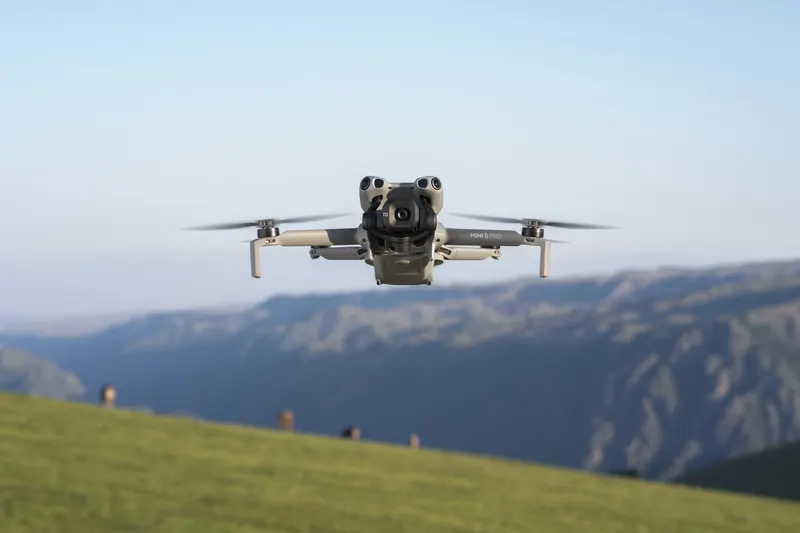
Best drones under 250 grams, by weight, and the FAA's 0.55 lb line
The FAA's line is 0.55 lb at takeoff, 249.48 g, with everything on board. Under it, a drone flown only for fun needs no registration and, while unregistered, no Remote ID; TRUST still applies.
- The FAA's line, 0.55 lb
- 249.48g
- Models listed at or under the line
- 12
- Lightest: the DJI Neo
- about 135g
- On the line: the DJI Mini 5 Pro
- 249.9g ± 4 g
Best drones under 250 grams by use: DJI and Potensic picks
Our list of best drones under 250 grams has four picks, each for one reason we can show in numbers from the makers' spec sheets. None of them is the Mini 5 Pro, which sits on the line.
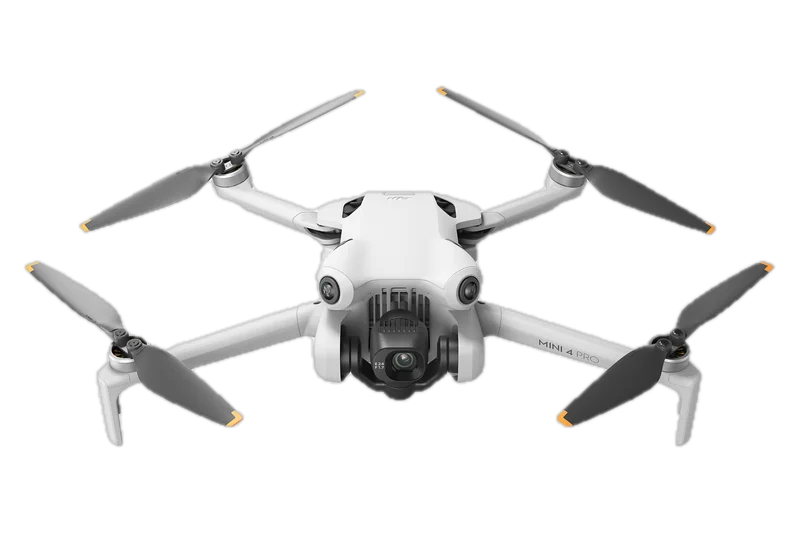
DJI Mini 4 Pro
Vision sensors facing every way and a 1/1.3-inch sensor, listed under 249 g.
under 249 g with the standard battery
- Flight time
- 34 min; 45 with the Battery Plus
- Remote ID
- Only with the Battery Plus
- Image sensor
- 1/1.3-inch
- Last U.S. price
- $759 with the DJI RC-N2, out of stock
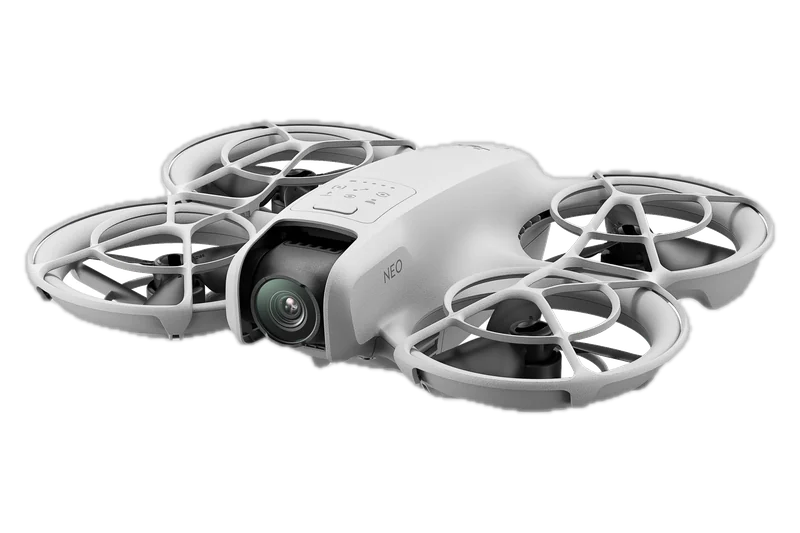
DJI Neo
The lightest drone in our data, for flying only for fun, unregistered.
about 135 g on takeoff
- Flight time
- About 18 min
- Remote ID
- No FAA declaration
- Image sensor
- 1/2-inch
- Last U.S. price
- $169, no remote, out of stock
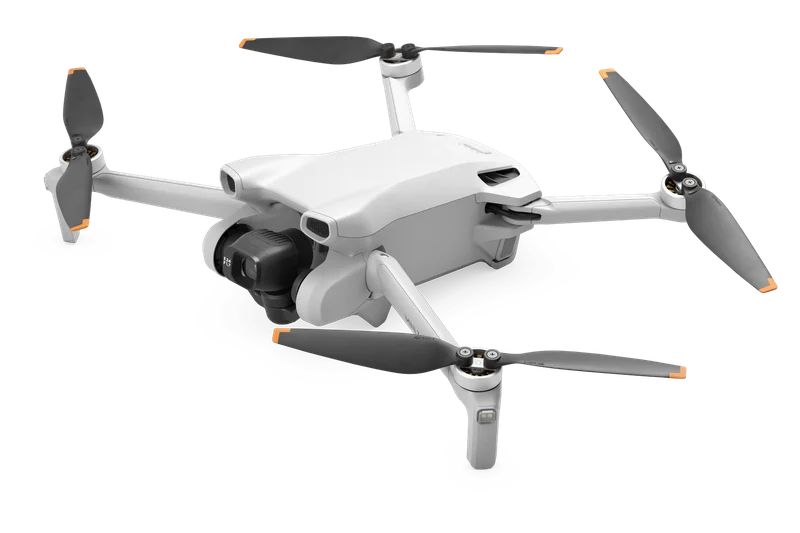
DJI Mini 3
38 minutes on the standard battery, the longest of the DJI drones under the line.
248 or about 290 g with the standard battery or the Battery Plus
- Flight time
- 38 min; 51 with the Battery Plus
- Remote ID
- Only with the Battery Plus
- Image sensor
- 1/1.3-inch
- Last U.S. price
- $419 with the DJI RC-N1, out of stock
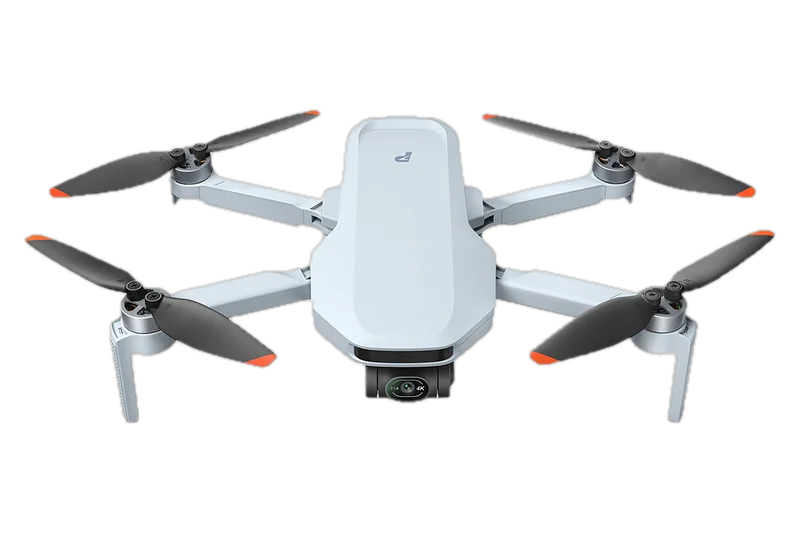
Potensic ATOM 2
Remote ID on its standard battery, so it can be registered and flown under Part 107 as it is.
under 249 g on takeoff
- Flight time
- 32 min
- Remote ID
- Built in, RID000002237
- Image sensor
- 1/2-inch
- U.S. price
- $359.99 Standard Kit, Potensic's page
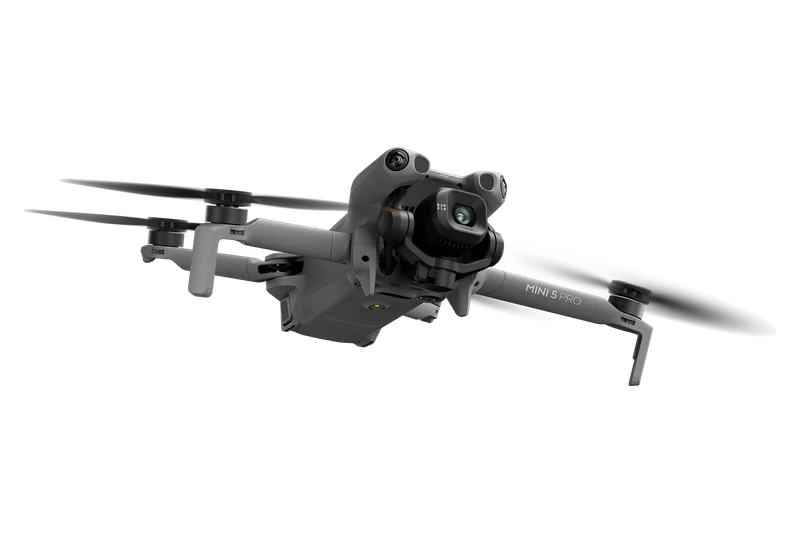
DJI Mini 5 Pro
Not a pick: DJI lists it at 249.9 g ± 4 g, a range that crosses the line.
249.9 g ± 4 g on takeoff
- Flight time
- 36 min; 52 with the Battery Plus
- Remote ID
- Built in, RID000002581
- Image sensor
- 1-inch
- U.S. price
- DJI has no U.S. page for it
The line on each weight bar is 0.55 lb (249.48 g): above it, a drone flown for fun is registered. The Mini 3's second bar is its weight with the Intelligent Flight Battery Plus, the battery that turns on its Remote ID. Prices are the last on each maker's U.S. page, read November 14, 2026.
DJI Mini 4 Pro: all-round obstacle sensing and a 1/1.3-inch sensor under the line
The DJI Mini 4 Pro, listed under 249 g, has what DJI calls an “Omnidirectional binocular vision system” for obstacle avoidance: vision sensors facing forward, backward, sideways, up and down. It has a 1/1.3-inch CMOS sensor and flies 34 minutes; the DJI Neo 2 also senses all around, with a 1/2-inch sensor and about 19 minutes. Its Remote ID works only with the Battery Plus, which takes it over the line, and so does its 84 g propeller guard. It was last listed on DJI's U.S. page at $759 with the DJI RC-N2, marked out of stock. The DJI Mini 5 Pro has the same all-round sensing, a 1-inch sensor and built-in Remote ID, at a listed 249.9 g ± 4 g.
DJI Neo: the lightest, about 135 g
The Neo is the lightest drone in our data and the smallest DJI drone by listed weight, 130 × 157 × 48.5 mm. It flies about 18 minutes and has no FAA Remote ID declaration, so it suits flying only for fun, unregistered. It was last listed on DJI's U.S. page at $169 with no remote, marked out of stock.
DJI Mini 3: the longest DJI flight under the line, 38 minutes
At 248 g with its standard battery, the Mini 3 flies 38 minutes, the longest of the DJI drones under the line. Its Intelligent Flight Battery Plus gives 51 minutes and turns on Remote ID, at about 290 g, over the line. It was last listed on DJI's U.S. page at $419 with the DJI RC-N1, marked out of stock. Potensic lists 40 minutes for its ATOM 3, which has no FAA Remote ID declaration.
Potensic ATOM 2: Remote ID built in under the line
Listed under 249 g, the ATOM 2 broadcasts Remote ID on its standard battery (FAA declaration RID000002237) and flies 32 minutes: a light drone that can be registered and flown under Part 107 as it is. It lists at $359.99 for the Standard Kit on Potensic's page. The DJI Mini 3 Pro also has a declaration on its standard battery, but DJI's U.S. comparison page shows no price for it.
Every drone under 250 grams in our list, by listed weight
Lightweight drones from DJI, HOVERAir, Potensic and Antigravity, sorted by the takeoff weight each maker lists with its standard battery, from the DJI Neo up, with what takes each one over the line in the maker's own figures. The DJI Mini 5 Pro comes last: DJI lists it at 249.9 g ± 4 g, on the line, and we give it no verdict.
when flying for fun
135 g
151 g
192 g
246–249.9 g
about 290 g
Twelve models below are listed at or under the line; the DJI Mini 5 Pro, at 249.9 g ± 4 g, sits on it. With their heavier batteries, the Mini 3 and Mini 3 Pro weigh about 290 g and the Antigravity A1 291 g.
| Drone | Listed takeoff weight | What takes it over 0.55 lb, in the maker's figures | Remote ID on the FAA list | U.S. price |
|---|---|---|---|---|
| DJI Neo | About 135 g (4.8 oz) | Nothing in DJI's figures | No FAA declaration | Last listed on DJI's U.S. page at $169 (no remote), marked out of stock |
| DJI Neo 2 | 151 g (5.3 oz) | Its DJI Neo 2 Digital Transceiver: 160 g, still under | No FAA declaration | DJI has no U.S. page for it |
| HOVERAir X1 PRO | 192 g (6.8 oz) | Its ND filter: 192.1 g, still under | Built in (HOVERAir's statement); the FAA list's two Zero Zero Robotics records, RID000002593 and RID000002594, name no model | From $499 (X1 PRO), HOVERAir's U.S. store |
| DJI Mini 2 SE | 246 g (8.7 oz) | Propeller guards: named by DJI, with no weight printed | No FAA declaration | No U.S. price read |
| DJI Mini 4K | 246 g (8.7 oz) | Propeller guards: named by DJI, with no weight printed | No FAA declaration | DJI's U.S. comparison page: out of stock, no price |
| DJI Mini 3 | 248 g (8.7 oz) | Intelligent Flight Battery Plus: “more than 249 g (about 290 g)” | Only with the Intelligent Flight Battery Plus: FAA declaration RID000000062 | Last listed on DJI's U.S. page at $419 (with the DJI RC-N1), marked out of stock |
| DJI Flip | Under 249 g (8.8 oz) | Nothing in DJI's figures; its guards are built in | No FAA declaration | Last listed on DJI's U.S. page at $439 (with the DJI RC-N3), marked out of stock |
| DJI Mini 3 Pro | Under 249 g (8.8 oz) | Intelligent Flight Battery Plus: “more than 249 g (about 290 g)” | Built in: FAA declaration RID000000001 | DJI's U.S. comparison page: out of stock, no price |
| DJI Mini 4 Pro | Under 249 g (8.8 oz) | Intelligent Flight Battery Plus: “more than 249 g”; propeller guard, 84 g: “The aircraft weight exceeds 250 g” | Only with the Intelligent Flight Battery Plus: FAA declaration RID000000713 | Last listed on DJI's U.S. page at $759 (with the DJI RC-N2), marked out of stock |
| Potensic ATOM 2 | Under 249 g (8.8 oz) | Potensic propeller guards, 30 g a set: “over 250 g” | Built in: FAA declaration RID000002237 | $359.99 (ATOM 2 Standard Kit), Potensic's page |
| Potensic ATOM 3 | Under 249 g (8.8 oz) | Extended battery: 123 g against 80 g, with no takeoff weight printed | No FAA declaration | $429.99 (Standard Kit), Potensic's U.S.-dollar store |
| Antigravity A1 | 249 g (8.8 oz) | High-Capacity Flight Battery: 291 g (10.26 oz) | Only with the High-Capacity Flight Battery: FAA declaration RID000002621 | $1,599 (Standard Bundle), Antigravity's U.S. page |
| DJI Mini 5 Pro | 249.9 g ± 4 g (8.8 oz): on the line | Intelligent Flight Battery Plus: DJI prints no takeoff weight with it | Built in: FAA declaration RID000002581 | DJI has no U.S. page for it |
Over the line in our data: the DJI Avata 2, about 377 g (13.3 oz), the DJI Air 3S, 724 g (25.5 oz) and the DJI Mavic 4 Pro, about 1,063 g (37.5 oz). Older drones named by other lists sit on DJI support pages now: the Mavic Mini, which DJI lists at 249 g, and the Mini 2 at “< 249 g”. For the Autel EVO Nano, Autel says “At only 249 grams, the EVO Nano and Nano+”, and its online shop in U.S. dollars shows the Nano+ “Sold Out”. The Holy Stone HS360S, which weighs 249 grams by its maker's page, and the Potensic ATOM and ATOM SE are on our best budget drones list.
Camera, video, obstacle sensing and flight time
Sensor sizes run from the 1/2-inch image sensor of the Neo to the 1-inch CMOS sensor of the Mini 5 Pro, and every model in the table records 4K video or more; obstacle avoidance runs from a downward sensor only to vision sensors that face every direction. Flight times in the table run from 16 minutes on the HOVERAir X1 PRO to 38 on the Mini 3, and the DJI Flip and Mini 4K each list a 31-minute flight time.
Camera and flight time table
| Drone | Image sensor | Top video | Vision and obstacle sensors face | Flight time |
|---|---|---|---|---|
| DJI Neo | 1/2-inch | 4K | Down only | About 18 min |
| DJI Neo 2 | 1/2-inch | 4K | All around: forward, backward, sideways, up and down | About 19 min |
| HOVERAir X1 PRO | 1/2-inch | 4K | Backward and down | 16 min |
| DJI Mini 4K | 1/2.3-inch | 4K | Down only | 31 min |
| DJI Mini 3 | 1/1.3-inch | 4K | Down only | 38 min; 51 min with the Intelligent Flight Battery Plus |
| DJI Flip | 1/1.3-inch | 4K | Forward and down | 31 min |
| DJI Mini 3 Pro | 1/1.3-inch | 4K | Forward, backward and down | 34 min; 47 min with the Intelligent Flight Battery Plus |
| DJI Mini 4 Pro | 1/1.3-inch | 4K | All around: forward, backward, sideways, up and down | 34 min; 45 min with the Intelligent Flight Battery Plus |
| Potensic ATOM 2 | 1/2-inch | 4K | Down only | 32 min |
| Antigravity A1 | 1/1.28-inch | 8K 360° | Forward and down | 24 min; 39 min with the High-Capacity Flight Battery |
| DJI Mini 5 Pro | 1-inch | 4K | All around: forward, backward, sideways, up and down | 36 min; 52 min with the Intelligent Flight Battery Plus |
The 250 grams line is really 0.55 lb: 249.48 grams
The rule, 14 CFR 48.15, says a drone flown only for fun needs no FAA registration if it “weighs 0.55 pounds or less on takeoff”. That is 249.48 g (0.55 × 453.59237 g), not 250.
- The weight that counts includes “everything that is on board or otherwise attached to the aircraft”: battery, propeller guards, a Remote ID module, a memory card.
- The FAA's web pages round the line to 250 grams: “All drones must be registered, except those that weigh 0.55 pounds or less (less than 250 grams)”, and, in its Fly SMART list, “You must register if your drone weighs 250 grams (0.55 lbs) or more.”
- The rule's figure and the web pages' 250 grams differ by about half a gram, so a listed weight between them sits on the line.
- Every weight on this page is the maker's listed takeoff weight. DJI notes that the actual weight “may vary due to differences in batch materials”, so weigh your drone as you fly it.
Drones under 250 grams flown for fun: FAA registration and Remote ID
Flown only for fun at or under the line, a drone needs no registration and, unregistered, no Remote ID. Every recreational flyer still passes TRUST.
- Registration
Not needed for a drone of 0.55 lb or less flown only for fun.
Not neededThe exact rule
The exception in 49 U.S.C. 44809 covers a drone “flown strictly for recreational purposes”. Flown that way at 0.55 lb or less, a drone needs no FAA registration, and while it is unregistered it is outside the Remote ID rule, which applies to drones “registered or required to be registered under part 47 or 48” (14 CFR 89.101).
49 U.S.C. 44809, 14 CFR 48.15 - Remote ID
Not while it is unregistered. Once it is registered with the FAA, by choice, Remote ID applies, even under the line.
If registeredThe exact rule
The FAA puts it this way: “Drones which are required to be registered or are registered, including those flown for recreation, business, or public safety, must comply with the rule on Remote ID.” Remote ID has been required since September 16, 2023.
14 CFR 89.101, FAA Remote ID page - TRUST
Required, whatever the drone weighs. That test is TRUST, and it is free.
RequiredThe exact rule
Weight does not change the test: “The law requires that all recreational flyers pass an aeronautical knowledge and safety test”.
49 U.S.C. 44809, FAA TRUST page
When HOVERAir's U.S. store calls its 125 g X1 “exempt from the hassle of FAA registration”, that holds only when it is flown only for fun.
What 250 grams does not change: Part 107 and flights over people
Flown under Part 107, for work or pay, a drone under the line is registered and meets Remote ID. Flights over people have their own test, and weight alone does not pass it.
- Part 107
Flown under Part 107, it is registered like any drone. Then it must meet Remote ID, whatever it weighs.
RegisteredThe exact rule
The registration exception covers only flights made only for fun. In the FAA's words, “Drones registered under the Exception for Limited Recreational Operations cannot be flown under Part 107.” So a drone under 0.55 lb flown under Part 107, for work or pay, must be registered like any other, and compliance with Remote ID then takes one of three forms: a Standard Remote ID drone with built-in broadcast, a drone with a Remote ID broadcast module attached, or a flight at an FAA-Recognized Identification Area. A drone with no record on the FAA list of Remote ID declarations needs a module or such an area, and the module counts toward its takeoff weight. The registration helper gives the answer for your own drone, battery and use.
14 CFR 89.105, FAA How to Register Your Drone page - Over people
Not settled by weight. Category 1 also asks for no exposed rotating parts that could cut skin.
Not settledThe exact rule
Flights over people are a separate test. Part 107 allows them only within Categories 1 to 4 (14 CFR 107.105). Category 1 needs a drone that “weighs 0.55 pounds or less on takeoff and throughout the duration of each operation under Category 1”, with no “exposed rotating parts that would lacerate human skin upon impact with a human being”, and it allows no sustained flight over open-air assemblies unless the flight meets Remote ID. None of the maker pages we read says a model meets Category 1: weight alone does not settle it.
14 CFR 107.105, 14 CFR 107.110
What takes a drone over 250 grams: batteries, guards and modules
The standard battery is what keeps most of these drones under the line. A heavier battery, a set of propeller guards or a Remote ID module can each take a drone over it.
- Batteries: DJI says that with the Intelligent Flight Battery Plus the Mini 3 and Mini 3 Pro “will weigh more than 249 g (about 290 g)”, and the Mini 4 Pro “will weigh more than 249 g”. The heavier battery adds 40.5 g on the Mini 3 Pro and 43.1 g on the Mini 4 Pro. Antigravity lists the A1 at 291 g (10.26 oz) with its High-Capacity Flight Battery, 42 g over its standard takeoff weight. Potensic's ATOM 3 Extended battery weighs 123 g against 80 g, with no takeoff weight printed. DJI's Mini 4 Pro FAQ adds that with a Mini 3 Pro battery “the total weight will exceed 249 g”.
- Propeller guards: DJI's Mini 4 Pro guard weighs 84 g, and “The aircraft weight exceeds 250 g after the propeller guard is installed.” Potensic's ATOM series guards weigh “30 g per set”, and “Using the propeller guards will increase the drone's takeoff weight to over 250 g”.
- What stays under: the Neo 2 with its Digital Transceiver weighs 160 g, and the HOVERAir X1 PRO with its ND filter 192.1 g. A drone like the DJI Flip, with its propeller guards built in, is listed under 249 g with them on.
- The Mini 5 Pro also has an Intelligent Flight Battery Plus; DJI prints no takeoff weight with it.
Remote ID requirements on drones under 250 grams: built in, by battery or none
The FAA list of Remote ID declarations has aircraft records for the DJI Mini 3 Pro, Mini 3, Mini 4 Pro and Mini 5 Pro, the Potensic ATOM 2 and the Antigravity A1. It has none for the DJI Neo, Neo 2, Flip, Mini 4K or Mini 2 SE, or the Potensic ATOM 3.
On three models in our data, Remote ID works only with the heavier battery, and that is also the configuration the maker lists over the line:
| Drone | Remote ID broadcasts with | Takeoff weight with it | With the standard battery | FAA declaration |
|---|---|---|---|---|
| Antigravity A1 | High-Capacity Flight Battery | 291 g (10.26 oz) | 249 g (8.8 oz) | RID000002621 |
| DJI Mini 3 | Intelligent Flight Battery Plus | “more than 249 g (about 290 g)” | 248 g (8.7 oz) | RID000000062 |
| DJI Mini 4 Pro | Intelligent Flight Battery Plus | “more than 249 g” | Under 249 g (8.8 oz) | RID000000713 |
Flown only for fun with the standard battery, these three stay under the line and, unregistered, need no Remote ID. Registered, for Part 107 or by choice, they broadcast with the heavier battery, or need a broadcast module or an FAA-Recognized Identification Area. Potensic's “RID-916” module (RID000001125) and Holy Stone's HSRID01, HSRID02 and HSRID03 are on the same FAA list.
FPV drones under 250 grams: the same 0.55 lb rule for an FPV drone
An FPV drone's takeoff weight depends on the battery it flies with, so the line applies to the drone as flown, with everything attached. Under it and flown only for fun, an FPV drone needs no registration; flown under Part 107, it is registered and must meet Remote ID like any drone. We list no FPV builds here; DJI's Avata 2 is about 377 g, over the line. See our FPV section.
Related pages
The other lists, the rules that weight decides, the registration helper and the flight check.
Drones under 250 grams FAQ
Do drones under 250 grams need to be registered?
Not when flown only for fun at 0.55 lb (249.48 g) or less at takeoff, everything attached. Flown under Part 107, yes: every drone is registered, whatever it weighs.
Do drones under 250 grams need Remote ID?
Not while unregistered and flown only for fun. Once a drone is registered or required to be, it must meet Remote ID, even under the line.
Is 249.9 g under the limit?
The rule's line is 0.55 lb, 249.48 g, while the FAA's web pages say 250 grams. DJI lists the Mini 5 Pro at 249.9 g ± 4 g, so its range crosses both. We give no verdict: weigh the drone as you fly it, everything attached.
Which DJI drone is the smallest?
By listed weight, the DJI Neo, about 135 g, at 130 × 157 × 48.5 mm.
Will the FAA know if I fly my drone?
A Standard Remote ID drone or a broadcast module broadcasts the drone's identification and location and that of its control station or takeoff point. Only drones that are registered or required to be are covered; see our Remote ID guide.
Do I need TRUST for a drone under 250 grams?
Yes. Every recreational flyer must pass the FAA's free TRUST test, whatever the drone weighs.
Sources Named, not linked.
Documents are named, not linked. Each was read on November 14, 2026; the makers' stores and DJI's U.S. pages were read again on November 14, 2026. Page checked November 14, 2026.
FAA and regulations
- 14 CFR 48.15, 14 CFR 89.101, 14 CFR 89.105, 14 CFR 107.105 and 14 CFR 107.110
- 49 U.S.C. 44809
- FAA How to Register Your Drone page, FAA Recreational Flyers page, FAA TRUST page and FAA Remote ID page
- FAA UAS Declaration of Compliance list: Remote ID declarations
DJI
- DJI Neo, Mini 4K / Mini 2 SE, Mini 3, Mini 4 Pro and Flip specs pages, DJI Neo 2 specs page (Canada) and DJI Mini 5 Pro specs page (U.K.)
- DJI Mini 3 Pro support page, DJI Mavic Mini and Mini 2 support pages, DJI Mini 4 Pro FAQ and DJI Mini 4 Pro Propeller Guard User Guide v1.4
- DJI U.S. online store
Other makers
- Potensic ATOM 2 and ATOM 3 specs pages, Potensic ATOM, ATOM SE and ATOM LT specs pages and Potensic store (U.S. dollars)
- HOVERAir X1 PRO and PROMAX page and HOVERAir U.S. store
- Antigravity A1 specs page (U.S.), Holy Stone HS360S page and Autel online shop