Real estate drone photography: the FAA rules and the aerial cameras
The FAA's own first example of a flight under Part 107 is taking photos to help sell a property or service.
- Part 107 registration, valid for 3 years
- $5/ drone
- Height limit above the ground, higher only near a structure
- 400ft
- Category 1 limit for flight over people, everything on board
- 0.55lb
- Civil twilight, before sunrise and after sunset
- 30min
Real estate drone photography rules at a glance
This guide gives the Part 107 rules a listing shoot meets, from the remote pilot certificate to airspace near the property, people and cars below and twilight, with a table of camera specs as the makers print them.
The questions a listing shoot meets, each with the rule that answers it and where that rule is written. Every rule was read in its source on November 14, 2026; the sections below give the detail.
16 questions a real estate shoot meets: the rule that answers each and where it is written. Read November 14, 2026.
- Is a real estate drone shoot a Part 107 flight?Part 107
Yes in the FAA's own example: “taking photos to help sell a property or service” is a Part 107 flight. Pay alone does not decide, and the FAA adds: “When in doubt, assume Part 107.”
Where it is written
FAA Recreational Flyers page
- Can an agent fly their own listing as a hobby flight?Assume Part 107
No FAA page we read names this case. Recreational flying leaves out flights “related to or in furtherance of a business”, and the FAA's example of a Part 107 flight is taking photos to help sell a property.
Where it is written
AC 91-57D, paragraph 2.2.1.1; FAA Recreational Flyers page
- Who may be remote pilot in command?Certificate
A holder of a remote pilot certificate with a small UAS rating: at least 16, and passed the FAA's initial knowledge test.
Where it is written
14 CFR 107.12, 107.61
- Must the drone be registered?$5 / drone
Yes: under Part 107 every drone is registered, whatever it weighs, at $5 per drone for 3 years. A recreational registration cannot be used for Part 107 flights.
Where it is written
FAA How to Register Your Drone
- Must the drone broadcast Remote ID?Required
Yes: a drone that must be registered, or is registered, must meet the Remote ID rule, through built-in Standard Remote ID, a broadcast module or a flight inside an FAA-Recognized Identification Area (FRIA).
Where it is written
FAA Remote ID page
- The listing is near an airport: what then?Authorization
Class B, C or D airspace, or the surface area of Class E airspace at an airport, needs prior authorization from air traffic control, through a LAANC app or FAADroneZone.
Where it is written
14 CFR 107.41; FAA LAANC page
- How high may it fly to shoot a tall building?400 ft
400 feet above the ground; higher only within 400 feet of a structure, and no more than 400 feet above its top.
Where it is written
14 CFR 107.51(b)
- Can it fly over neighbors, potential buyers or passers-by?Only if
Only if they take part in the operation, are under a covered structure or inside a stationary vehicle, or the flight meets Category 1, 2, 3 or 4.
Where it is written
14 CFR 107.39; subpart D
8 more: Category 1, crowds, cars, twilight, night, privacy, the brand
- What makes a drone Category 1?0.55 lb
0.55 lb (249 g) or less with everything on board, and no exposed rotating parts that would lacerate skin: both conditions.
Where it is written
14 CFR 107.110(a)
- Can it fly over a gathered crowd, at an open house or an event?Rarely
Never in Category 3. In Categories 1 and 2, sustained flight over an open-air assembly only when the flight meets Remote ID; the FAA counts hovering, flying back and forth and circling as sustained flight.
Where it is written
14 CFR 107.110(b), 107.115(b), 107.125(b); FAA OOP page
- Can it fly over cars on the street?Not sustained
In Categories 1 to 3, only inside a closed or restricted-access site where everyone is on notice, or with no sustained flight over moving vehicles.
Where it is written
14 CFR 107.145
- Can you fly from a moving car?Sparse areas
Only over a sparsely populated area, and not while carrying another person's property for hire.
Where it is written
14 CFR 107.25(b)
- What do twilight shots need?Lights
Civil twilight is the 30 minutes before official sunrise and the 30 minutes after official sunset, and it needs anti-collision lighting visible for at least 3 statute miles.
Where it is written
14 CFR 107.29(b), (c)
- What do night shots need?Lights, training
The initial test or recurrent training taken after April 6, 2021, anti-collision lighting visible for at least 3 statute miles and, in controlled airspace, an airspace authorization.
Where it is written
14 CFR 107.29(a); FAA Part 107 Airspace Authorizations
- Who sets the privacy and trespass rules?State law
Generally state and local law: privacy, voyeurism, photography or imaging from drones, and trespass. Of the 51 rows in our state table, 19 have only a drone privacy statute, 10 only a drone trespass statute, 3 both, 7 only a critical-facility law and 12 only general law.
Where it is written
AIM 11-4-6; FAA and DOT fact sheet; our table of state drone laws on private property
- Do the FAA rules depend on the drone brand?No
No: the registration and Remote ID rules set their conditions by weight, purpose and equipment, not by manufacturer.
Where it is written
14 CFR 48.15; part 89
What this page is
This guide sets out what the FAA's rules ask of drone real estate photography, from the certificate to airspace, people below, twilight and state privacy law, with the section of the rule that says so. It gives no rates, no editing, marketing or aerial photography advice and no pick of a best drone: the camera table shows what each maker prints.
Is real estate drone photography a Part 107 flight?
In the FAA's own words, yes. The first example the FAA gives of a flight under Part 107, its rule for drones under 55 pounds, is “taking photos to help sell a property or service”.
Drone photography for real estate marketing is that example, and the recreational rules of 49 U.S.C. 44809 and Part 107 stay separate:
- Flying for fun (49 U.S.C. 44809)
The FAA's Advisory Circular 91-57D says recreational purposes leave out flights “related to or in furtherance of a business”, and one flight cannot mix recreational and commercial purposes.
Not for business - Part 107
Pay alone does not decide. The FAA says compensation “is not what determines” whether a flight was recreational.
Part 107 - When unsure
The FAA's advice is “When in doubt, assume Part 107.”
Assume Part 107 - The BLS says the same of photographers
“Photographers who commercially operate drones, commonly known as unmanned aerial vehicles, must obtain certification from the Federal Aviation Administration (FAA).”
An agent photographing their own listing is a case no FAA page we read names. What the FAA does say is above: its example of a Part 107 flight, Advisory Circular 91-57D on flights in furtherance of a business, and its advice when in doubt.
Hobby or work?
Our drone license guide sorts the kinds of flying by the rules each falls under.
The Part 107 path: certificate, registration, Remote ID
A Part 107 flight needs a remote pilot in command who holds a remote pilot certificate: the FAA's name for what is often called a drone license or a commercial drone pilot license.
- Drone license guide
The remote pilot certificate
16 or olderYou must be at least 16 and pass the FAA's knowledge test (14 CFR 107.12, 107.61).
Staying current
24 monthsTo act as remote pilot in command you must have passed the initial test or finished recurrent training within the previous 24 calendar months (14 CFR 107.65). The certificate itself does not expire: what lapses is knowledge recency, renewed by the FAA's online training, and no new certificate is issued for it.
- Registration helper
Registration
$5 per droneUnder Part 107 every drone is registered, whatever it weighs: $5 per drone for 3 years. A recreational registration cannot be used for Part 107 flights.
- Remote ID guide
Remote ID
A drone that must be registered, or is registered, must meet the Remote ID rule.
Our drone license guide covers the Part 107 certification steps in full, the drone registration helper answers for your own drone, and the Remote ID guide covers the broadcast rule.
Real estate aerial photography near airports and tall buildings
For aerial real estate photography, a listing near an airport may sit in controlled airspace, and the height limit is 400 feet above the ground.
No Part 107 flight may enter Class B, C or D airspace, or the surface area of Class E airspace designated for an airport, without prior authorization from air traffic control (14 CFR 107.41). LAANC automates that authorization in the apps of FAA-approved UAS Service Suppliers: a request is checked against the FAA's UAS Facility Maps and other data, and an approval can come in near-real time.
A drone may fly higher than 400 feet only within 400 feet of a structure, and then no more than 400 feet above its top (14 CFR 107.51(b)). Our LAANC guide covers the authorization, and our guide to how high a drone can fly covers the structure rule.
Near an airport?
Look up the airspace over the property before the shoot.
Check the listing before the shootFlying over people, cars and the street
A drone may fly over a person only if that person takes part in the operation, is under a covered structure or inside a stationary vehicle, or the flight meets one of the four categories of subpart D (14 CFR 107.39).
- Category 1
0.55 lb (249 g) or less with everything on board, and no exposed rotating parts that would lacerate human skin: both conditions (14 CFR 107.110).
0.55 lb - Categories 2 and 3
The drone is listed on an FAA-accepted declaration of compliance for that category and labeled for it (14 CFR 107.115, 107.125). The FAA's page on operations over people points to its UAS Declaration of Compliance System for these declarations.
Declaration - Category 3 limits
Never over open-air assemblies of people; over people only inside a closed or restricted-access site where everyone is on notice, or with no sustained flight over anyone who neither takes part nor is under cover (14 CFR 107.125).
No crowds - Category 4
A drone with a part 21 airworthiness certificate (14 CFR 107.140).
- Crowds
In Categories 1 and 2, sustained flight over an open-air assembly is allowed only when the flight meets Remote ID (14 CFR 107.110(b), 107.115(b)). The FAA counts hovering above heads, flying back and forth over the assembly and circling above it as sustained flight; a brief, one-time transit is not.
Remote ID - Moving vehicles
In Categories 1 to 3, only inside a closed or restricted-access site where everyone is on notice, or with no sustained flight over moving vehicles (14 CFR 107.145).
Not sustained - Flying from a car or boat
Allowed only over a sparsely populated area (14 CFR 107.25(b)).
Sparse areas
This page names no model as eligible for flight over people: which drones are on an FAA-accepted declaration is in the FAA's own system.
Twilight and night real estate photos
Twilight photos of a property are a Part 107 flight with one more requirement: during civil twilight the drone needs anti-collision lighting visible for at least 3 statute miles (14 CFR 107.29(b)).
Outside Alaska, civil twilight is the 30 minutes before official sunrise and the 30 minutes after official sunset (14 CFR 107.29(c)).
- Night
The pilot needs the initial test or recurrent training taken after April 6, 2021, and the drone the same lighting (14 CFR 107.29(a)).
Lights, training - Controlled airspace at night
Below 400 feet the pilot also holds a valid airspace authorization from FAADroneZone or LAANC.
Authorization
Privacy, trespass and state law
The FAA rules the airspace; privacy and trespass are generally for the states.
In the FAA's view, outside aviation safety and the efficient use of airspace, states may generally regulate drones, even with laws written for drones, as long as they do not conflict with FAA rules. The FAA's Aeronautical Information Manual lists state and local laws on privacy, voyeurism, photography or imaging from drones, and trespass on property as generally within state power.
The FAA's fact sheet gives an example of where that line falls: a privacy-based ban on drones over a whole city is likely preempted, while a low-altitude privacy limit over places such as parks or schools is more likely allowed.
Our 51-row state table, the 50 states and Washington, D.C., each read in its own code, counts 19 with only a drone surveillance or privacy statute, 10 with only a drone trespass or overflight statute and 3 with both; 7 reach drones only at critical facilities, and 12 rely on general law alone. Our guide to flying over private property lists each state's law, and the drone laws by state page covers every other topic.
Your state's law
Privacy and trespass are generally state and local law. Our table names each state's drone law on private property.
State by stateWhat the National Association of Realtors tells real estate professionals
The National Association of Realtors (NAR) has a page on drones for its members. It is an association's guidance, not one of the FAA's rules and regulations; each point below is NAR's, next to the FAA rule it matches.
- Who flies
NAR tells members they can get an FAA Remote Pilot Certificate themselves for commercial use, or hire a professional drone pilot or photographer.
The FAA rule
The rule: a Part 107 flight needs a remote pilot in command who holds that certificate (14 CFR 107.12).
- Registration
NAR says drones used for real estate business should be registered under Part 107, not under the recreational exception.
The FAA rule
The rule: under Part 107 every drone is registered, whatever it weighs.
- Local rules
NAR notes that permits, privacy laws and airspace rules may apply locally.
The FAA rule
The FAA: privacy and trespass are generally state and local law, and controlled airspace needs an authorization.
Drones for real estate photography: camera specs of 14 models
This page names no best drones for real estate and picks none, and the FAA's rules do not depend on the brand.
The table shows each drone's camera as its maker prints it, read on the maker's own spec page on November 14, 2026. The drone picker narrows the list by your needs, and compare drones puts two side by side.
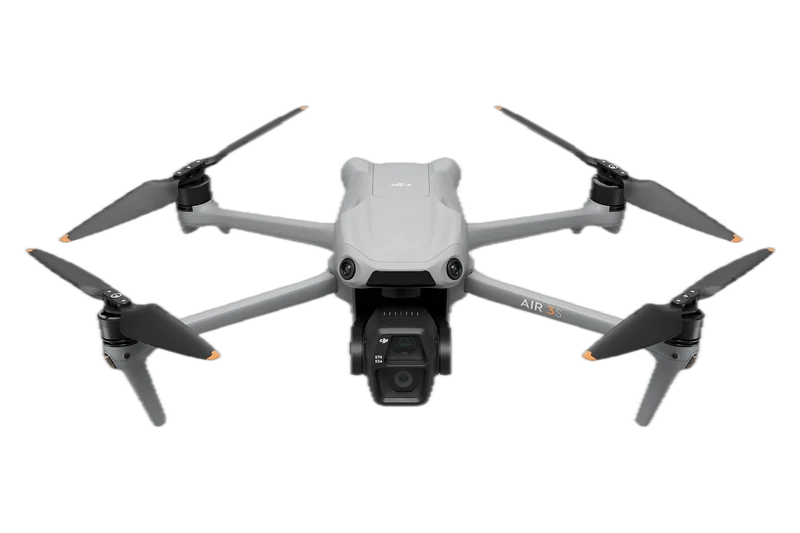
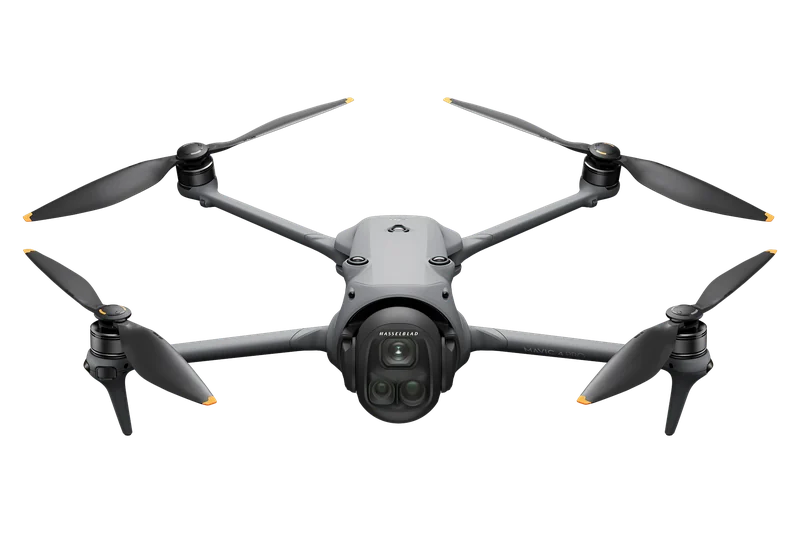
Three of the drones in the table, by sensor size
| Drone and sensor | Photo | Largest photo size | Top video mode | Gimbal | Flight time |
|---|---|---|---|---|---|
| DJI Mini 4 Pro1/1.3-inch CMOS | 48 MP | 8064×6048 | 4K up to 100 fps (slow-motion rate) | 3-axis | 34 min; 45 min with the Intelligent Flight Battery Plus |
| DJI Mini 5 Pro1-inch CMOS | 50 MP | 8192×6144 | 4K up to 120 fps (slow-motion rate) | 3-axis | 36 min; 52 min with the DJI Mini 5 Pro Intelligent Flight Battery Plus |
| DJI Mini 31/1.3-inch CMOS | 48 MP | 8064×6048 | 4K at 24/25/30 fps | 3-axis | 38 min; 51 min with the Intelligent Flight Battery Plus |
| DJI Mini 3 Pro1/1.3-inch CMOS | 48 MP | 8064×6048 | 4K up to 60 fps | 3-axis | 34 min; 47 min with the Intelligent Flight Battery Plus |
| DJI Mini 4K1/2.3-inch CMOS | 12 MP | 4000×3000 | 4K at 24/25/30 fps | 3-axis | 31 min |
| DJI Air 3S1-inch CMOS (wide); 1/1.3-inch (medium tele) | 50 MP (wide); 48 MP (medium tele) | 8192×6144 (wide); 8064×6048 (medium tele) | 4K up to 120 fps (slow-motion rate) | 3-axis | 45 min |
| DJI Mavic 4 Pro4/3 CMOS (Hasselblad); 1/1.3-inch (medium tele); 1/1.5-inch (tele) | 100 MP (Hasselblad); 48 MP (medium tele); 50 MP (tele) | 12288×8192 (Hasselblad) | 6K up to 60 fps | 3-axis | 51 min |
| DJI Flip1/1.3-inch image sensor | 48 MP | 8064×6048 | 4K up to 100 fps | 3-axis | 31 min |
| DJI Avata 21/1.3-inch image sensor | 12 MP | 4000×3000 | 4K up to 60 fps (4:3); 100 fps (16:9) | 1-axis (tilt) | About 23 min |
| DJI Neo1/2-inch image sensor | 12 MP | 4000×3000 | 4K at 30 fps | 1-axis (tilt) | About 18 min |
| DJI Neo 21/2-inch CMOS | 12 MP | 4000×3000 | 4K up to 60 fps (4K/100 in 16:9 only with motion control or the remote) | 2-axis | About 19 min |
| Antigravity A11/1.28-inch (360-degree camera) | 55 MP or 14 MP | 10496×5248 | 8K 7680×3840 up to 30 fps (360-degree) | None printed | 24 min; 39 min with the High-Capacity Flight Battery |
| Potensic ATOM 21/2-inch CMOS | 48 MP | 8000×6000 | 4K at 24/25/30 fps | 3-axis: tilt, roll and pan ranges (“3-Axis gimbal” in the page description) | 32 min |
| HOVERAir X1 PRO1/2-inch | Not printed for the X1 PRO | Not printed for the X1 PRO | 4K up to 60 fps | 2-axis, plus EIS | 16 min |
14 drones and their cameras, as each maker prints them on its own spec page, read November 14, 2026. No prices, no pick.
- Top video mode: the highest frame rate at 4K or above that the maker prints; “slow-motion rate” marks a rate the maker gives for slow-motion recording.
- Largest photo size: the largest image size in pixels the maker prints; HOVERAir prints “Up to 48 MP” only for the X1 PROMAX, so the X1 PRO cells say “not printed”.
- Three DJI models without a U.S. page: the Mini 5 Pro, Mavic 4 Pro and Neo 2 were read on DJI's U.K. spec pages, as DJI has no U.S. page for them.
- DJI Mini 4K: read on DJI's U.S. support page it shares with the Mini 2 SE.
U.S. status and Remote ID of these drones
The FCC added DJI drones and all other foreign-produced drones to its Covered List on December 22, 2025. Models authorized before the listing may still be imported and sold.
Potensic, Zero Zero Robotics (the maker of HOVERAir) and Antigravity are not on the FCC's UAS Conditional Approvals list, whose latest entry is dated November 6, 2026. Antigravity's maker is named as PixelSpace Technology Pte Ltd, Singapore; the place of production is not stated. Our DJI ban page and DJI alternatives cover the listing in full.
The FAA's registration and Remote ID rules set their conditions by weight, purpose and equipment, not by manufacturer. What changes from drone to drone is how it meets Remote ID: the DJI Mini 4 Pro and Mini 3 broadcast only with the Intelligent Flight Battery Plus, the Antigravity A1 only with its High-Capacity Flight Battery, and four models have neither an FAA declaration nor a maker statement in our data, so under Part 107 they need a broadcast module or a flight inside an FAA-Recognized Identification Area (FRIA).
How each of the 14 drones meets Remote ID: as our drone data records it, or as the maker says where it ties Remote ID to a battery.
- DJI Mini 4 Pro
Built-in Remote ID only with the Intelligent Flight Battery Plus.
One battery - DJI Mini 5 Pro
Standard Remote ID, as our drone data records it.
Built in - DJI Mini 3
Built-in Remote ID only with the Intelligent Flight Battery Plus.
One battery - DJI Mini 3 Pro
Standard Remote ID, as our drone data records it.
Built in - DJI Mini 4K
No FAA declaration or maker statement in our data: under Part 107, a broadcast module or a FRIA.
Module or FRIA - DJI Air 3S
Standard Remote ID, as our drone data records it.
Built in - DJI Mavic 4 Pro
Standard Remote ID, as our drone data records it.
Built in - DJI Flip
No FAA declaration or maker statement in our data: under Part 107, a broadcast module or a FRIA.
Module or FRIA - DJI Avata 2
Standard Remote ID, as our drone data records it.
Built in - DJI Neo
No FAA declaration or maker statement in our data: under Part 107, a broadcast module or a FRIA.
Module or FRIA - DJI Neo 2
No FAA declaration or maker statement in our data: under Part 107, a broadcast module or a FRIA.
Module or FRIA - Antigravity A1
Remote ID only with the High-Capacity Flight Battery, the maker says.
One battery - Potensic ATOM 2
Standard Remote ID, as our drone data records it.
Built in - HOVERAir X1 PRO
Standard Remote ID, as our drone data records it.
Built in
Related pages
The certificate, where you can fly, the drones, and the other guides to drone work.
Registration and Remote ID
Where you can fly
Questions about real estate drone photography
Do you need a license to shoot real estate photography?
For the drone flight, yes. The FAA's own example of a Part 107 flight is taking photos to help sell a property, and a Part 107 flight needs a remote pilot in command who holds a remote pilot certificate. The FAA's rules cover the flight that takes the photos of the property.
What is a good drone for real estate?
This page names none. The camera table above shows what each maker prints, and the drone picker narrows the list by your needs. The FAA's registration and Remote ID rules do not depend on the brand.
How much money do drone photographers make?
The BLS figure covers photographers of all kinds: in May 2025 it counted 51,760 in wage and salary jobs, with a median of $44,660 a year; most photographers are self-employed and are not in that count. Our drone pilot salary guide shows what each BLS figure covers.
Sources Documents are named, not linked. The rules were read on November 14, 2026, and the page's facts were last checked on November 14, 2026.
Rules
- 14 CFR part 107: sections 107.12, 107.25, 107.29, 107.39, 107.41, 107.51, 107.61, 107.65, 107.110, 107.115, 107.125, 107.140 and 107.145 (eCFR)
- 14 CFR 48.15 and part 89: registration and Remote ID (eCFR)
- FAA Advisory Circular 91-57D, Exception for Limited Recreational Operations of Unmanned Aircraft
- FAA, Aeronautical Information Manual, paragraph 11-4-6, Airspace Restrictions To Flight
FAA pages
- FAA, Recreational Flyers & Community-Based Organizations, last updated October 29, 2026
- FAA, How to Register Your Drone, FAA, Remote Identification of Drones and the FAA FAQ on recurrent training
- FAA, UAS Data Exchange (LAANC), last updated September 29, 2026, and FAA, Part 107 Airspace Authorizations, last updated October 1, 2026
- FAA, Operations Over People General Overview, last updated November 10, 2022
- FAA and DOT, State and Local Regulation of Unmanned Aircraft Systems (UAS) Fact Sheet, July 14, 2023
FCC, BLS and NAR
- FCC Public Notice DA 25-1086 and the FCC Covered List page with its UAS Conditional Approvals
- BLS, Occupational Employment and Wage Statistics, May 2025 (27-4021), and the BLS Occupational Outlook Handbook, Photographers
- National Association of Realtors, Drones (an association's page)
- Windhorse, drone laws on private property by state: our 51-row table, each row read in the state's own code
Makers
- DJI spec pages for the Mini 4 Pro, Mini 3, Air 3S, Flip, Avata 2 and Neo; DJI support pages for the Mini 3 Pro and the Mini 4K; DJI U.K. spec pages for the Mini 5 Pro, Mavic 4 Pro and Neo 2
- DJI Mini 4 Pro User Manual and DJI Mini 3 User Manual v1.2: the Remote ID notes
- Antigravity A1, U.S. spec page and product page, Potensic ATOM 2 specs and the HOVERAir X1 PRO and PROMAX page
Photos: DJI press images. Wikimedia Commons: Grendelkhan (CC BY-SA 4.0), FOCIIS Photography (CC BY-SA 4.0) and JabSVBS13 (CC BY-SA 4.0).