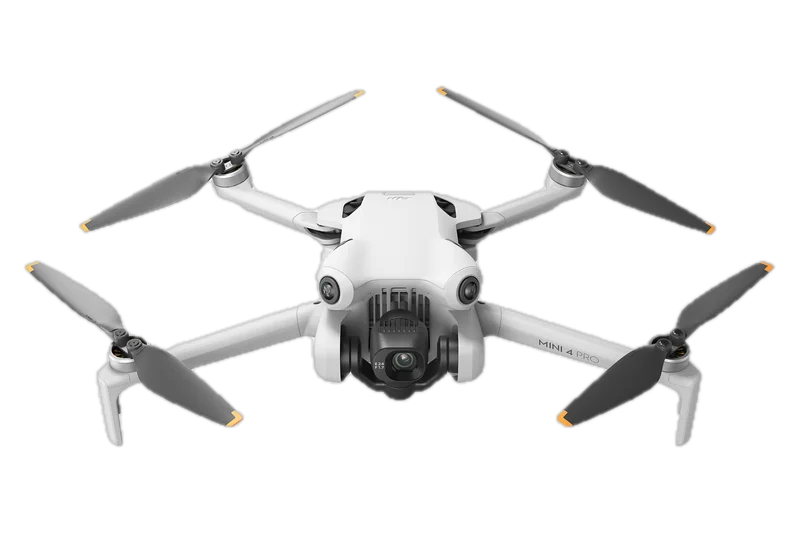
DJI Mini 4 Pro
Remote ID is on only with the Intelligent Flight Battery Plus, not with the standard battery.
The drone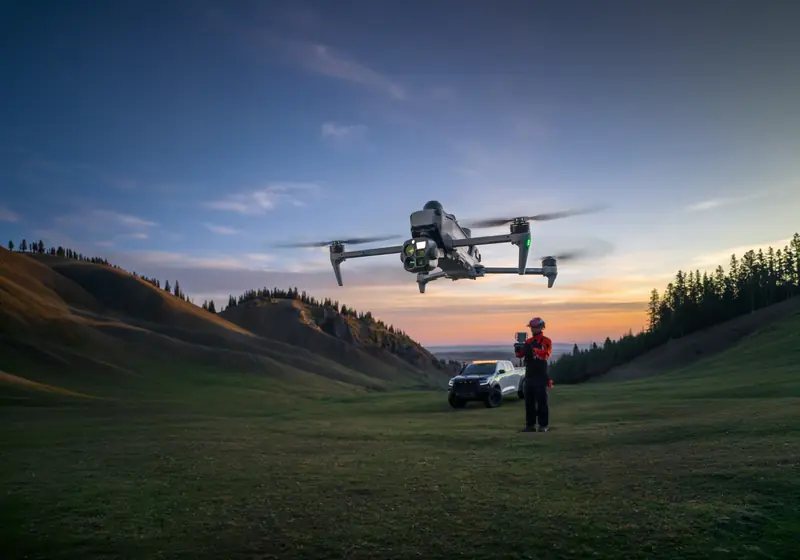
Almost every drone business flies under Part 107, the FAA's default rule for drones under 55 pounds.
Before the first paid flight you get the remote pilot certificate, register each drone and make sure it broadcasts Remote ID; then come the steps the SBA and the IRS list for any new business, such as registering the business and getting a free EIN.
What you need to know before the first paid flight, in the order the steps depend on each other: the FAA's steps first, because every other row needs the remote pilot certificate, then the steps the SBA and the IRS list for any new business. Each row names who asks for it and the rule or page that says so, as read on November 14, 2026.
This guide explains what each agency asks before a drone business flies for pay, in order, and gives a fee only where the agency itself states one. It is not business advice: it names no bank, insurer or lender and promises no income.
21 steps to start a drone business, the FAA's first, then the SBA and IRS steps for any new business: who asks for each, the rule or page that says so, and the fee where the agency states one. Read November 14, 2026.
The FAA's steps before the first paid flight
Decide whether your flights are Part 107 or recreational: business, paid and goodwill flights are Part 107.
Create an IACRA profile to get an FAA Tracking Number (FTN).
Pass the Unmanned Aircraft General - Small (UAG) knowledge test at an FAA-approved Knowledge Testing Center (the certificate needs you to be 16 or older).
Apply for the remote pilot certificate on FAA Form 8710-13 in IACRA; after the TSA security background check you print a temporary certificate, and the permanent one comes by mail.
Carry the certificate and an ID on every Part 107 flight.
Register each drone under Part 107 in FAADroneZone, whatever it weighs, and mark it with its number.
Make sure each drone broadcasts Remote ID (a Standard Remote ID drone or a broadcast module), or fly only inside an FAA-Recognized Identification Area (FRIA).
Get airspace authorization before flying in Class B, C or D airspace or the surface area of Class E airspace at an airport (LAANC or FAADroneZone).
Fly over people or moving vehicles only as subpart D allows (Categories 1 to 4).
For night flight: the test or training taken after April 6, 2021 and anti-collision lighting visible for 3 statute miles; for civil twilight, the same lighting.
For a flight outside a waivable rule, apply for a certificate of waiver in the FAA's AIS Services.
Keep current: pass the test or finish recurrent training within the previous 24 calendar months.
Spraying or dispensing (agriculture, disinfectants): a Part 137 UAS certificate with an exemption.
Package delivery for hire: a Part 135 certificate plus an exemption or waiver to fly beyond visual line of sight.
The SBA and IRS steps for any new business
Choose a business structure (you are a sole proprietorship automatically if you register as nothing else).
Register the business or its name with the state and local governments, unless you work under your own legal name.
Get an Employer Identification Number (EIN) online from the IRS (form an LLC or corporation with the state first).
Get a state tax ID number where the state requires one.
Apply for licenses and permits; for aircraft operation the federal issuing agency is the FAA.
Open a business bank account: a step in the SBA's guide, which cites no rule for it.
Get business insurance: a step in the SBA's guide, which cites no rule for it.
Almost always. A small unmanned aircraft is one under 55 pounds at takeoff, counting the drone and equipment on board, and the FAA calls Part 107 the default rule for it: almost all flying that is not recreational falls under it.
Part 107 does not apply to a flight under the recreational exception of 49 U.S.C. 44809, and the two rule sets stay separate: one flight cannot mix them.
The FAA's Advisory Circular 91-57D says recreational purposes leave out flights for compensation, “monetary or otherwise”, and flights “in furtherance of a business”.
Not for businessThe FAA's own examples of Part 107 flights are taking photos to help sell a property or service, roof inspections, and pictures of a high school football game for the school's website.
Part 107Pay alone does not decide. The FAA says compensation “is not what determines” whether a flight was recreational, and goodwill can be non-recreational too, such as volunteering a drone to survey coastlines for a non-profit.
Can be Part 107The FAA lists commercial package delivery beyond visual line of sight and agricultural spraying as non-recreational Part 91 examples; their rules are in the business types below.
Part 91The FAA's advice when unsure: “When in doubt, assume Part 107.” Our drone license guide sorts the kinds of flying by the rules each falls under.
No one may act as remote pilot in command of a flight under Part 107 without a remote pilot certificate with a small UAS rating and current knowledge (14 CFR 107.12).
Someone without it may work the controls only under the direct supervision of a certificated remote pilot in command who can take over.
You must be at least 16 and able to read, speak, write and understand English (14 CFR 107.61).
16+Get an FAA Tracking Number (FTN) by creating an IACRA profile, book the test at an FAA-approved Knowledge Testing Center, pass the Unmanned Aircraft General - Small (UAG) test, then complete FAA Form 8710-13 in IACRA. After the TSA security background check you print a temporary certificate; the permanent one comes by mail.
Holders of a Part 61 certificate take the FAA's online course ALC-451 instead of the test, then apply in IACRA.
The FAA says Knowledge Testing Centers charge “approximately $175” for the initial test; it names no fee of its own.
About $175Operating as remote pilot in command needs the initial test or recurrent training passed within the previous 24 calendar months (14 CFR 107.65), and the FAA's recurrent training courses, ALC-677 and ALC-515, cost nothing.
No costThe certificate and an ID must be with you and readily accessible (14 CFR 107.7).
Our drone license guide covers each step in full, the Part 107 study guide lists what to read, and the Part 107 practice test runs the exam's format.
Take the practice testUnder Part 107 every drone is registered, whatever it weighs, each with its own number: $5 per drone, valid for 3 years.
You register in FAADroneZone under “Fly sUAS under Part 107” and mark the drone with its number. A recreational registration cannot be used for Part 107 flights and cannot be transferred. The FAA's own forecast says it plainly: a drone of 0.55 lb (249 g) or less that earns compensation under Part 107 “must be registered regardless of how small it is”.
Since September 16, 2023, a drone that needs an FAA registration number must also broadcast Remote ID, unless it flies inside an FAA-Recognized Identification Area (FRIA). The FAA names three ways to comply: a Standard Remote ID drone, a Remote ID broadcast module, or flying inside a FRIA within visual line of sight. Part 107 pilots register each Standard Remote ID drone or broadcast module separately, each with its own number. The broadcast runs from takeoff to shutdown and carries the drone's serial number or session ID, the position and altitude of the drone and of its control station, its velocity, a time mark and its emergency status.
Three small drones whose Remote ID depends on the battery
Remote ID is on only with the Intelligent Flight Battery Plus, not with the standard battery.
The drone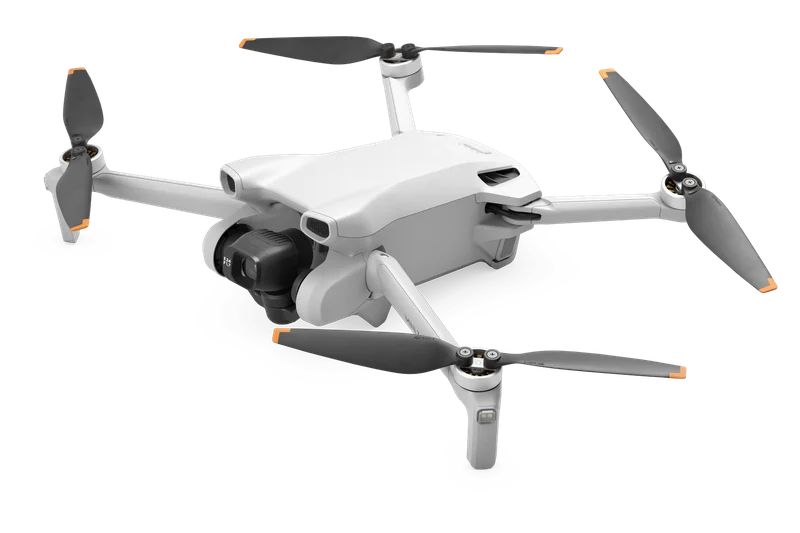
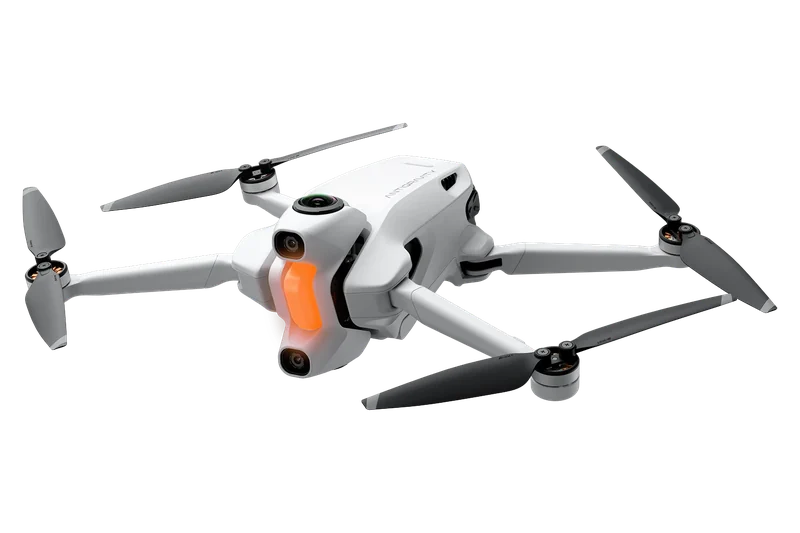
With the Standard Flight Battery it broadcasts no Remote ID; with the High-Capacity Flight Battery it does. The maker adds that U.S. commercial use needs Remote ID even under 250 g.
The droneThe Remote ID guide covers the broadcast rule and the drones that depend on one battery.
Remote ID guideNo. The FAA's rules for registration and Remote ID set their conditions by weight, purpose and equipment, not by manufacturer.
Whether a new DJI drone can be bought in the U.S. is a separate question, answered on our DJI ban page.
Part 107 sets limits that some jobs meet only with a further step: airspace near airports, flight over people, night flight, and anything a waiver covers.
No Part 107 flight in Class B, C or D airspace, or in the surface area of Class E airspace designated for an airport, without prior authorization from air traffic control (14 CFR 107.41). LAANC automates those authorizations through the apps of FAA-approved UAS Service Suppliers, and Part 107 requests can go in up to 90 days ahead; requests outside LAANC go through FAADroneZone, where the FAA says processing has historically taken up to eight weeks. Our LAANC guide and airspace classes guide cover both.
AuthorizationFlying over a person is allowed only if the person takes part in the operation, is under a covered structure or inside a stationary vehicle, or the flight meets one of the four categories of subpart D (14 CFR 107.39).
CategoriesNight flight needs the initial test or training taken after April 6, 2021, and anti-collision lighting visible for at least 3 statute miles; civil twilight needs the same lighting (14 CFR 107.29).
LightingA certificate of waiver can cover 107.25, 107.29(a)(2) and (b), 107.31, 107.33, 107.35, 107.37(a), 107.39, 107.41, 107.51 and 107.145 (14 CFR 107.205). Applications go through the FAA's Aviation Integrated Safety (AIS) Services, while airspace authorizations stay in FAADroneZone, and the FAA aims to approve or disapprove a waiver within 90 days of submission.
90 daysThe four categories of flight over people, as subpart D sets them:
A drone of 0.55 lb (249 g) or less with no exposed rotating parts that would lacerate skin; no sustained flight over open-air assemblies unless it meets Remote ID (14 CFR 107.110).
A drone on an FAA-accepted declaration of compliance and labeled for it, built so that an impact would cause less injury than an 11 foot-pound transfer of energy, with no exposed rotating parts that would lacerate skin (14 CFR 107.115, 107.120).
The same with a 25 foot-pound limit; never over open-air assemblies, and over people only inside a closed or restricted-access site where they have been told, or without sustained flight over them (14 CFR 107.125, 107.130).
A drone with a part 21 airworthiness certificate, flown within the limits of its approved flight manual or the limits the FAA sets (14 CFR 107.140).
Categories 1 to 3 only inside a closed or restricted-access site with notice, or with no sustained flight over moving vehicles; Category 4 within its limitations (14 CFR 107.145).
A job near an airport may sit in controlled airspace. Look up the airspace before you fly.
Can I fly here?Each type of drone business falls under the rule its flights fall under, and the FAA sorts the work that way, not by what a drone service is called.
These are the business uses the FAA's own pages and the rule text name, each with the rule it meets: the same rule for every drone service provider that does that work. This page adds no ideas of its own.
Part 107. Photos and video for property marketing are a Part 107 flight: the FAA's own example is taking photos to help sell a property or service. Our real estate drone photography guide covers the rules for a listing shoot.
Part 107. Roof inspections are one of the FAA's own examples. Our drone inspection guide covers line of sight, tall structures and sites near critical infrastructure.
Part 107 bans careless or reckless operation that endangers life or property, and dropping an object in a way that creates an undue hazard (14 CFR 107.23). No flying from a moving aircraft; from a moving land or water vehicle only over a sparsely populated area, and never while carrying another person's property for compensation or hire (14 CFR 107.25). No hazardous material as 49 CFR 171.8 defines it (14 CFR 107.36). And no waiver of 107.25 or 107.31 is issued to carry another person's property for compensation or hire (14 CFR 107.205).
The FAA's Part 135 certification process, plus an exemption or waiver to fly beyond visual line of sight.
14 CFR part 137 governs drones that dispense or spray substances, disinfectants included. For a Part 137 UAS certificate the applicant completes FAA Form 8710-3 and sends its exemption number to the FAA's Part 137 UAS mailbox. Our drones in agriculture guide covers the spraying rules.
A proposed rule, not law. The FAA and the TSA published the proposed part 108 on August 7, 2025 (90 FR 38212, docket FAA-2025-1908), and its comment period closed October 6, 2025; a reopened comment period on electronic conspicuity and right-of-way ran until February 11, 2026, and requests to extend it were denied. The proposal names uses such as package delivery, agriculture, aerial surveying and civic interest operations. On November 14, 2026 the Federal Register listed no final rule under its regulation number (RIN 2120-AL82), and the eCFR had no part 108.
To launch your drone business, the SBA's “Launch your business” guide lists the steps for any new business: pick a location, choose a business structure, choose a name, register the business, get federal and state tax ID numbers, apply for licenses and permits, open a business bank account and get business insurance.
The SBA gives these steps for every state; the details, such as fees and state tax IDs, vary by state.
Before those steps the SBA's guide has a part called “Plan your business”: market research and competitive analysis, writing a business plan and calculating startup costs. The SBA calls the business plan “a roadmap for how to structure, run, and grow your new business”, and of its marketing and sales section it says: “There's no single way to approach a marketing strategy.” This page adds no strategy and no market analysis of its own; the figures further down are the FAA's and the BLS's.
If you do business activities without registering as anything else, you are automatically a sole proprietorship, with no separate business entity.
If you do business as yourself under your legal name, the SBA says you won't need to register anywhere; otherwise the business or its name is registered with the state and local governments. In most cases the total cost to register a business is “less than $300”, the SBA says, varying by state and business structure.
Less than $300The EIN is the business's federal tax ID. The IRS issues it online, free, in one session: “You never have to pay a fee for an EIN.” The IRS says you generally need one to hire employees, operate a partnership or corporation, or pay sales and excise taxes, and that a corporation or LLC is formed with the secretary of state before applying.
FreeThe SBA's table of federal licenses lists Aviation (aircraft operation, transport of goods or people by air, aircraft maintenance) with the FAA as the issuing agency. State and local requirements and fees vary by activity and location, and state tax ID numbers are set state by state.
Both are steps in the SBA's guide, which cites no rule for either. This page names no bank, insurer or product.
Registering with the state does not make your drone business legal to fly: under Part 107 the pilot still needs the remote pilot certificate, and each drone its registration and Remote ID.
The certificateThe FAA counts pilots and aircraft, and the BLS counts wage jobs. Each figure below comes with its date and what it counts; none is a promise or a forecast of what any one drone business will earn.
493,396 at the end of 2025, in the FAA's forecast compendium. The FAA's numbers page shows 481,760 certificated remote pilots and carries no date (read November 14, 2026). The FAA forecasts 628,600 remote pilots by 2030.
493,396The registry held 424,516 active aircraft at the end of 2025, about 24,000 more than a year earlier. The numbers page shows 837,513 drones registered, again with no date.
424,516In 2025 more than 126,000 nonrecreational operators registered new equipment, down from more than 135,000 in 2024.
In its base case the Part 107 registry grows to 540,845 aircraft by the end of 2030, 5.0 percent a year, with 470,039 in the low case. The high case, 1,491,153, counts cumulative new registrations, not active aircraft.
The job title Unmanned Aerial Vehicle Operator is a direct match to BLS occupation 17-3024; in May 2025 that occupation had 15,520 jobs and a median of $73,900 a year, most of them mechatronics technicians, not drone pilots.
$73,900Occupation 27-4021 had 51,760 wage-and-salary jobs in May 2025 and a median of $44,660; about two thirds of photographers are self-employed and outside that count. In the BLS Handbook's words, “Photographers who commercially operate drones, commonly known as unmanned aerial vehicles, must obtain certification from the Federal Aviation Administration (FAA).”
$44,660Our drone pilot salary guide shows the full BLS figures and what each code includes and leaves out.
The salary figuresThree common mistakes to avoid, each answered by the rule itself.
Under Part 107 every drone is registered, whatever it weighs.
MistakeIt cannot be used for Part 107 flights and cannot be transferred; each drone gets a Part 107 registration of its own.
MistakeTheir Remote ID is on only with the Intelligent Flight Battery Plus, so on the standard battery the flight needs a broadcast module or a FRIA.
MistakeThe certificate, the registration, and the guides to the jobs most drone businesses do.
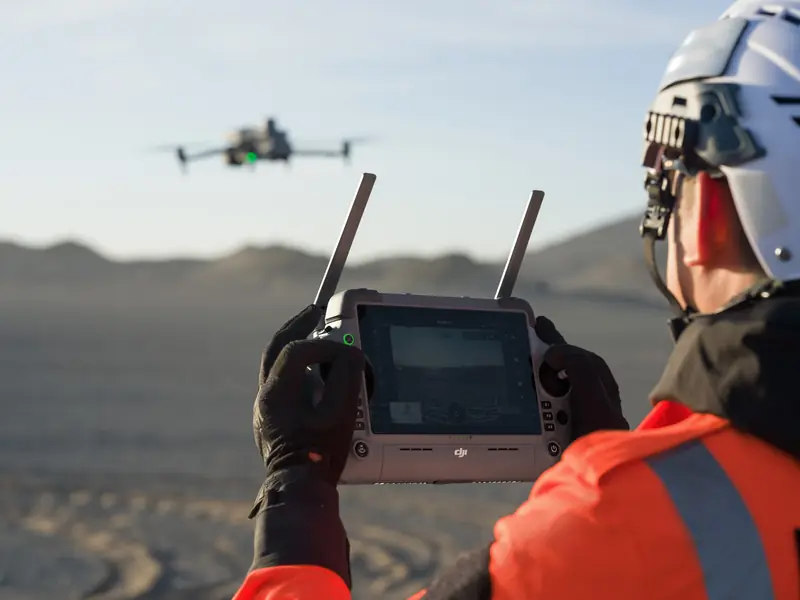
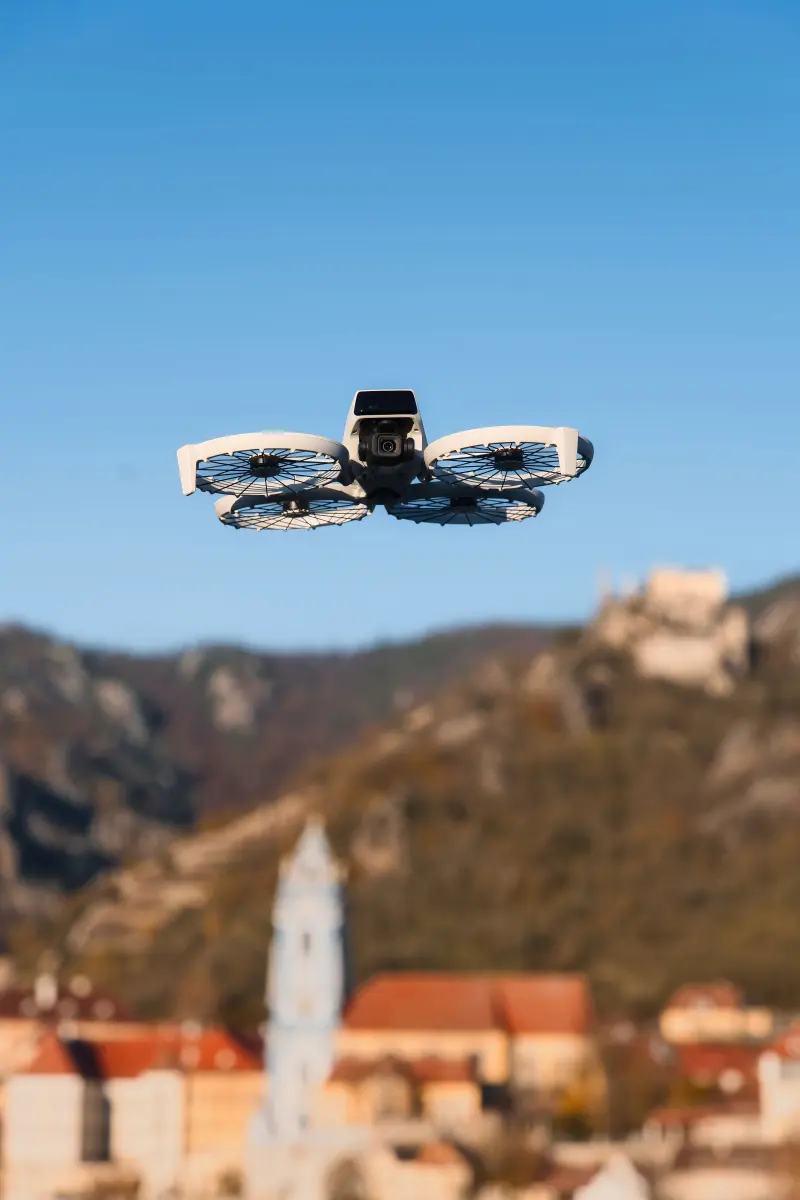
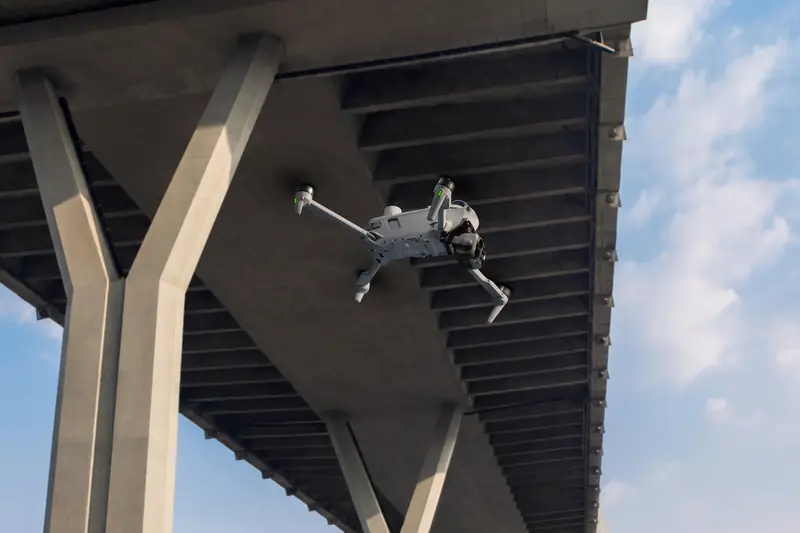
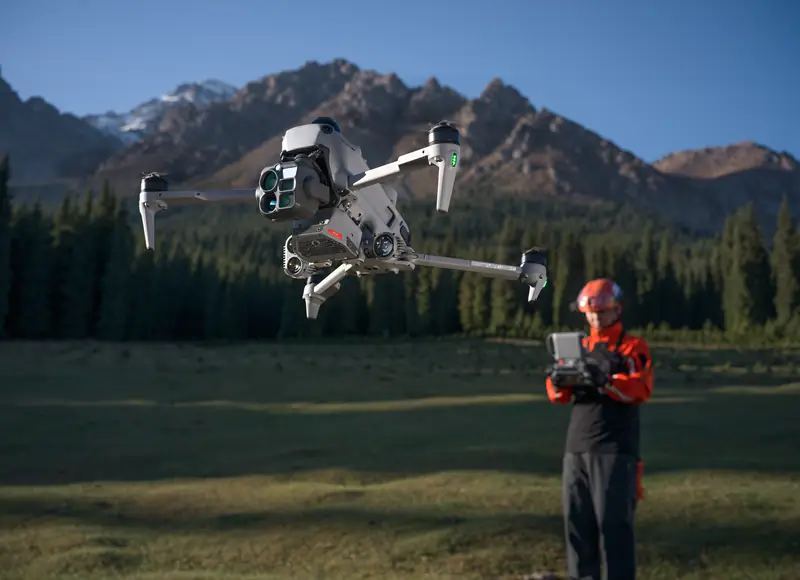
The FAA lists taking photos to help sell a property or service as a Part 107 flight. So the steps are the ones in the steps at the top of this page: the remote pilot certificate, a Part 107 registration for each drone, Remote ID, then the SBA and IRS steps for any new business. Our real estate drone photography guide covers the rules for a listing shoot.
Part 107 has no rule by that name: the phrase does not occur in the part's text.
The FAA says Knowledge Testing Centers charge approximately $175 for the initial test, and the FAA names no fee of its own. Registration under Part 107 is $5 per drone, valid for 3 years, and the FAA's recurrent training courses cost nothing.
Photos: DJI press images. Product photos by Antigravity. Wikimedia Commons: Warren LeMay (CC BY-SA 2.0).