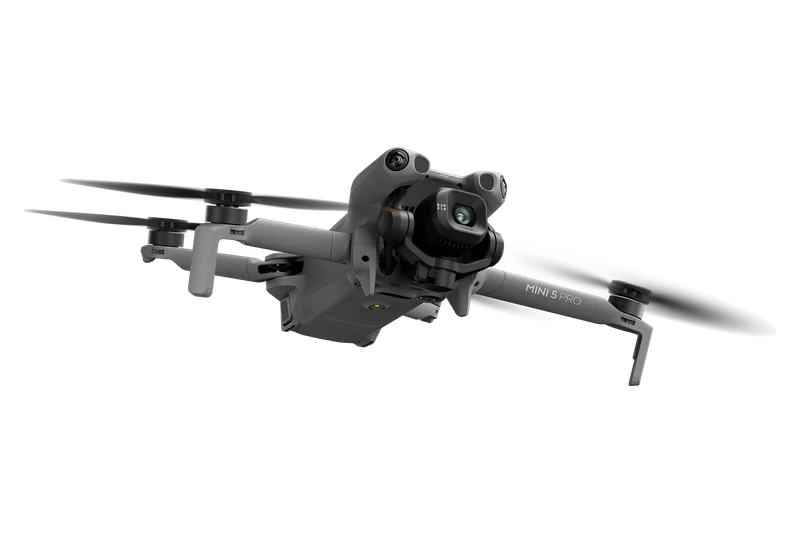
A1 or DJI Mini 5 Pro?
DJI's small camera drone: 36 minutes in the air, or 52 with the Battery Plus, and Remote ID declaration RID000002581.
249.9 g · 36 min
Its page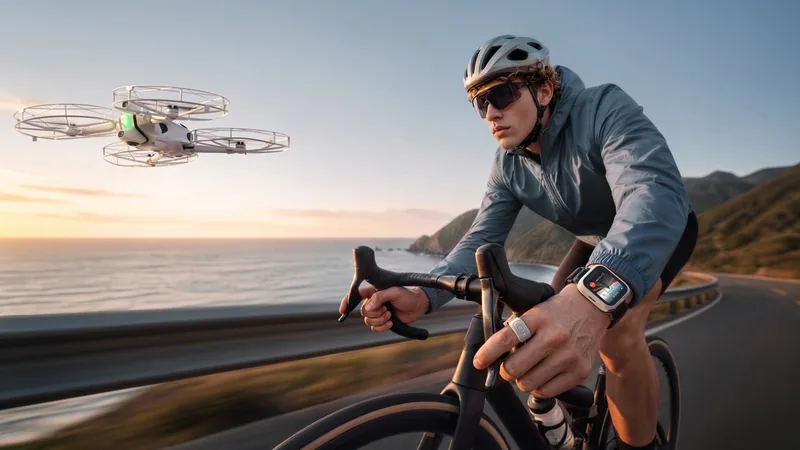
Antigravity's 8K 360 camera drone, flown through Vision Goggles with the Grip Motion Controller. At 249 g with the Flight Battery it needs no FAA registration when flown only for fun; with the High-Capacity Flight Battery it weighs 291 g, must be registered, and Antigravity says Remote ID switches on.
Yes, for fun, and the battery decides the paperwork: with the Flight Battery and nothing added it needs no registration; with the High-Capacity Flight Battery, register it. Pass the free TRUST test, and with the goggles on, fly with someone who can see the drone.
Yes, for work under Part 107: register it whatever battery it carries, hold a Part 107 certificate, and keep the drone in sight, yours or a visual observer's. For commercial use Antigravity recommends the High-Capacity Flight Battery, which switches Remote ID on.
The FAA rules follow the weight at takeoff and the reason you fly, never the brand. For the A1 the battery decides the weight: 249 g with the Flight Battery is just under the 0.55 lb line, and 291 g with the High-Capacity Flight Battery is over it.
Only with the High-Capacity Flight Battery. With the Flight Battery and nothing added it weighs 249 g, under the 0.55 lb line. With the High-Capacity Flight Battery it weighs 291 g: register it, $5 for every drone you own for 3 years.
Register it before the first flight. Under Part 107 every drone is registered, any battery: $5 per drone for 3 years.
By batteryNeededThe aircraft is operated exclusively in compliance with 49 U.S.C. 44809 and weighs 0.55 pounds or less on takeoff, including everything that is on board or otherwise attached to the aircraft14 CFR 48.15(b), Requirement to register (eCFR)
What it means: only a drone flown for fun at 0.55 lb (249.48 g, or 8.8 ounces) or less, with everything attached, skips FAA registration. Antigravity lists the A1 at 249 g with the Flight Battery, under the line, and at 291 g with the High-Capacity Flight Battery, about 41.5 g over it.
Weight and registration, battery by battery. Flown only for fun with the Flight Battery and nothing added, the A1 at 249 g needs no FAA registration. With the High-Capacity Flight Battery it must be registered for every flight: the recreational registration costs $5, lasts 3 years and covers every drone you own. With propeller guards, Antigravity says only that the takeoff weight is over 249 g, and no source we read says how far. Flown for work under Part 107, every drone is registered whatever it weighs, at $5 per drone for 3 years, and a registration cannot move from one kind of flying to the other. Either way the owner must be 13 or older, and the registration number goes on the drone before it flies. The step-by-step answer for any drone: do I have to register my drone?
On with the High-Capacity Flight Battery, by itself. With the Flight Battery and nothing added the A1 need not be registered, and Antigravity says “Remote ID broadcasting is not required”. The FAA accepted Antigravity's declaration RID000002621.
Needed: fly it with the High-Capacity Flight Battery. Under Part 107 every A1 is registered, so it must broadcast, and Antigravity says Remote ID switches on with that battery. The FAA accepted Antigravity's declaration RID000002621.
By batteryNeededRemote ID: on with the High-Capacity Flight Battery, declaration RID000002621. The Remote ID rule applies to drones that are registered or must be (14 CFR 89.101), and such a drone flies as a standard Remote ID drone, with a broadcast module, or only inside an FAA-recognized identification area (FRIA). Antigravity's U.S. answer ties the A1's broadcast to the battery: with the Standard Flight Battery “Remote ID broadcasting is not required”, and with the High-Capacity Flight Battery “Remote ID will be automatically enabled”. The FAA has accepted Antigravity's declaration RID000002621, make Antigravity, model “A1(DE001)”, updated November 28, 2025; on November 14, 2026 the FAA's list had 487 accepted records. When you register, the FAA asks for the serial number of each standard Remote ID drone.
Antigravity's FAQ adds that “in the United States, Remote ID is required for commercial purposes, even for drones weighing under 250 g”, and for commercial use it recommends the Infinity Bundle or buying the High-Capacity Flight Battery separately. The A1 user manual V2.0 has no U.S. Remote ID section.
14 CFR 89.101 and 89.110 · FAA declaration RID000002621Pass TRUST, the FAA's free online safety test, once. Keep proof that you passed with you when you fly.
Hold a Part 107 certificate. You must be 16 or older and pass the FAA knowledge test.
NeededA recreational flyer passes the aeronautical knowledge and safety test and shows proof when the FAA or police ask.
A Part 107 pilot in command holds a remote pilot certificate with a small UAS rating.
TRUST for fun, Part 107 for work. Flying for fun, pass the FAA's free online TRUST test and keep proof that you passed, whatever the drone weighs. Fly at or below 400 ft in uncontrolled (Class G) airspace; controlled airspace needs FAA authorization. With the Vision Goggles on, the next section says who must see the drone.
Flying for work needs a Part 107 remote pilot certificate: at least 16 years old and a passed knowledge test. Part 107 flights stay at or below 400 ft above the ground, at no more than 100 mph (87 knots), with 3 statute miles of visibility.
49 U.S.C. 44809(a)(7)14 CFR 107.12 and 107.61Up to 400 ft above the ground, and someone must see it. Near airports, ask permission first; a LAANC app usually approves it in near real time.
400 ftSame ceiling for both rulebooks. Flying for fun, fly within your visual line of sight, at or below 400 ft in uncontrolled (Class G) airspace. Part 107 flights stay at or below 400 ft above the ground.
Controlled airspace near airports (Class B, C, D and the airport's Class E surface area) needs FAA authorization first.
49 U.S.C. 44809(a)(3), (a)(5) and (a)(6) · 14 CFR 107.31, 107.41 and 107.51Not shown to qualify. Category 1 takes 0.55 lb or less and no exposed rotating parts that would lacerate skin. Antigravity claims no over-people category for the A1, and its propeller guards take it over 249 g.
Not shownOver people: the Category 1 weight only with the Flight Battery. Under Part 107, flying over people in Category 1 takes a drone of 0.55 lb or less with everything attached and no exposed rotating parts that would lacerate skin (14 CFR 107.110(a)). At 249 g with the Flight Battery the A1 meets the weight on Antigravity's figure, but Antigravity claims no over-people category and the FAA's list of operations-over-people declarations (29 records) has no Antigravity record, so it is not shown to qualify. At 291 g with the High-Capacity Flight Battery it is over the Category 1 weight.
14 CFR 107.39 and 107.110On sale from Antigravity. Its U.S. buy page showed every A1 bundle in stock on November 14, 2026. The FCC's listing of foreign-produced drones stops new authorizations, not drones people already bought.
On saleU.S. status: on sale from Antigravity, and the FCC listing of foreign-produced drones. Antigravity's U.S. buy page showed every A1 bundle in stock on November 14, 2026. Since December 22, 2025 the FCC Covered List has included DJI drones and all other foreign-produced drones; the listing has two parts, one by place of production and one by maker, naming DJI and Autel. It stops new FCC authorizations and does not revoke existing ones. The only import and marketing ban in force covers equipment added to the list in 2024 or earlier, and the FCC said that ban does not affect equipment added in 2025 or 2026, such as foreign-produced drones; it also says even its proposed import and marketing bans would not affect the continued use of drones people already bought. Antigravity's pages and manual do not say where the A1 is produced. The whole story: DJI ban in the U.S.
FCC DA 25-1086, FCC 26-50, DA 26-635 and DA 26-742| How you fly it | FAA registration | Remote ID | Pilot test |
|---|---|---|---|
| For fun, Flight Battery, nothing added | Not needed: 249 g, under 0.55 lb | Not needed for a drone that is not registered; Antigravity: “Remote ID broadcasting is not required” | TRUST |
| For fun, High-Capacity Flight Battery | Needed: 291 g, over 0.55 lb; $5 covers every drone you own for 3 years | Needed: Antigravity says it switches on automatically with this battery | TRUST |
| For fun, Flight Battery with propeller guards | Antigravity says “over 249 g” and prints no guard weight; the FAA counts everything attached | Antigravity's texts do not say whether it broadcasts | TRUST |
| For work, under Part 107 | Needed for every drone, any battery: $5 per drone for 3 years | Needed: Antigravity says it is required for commercial use and switches on with the High-Capacity Flight Battery | Part 107 certificate |
What the FAA rules ask of an Antigravity A1, by battery: from 14 CFR 48.15, 89.101 and 89.110, the FAA's registration and Remote ID pages, Antigravity's U.S. pages and the FAA's Remote ID declaration RID000002621.
That depends on the place, the hour and the airspace, not the drone, and as the pilot you are responsible for knowing where it is and is not safe to fly. Our flight check takes a place and the A1 and returns one verdict with its reasons: no-fly zones, airspace, the ceiling, wind against the A1's rating of about 24 mph (10.7 m/s), and daylight. The FAA's B4UFLY service, offered through FAA-approved companies, also shows where recreational flyers can fly, including temporary flight restrictions.
Check where you can fly itWith the Vision Goggles on, someone must still see the drone: flown for fun, a visual observer next to you; under Part 107, you or a visual observer, throughout the flight.
Flown for fun, the FAA's advisory circular for recreational flyers says “The use of a VO is necessary if the recreational flyer wants to use first person view (FPV) devices”, meaning a visual observer next to you who can see the drone. Flown under Part 107, the FAA's advisory circular for small drones says “First person view devices may be used during operations, but do not satisfy the VLOS requirement”, so you or a visual observer must still see the drone throughout the flight.
Each rulebook in full, with the Remote ID rule and the makers' own goggles warnings: What is FPV?
Two ways to fly, both through the Vision Goggles and the Grip Motion Controller: FreeMotion, where you point and the drone flies there while you look around, and FPV mode, steered by turns of the wrist. Three Follow Me bundles come without goggles and use the Insta360 Watch and Ring remotes instead.
Tap a photo to see it large.
Antigravity's manual says the A1 “combines advanced hand-eye coordination technology with an immersive flying experience”, flown with the Vision Goggles and the Grip Motion Controller. Its product page names two ways to fly: FreeMotion (“Just point and fly”) and FPV mode, “where a subtle turn of your wrist translates into precision movements”. Antigravity's case for it: “camera drones and FPV drones limit your view to the flight path”, while with FreeMotion the pilot looks around without changing course. For FPV mode the manual adds: “it is essential to have a visual observer situated near the operator”, who “must be able to communicate clearly with the operator”.
The Vision Goggles weigh 340.4 g (12.0 oz) with spacer, mask and band and give each eye a 1.03-inch Micro-OLED screen at 2560 × 2560 and 72 Hz, with a 90° diagonal field of view. The diopter adjusts from −5.0 D to +2.0 D, or to −8.0 D with the optional −3.0 D lenses. The goggles run about 2.5 hours on their own battery, and live view from the drone is 2K at 30 fps.
The Grip Motion Controller weighs 124.3 g (4.38 oz), runs about 4 hours on 2300 mAh and talks to the goggles at under 32.8 ft (10 m). The three Follow Me bundles without goggles carry the Insta360 Watch Remote and Ring Remote in place of the goggles and the Grip: Antigravity says the drone “flies and films autonomously”. Owners of other bundles can add the Follow Me Bundle Accessory Kit.
The speed modes are S, N and C. Antigravity lists voice commands in English and Chinese, a flight simulator to “Master the controls in realistic virtual environments”, and Sky Genie, with 8 one-tap moves such as Arc Shot. Return to home comes at “the press of a button”, and the retractable landing gear extends at power-on and retracts after takeoff.
Antigravity's specs page lists “Forward and downward vision sensors, complemented by bottom infrared sensors”. Its product page calls the system “Omnidirectional Obstacle Avoidance”, which “fuses 360 sensing with front and downward binocular vision”. Obstacle avoidance is set to Brake by default; Bypass can be chosen in Safety Settings and reverts to Brake on restart.
Antigravity lists it at 249 g with the Flight Battery, just under the 0.55 lb line, and at 291 g with the High-Capacity Flight Battery, over it. Propeller guards take it over 249 g too.
The battery decides it: under the line with the Flight Battery and nothing added, over it with the High-Capacity Flight Battery.
The figures that decide a flight, from Antigravity's U.S. specs page for the A1, read November 14, 2026.
Antigravity lists the A1 at 249 g (8.78 oz) with the Flight Battery, which its FAQ calls the Standard Flight Battery, and at 291 g (10.26 oz) with the High-Capacity Flight Battery; its manual prints the same two weights as 0.548 lb and 0.642 lb. The product page adds that the weight “may vary slightly depending on batch materials and environmental factors.” The two batteries are 2360 mAh and 4345 mAh Li-ion packs, under 67.5 g and under 108.6 g, and the manual says the takeoff weight with the High-Capacity Flight Battery will exceed 249 grams.
Propeller guards are sold separately and come in some bundles. Antigravity's guards page says installing them “increases the drone's takeoff weight to over 249 g” and prints no guard weight; they may reduce flight time, Antigravity recommends the High-Capacity Flight Battery with them, and with the Full-Coverage Propeller Guards fitted the A1 limits its top speed to 25 mph (11 m/s). Antigravity's payload detection system “flags excess weight to prevent misuse” and “triggers automatic landing if unauthorized modifications are detected”. How the 0.55 lb line falls across every small model: drones under 250 grams.
The drawing shows the drone's size unfolded, as that page lists it, at one scale.
Antigravity rates it at 24 minutes with the Flight Battery and 39 with the High-Capacity Flight Battery, 35.8 mph in S mode, and 6.2 mi of video range under the FCC rating.
Antigravity's maximum flight time is 24 minutes with the Flight Battery and 39 minutes with the High-Capacity Flight Battery, from its own windless test at 77 °F (25 °C), flying forward at 13.4 mph (6 m/s) below 164 ft (50 m) with video recording off, until the low-battery landing. The top horizontal speed is 35.8 mph (16 m/s) in S mode, 26.8 mph (12 m/s) in N mode and 6.7 mph (3 m/s) in C mode. Antigravity rates the wind resistance at 24 mph on its specs page and 23.9 mph in its manual, both from the same 10.7 m/s, Level 5, and its FAQ says the A1 is not waterproof. It flies from 14 to 104 °F (−10 to 40 °C).
The OmniLink 360 video link reaches 6.2 mi (10 km) under the FCC rating, in the open and free of interference, one way. With strong urban interference Antigravity gives about 0.6 to 2.5 mi (1 to 4 km), and among buildings about 0.1 to 0.3 mi (0.1 to 0.5 km). The 8.0 mi (13 km) and 14.3 mi (23 km) per charge are battery figures, flying forward at 26.8 mph (12 m/s), not control ranges. Live view in the goggles is 2K at 30 fps, at about 150 ms. What these figures mean for any drone: how far a drone can fly; the wind on the day against the A1's rating: drone weather forecast.
The Antigravity A1 is a 360 drone: its 360 camera has lenses at the top and bottom of the drone, and it records 8K 360 video.
Below are the figures Antigravity's U.S. specs page prints for the drone, the 360 camera, sensing, the OmniLink 360 video link, Wi-Fi and Bluetooth, both batteries, the Vision Goggles and the Grip Motion Controller, with the lines the product page, the buy page, the guards page, the user manual V2.0 and the FAA's list add. The key ones first; the full sheet is one click away.
| Flight time | 24 min; 39 min with the High-Capacity battery |
|---|---|
| Top speed | 35.8 mph S, 26.8 mph N, 6.7 mph C |
| Climb and descent | 17.9 mph S, 13.4 mph N, 6.7 mph C |
| Wind it handles | 24 mph (23.9 in the manual), Level 5 |
| Max takeoff altitude | 13,123 ft; 9,842 ft with the High-Capacity battery |
| Temperature | 14 to 104 °F |
| Storage | 20 GB inside, plus microSD up to 1 TB |
| Noise | 75 dB(A) hovering |
| Positioning | GPS + Galileo + Beidou |
| Sensor | 1/1.28-inch, F2.2 |
|---|---|
| Lenses | Top and bottom of the drone |
| 360 video | 8K 7680 × 3840 up to 30 fps |
| 5.2K and 4K | 5.2K up to 60 fps, 4K up to 100 fps |
| Photos | 55 MP or 14 MP |
| Files | INSV video, INSP and DNG photos |
| Bitrate | Up to 170 Mbps |
| Live view | 2K at 30 fps, about 150 ms |
| Video link | OmniLink 360, 6.2 mi (FCC) |
The 360 camera uses a 1/1.28-inch sensor at F2.2, with lenses at the top and bottom of the drone. Antigravity says its image stitching, “powered by Insta360”, is there to “make the drone invisible” in the footage. Antigravity calls the A1 “The world's first 360 drone”, and its footnote dates the claim to July 28, 2025, describing “the market's first 8K all-in-one 360 drone”.
The A1 films 8K 360 video at 7680 × 3840 and up to 30 fps, 5.2K at up to 60 fps and 4K at 100 fps, in H.264 or H.265 at up to 170 Mbps. Photos are 55 MP or 14 MP, as INSP or DNG files; video files are INSV, exported through the Antigravity app or Antigravity Studio. ISO runs from 100 to 6400.
Storage is 20 GB inside the drone plus a microSD card of up to 1 TB; the Vision Goggles have about 30 GB of internal storage of their own.
The forward sensors measure 1.6 to 59.1 ft (0.5 to 18 m) and work at up to 26.8 mph (12 m/s); the downward sensors measure 1.0 to 24.6 ft (0.3 to 7.5 m). Satellite positioning is GPS + Galileo + Beidou, and Antigravity gives a hovering accuracy of ±0.3 ft (0.1 m) with vision positioning and ±1.6 ft (0.5 m) with satellite positioning.
OmniLink 360 carries live view at 2K and 30 fps and 30 Mbps, at about 150 ms, over 2.4 GHz and, where permitted, 5.1 and 5.8 GHz, with four antennas. Its FCC rating is 6.2 mi (10 km) in the open without interference. The A1 also has Wi-Fi and Bluetooth 5.0.
The Flight Battery holds 2360 mAh and 16.9 Wh, the High-Capacity Flight Battery 4345 mAh and 31.1 Wh, both 7.16 V Li-ion packs. In the charging hub the Flight Battery charges in about 45 minutes and the High-Capacity one in about 60; in the drone they take about 58 and 103 minutes. The manual gives a design charging cycle of 300 cycles.
Folded, the A1 measures 5.56 × 3.79 × 3.20 in (141.3 × 96.2 × 81.4 mm); unfolded, with propellers extended, 12.15 × 15.05 × 3.51 in (308.6 × 382.3 × 89.2 mm), length by width by height.
| Takeoff weight | 249 g (8.78 oz) with the Flight Battery; 291 g (10.26 oz) with the High-Capacity Flight Battery; the manual prints 249 g (0.548 lbs) and 291 g (0.642 lbs)Source: Antigravity's A1 specs page (U.S.) and user manual V2.0, Takeoff Weight; manual printed p.100 (PDF p.105), Maximum Takeoff Weights |
|---|---|
| Weight with propeller guards | Installing them "increases the drone's takeoff weight to over 249 g"; no guard weight printedSource: Antigravity's A1 Propeller Guards page (U.S.), product description, first note |
| Dimensions | Folded 5.56 × 3.79 × 3.20 in (141.3 × 96.2 × 81.4 mm); unfolded, propellers extended, 12.15 × 15.05 × 3.51 in (308.6 × 382.3 × 89.2 mm); length by width by height |
| Max flight time | 24 min (Flight Battery); 39 min (High-Capacity Flight Battery); tested windless at 77 °F (25 °C), 5.2K30fps with video recording disabled, flying forward at 13.4 mph (6 m/s) below 164 ft (50 m) until low-battery auto-landing |
| Max flight distance per charge | 8.0 mi (13 km) Flight Battery; 14.3 mi (23 km) High-Capacity; flying forward at 26.8 mph (12 m/s) under the same test conditions (a battery figure, not a control range) |
| Max ascent and descent speed | 17.9 mph (8 m/s) S mode; 13.4 mph (6 m/s) N mode; 6.7 mph (3 m/s) C mode (both) |
| Max horizontal speed | 35.8 mph (16 m/s) S mode; 26.8 mph (12 m/s) N mode; 6.7 mph (3 m/s) C mode; at sea level, no wind |
| Speed with propeller guards | With the Full-Coverage Propeller Guards installed, Antigravity says the A1 automatically restricts its top speed to 25 mph (11 m/s)Source: Antigravity's A1 Propeller Guards page (U.S.), product description, third note |
| Max wind speed resistance | 24 mph on the specs page and 23.9 mph in the manual (10.7 m/s), Level 5Source: Antigravity's A1 specs page (U.S.) and user manual V2.0, Max Wind Speed Resistance; manual printed p.100 |
| Max takeoff altitude | 13,123 ft (4,000 m) with the Flight Battery; 9,842 ft (3,000 m) with the High-Capacity Flight Battery |
| GNSS | GPS + Galileo + Beidou |
| Hovering accuracy | Vertical and horizontal ±0.3 ft (0.1 m) with vision positioning; ±1.6 ft (0.5 m) with GNSS positioning |
| Operating temperature | 14 to 104 °F (−10 to 40 °C) |
| Storage | 20 GB internal (exFAT); microSD up to 1 TB |
| Noise | Ground noise 75.0 dB(A) hovering, 73.0 dB(A) in flight at 6.7 mph (3 m/s); sound level 75 dB(A)Source: Antigravity A1 User Manual V2.0, printed p.101 (Ground Noise Level) and p.112 (Sound Level) |
| Landing gear | Extends automatically at power-on and retracts after takeoffSource: Antigravity's A1 product page (U.S.), Retractable Landing Gear block |
| Payload detection | Antigravity: it "triggers automatic landing if unauthorized modifications are detected"Source: Antigravity's A1 product page (U.S.), footnote 9; "PAYLOAD DETECTION" block |
| Water resistance | Not waterproof, Antigravity's FAQ saysSource: Antigravity's A1 product page (U.S.), FAQ "How is Antigravity A1's wind resistance and waterproofing?" |
| Image sensor and lens | 1/1.28-inch; F2.2; 360 camera with lenses at the top and bottom of the drone, stitching "powered by Insta360"Source: Antigravity's A1 specs and product pages (U.S.), Camera > Image Sensor, Lens Aperture; product page "INVISIBLE DRONE" block |
|---|---|
| Video resolution | 8K 7680 × 3840 at 30/25/24 fps; 5.2K 5248 × 2624 at 60/50/30/25/24 fps; 4K 3840 × 1920 at 100 fps; 4K Slow Motion 3840 × 1920 at 30/25/24 fps |
| Photo resolution | 55 MP (10496 × 5248 on the specs page; 10486 × 5248 in the manual); 14 MP (5248 × 2624)Source: Antigravity's A1 specs page (U.S.) and user manual V2.0, Photo Resolution; manual printed p.101, Max Image Size |
| Formats | Video INSV, photo INSP (both exported through the Antigravity app or Antigravity Studio), DNG; H.264 and H.265; max 170 Mbps |
| Modes | Video: Standard Video, Slow Motion; photo: Standard Photo, HDR, Burst, AEB |
| ISO and shutter | ISO 100-6400; 14 MP photo 1/8000-1/2 s; 55 MP photo 1/8000-1/20 s |
| Gimbal | No gimbal line on the specs page (360 camera) |
| Sensing type | Specs page: forward and downward vision sensors, complemented by bottom infrared sensors |
|---|---|
| Forward | 1.6-59.1 ft (0.5-18 m); effective at flight speed up to 26.8 mph (12 m/s); FOV horizontal 93, vertical 104 degrees (105 in the manual)Source: Antigravity's A1 specs page (U.S.) and user manual V2.0, Sensing > Forward; manual printed p.102 |
| Downward | 1.0-24.6 ft (0.3-7.5 m); effective at flight speed up to 13.4 mph (6 m/s); FOV front and back 107, left and right 90 degrees |
| Obstacle avoidance (product page) | Product page: "Omnidirectional Obstacle Avoidance"; the system "fuses 360 sensing with front and downward binocular vision"; set to Brake by default, Bypass can be chosen in Safety Settings and reverts to Brake on restartSource: Antigravity's A1 product page (U.S.), 360 OBSTACLE AVOIDANCE block; footnote 5 |
| System and live view | OmniLink 360; live view 2K at 30 fps; 30 Mbps; latency approx. 150 ms |
|---|---|
| Max transmission distance (open, no interference) | 6.2 mi (10 km) FCC; 5.0 mi (8 km) SRRC; 3.7 mi (6 km) CE; 2.5 mi (4 km) MIC; one-way, without return-to-home |
| Max transmission distance (open, with interference, FCC) | Strong (urban/industrial) approx. 0.6-2.5 mi (1-4 km); medium (suburban) approx. 1.9-3.7 mi (3-6 km); low (seaside/suburb) approx. 3.1-6.2 mi (5-10 km) |
| Max transmission distance (obstructed, FCC) | Buildings approx. 0.1-0.3 mi (0.1-0.5 km); trees approx. 0.3-1.2 mi (0.5-2 km) on the specs page and 0.3-1.9 mi (0.5-3 km) in the manualSource: Antigravity's A1 specs page (U.S.) and user manual V2.0, Max Transmission Distance (obstructed, with interference); manual printed p.103 |
| Frequencies and antennas | 2.400-2.4835 GHz; 5.150-5.250 GHz and 5.725-5.850 GHz only where permitted; 4 antennas; 2T2R on the specs page, 2T4R in the manualSource: Antigravity's A1 specs page (U.S.) and user manual V2.0, Operating Frequency; Antenna; manual printed p.103 |
| Transmitter power (EIRP), FCC | 2.4 GHz < 30 dBm; 5.1 GHz < 21 dBm; 5.8 GHz < 30 dBm |
| Wi-Fi and Bluetooth | Wi-Fi 802.11 a/b/g/n/ac; Bluetooth 5.0 |
|---|
| Flight Battery | 2360 mAh; 16.9 Wh; 7.16 V; Li-ion 2S; < 67.5 g (2.38 oz); model BDE-mini-2360-7.16 (manual)Source: Antigravity's A1 specs page (U.S.) and user manual V2.0, Flight Battery; manual printed p.104 |
|---|---|
| High-Capacity Flight Battery | 4345 mAh; 31.1 Wh (31.11 Wh in the manual); 7.16 V; Li-ion 2S; < 108.6 g (3.83 oz); model BDE-max-4345-7.16 (manual)Source: Antigravity's A1 specs page (U.S.) and user manual V2.0, Flight Battery; manual printed p.104 |
| Charging time | Flight Battery approx. 45 min (hub), approx. 58 min (in the drone); High-Capacity approx. 60 min (hub), approx. 103 min (in the drone); at 77 °F (25 °C) |
| Charging temperature | 41 to 113 °F (5 to 45 °C) |
| Charge cycles | 300 cycles, the manual's design charging cycleSource: Antigravity A1 User Manual V2.0, printed p.113, Maintenance Instructions item 5 |
| Charging hub | 118.5 g (4.18 oz); USB-C input; charges the Flight Battery and the High-Capacity Flight Battery; recommended charger Antigravity 65W GaN Fast Charger |
|---|
| Weight and size | 340.4 g (12.0 oz) with spacer, mask and band; antenna folded 6.85 × 4.17 × 3.62 in (174 × 106 × 92 mm), unfolded 7.87 × 4.17 × 4.53 in (200 × 106 × 115 mm) |
|---|---|
| Display | 1.03-inch Micro-OLED per eye, 2560 × 2560, 72 Hz, pancake optics; DFOV 90 degrees (HFOV/VFOV 65) |
| Vision correction | IPD 2.32-2.83 in (59-72 mm); diopter −5.0 D to +2.0 D, extended to −8.0 D with the optional −3.0 D corrective lenses |
| Real View and recording | Real View DFOV 115 degrees, 1088 × 1088 at 50 fps; screen recording MP4 1600 × 1600 at 30 fps; internal storage approx. 30 GB; microSD up to 1 TB |
| Goggles battery | 175 g (6.17 oz); approx. 2.5 h; 4,500 mAh; 7.3 V; 32.85 Wh; powered only by its dedicated battery through a USB-C to DC cable |
| Operating temperature | 14 to 104 °F (−10 to 40 °C) |
| Grip Motion Controller | 5.63 × 1.77 × 2.85 in (143 × 45 × 72.5 mm); 124.3 ± 0.3 g (4.38 oz); link to the goggles < 32.8 ft (10 m); approx. 4 h; 2300 mAh; 3.6 V; charging < 2.5 h |
|---|
| Flight modes | FreeMotion ("Just point and fly") and FPV mode ("a subtle turn of your wrist translates into precision movements"); speed modes S, N and CSource: Antigravity's A1 product and specs pages (U.S.), DUAL MOTION MODES block; spec page speed rows |
|---|---|
| Follow Me control | Follow Me bundles carry the Insta360 Watch Remote and Ring Remote and no goggles; "the drone flies and films autonomously"Source: Antigravity's A1 buy page (U.S.), bundle contents; FAQ "What is the difference between the Follow Me Bundle and the original Motion Bundle?" |
| Voice and simulator | Voice commands in English and Chinese; a flight simulator to "Master the controls in realistic virtual environments"Source: Antigravity's A1 product page (U.S.), VOICE ASSISTANT and "FLIGHT SIMULATOR" blocks |
| Firmware and apps (manual) | Drone DE001 4.9; Vision Goggles DGS001 2.7; Grip Motion Controller SRCSE001 2.7; Antigravity app 1.0.0 (iOS 17.0 or Android 10.0 and later)Source: Antigravity A1 User Manual V2.0, printed p.112, Firmware Versions and App Versions |
| FAA declaration | Accepted: RID000002621, make Antigravity, model "A1(DE001)", revision 0, updated November 28, 2025Source: The FAA's list of Remote ID declarations, record RID000002621 (487 records searched) |
|---|---|
| Remote ID by battery | Standard Flight Battery: "Remote ID broadcasting is not required"; High-Capacity Flight Battery: "Remote ID will be automatically enabled" (U.S., UK, Singapore, UAE answer)Source: Antigravity's A1 product page (U.S.), FAQ "Is Remote ID required for Antigravity A1?" |
| Broadcast protocol | Bluetooth LESource: Antigravity A1 User Manual V2.0, printed p.112, Remote Identification Protocol |
| Maker as stated | Antigravity, "incubated by Insta360" (site data) or "Incubated by Insta360 and third parties" (brand story); buy page title "Co-Engineered With Insta360"; the U.S. privacy policy is issued by PixelSpace Technology Pte LtdSource: Antigravity's A1 buy page, brand story and privacy policy (U.S.), About Us text; buy page title; site organization data; privacy policy, first paragraph |
|---|
57 figures, from Antigravity's A1 specs page (U.S.) unless a row names another document. Data read November 14, 2026.
Every figure is Antigravity's or the FAA's. The table follows Antigravity's A1 specs page for the U.S. unless a row names another document: Antigravity's product page, buy page or Propeller Guards page, the Antigravity A1 User Manual V2.0, or the FAA's list of Remote ID declarations. Where Antigravity prints only a metric figure, the imperial one is our conversion. We read them all on November 14, 2026.
Antigravity's own texts differ in places, and the table prints each with its document. Wind resistance is 24 mph on the specs page and 23.9 mph in the manual, both from 10.7 m/s. The antenna setup is 2T2R on the specs page and 2T4R in the manual; the range behind trees is about 0.3 to 1.2 mi (0.5 to 2 km) on the specs page and 0.3 to 1.9 mi (0.5 to 3 km) in the manual; the 55 MP photo is 10496 × 5248 on the specs page and 10486 × 5248 in the manual; the forward sensors' vertical field of view is 104° on the specs page and 105° in the manual. For obstacle sensing the specs page lists forward and downward vision sensors with bottom infrared sensors, and the product page says “Omnidirectional Obstacle Avoidance”.
Nine A1 bundles, each in the table with the battery in its box. With the Vision Goggles and the Grip Motion Controller, the lowest is $1,599 for the Standard Bundle on Antigravity's U.S. buy page (read November 14, 2026).
Only the Standard and the Explorer ship with the Flight Battery alone and no guards, so only they leave the box at 249 g. The cheapest kit, the $799 Follow Me Bundle, has no goggles: it ships with one High-Capacity Flight Battery, the Full-Coverage Propeller Guards and the Insta360 Watch Remote and Ring Remote, so with that battery the A1 weighs 291 g, must be registered for every flight and, Antigravity says, has Remote ID on. The A1 Propeller Guards alone list at $29.99 on Antigravity's U.S. page, in stock on November 14, 2026.
| Bundle | U.S. list price | Battery | Takeoff weight | Remote ID, in Antigravity's words | FAA registration, flown for fun | In the box, as Antigravity lists it |
|---|---|---|---|---|---|---|
| Standard Bundle | $1,599 | Flight Battery | 249 g (8.8 oz) | “Remote ID broadcasting is not required” | Not needed with nothing added | A1, Vision Goggles, Grip Motion Controller, 1 Flight Battery, carry case, 4 spare propellers |
| Explorer Bundle | $1,899 | Flight Battery | 249 g (8.8 oz) | “Remote ID broadcasting is not required” | Not needed with nothing added | A1, Vision Goggles, Grip Controller, 3 Flight Batteries, charging hub, carry case, sling bag, 8 spare propellers |
| Infinity Bundle | $1,999 | High-Capacity Flight Battery | 291 g (10.3 oz), over 0.55 lb | “Remote ID will be automatically enabled” | Needed | A1, Vision Goggles, Grip Controller, 3 High-Capacity Flight Batteries, Quick Reader, charging hub, carry case, sling bag, 8 spare propellers |
| Ultimate Bundle | $2,249 | High-Capacity Flight Battery | 291 g (10.3 oz), over 0.55 lb | “Remote ID will be automatically enabled” | Needed | The Infinity Bundle plus Replacement Lens Kit, 256 GB SD card, landing pad, propeller guards and 65W GaN charger |
| Motion & Follow Me, Standard | $1,699 | High-Capacity Flight Battery | 291 g (10.3 oz), over 0.55 lb | “Remote ID will be automatically enabled” | Needed | A1, Vision Goggles, Grip Controller, Watch Remote, Ring Remote, Full-Coverage Propeller Guards, 1 High-Capacity Flight Battery, Lens Guard, crossbody bag |
| Motion & Follow Me, Infinity | $2,099 | High-Capacity Flight Battery | 291 g (10.3 oz), over 0.55 lb | “Remote ID will be automatically enabled” | Needed | The Infinity Bundle plus the same Follow Me kit, with 3 High-Capacity Flight Batteries |
| Follow Me Bundle | $799 | High-Capacity Flight Battery | 291 g (10.3 oz), over 0.55 lb | “Remote ID will be automatically enabled” | Needed | A1, Insta360 Watch Remote, Insta360 Ring Remote, Full-Coverage Propeller Guards, 1 High-Capacity Flight Battery, Lens Guard, crossbody bag |
| Follow Me, Infinity | $1,169 | High-Capacity Flight Battery | 291 g (10.3 oz), over 0.55 lb | “Remote ID will be automatically enabled” | Needed | The Follow Me kit with 3 High-Capacity Flight Batteries and a charging hub |
| Follow Me, Ultimate | $1,409 | High-Capacity Flight Battery | 291 g (10.3 oz), over 0.55 lb | “Remote ID will be automatically enabled” | Needed | Adds lens kit, 256 GB card, Quick Reader, 65W charger |
The A1 bundles on Antigravity's U.S. buy page with Antigravity's U.S. list prices, read November 14, 2026; every bundle showed in stock. The takeoff weight is Antigravity's for the battery in the box, without propeller guards; with guards fitted, Antigravity says only “over 249 g”. Flown under Part 107, every A1 is registered.
Its closest neighbors, and the one difference that should decide it.
DJI's small camera drone: 36 minutes in the air, or 52 with the Battery Plus, and Remote ID declaration RID000002581.
249.9 g · 36 min
Its page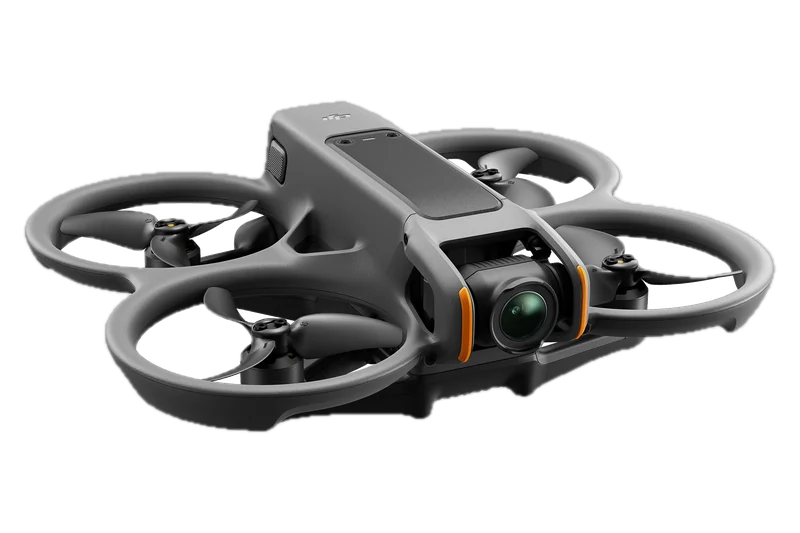
Registered for every flight, and flown only with DJI goggles and a DJI motion controller or FPV remote controller.
About 377 g · FPV
Its pageDJI's U.S. site has no Avata 360 product page, though the FAA's list has two accepted declarations for it, RID000002650 and RID000002651. We have read no Avata 360 specs yet, so there is no side-by-side here.
Antigravity A1 or DJI Mini 5 Pro? The DJI Mini 5 Pro weighs 249.9 g and flies 36 minutes, or 52 minutes with the Battery Plus. DJI's U.S. site has no Mini 5 Pro page, and the FAA's list has an accepted Mini 5 Pro declaration, RID000002581. Side by side: the A1 and the Mini 5 Pro in the compare tool.
Antigravity A1 or DJI Avata 2? The DJI Avata 2 weighs about 377 g, so it is registered for every flight, and it flies only with DJI goggles and a DJI motion controller or FPV remote controller. Its standard Remote ID is on the FAA's list as RID000001376, and DJI's U.S. pages show no price for it. Side by side: the A1 and the Avata 2 in the compare tool.
$1,599 for the Standard Bundle on Antigravity's U.S. buy page (read November 14, 2026), with the Vision Goggles and the Grip Motion Controller. The $799 Follow Me Bundle has no goggles and ships with the High-Capacity Flight Battery and propeller guards; the Ultimate Bundle lists at $2,249. Every bundle showed in stock.
Antigravity. Its brand story says it was “Incubated by Insta360 and third parties”, its site data calls it “incubated by Insta360”, and the A1 buy page's title says “Co-Engineered With Insta360”. Its U.S. privacy policy is issued by PixelSpace Technology Pte Ltd.
Under Part 107, always. Flown only for fun: not with the Flight Battery and nothing added, at 249 g, and yes with the High-Capacity Flight Battery, at 291 g. With propeller guards Antigravity says only that it is over 249 g.
Antigravity's U.S. answer: with the Standard Flight Battery “Remote ID broadcasting is not required”, and with the High-Capacity Flight Battery “Remote ID will be automatically enabled”. The FAA has accepted its declaration, RID000002621, for the “A1(DE001)”.
Flown for fun, the FAA's circular says a visual observer next to you is necessary when you use FPV devices. Under Part 107, goggles do not satisfy visual line of sight, so you or a visual observer must see the drone throughout the flight. Antigravity also says a visual observer near the operator is essential in FPV mode.
24 minutes with the Flight Battery and 39 minutes with the High-Capacity Flight Battery, in Antigravity's windless test at 77 °F (25 °C), flying forward at 13.4 mph (6 m/s) with video recording off.
Documents are named, not linked. Each was read on November 14, 2026; Antigravity's U.S. specs, product, buy and guards pages and the FAA lists were checked for this page on November 14, 2026.
Photos: DJI press images. Product photos by Antigravity.