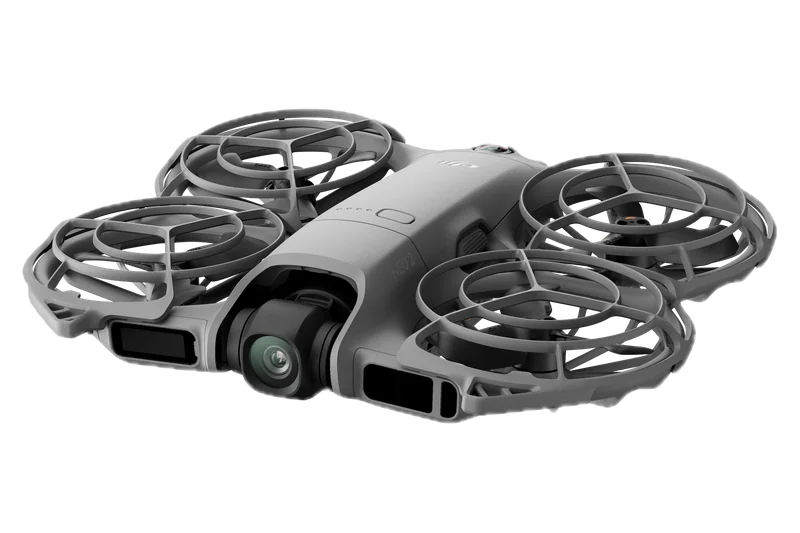
Avata 2 or Neo 2?
Under 0.55 lb, and with its Digital Transceiver it flies with Goggles 3 or N3 and the RC Motion 3 or FPV Remote Controller 3.
151 g · 19 min
Its page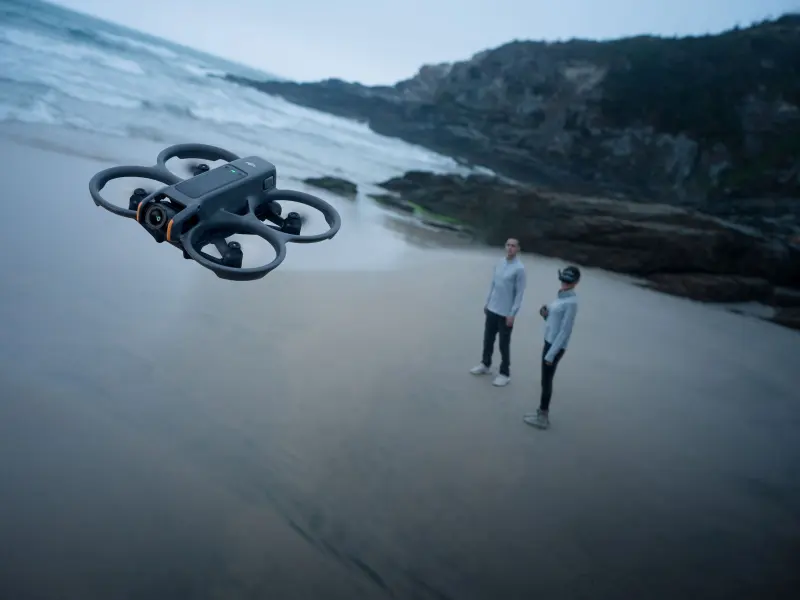
DJI's FPV drone with built-in propeller guards, flown only with DJI goggles and a motion controller or an FPV remote controller. At about 377 g it must be registered for every flight, fun or work, and its built-in Remote ID is on the FAA's accepted list.
Yes, for fun, once it is registered. At about 377 g it is over the 0.55 lb line: register it, pass the free TRUST test, and fly with someone who can see the drone. Remote ID is built in.
Yes, for work under Part 107: register it, hold a Part 107 certificate, and keep the drone in sight, yours or a visual observer's. Its built-in Remote ID covers the broadcast.
The FAA rules follow the weight at takeoff and the reason you fly, never the brand. At about 377 g the Avata 2 is over the 0.55 lb line, so it is registered under both rulebooks, and as a registered drone it must broadcast Remote ID, which it does on its own.
Register it first. At about 377 g it is over the 0.55 lb line. Flown for fun, $5 covers every drone you own for 3 years.
Register it before the first flight. Under Part 107 every drone is registered on its own: $5 per drone for 3 years.
NeededThe aircraft is operated exclusively in compliance with 49 U.S.C. 44809 and weighs 0.55 pounds or less on takeoff, including everything that is on board or otherwise attached to the aircraft14 CFR 48.15(b), Requirement to register (eCFR)
What it means: only a drone flown for fun at 0.55 lb (249.48 g, or 8.8 ounces) or less, with everything attached, skips FAA registration. DJI lists the Avata 2 at about 377 g, about 127.5 g over the line, so that exception never applies to it, for fun or for work.
Weight and registration. DJI's U.S. specs page lists the Avata 2's takeoff weight as about 377 g (13.3 oz). Flown for fun, it is registered under the exception for limited recreational operations: the registration costs $5, lasts 3 years and covers every drone you own. Flown for work under Part 107, every drone is registered on its own, at $5 per drone for 3 years, and a registration cannot move from one kind of flying to the other. Either way the owner must be 13 or older, and the registration number goes on the drone before it flies. The step-by-step answer for any drone: do I have to register my drone?
Built in, nothing to add. The FAA accepted DJI's declaration RID000001376, and the Avata 2 broadcasts from takeoff to shutdown with no module. With the RC Motion 3 or the FPV Remote Controller 3, connect a phone running DJI Fly as the location source.
Built inRemote ID: built in, under declaration RID000001376. The Remote ID rule applies to drones that are registered or must be (14 CFR 89.101), so it applies to every Avata 2 flight. Such a drone flies as a standard Remote ID drone, with a broadcast module, or only inside an FAA-recognized identification area (FRIA). The FAA has accepted DJI's declaration for the Avata 2: RID000001376, make DJI, model “Avata 2”, updated April 30, 2024; on November 14, 2026 the FAA's list had 487 accepted records. When you register, the FAA asks for the serial number of each standard Remote ID drone.
DJI's user manual v1.0 says the Avata 2's Remote ID system meets 14 CFR Part 89 and broadcasts from takeoff to shutdown; it runs a self-test before takeoff, and the drone cannot take off if the test fails. With DJI devices that have no satellite positioning of their own, which the manual names as the DJI RC Motion 3 and the DJI FPV Remote Controller 3, a phone or tablet running a DJI flight app such as DJI Fly must be connected as the location source. For fun or for work, the registered Avata 2 flies on its built-in broadcast, with no module.
14 CFR 89.101 and 89.110 · FAA declaration RID000001376Pass TRUST, the FAA's free online safety test, once. Keep proof that you passed with you when you fly.
Hold a Part 107 certificate. You must be 16 or older and pass the FAA knowledge test, about $175.
NeededA recreational flyer passes the aeronautical knowledge and safety test and shows proof when the FAA or police ask.
A Part 107 pilot in command holds a remote pilot certificate with a small UAS rating.
TRUST for fun, Part 107 for work. Flying for fun, pass the FAA's free online TRUST test and keep proof that you passed. Fly at or below 400 ft in uncontrolled (Class G) airspace; controlled airspace needs FAA authorization. With goggles on, the next section says who must see the drone.
Flying for work needs a Part 107 remote pilot certificate: at least 16 years old and a passed knowledge test. Part 107 flights stay at or below 400 ft above the ground, at no more than 100 mph (87 knots), with 3 statute miles of visibility.
49 U.S.C. 44809(a)(7)14 CFR 107.12 and 107.61Up to 400 ft above the ground, and someone must see it. Near airports, ask permission first; a LAANC app usually approves it in near real time.
400 ftSame ceiling for both rulebooks. Flying for fun, fly within your visual line of sight, at or below 400 ft in uncontrolled (Class G) airspace. Part 107 flights stay at or below 400 ft above the ground.
Controlled airspace near airports (Class B, C, D and the airport's Class E surface area) needs FAA authorization first.
49 U.S.C. 44809(a)(3), (a)(5) and (a)(6) · 14 CFR 107.31, 107.41 and 107.51Not in Category 1: it is over the weight. At about 377 g it is over 0.55 lb, and the FAA has no Category 2 or 3 declaration for it.
NoOver people: over the Category 1 weight. Under Part 107, flying over people in Category 1 takes a drone of 0.55 lb or less, everything attached included (14 CFR 107.110(a)), so at about 377 g the Avata 2 does not qualify. Categories 2 and 3 cover drones over 0.55 lb, and the FAA's list of operations-over-people declarations (29 records) has no Avata 2 record; DJI's specs page, FAQ and manual name no over-people category.
14 CFR 107.39 and 107.110Drones you own keep flying. DJI went on the FCC Covered List on December 22, 2025. That stops new DJI approvals, not drones already bought. DJI's U.S. pages show no price for the Avata 2.
FliesU.S. status: on the FCC Covered List, owned drones fly. DJI drones have been on the FCC Covered List since December 22, 2025, which stops new FCC authorizations for DJI. Existing authorizations are not revoked, and the only import and marketing ban in force covers equipment added to the list in 2024 or earlier. The FCC's exclusion for small toy drones does not reach the Avata 2: it weighs over 150 g, has a camera, satellite positioning and Wi-Fi, and is made by DJI. The FCC says even its proposed import and marketing bans would not affect the continued use of drones people already bought, and DJI says owners can keep using the DJI products they have. DJI's U.S. site still carries the Avata 2's product, specs, FAQ and support pages, but on November 14, 2026, its product page marked the “DJI Avata 2 (Drone Only)” item not for sale, its comparison page said “DJI Store Out of Stock”, and DJI's own U.S. online store listed no drones. DJI's U.S. pages show no price for the Avata 2.
Updates: the newest Avata 2 firmware is V01.00.0500 of July 30, 2026, and DJI's U.S. specs page says “Guaranteed software updates until 2026/12/31”. An FCC waiver lets DJI drones authorized before the listing get firmware updates until at least January 1, 2029. Every DJI model's U.S. status: DJI drones; the whole story: DJI ban in the U.S.
FCC DA 25-1086, DA 26-742, DA 26-588, DA 26-69 and DA 26-454| How you fly it | FAA registration | Remote ID | Pilot test |
|---|---|---|---|
| For fun | Needed: about 377 g, over 0.55 lb; $5 covers every drone you own for 3 years | Needed: built in, on from takeoff to shutdown | TRUST |
| For work, under Part 107 | Needed for every drone: $5 per drone for 3 years | Needed: built in, on from takeoff to shutdown | Part 107 certificate |
What the FAA rules ask of an Avata 2: from 14 CFR 48.15, 89.101 and 89.110, the FAA's registration and Remote ID pages, DJI's user manual v1.0 and the FAA's Remote ID declaration RID000001376.
That depends on the place, the hour and the airspace, not the drone, and as the pilot you are responsible for knowing where it is and is not safe to fly. Our flight check takes a place and the Avata 2 and returns one verdict with its reasons: no-fly zones, airspace, the ceiling, wind against the Avata 2's 23.9 mph rating, and daylight. The FAA's B4UFLY service, offered through FAA-approved companies, also shows where recreational flyers can fly, including temporary flight restrictions.
Check where you can fly itWith goggles on, someone must still see the drone: flown for fun, a visual observer next to you; under Part 107, you or a visual observer, throughout the flight.
Flown for fun, the FAA's advisory circular for recreational flyers says “The use of a VO is necessary if the recreational flyer wants to use first person view (FPV) devices”, meaning a visual observer next to you who can see the drone. Flown under Part 107, the FAA's advisory circular for small drones says “First person view devices may be used during operations, but do not satisfy the VLOS requirement”, so you or a visual observer must still see the drone throughout the flight.
Each rulebook in full, with the Remote ID rule and DJI's own goggles warnings: What is FPV?
It flies only with DJI goggles, steered by a motion controller or an FPV remote controller, in Normal, Sport or Manual mode, and it has no obstacle avoidance.
Tap a photo to see it large.
DJI's FAQ asks “Can I use DJI Avata 2 without the goggles?” and answers “No.” It calls the Avata 2 “an FPV (first-person view) drone that requires a DJI Goggles series product”, flown with a DJI RC Motion series product or a DJI FPV Remote Controller product, and DJI's manual adds: “Using the goggles does not satisfy the requirement of visual line of sight (VLOS).”
DJI's FAQ lists four goggles. DJI Goggles 3 and Goggles N3 pair only with the DJI RC Motion 3 and the DJI FPV Remote Controller 3; DJI Goggles 2 and Goggles Integra pair only with the DJI RC Motion 2 and the DJI FPV Remote Controller 2. The FAQ's controller answer names Goggles 3 alone for the two “3” controllers, while its goggles answer adds Goggles N3; the controller table under Versions prints what each DJI document says. The DJI FPV Remote Controller 3 runs about 10 hours on its 2600 mAh battery and weighs about 240 g.
DJI's manual names three flight modes, and Normal and Sport switch with the Mode button on the motion controller. Manual mode is “Classic FPV aircraft control mode with the highest maneuverability”: all flight assistance is off, precise hovering and auto-brake included, and DJI says proficient control skills are required. DJI's texts differ on what it needs: the manual says only the DJI FPV Remote Controller 3, and the FAQ says the DJI FPV Remote Controller 2 or 3. To practise, DJI's FAQ recommends four simulators: Liftoff, Uncrashed, The Drone Racing League and DCL.
Easy ACRO, with the motion controller, performs Slide, 180° Drift, Flip and Power Loop, and DJI says to perform them in an open environment; the manual calls them “three actions” and lists four.
DJI's FAQ answers “Yes” for Smart RTH, Low Battery RTH and Failsafe RTH, Turtle mode, indoor flying and Find My Drone. Asked whether the Avata 2 supports obstacle avoidance, it answers “No.” In Normal and Sport mode the Avata 2 uses downward and backward visual positioning.
DJI lists it at about 377 g, well over the 0.55 lb (about 250 g) registration line, and rates it at about 23 minutes in the air and 60.4 mph in Manual mode.
Over the line, it is registered for every flight, for fun or for work.
The figures that decide a flight, from DJI's U.S. specs page for the Avata 2, read November 14, 2026.
DJI's maximum flight time of about 23 minutes comes from its own test, flying forward at 13.4 mph (21.6 km/h) in a wind tunnel with Obstacle Avoidance Action set to Brake, in Photo mode; hovering, DJI's U.S. specs page gives about 21 minutes. DJI rates the wind resistance at 23.9 mph (10.7 m/s), Level 5. The top horizontal speed is 17.9 mph (8 m/s) in Normal mode, 35.8 mph (16 m/s) in Sport mode and 60.4 mph (27 m/s) in Manual mode, and DJI notes that Manual mode is held to 42.5 mph (19 m/s) in the EU. The first flight is in Beginner mode by default, at no more than 2.2 mph (1 m/s).
The DJI O4 video transmission system reaches 8.1 mi (13 km) under the FCC rating, unobstructed and free of interference; DJI calls it a one-way figure that the max flight distance also limits. With strong urban interference DJI says about 0.9 to 2.5 mi (1.5 to 4 km), and behind buildings up to 0.3 mi (0.5 km). DJI's 8.1 mi (13 km) max flight distance is a battery figure, measured flying forward at 26.8 mph (43.2 km/h) until a forced landing, not a control range. Live view is 1080p at up to 100 fps, and with DJI Goggles 3 the lowest latency is 24 ms. What these figures mean for any drone: how far a drone can fly.
The drawing shows the drone's size as DJI's U.S. specs page lists it, at one scale.
The DJI Avata 2 is an FPV drone with built-in propeller guards. Its 1/1.3-inch image sensor takes 12 MP photos through an f/2.8 lens with a 155° field of view, on a single-axis gimbal, and films 4K at up to 100 fps.
Below are the figures DJI's U.S. specs page prints for the drone, the camera, sensing, the O4 video link, Wi-Fi, the battery and the DJI FPV Remote Controller 3, with the lines DJI's FAQ, manual and release notes and the FAA's list add. The key ones first; the full sheet is one click away.
| Flight time | About 23 min |
|---|---|
| Hovering | About 21 min |
| Top speed | 60.4 mph Manual, 35.8 mph Sport, 17.9 mph Normal |
| Climb and descent | 29.5 ft/s Sport, 19.7 ft/s Normal |
| Wind it handles | 23.9 mph, Level 5 |
| Max takeoff altitude | 16,404 ft (5000 m) |
| Temperature | 14 to 104 °F |
| Storage | 46 GB inside, plus microSD |
| Noise | 81 dB |
| Sensor | 1/1.3-inch, 12 MP |
|---|---|
| Lens | 12 mm, f/2.8, 155° |
| Photos | 4000 × 3000, JPEG only |
| Video | 4K 16:9 up to 100 fps |
| 2.7K and 1080p | Up to 120 fps |
| Color | Standard and D-Log M |
| Bitrate | Up to 130 Mbps |
| Gimbal | Single-axis, tilt −85 to 80° |
| Video link | DJI O4, 8.1 mi (FCC) |
The 1/1.3-inch image sensor, 12 MP effective, sits behind a 12 mm equivalent lens at f/2.8 with a 155° field of view. Photos run up to 4000 × 3000 (4:3), single shot only, as JPEG only.
Video runs to 4K 4:3 (3840 × 2880) at up to 60 fps and 4K 16:9 at up to 100 fps; 2.7K 16:9 and 1080p go up to 120 fps. The color modes are Standard and D-Log M, in MP4 files (H.264 or H.265) at up to 130 Mbps, and the camera has normal, wide-angle and ultra-wide-angle views.
A single-axis mechanical gimbal tilts the camera, controllable from −85 to 80 degrees. RockSteady 3.0+ and HorizonSteady stabilize the footage and can be turned off, and DJI says unstabilized wide-angle footage supports Gyroflow.
Sensing is downward and backward visual positioning, with a downward ToF sensor that measures up to 32.8 ft (10 m); DJI's FAQ says the Avata 2 has no obstacle avoidance. Satellite positioning is GPS + Galileo + BeiDou.
The DJI O4 video transmission system is rated at 8.1 mi (13 km) under the FCC rating and 6.2 mi (10 km) under CE, SRRC and MIC, with live view at 1080p and up to 100 fps, a 60 Mbps max video bitrate for the link and four antennas. Wi-Fi downloads run at up to 30 MB/s, and the Avata 2 also has Bluetooth 5.0.
The Intelligent Flight Battery is a 2150 mAh, 31.7 Wh Li-ion pack at 14.76 V that weighs about 145 g. In the charging hub (60 W max) it charges from 0 to 100% in about 45 minutes and from 10 to 90% in about 30; directly charging the drone (30 W max) takes about 88 and 60 minutes. The hub charges three batteries in sequence. Storage is 46 GB inside plus a microSD card; DJI recommends 64 to 512 GB U3 A2 V30 cards.
DJI's manual calls the Avata 2 “a compact and portable FPV camera drone equipped with built-in propeller guards”, and its FAQ speaks of an “integrated propeller guard design” and flight noise reduced to 81 decibels. The drone measures 7.28 × 8.35 × 2.52 in (185 × 212 × 64 mm), length by width by height; DJI lists no folded size.
| Takeoff weight | Approx. 377 g (13.3 oz) |
|---|---|
| Dimensions | 7.28 × 8.35 × 2.52 in (185 × 212 × 64 mm); DJI lists no folded size |
| Max ascent and descent speed | 19.7 ft/s (6 m/s) Normal; 29.5 ft/s (9 m/s) Sport (both) |
| Max horizontal speed | 17.9 mph (8 m/s) in Normal mode; 35.8 mph (16 m/s) in Sport mode; 60.4 mph (27 m/s) in Manual mode; no faster than 42.5 mph (19 m/s) in Manual mode in the EU |
| Max takeoff altitude | 16,404 ft (5000 m) |
| Max flight time | Approx. 23 min, flying forward at 13.4 mph (21.6 km/h) in a wind tunnel, Obstacle Avoidance Action set to Brake, Photo mode |
| Max hovering time | Approx. 21 min on DJI's U.S. specs page; approx. 23 min in the manual's spec appendixSource: DJI's Avata 2 specs page (U.S.) and user manual v1.0, Max Hovering Time; manual PDF p.86 |
| Max flight distance | 8.1 mi (13 km), flying forward at 26.8 mph (43.2 km/h) until forced landing (a battery figure) |
| Max wind speed resistance | 23.9 mph (10.7 m/s), Level 5 |
| Operating temperature | 14 to 104 °F (−10 to 40 °C) |
| GNSS | GPS + Galileo + BeiDou |
| Hovering accuracy | Vertical ±0.3 ft (0.1 m) (vision), ±1.6 ft (0.5 m) (GNSS); horizontal ±1.0 ft (0.3 m) (vision), ±4.9 ft (1.5 m) (GNSS) |
| Internal storage | 46 GB; SD cards also supportedSource: DJI's Avata 2 specs page and FAQ (U.S.), Internal Storage; FAQ storage answer |
| Noise | 81 dB (DJI: flight noise reduced to 81 decibels); EU sound power level 81 dBSource: DJI's Avata 2 FAQ (U.S.) and user manual v1.0, FAQ improvements answer item 1; manual PDF p.99 |
| Propeller guard | Built-in propeller guards (manual); "integrated propeller guard design" (FAQ)Source: DJI's Avata 2 user manual v1.0 and FAQ (U.S.), PDF p.10 Introduction; FAQ improvements answer item 2 |
| Image sensor | 1/1.3-inch image sensor; effective pixels 12 MP |
|---|---|
| Lens | FOV 155 degrees; 12 mm equivalent; f/2.8; focus 2.0 ft (0.6 m) to infinity |
| ISO range | 100-25600 (Auto and Manual) |
| Shutter speed | Video 1/8000-1/30 s; photo 1/8000-1/50 s |
| Photo | Max 4000 × 2256 (16:9), 4000 × 3000 (4:3); single shot only; JPEG only |
| Video resolution | 4K 4:3 3840 × 2880 at 30/50/60 fps; 4K 16:9 3840 × 2160 at 30/50/60/100 fps; 2.7K 4:3 at 30/50/60 fps; 2.7K 16:9 at 30/50/120 fps; 1080p 4:3 and 16:9 at 30/50/120 fps |
| Video format and bitrate | MP4 (H.264/H.265); max 130 Mbps; exFAT |
| Color mode and FOV modes | Standard and D-Log M; normal, wide-angle and ultra-wide-angle views |
| Stabilization (EIS) | RockSteady 3.0+ and HorizonSteady; can be disabled; unstabilized wide-angle footage supports Gyroflow |
| Stabilization and range | Single-axis mechanical gimbal (tilt); mechanical −95 to 90 degrees; controllable −85 to 80 degrees; 100 degrees/s; angular vibration ±0.01 degrees |
|---|---|
| Electronic roll axis | Real-time screen correction unavailable while recording; can be applied to footage recorded on the drone |
| Sensing type | Downward and backward visual positioning; no obstacle avoidance (FAQ)Source: DJI's Avata 2 specs page and FAQ (U.S.), Sensing Type; FAQ "Does DJI Avata 2 support obstacle avoidance? No." |
|---|---|
| Downward | ToF effective measurement height 32.8 ft (10 m); precise hovering 1.0-32.8 ft (0.3-10 m); measurement range 1.0-65.6 ft (0.3-20 m); FOV 78 × 78 degrees |
| Backward | Measurement range 1.6-65.6 ft (0.5-20 m); FOV 78 × 78 degrees |
| Operating environment | Patterned diffuse surfaces, reflectivity > 20%; lux > 15 (normal indoor lighting) |
| System and live view | DJI O4; live view 1080p at 30/50/60/100 fps |
|---|---|
| Operating frequency | 2.400-2.4835 GHz; 5.170-5.250 GHz and 5.725-5.850 GHz where local law permits |
| Transmitter power (EIRP) | 2.4 GHz < 33 dBm (FCC), < 20 dBm (CE/SRRC/MIC); 5.1 GHz < 23 dBm (CE); 5.8 GHz < 33 dBm (FCC), < 30 dBm (SRRC), < 14 dBm (CE) |
| Max transmission distance (unobstructed, no interference) | FCC 8.1 mi (13 km), subject to the max flight distance; CE, SRRC, MIC 6.2 mi (10 km); one-way figures |
| With interference (FCC) | Urban approx. 0.9-2.5 mi (1.5-4 km); suburban approx. 2.5-6.2 mi (4-10 km); suburb/seaside approx. 6.2-8.1 mi (10-13 km) |
| Obstructed (FCC) | Buildings up to 0.3 mi (0.5 km); trees approx. 0.3-1.9 mi (0.5-3 km) |
| Latency, bitrate, bandwidth, antennas | With DJI Goggles 3: 24 ms at 1080p/100fps, 40 ms at 1080p/60fps; max video bitrate 60 Mbps; bandwidth max 60 MHz; 4 antennas, 2T4R |
| Protocol and download | 802.11a/b/g/n/ac; 2.4 and 5.8 GHz; max download speed 30 MB/s |
|---|
| Protocol | Bluetooth 5.0, 2.400-2.4835 GHz, < 10 dBm |
|---|
| Intelligent Flight Battery | 2150 mAh; approx. 145 g; 14.76 V (max charging 17 V); Li-ion; 31.7 Wh at 0.5C |
|---|---|
| Charging temperature | 41 to 104 °F (5 to 40 °C) |
| Charging time | Charging hub (60 W max): 0-100% approx. 45 min, 10-90% approx. 30 min; directly charging the drone (30 W max): 0-100% approx. 88 min, 10-90% approx. 60 min |
| Charging hub | Input 5-20 V, max 3 A; output (power accumulation) max 65 W; three batteries charged in sequence |
| Recommended chargers | DJI 65W Portable Charger; DJI 65W Car Charger; USB Power Delivery charger |
| microSD | Recommended Kingston CANVAS Go! Plus and Lexar Professional 1066x, 64-512 GB, U3 A2 V30 |
|---|
| Compatible goggles | DJI Goggles 3, DJI Goggles N3, DJI Goggles 2, DJI Goggles IntegraSource: DJI's Avata 2 FAQ (U.S.), Which goggles are compatible with DJI Avata 2? |
|---|---|
| Pairings | Goggles 3 or N3: only RC Motion 3 and FPV Remote Controller 3; Goggles 2 or Integra: only RC Motion 2 and FPV Remote Controller 2Source: DJI's Avata 2 FAQ (U.S.), goggles answer |
| Compatible controllers | DJI RC Motion 2, DJI RC Motion 3, DJI FPV Remote Controller 2, DJI FPV Remote Controller 3; the controller answer says RC Motion 3 and FPV RC 3 work only with Goggles 3 (the goggles answer adds N3)Source: DJI's Avata 2 FAQ (U.S.), Which remote controllers are compatible with DJI Avata 2? |
|---|---|
| DJI FPV Remote Controller 3 | Approx. 10 h; 2600 mAh; approx. 240 g; 6.50 × 4.69 × 2.44 in (165 × 119 × 62 mm); charging 2 h at 5 V 2 A; 14 to 104 °F (−10 to 40 °C) |
| Without goggles | Not possible ("Can I use DJI Avata 2 without the goggles? No.")Source: DJI's Avata 2 FAQ (U.S.), that question |
|---|---|
| Flight modes | Normal, Sport and Manual; Normal and Sport switch with the Mode button on the motion controller; Beginner mode by default on the first flight, up to 2.2 mph (1 m/s)Source: DJI Avata 2 User Manual v1.0, PDF p.43, Flight Modes |
| Manual mode | Classic FPV aircraft control mode; all flight assistance off; manual: only with DJI FPV Remote Controller 3, not RC Motion 3; FAQ: FPV Remote Controller 2 or 3Source: DJI's Avata 2 user manual v1.0 and FAQ (U.S.), PDF p.43; FAQ advanced controls answer |
| Easy ACRO | With the motion controller: Slide, 180 degree Drift, Flip and Power Loop (the manual says "three actions" and lists four)Source: DJI Avata 2 User Manual v1.0, PDF p.38 |
| Other functions | Smart RTH, Low Battery RTH and Failsafe RTH; Turtle mode; indoor flying; Find My Drone (all "Yes" in the FAQ)Source: DJI's Avata 2 FAQ (U.S.), FAQ Flight and Flight Safety answers |
| Manual mode practice | DJI recommends simulators Liftoff, Uncrashed, The Drone Racing League and DCLSource: DJI's Avata 2 FAQ (U.S.), What simulators can be used to practice Manual mode flight? |
| U.S. Remote ID | A Remote ID system that meets the requirements of 14 CFR Part 89; broadcasts from takeoff to shutdown; pre-flight self-test, no takeoff if it failsSource: DJI Avata 2 User Manual v1.0, PDF p.104, FAR Remote ID Compliance Information |
|---|---|
| Location source | With DJI devices that have no GNSS (RC Motion 3, FPV Remote Controller 3), a phone or tablet running DJI Fly must be connected as the location sourceSource: DJI Avata 2 User Manual v1.0, PDF p.104 and footnote [1] |
| FAA declaration | RID000001376, DJI "Avata 2", accepted, updated April 30, 2024Source: The FAA's list of Remote ID declarations, record RID000001376 |
| Newest release | Aircraft V01.00.0500 of July 30, 2026 ("Fixed known issues"); Goggles 3 V01.00.1400; RC Motion 3 V01.00.0200; FPV RC 3 V01.00.0300; Goggles N3 V01.00.1000; DJI Fly V1.21.8Source: DJI Avata 2 release notes, first entry, Date July 30, 2026 |
|---|---|
| Software support | Guaranteed software updates until December 31, 2026 |
| User manual version | v1.0, 2024.05Source: DJI Avata 2 User Manual v1.0, cover |
61 figures, from DJI's Avata 2 specs page (U.S.) unless a row names another document. Data read November 14, 2026.
Every figure is DJI's or the FAA's. The table follows DJI's Avata 2 specs page for the U.S. unless a row names another document: DJI's FAQ and product page, the Avata 2 user manual v1.0 of May 2024, its release notes or the FAA's list of Remote ID declarations. DJI's U.S. specs page prints metric figures, apart from temperatures; the imperial figures are our conversions. We read them all on November 14, 2026.
DJI's own texts differ in small ways, and the table prints each with its source. Hovering time is about 21 minutes on the U.S. specs page and about 23 minutes in the manual's spec appendix. For Manual mode the manual names only the DJI FPV Remote Controller 3, and the FAQ the FPV Remote Controller 2 or 3. The FAQ's controller answer pairs the two “3” controllers with Goggles 3 alone, while its goggles answer adds Goggles N3. The manual calls Easy ACRO “three actions” and lists four.
The Avata 2 as DJI's U.S. pages list it: one item, the drone only, with no price; four combos, described with no price; and four remote controllers in DJI's FAQ.
DJI's U.S. pages show no price for the Avata 2: on November 14, 2026, the product page marked its only item not for sale, the comparison page said “DJI Store Out of Stock”, the Buy Now link ended on the store's account page, and DJI's own U.S. online store listed no drones. Drones already owned keep flying.
DJI's U.S. product page still describes four combos: the Fly More Combo, with DJI Goggles 3 and the DJI RC Motion 3, and the Fly Smart Combo, with DJI Goggles N3 and the DJI RC Motion 3, each with one battery or with three batteries and a Two-Way Charging Hub; the Fly More Combo with three batteries adds a sling bag. None shows a price.
| What | What DJI lists |
|---|---|
| U.S. item | DJI Avata 2 (Drone Only), marked not for sale, with no price |
| DJI's comparison page (U.S.) | DJI Store Out of Stock, marked off sale |
| DJI's Buy Now link | Ends on the DJI U.S. store's account page, not a product page |
| Fly More Combo (Single Battery) | The drone, Goggles 3, RC Motion 3 and more; no price |
| Fly More Combo (Three Batteries) | Adds a Two-Way Charging Hub, two batteries and a sling bag; no price |
| Fly Smart Combo (Single Battery) | The drone, Goggles N3, RC Motion 3 and more; no price |
| Fly Smart Combo (Three Batteries) | Adds a Two-Way Charging Hub and two batteries; no price |
The DJI Avata 2 as DJI's U.S. product and comparison pages list it, read November 14, 2026.
| Controller | Goggles it pairs with | Manual mode in the manual | Manual mode in the FAQ | Phone as the Remote ID location source | What DJI lists |
|---|---|---|---|---|---|
| DJI RC Motion 2 | DJI Goggles 2 or Goggles Integra | Not named | Not named | Not named | Not in the newest release notes entry |
| DJI RC Motion 3 | DJI Goggles 3 or Goggles N3 | No | Not named | Needed | Firmware V01.00.0200 |
| DJI FPV Remote Controller 2 | DJI Goggles 2 or Goggles Integra | Not named | Yes | Not named | Not in the newest release notes entry |
| DJI FPV Remote Controller 3 | DJI Goggles 3 or Goggles N3 | Yes | Yes | Needed | About 10 hours, 2600 mAh, about 240 g; firmware V01.00.0300 |
The four controllers DJI's Avata 2 FAQ (U.S.) lists, the goggles each pairs with, and what DJI's manual v1.0 and FAQ say about Manual mode and Remote ID, read November 14, 2026.
Its closest neighbors, and the one difference that should decide it.
Under 0.55 lb, and with its Digital Transceiver it flies with Goggles 3 or N3 and the RC Motion 3 or FPV Remote Controller 3.
151 g · 19 min
Its page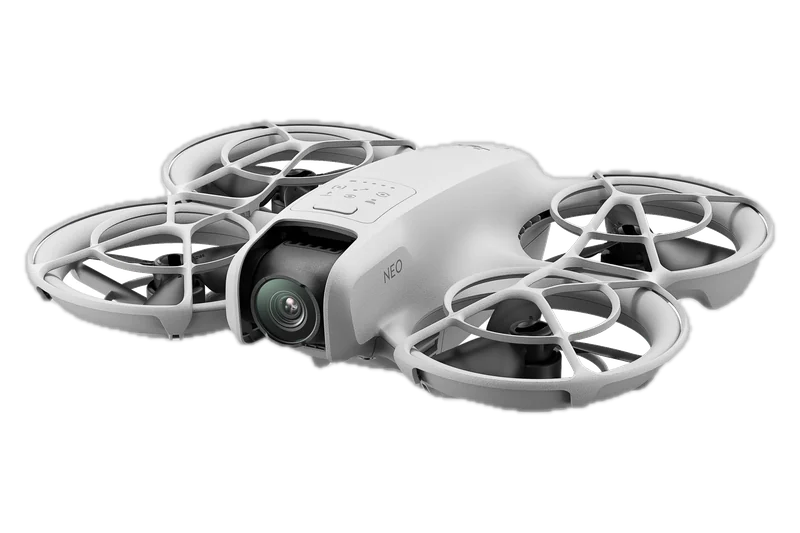
Flown only for fun it needs no FAA registration, and the FAA has no Remote ID declaration for it.
135 g · 18 min
Its page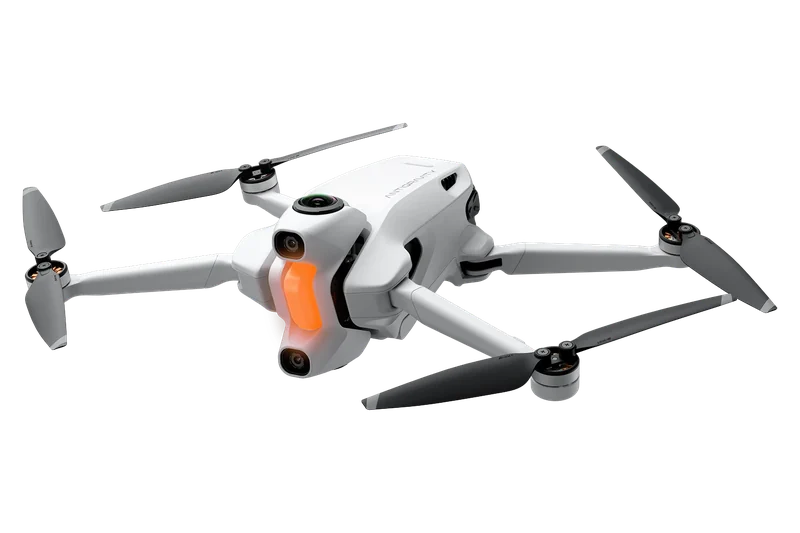
A 360 drone flown with Antigravity's Vision Goggles and Grip Motion Controller.
249 or 291 g · 8K 360
Its pageDJI's U.S. site has no Avata 360 product page, though the FAA's list has two accepted declarations for it: RID000002650 for the “DJI Avata 360 (DVN3NT)” and RID000002651 for the “Avata 360 (DVN3XT)”. We have read no Avata 360 specs yet, so there is no side-by-side here.
Avata 2 or Neo 2? The DJI Neo 2 weighs 151 g, or 160 g with the DJI Neo 2 Digital Transceiver, and flies about 19 minutes. Through the transceiver it flies with DJI Goggles 3 or N3 and the RC Motion 3 or FPV Remote Controller 3, over O4 rated at 6.2 mi (10 km) under the FCC rating, and DJI's FAQ calls it “an entry-level drone for Manual mode”, not meant for continuous high-speed flight or moves such as Power Loop. At 151 g it is under 0.55 lb, unlike the Avata 2; DJI's U.S. site has no Neo 2 page, and the FAA's list has no Neo 2 declaration. Side by side: the Avata 2 and the Neo 2 in the compare tool.
Avata 2 or Neo? The DJI Neo weighs about 135 g and flies about 18 minutes, so flown only for fun it needs no FAA registration, and the FAA's list has no Remote ID declaration for it. Side by side: the Avata 2 and the Neo in the compare tool.
Avata 2 or Antigravity A1? The Antigravity A1 is a 360 drone flown with Antigravity's Vision Goggles and Grip Motion Controller. It weighs 249 g with the Flight Battery, under the 0.55 lb line for flying only for fun, and 291 g with the High-Capacity Flight Battery, with which Antigravity says its Remote ID switches on; its FAA declaration is RID000002621. Side by side: the Avata 2 and the A1 in the compare tool.
DJI's U.S. pages show no price for it on November 14, 2026: the “DJI Avata 2 (Drone Only)” item is marked not for sale, the comparison page says “DJI Store Out of Stock”, the Buy Now link ends on the store's account page, and DJI's own U.S. online store lists no drones. Drones already owned keep flying.
Yes, for every flight: DJI lists it at about 377 g, over 0.55 lb (249.48 g). Flown for fun, $5 covers every drone you own; under Part 107 it is $5 per drone; both last 3 years.
Yes, built in, under the FAA's accepted declaration RID000001376, so it needs no broadcast module. With the RC Motion 3 or the FPV Remote Controller 3, DJI's manual says a phone or tablet running DJI Fly must be connected as the location source.
Flown for fun, the FAA's circular says a visual observer next to you is necessary when you use FPV goggles. Under Part 107, goggles do not satisfy visual line of sight, so you or a visual observer must see the drone throughout the flight. DJI also says its goggles do not satisfy visual line of sight.
No. DJI's FAQ says so in one word; in Normal and Sport mode the Avata 2 uses downward and backward visual positioning.
Documents are named, not linked. Each was read on November 14, 2026; DJI's U.S. product, specs, FAQ and comparison pages, the release notes, the FAA lists and DJI's U.S. store were checked for this page on November 14, 2026.
Photos: DJI press images. Product photos by Antigravity.