Below are DJI's figures for the drone, the camera, sensing, the video link, the batteries and the controller, and the FAA's record on Remote ID.
Camera sensor: 1/1.3-inch, 48 MP, f/1.7 and 4K HDR
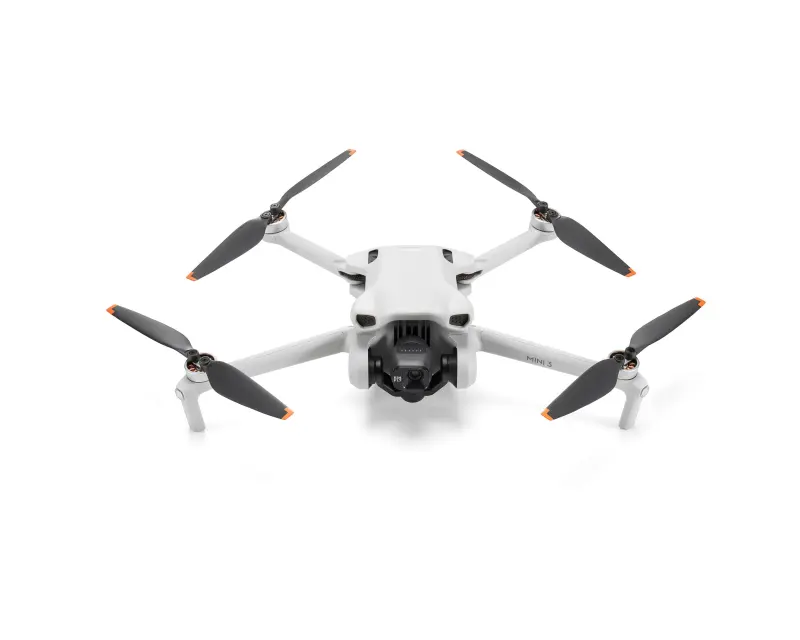
The 1/1.3-inch CMOS sensor has 48 MP effective, behind a 24 mm equivalent lens with an f/1.7 aperture and an 82.1° field of view. DJI says the sensor supports dual native ISO and chip-level HDR for 4K HDR video; HDR output works when recording at 24, 25 or 30 fps. Video runs to 4K at 30 fps and to 2.7K and 1080p at up to 60 fps, as MP4 (H.264) at up to 100 Mbps. When shooting in 4K, digital zoom reaches 2x; it reaches 3x in 2.7K and 4x in 1080p. The Mini 3's camera shoots single 12 MP or 48 MP photos, AEB, Sphere, 180° and Wide Angle panoramas and HDR single shots, and the QuickShots are Dronie, Helix, Rocket, Circle and Boomerang.
Gimbal and True Vertical Shooting
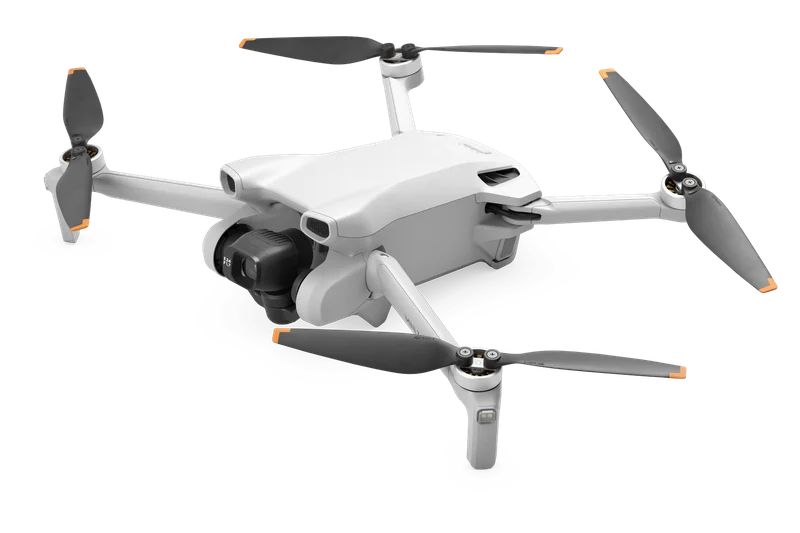
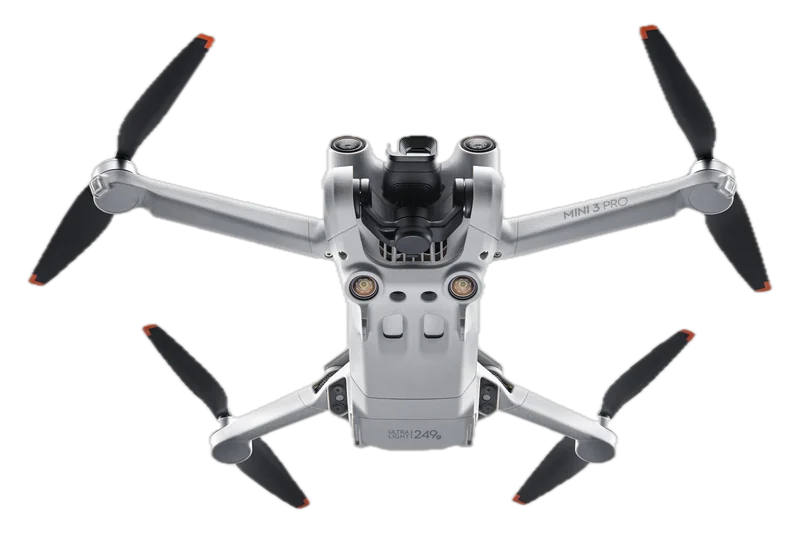
A 3-axis mechanical gimbal tilts the camera from −90 to 60 degrees, and its roll can be set to −90 or 0 degrees, which DJI calls True Vertical Shooting. DJI counts it among the DJI Mini 3 features it added over the DJI Mini 2.
Color profile, file formats and storage
DJI's spec page lists one color mode for the Mini 3: Normal. Photos are saved as JPEG or DNG (RAW) and video as MP4 (H.264). There is no internal storage: footage goes to a microSD card, and DJI recommends 11 cards from 32 GB to 256 GB, all V30 microSDXC. Files download at 5.5 MB/s over DJI O2, or at up to 25 MB/s over Wi-Fi with QuickTransfer.