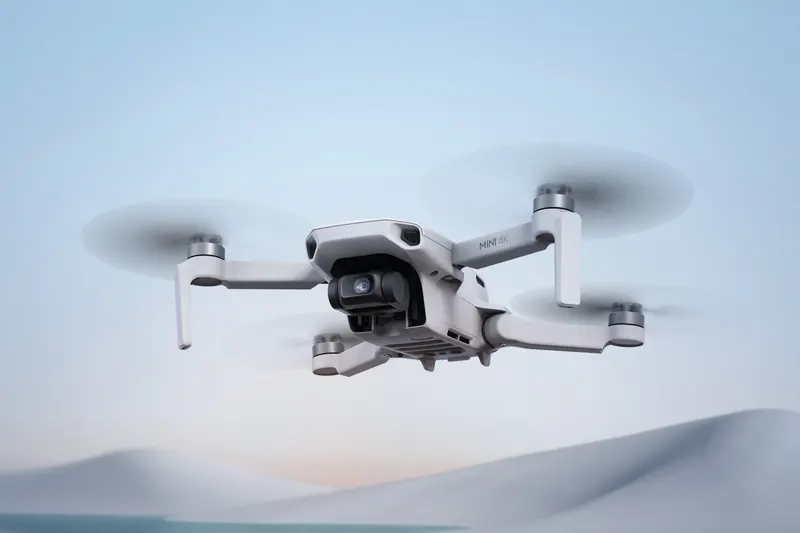
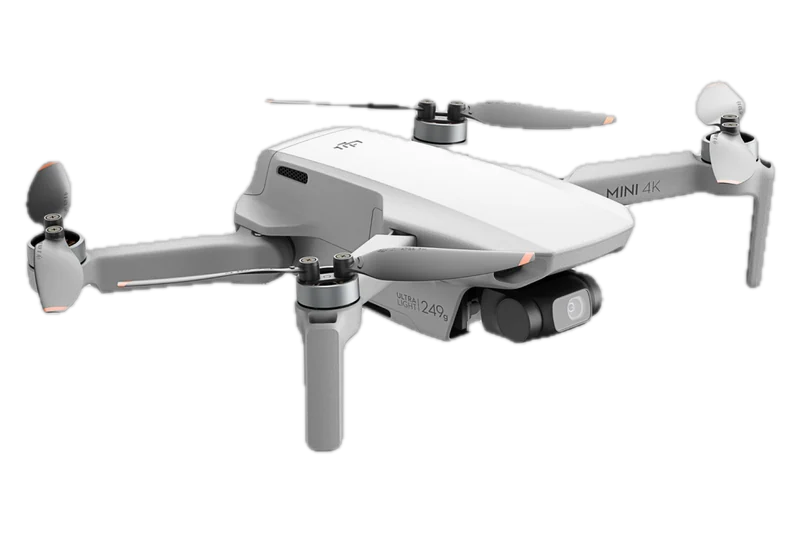
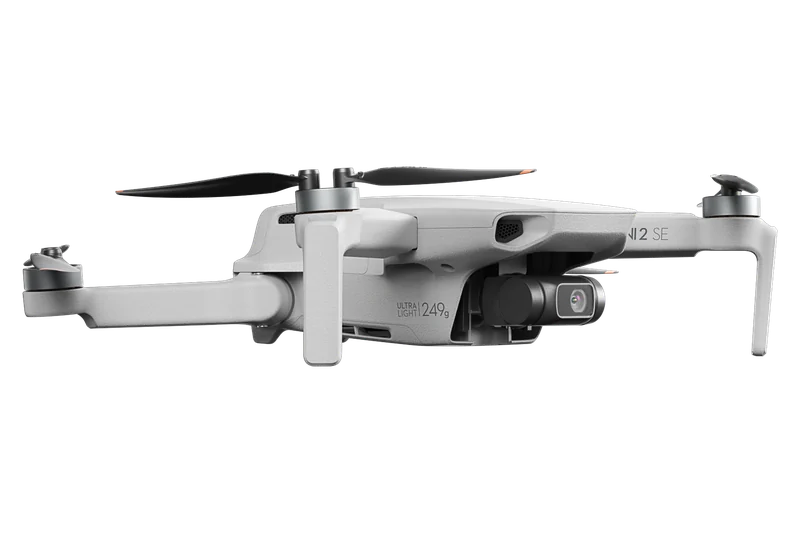
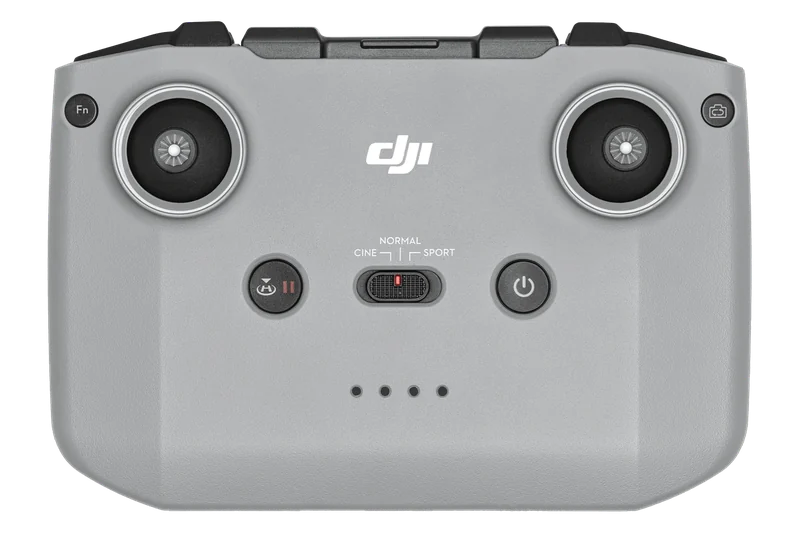
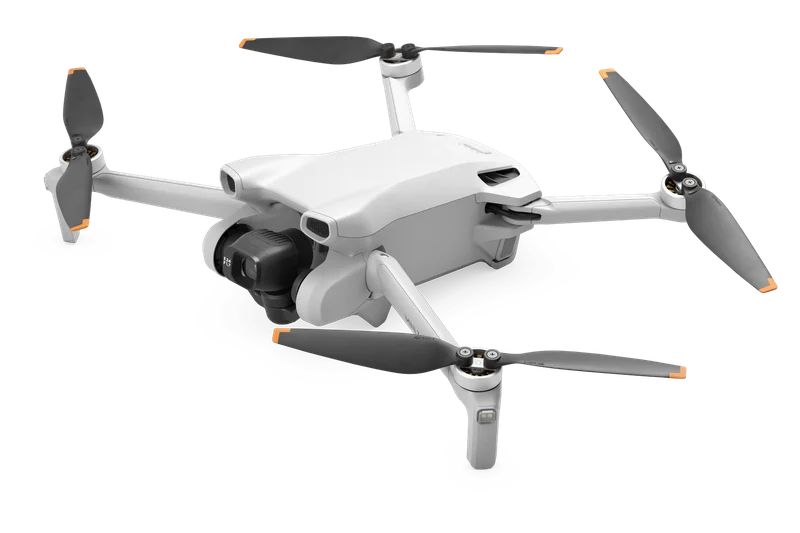
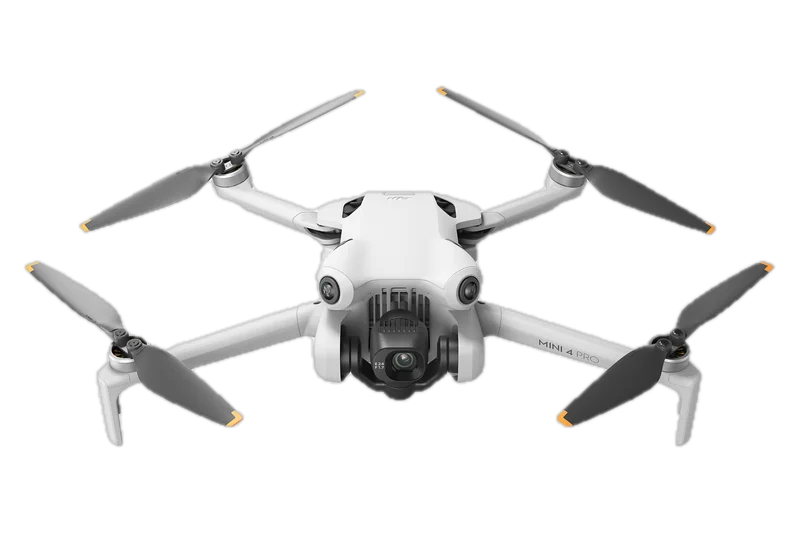
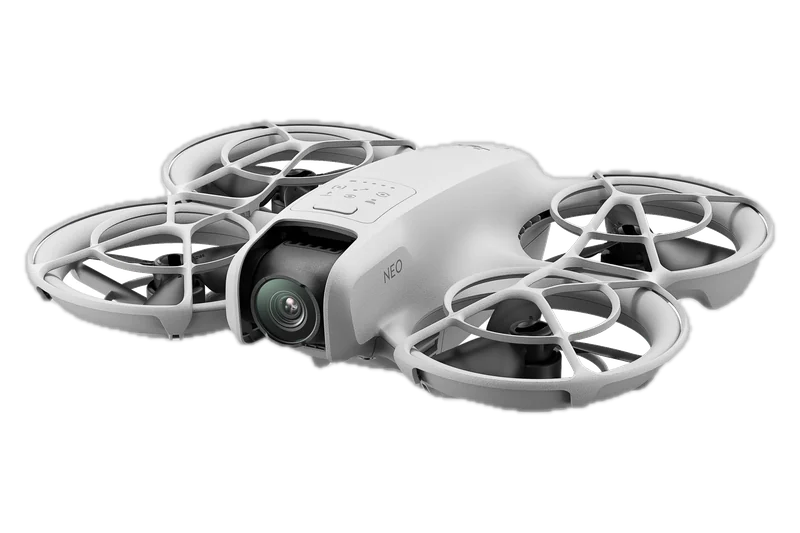
DJI prints its figures on one U.S. specs page with the DJI Mini 2 SE and marks the lines that differ; below are the Mini 4K's, for the drone, the camera, sensing, the video link, the battery and the remote controller, and the FAA's list on Remote ID.
Camera: 1/2.3-inch, 12 MP and 4K at 30 fps
The camera uses a 1/2.3-inch CMOS sensor with 12 MP effective, behind a 24 mm equivalent lens at f/2.8 with an 83° field of view and focus from 3.3 ft (1 m) to infinity. Video runs to 4K at 24, 25 or 30 fps and to 2.7K and 1080p at up to 60 fps, as MP4 (H.264) at up to 100 Mbps; digital zoom reaches 2x in 4K, 3x in 2.7K and 4x in 1080p. Photos are 12 MP, saved as JPEG or DNG (RAW), with AEB and Sphere, 180° and Wide Angle panoramas, and the QuickShots are Dronie, Helix, Rocket, Circle and Boomerang.
3-axis gimbal
A 3-axis mechanical gimbal steadies the camera in tilt, roll and pan. You can tilt it from −90 to 0 degrees by default, or from −90 to 20 degrees in the extended setting.
Vision positioning: downward sensing only
DJI's spec page lists downward sensing only, for precise hovering from 1.6 to 32.8 ft (0.5 to 10 m) over surfaces with discernible patterns in light over 15 lux; the manual calls it a Downward Vision System and Infrared Sensing System. No forward, rear or side obstacle sensing is listed. GPS, GLONASS and Galileo give the position, and DJI gives a vertical hovering accuracy of ±0.3 ft (0.1 m) with vision positioning and ±1.6 ft (0.5 m) with satellites. DJI's manual says the Mini 4K can hover and fly indoors as well as outdoors, the sensing systems helping where GPS is unavailable.