Skip to content
Rulebook
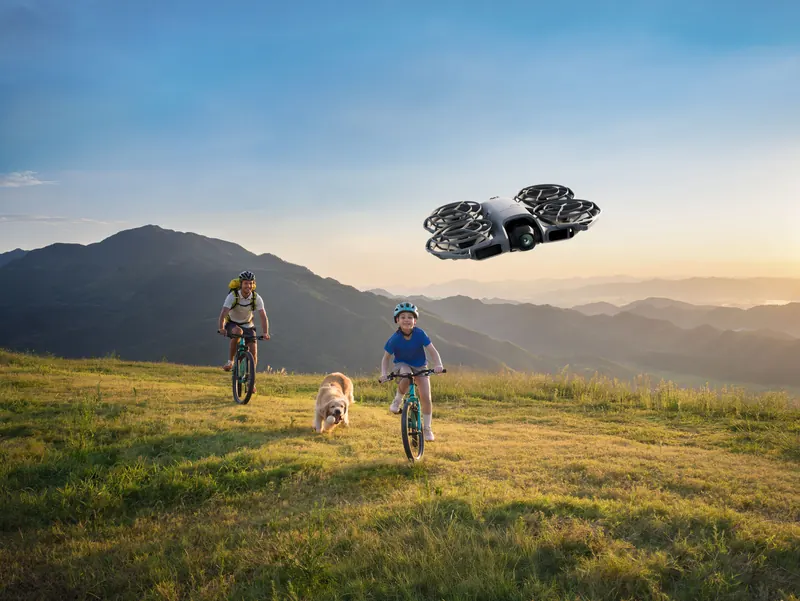
A DJI Neo 2 flying beside two cyclists and a dog on a hilltop meadow at sunset

DJI Neo 2

DJI's palm-launched follow-me camera drone, at 151 g. Flown only for fun it needs no FAA registration and no Remote ID, just your TRUST certificate; flown for work it must be registered and needs a broadcast module or a FRIA. DJI never released it in the U.S.; drones already bought can keep flying.

Specs from DJI's Canada specs page, read November 13, 2026DJI has no U.S. page for itPhotos: DJI press images

Takeoff weight
151g
Flight time, about
19min
Wind it handles
23.9mph
Range with transceiver (FCC)
6.2mi
Camera
12MP

Rules for flying the DJI Neo 2 drone in the U.S.

Flown only for fun, the Neo 2 needs no FAA registration and no Remote ID: DJI lists it at 151 g, well under the 0.55 lb line. Pass the free TRUST test and keep proof that you passed.

Flown for work under Part 107: register it, hold a Part 107 certificate, and fit a broadcast module or fly inside a FRIA, because the FAA has no Remote ID declaration for it.

  • Register

    Not for fun at DJI's listed weights. 151 g, or 160 g with the Digital Transceiver, is well under 0.55 lb (249 g). For work, register it whatever it weighs.

    Not for fun
    The exact rule
    The aircraft is operated exclusively in compliance with 49 U.S.C. 44809 and weighs 0.55 pounds or less on takeoff, including everything that is on board or otherwise attached to the aircraft 14 CFR 48.15(b), Requirement to register (eCFR)

    What it means: flown only for fun, a drone of 0.55 lb (249 g) or less, with everything attached, needs no FAA registration. DJI lists the Neo 2 at 151 g, or 160 g with the Digital Transceiver. Even the propeller guard pair (8.1 g) and the transceiver (about 9 g) added to 151 g make 168.1 g, about 81 g under 0.55 lb (249.48 g).

    Weight and registration. DJI says the actual weight may vary with batch materials and external factors, and its note does not say whether the 151 g includes the propeller guards; the sum above counts them anyway. The FAA's web pages word the line as 250 grams and the regulation as 0.55 lb, and DJI's listed 151 g and 160 g are under both. So flown only for fun, the Neo 2 needs no FAA registration.

    Any other flight needs registration, because the exception covers only drones flown exclusively for fun, and under Part 107 every drone is registered, whatever it weighs. Registration costs $5 per drone and lasts 3 years, and you must be 13 or older.

  • Remote ID

    No FAA declaration for it. Flown only for fun it needs none; flown for work it needs a broadcast module, or flies only inside a FRIA.

    Module for work
    The exact rule

    Remote ID: no FAA declaration, so a module or a FRIA for work. The FAA's list of accepted Remote ID declarations holds no Neo 2 record: on November 14, 2026 it had 487 accepted records, 55 of them from DJI, and none for the Neo 2. DJI's Neo 2 user manual has no Remote ID section, and its specs page and FAQ do not mention Remote ID. The Remote ID rule applies to drones that are registered or must be (14 CFR 89.101), and a standard Remote ID drone needs its serial number on an FAA-accepted declaration (89.110). Read side by side, they mean:

    • Only for fun at DJI's listed weights: the drone need not be registered, so the Remote ID rule does not apply.
    • For work under Part 107: the drone is registered, so Remote ID applies. With no declaration it is not a standard Remote ID drone, so it needs a broadcast module whose serial number is on an FAA-accepted declaration and on the drone's registration (89.115(a)), or it flies without Remote ID only inside an FAA-recognized identification area (FRIA), where the drone and the pilot stay inside the area's boundaries and the pilot keeps the drone in sight throughout (89.115(b)).

    Neither DJI nor the FAA names a broadcast module or its weight for the Neo 2, and whatever you attach counts toward the takeoff weight.

    14 CFR 89.101, 89.110 and 89.115
  • Pilot test

    Pass TRUST, the FAA's free online test, and keep proof that you passed, whatever the drone weighs.

    Hold a Part 107 certificate: at least 16 years old and a passed knowledge test.

    Needed
    The exact rule

    TRUST for fun, Part 107 for work. Flying for fun, pass the FAA's free online TRUST test and keep proof that you passed, whatever the drone weighs; if you lose the certificate, you take the test again. Fly within sight, or with a visual observer next to you, at or below 400 ft in uncontrolled (Class G) airspace; controlled airspace needs FAA authorization through LAANC or DroneZone. DJI rates the Neo 2 for ages 16 and above and says it is not intended for children; that is DJI's advice, not an FAA rule.

    Flying for work needs a Part 107 remote pilot certificate: at least 16 years old and a passed knowledge test. Part 107 flights stay at or below 400 ft above the ground, at no more than 100 mph, with 3 statute miles of visibility.

    49 U.S.C. 44809 · 14 CFR 107.12
  • Height

    Up to 400 ft, always in sight. In palm and app control DJI itself holds it to 197 ft (60 m). Near airports, in controlled airspace, get FAA authorization first.

    400 ft
    The exact rule

    The same ceiling under both rulebooks: flying for fun, at or below 400 ft in uncontrolled (Class G) airspace; under Part 107, at or below 400 ft above the ground, higher only near a structure. DJI's own lower cap in palm and app control is a setting of the drone, not a U.S. rule.

    49 U.S.C. 44809 · 14 CFR 107.51
  • Over people

    Not shown to qualify for Category 1 under Part 107: it is well under 0.55 lb, but neither DJI nor the FAA says whether its guarded propellers meet the second test.

    Not shown
    The exact rule

    Over people: not shown to qualify for Category 1. Under Part 107, flying over people in Category 1 takes a drone that weighs 0.55 lb or less on takeoff and throughout the flight, everything attached included, and has no exposed rotating parts that would lacerate human skin on impact (14 CFR 107.110(a)). DJI's listed weights are well under the weight line, and DJI ships it with detachable propeller guards it calls full-coverage, but neither DJI nor the FAA says whether it meets the second test. So it is not shown to qualify. Sustained flight over open-air assemblies of people also needs Remote ID (107.110(b)), which for the Neo 2 means a broadcast module.

    14 CFR 107.110
  • DJI ban

    Drones already bought keep flying. DJI never released the Neo 2 in the U.S., and DJI is on the FCC Covered List: that stops new approvals, not drones people own.

    Flies
    What the FCC said

    U.S. status: never released by DJI in the U.S., owned drones fly. DJI drones have been on the FCC Covered List since December 22, 2025, which stops new FCC authorizations for DJI. Existing authorizations are not revoked, and the only import and marketing ban in force covers equipment added to the list in 2024 or earlier. The FCC's exclusion for small toy drones does not cover drones made by DJI. The FCC says even its proposed import and marketing bans would not affect drones people already bought, and DJI says owners can keep using the DJI products they have. On November 14, 2026, DJI's U.S. site had no Neo 2 page and DJI's own U.S. online store listed no drones: DJI never released the Neo 2 in the U.S., and it publishes no U.S. price for it.

    Updates: DJI's newest Neo 2 firmware is V01.00.0800 of October 20, 2026, and no DJI page we read gives a date until which updates are guaranteed. An FCC waiver lets DJI drones authorized before the listing get firmware updates until at least January 1, 2029. The whole story, model by model: DJI ban in the U.S.

    FCC DA 25-1086, DA 26-742, DA 26-588, DA 26-69 and DA 26-454
Palm takeoff and landing: keep it in sight the whole flight, under either rulebook.

Can I fly my DJI Neo 2 here today?

That depends on the place, the hour and the airspace, not the drone, and as the pilot you are responsible for knowing where it is and is not safe to fly. Our flight check takes a place and the Neo 2 and returns one verdict with its reasons: no-fly zones, airspace, the ceiling, wind against the Neo 2's 23.9 mph rating, and daylight. The FAA's B4UFLY service, offered through FAA-approved companies, also shows where recreational flyers can fly, including temporary flight restrictions.

Check where you can fly it

What the FAA asks, by the reason you fly

The FAA rules follow the weight at takeoff and the reason you fly, never the brand. At DJI's listed weights the Neo 2 is well under the registration line, so for this drone what changes the rules is why you fly it.

By the reason you fly
How you fly itFAA registrationRemote IDPilot test
Only for funNot needed: 0.55 lb (249 g) or lessNot neededTRUST
For work, under Part 107Needed for every droneNeeded: no FAA declaration, so a broadcast module or a FRIAPart 107 certificate

What the FAA rules ask of a Neo 2 at DJI's listed weights: from 14 CFR 48.15, 89.101 and 89.115 and the FAA's list of Remote ID declarations.

DJI Neo 2 limits: weight, flight time, wind and range

The figures that decide a flight, from DJI's own specs page for Canada (DJI has no U.S. page for this drone), read November 13, 2026. The drawing shows the drone's overall size with its propeller guards and without the transceiver, at one scale.

Takeoff weight
151 g (5.3 oz); 160 g (5.6 oz) with the transceiver
Flight time
About 19 min (17 min with guards)
Wind rating
23.9 mph (10.7 m/s)
Top speed
26.8 mph (12 m/s), Sport mode
Video range
1,640 ft (500 m) on Wi-Fi; 6.2 mi (10 km) with the transceiver, FCC
Height cap
197 ft (60 m) in palm and app control
Temperature
14 to 104 °F
Camera
1/2-inch, 12 MP photos
Remote ID
No FAA declaration

DJI's 19 minutes come from its own test at 8.9 mph (4 m/s) without the Digital Transceiver, in Photo mode; with the propeller guards DJI gives about 17 minutes, and about 18 minutes of hovering. One battery allows at least 20 palm takeoffs and landings in a row. In palm control and app control DJI holds the drone to 197 ft (60 m) of height, with no distance limit, and without a DJI Fly login to 98.4 ft (30 m) of height and 164 ft (50 m) of range; a login lasts 90 days. The Neo 2 is not waterproof, and DJI's safety guidelines say to fly only in the daytime, a piece of DJI's advice rather than a U.S. rule.

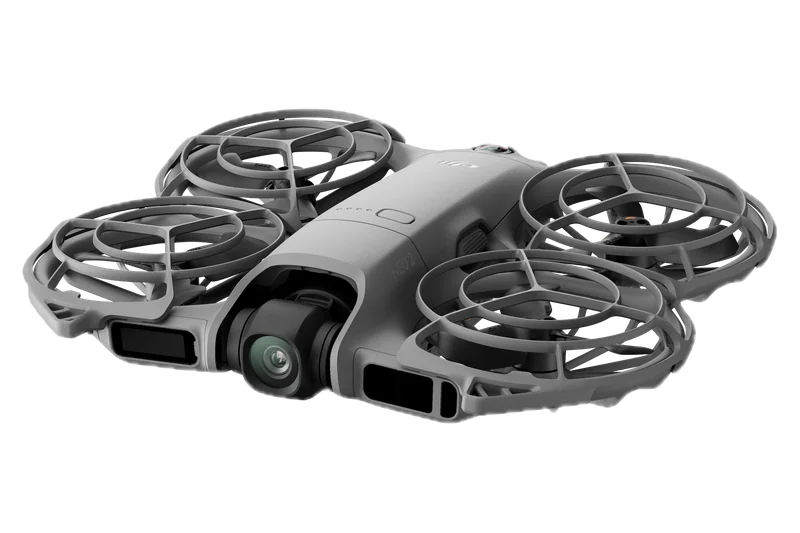
A grey DJI Neo 2 with its propeller guards, a studio photo
With its propeller guards: 5.79 × 6.73 × 1.61 in.
Show its size at one scale
100 mm · 1 px = 1 mm · 171 × 147 mm, with propeller guards, without the transceiver
100 mm · 1 px = 2 mm · 171 × 147 mm, with propeller guards, without the transceiver

Full DJI Neo 2 specs: design, camera, battery life, obstacle avoidance and gesture control

In DJI's words, the Neo 2 is DJI's most compact drone equipped with omnidirectional obstacle sensing, and a personal follow-me camera drone. It can take off and land directly from your palm.

The Neo 2 uses a 1/2-inch CMOS camera that takes 12 MP photos through an f/2.2 aperture on a 2-axis gimbal and films 4K 60fps, 4K 100fps slow-motion and 2.7K vertical video. Below are DJI's figures for the drone, the camera, sensing, the battery and the controls, and the FAA's list on Remote ID.

Design and safety: propeller guards in every box

DJI ships the Neo 2 with detachable propeller guards in every bundle, and its safety guidelines recommend using them. With the guards it measures 5.79 × 6.73 × 1.61 in (147 × 171 × 41 mm). There is no microSD slot: footage goes to 49 GB of internal storage and downloads over Wi-Fi at up to 80 MB/s.

Camera: 4K 100fps and 2.7K vertical video

Video runs to 4K and 1080p at up to 100 fps in 16:9, and to 2.7K 60fps in vertical 9:16 (1512 × 2688); 4:3 video needs DJI goggles. Footage records as MP4 at up to 80 Mbps in the Normal color mode. RockSteady stabilization can be turned off only with goggles, and the unstabilized footage supports Gyroflow. The lens is a 16.5 mm equivalent with a 119.8° field of view.

Omnidirectional obstacle sensing and LiDAR

Monocular vision on every side, a downward infrared sensor and a forward-facing LiDAR give omnidirectional obstacle sensing. Forward sensing measures 1.6 to 33 ft (0.5 to 10 m) and works up to 17.9 mph (8 m/s); vision needs light above 5 lux. DJI says the Neo 2 can detect and avoid obstacles when tracking from the front or the sides and that vision is only an aid, and obstacle avoidance is off in Sport and Manual mode.

Palm, gesture, voice and app control

You can fly it from your palm, with gestures, with the DJI Fly app over Wi-Fi, by voice through the phone in English or Mandarin, from an Apple Watch since firmware V01.00.0500 of December 10, 2025, or with a remote controller once the Digital Transceiver is fitted. DJI says the app's virtual joysticks are for fine-tuning and returning, not a full remote-controller experience. Gesture control works only in Spotlight or Follow mode, and not below 5 lux or above 100,000 lux. In palm control it tracks people only, and DJI gives 26.8 mph (12 m/s) as its top tracking speed. Its intelligent shooting modes include Follow, Cycling Follow, SelfieShot, Dolly Zoom, MasterShots, Dronie, Circle, Rocket, Spotlight, Helix and Boomerang, with QuickShots on a remote controller.

Battery life and video transmission

The DJI Neo 2's 1606 mAh, 11.5 Wh battery gives about 19 minutes of flight. Three batteries charge together in about 68 minutes in the Two-Way Charging Hub with a 65 W charger, or one in about 70 minutes in the drone at 15 W. Over the phone's Wi-Fi the range is 1,640 ft (500 m); with the Digital Transceiver and a DJI remote controller or goggles, DJI O4 reaches up to 6.2 mi (10 km) under the FCC rating, and about 0.9 to 1.9 mi (1.5 to 3 km) in a city.
Gesture control works in Spotlight or Follow mode.
The DJI Fly app over Wi-Fi: up to 1,640 ft (500 m).
Camera
Image sensor1/2-inch CMOS; 12 MP photos
Lens119.8 degree field of view; 16.5 mm equivalent; f/2.2; focus 2.3 ft (0.7 m) to infinity
ISO range, photo100-3200 (single auto); 100-12800 (burst and timed auto, manual)
ISO range, video100-12800 (auto and manual)
Shutter speedVideo 1/8000-1/30 s; photo 1/8000-1/10 s
Max image size4000 × 3000 (4:3); 4000 × 2250 (16:9)
Still photography modesSingle shot 12 MP; timed shot 12 MP, 2-60 s
Photo formatJPEG
Video, 4K 4:33840 × 2880 at 60/50/30 fps; 4:3 only with DJI goggles connected
Video, 1080p 4:31440 × 1080 at 60/50/30 fps; 4:3 only with DJI goggles connected
Video, 4K 16:93840 × 2160 at 100/60/50/30 fps
Video, 1080p 16:91920 × 1080 at 100/60/50/30 fps
Video, vertical2.7K 1512 × 2688 (9:16) at 60/50/30 fps
100 fps condition on the spec page4K/100fps and 1080p/100fps only with motion control or remote control
Video formatMP4
Max video bitrate80 Mbps
Color modeNormal
Electronic stabilizationRockSteady; can be turned off only with goggles; unstabilized footage supports Gyroflow
File systemexFAT
Obstacle sensing
Sensing typeOmnidirectional monocular vision, a downward infrared sensor and forward-facing LiDAR
ForwardMeasurement 1.6-33 ft (0.5-10 m); detection 1.6-49 ft (0.5-15 m); effective up to 17.9 mph (8 m/s)
Backward and lateralDetection 1.6-49 ft (0.5-15 m); effective up to 17.9 mph (8 m/s)
Upward and downwardDetection 1.6-49 ft (0.5-15 m); effective up to 6.7 mph (3 m/s)
Forward LiDAR and downward infrared1.0-26 ft (0.3-8 m), reflectivity above 10 percent
Operating environmentSurfaces with discernible patterns and light above 5 lux; downward also diffuse reflectivity above 20 percent
Obstacle avoidance in Sport and Manual modeDisabledSource: DJI Neo 2 User Manual v1.2, PDF p.57
Video transmission
SystemWi-Fi as standard; optional DJI Neo 2 Digital Transceiver (O4)
Live view qualityUp to 1080p/60fps with DJI RC-N3; 1080p/60fps with DJI Goggles N3; 1080p/100fps with DJI Goggles 3
Max distance, no interference (with transceiver)6.2 mi (10 km) FCC; 3.7 mi (6 km) CE, SRRC, MIC
Max distance with interference (FCC)Urban 0.9-1.9 mi (1.5-3 km); suburban 1.9-3.7 mi (3-6 km); suburb or seaside 3.7-6.2 mi (6-10 km)
Max distance obstructed (FCC)Buildings 0-0.3 mi (0-0.5 km); trees 0.3-1.9 mi (0.5-3 km)
Wi-Fi effective operating range1,640 ft (500 m), FCC
Max download speedWi-Fi 80 MB/s
Lowest latencyAbout 120 ms with DJI RC-N3 or DJI RC 2; 54 ms with DJI Goggles N3; 50 ms with DJI Goggles 3
Transmission bitrate60 Mbps
Antennas2 antennas, 1T2R
Operating frequency2.400-2.4835 GHz; 5.170-5.250 GHz; 5.725-5.850 GHz (varies by country)
Wi-Fi protocol802.11a/b/g/n/ac/ax
BluetoothBluetooth 5.2
Show 53 more figures
Aircraft
Takeoff weight without the Digital Transceiver151 g (5.3 oz)Source: DJI Neo 2 specs pages (Canada and UK), Aircraft > Takeoff Weight
Takeoff weight with the DJI Neo 2 Digital Transceiver160 g (5.6 oz)Source: DJI Neo 2 specs pages (Canada and UK), Aircraft > Takeoff Weight
Weight noteActual weight may vary with batch materials and external factors; DJI's note does not say whether the guards are includedSource: DJI Neo 2 specs pages (Canada and UK), Aircraft > Takeoff Weight, note
Dimensions with guards, without transceiver5.79 × 6.73 × 1.61 in (147 × 171 × 41 mm)
Dimensions with guards and transceiver6.57 × 6.73 × 2.13 in (167 × 171 × 54 mm)
Max ascent speed1.6 ft/s (0.5 m/s) Cine; 9.8 ft/s (3 m/s) Normal; 16.4 ft/s (5 m/s) Sport
Max descent speed1.6 ft/s (0.5 m/s) Cine; 9.8 ft/s (3 m/s) Normal and Sport
Max horizontal speed17.9 mph (8 m/s) Normal; 26.8 mph (12 m/s) Sport and while tracking
Max takeoff altitude6,562 ft (2000 m)
Max flight timeAbout 19 minutes (about 17 with the propeller guards), at 8.9 mph (4 m/s) without the transceiver, Obstacle Avoidance Action Brake, Photo mode
Palm takeoffs per batteryAt least 20 palm takeoff-and-landing shoots in a row
Max hovering timeAbout 18 minutes (16.5 with the propeller guards), without the transceiver
Max flight distance4.3 mi (7 km), measured at 20.1 mph (9 m/s) without the transceiver
Max wind speed resistance23.9 mph (10.7 m/s), Level 5
Operating temperature14 to 104 °F (−10 to 40 °C)
Satellite positioningGPS + Galileo + BeiDou
Hovering accuracyVertical 0.3 ft (0.1 m) with vision, 1.6 ft (0.5 m) with satellite; horizontal 1.0 ft (0.3 m) with vision, 4.9 ft (1.5 m) with satellite (all plus or minus)
Internal storage49 GB; no microSD slot
Height limit in Palm Control and Mobile App Control197 ft (60 m); distance not limited; cannot be changed in DJI FlySource: DJI Neo 2 User Manual v1.2, PDF p.21
Limit when not logged into DJI Fly98.4 ft (30 m) height and 164 ft (50 m) range; login valid 90 daysSource: DJI Neo 2 User Manual v1.2, PDF p.4
WaterproofNoSource: DJI Neo 2 FAQ page (Canada), Is DJI Neo 2 waterproof?
Intended usersAges 16 and aboveSource: DJI Neo 2 FAQ page (Canada), Who is DJI Neo 2 suitable for?
ChildrenNot intended for childrenSource: DJI Neo 2 Safety Guidelines v1.2, p.4, Safety at a Glance
Propeller guard adviceIt is recommended to use the propeller guardSource: DJI Neo 2 Safety Guidelines v1.2, p.4, Flight Operation item 1
Software
Latest aircraft firmwareV01.00.0800, October 20, 2026, DJI Fly V1.21.16Source: DJI Neo 2 release notes, entry Date October 20, 2026
Earliest entry in the release notesV01.00.0200, October 30, 2025: added DJI Goggles 3, DJI RC-N2 and DJI RC 2Source: DJI Neo 2 release notes, entry Date October 30, 2025
Manual modeAdded in V01.00.0300 (November 6, 2025) with DJI Goggles N3 or 3 and DJI FPV Remote Controller 3Source: DJI Neo 2 release notes, entry Date November 6, 2025
Gimbal
Stabilization2-axis mechanical (tilt, roll)
Mechanical rangeTilt −125 to 105 degrees; roll −43 to 43 degrees
Controllable rangeTilt −90 to 70 degrees
Max control speed (tilt)100 degrees/s
Angular vibration rangePlus or minus 0.01 degrees
Battery
Capacity1606 mAh
Weight (spec page)46 g (1.6 oz)
VoltageNominal 7.16 V; max charging 8.6 V
Energy11.5 Wh
TypeLi-ion, LiNiMnCoO2
Charging temperature41 to 104 °F (5 to 40 °C)
Charging timeAbout 68 min for three batteries together in the Two-Way Charging Hub (65 W); about 70 min in the drone (15 W)
Recommended chargerDJI 65W Portable Charger or USB Power Delivery chargers
Charging hubThree at once with a charger above 45 W; two with 30-45 W; one after another below 30 W
Control and remote controllers
DJI RC-N3 operating time3.5 hours; 1.5 hours while charging a phone
DJI RC-N3 weightAbout 320 g (11.3 oz)
DJI RC-N3 dimensions4.10 × 5.91 × 1.78 in (104.2 × 150 × 45.2 mm)
Compatible remote controllersDJI RC 2, DJI RC-N3, DJI RC-N2, DJI RC Motion 3, DJI FPV Remote Controller 3Source: DJI Neo 2 FAQ page (Canada), Which remote controllers are compatible with DJI Neo 2?
Compatible gogglesDJI Goggles 3 and DJI Goggles N3Source: DJI Neo 2 FAQ page (Canada), Which goggles are compatible with DJI Neo 2?
Control methodsPalm, gesture, mobile app, voice via phone (English and Mandarin), remote controller (needs the Digital Transceiver)Source: DJI Neo 2 FAQ page (Canada), What control methods does DJI Neo 2 support?
Apple Watch controlApple Watch Series 8 to 11, Ultra 2 and Ultra 3; watchOS 11 or laterSource: DJI Neo 2 FAQ page (Canada), Which Apple Watch models are compatible with DJI Neo 2?
Remote ID (U.S.)
FAA declaration of complianceNone for DJI Neo 2 among 487 accepted Remote ID records (55 DJI); search Neo returned only other makersSource: FAA list of Remote ID declarations, full list read November 13, 2026
Remote ID text in DJI documentsThe user manual v1.2 has no FAR Remote ID section and no Remote ID text; the spec page and FAQ do not mention itSource: DJI Neo 2 User Manual v1.2, whole manual text searched for Remote ID, Part 89, register
Accessories
Propeller guards (model PG020)8.1 g (0.3 oz) per pair; DJI Neo 2 comes with detachable propeller guardsSource: DJI Neo 2 User Manual v1.2, PDF p.97 list of items; p.71, 4.6 Propellers and Propeller Guards
DJI Neo 2 Digital Transceiver (model DEP1)About 9 g (0.3 oz)Source: DJI Neo 2 User Manual v1.2, PDF p.97, list of items
Propellers (model R2217S)1.52 g (0.1 oz) per pairSource: DJI Neo 2 User Manual v1.2, PDF p.97, list of items

92 figures, from DJI's Neo 2 specs page (Canada; DJI has no U.S. page) unless a row names another document. Data read November 13, 2026.

Where these numbers come from

Every figure is DJI's or the FAA's. DJI has no U.S. page for the Neo 2, so the table follows DJI's Neo 2 specs page for Canada, which prints imperial units and the FCC ratings, unless a row names DJI's specs pages for Canada and the UK (the same text), its user manual v1.2 of December 2025, its safety guidelines v1.2, its FAQ or product page, its release notes or the FAA list of Remote ID declarations. The manual, the safety guidelines and the release notes are on DJI's UK downloads page. We read them on November 13, 2026 and read DJI's Canada specs page, the release notes and the UK downloads page, DJI's U.S. site and store, the FAA list and the regulations again on November 14, 2026.

DJI disagrees with itself in three places, and the table prints the specs page each time. The specs page and the FAQ say 4K and 1080p at 100 fps need a remote controller or motion controller, but firmware V01.00.0600 of April 23, 2026 added 4K 100fps and 1080p 100fps recording in Palm Control. The specs page gives the battery as 46 g, the manual as about 46.7 g. And the manual's EU table gives the Neo 2 (model DEN225) a maximum takeoff mass of 160 g, while the statement below it names another model code, DF1A0424, and 249 g.

DJI Neo 2 versions: Fly More Combo, Digital Transceiver and RC-N3 remote controller

DJI's Canada page lists four Neo 2 bundles, each with the propeller guards; two add the Digital Transceiver that a remote controller or goggles need. DJI publishes no U.S. price for any of them.

The four bundles
BundleWhat DJI lists in the box
DJI Neo 2 (Drone Only)Drone, one Intelligent Flight Battery, propeller guards
DJI Neo 2 Fly More Combo (Drone Only)Drone, three batteries, Two-Way Charging Hub, propeller guards
DJI Neo 2 Fly More ComboDrone, DJI RC-N3, three batteries, Two-Way Charging Hub, Digital Transceiver, propeller guards and more
DJI Neo 2 Motion Fly More ComboDrone, DJI RC Motion 3, DJI Goggles N3, three batteries, Two-Way Charging Hub, Digital Transceiver, propeller guards and more

The four bundles on DJI's Neo 2 product page (Canada), read November 13, 2026.

With or without the Digital Transceiver
FigureWithout the transceiverWith the Digital Transceiver
Takeoff weight151 g (5.3 oz)160 g (5.6 oz)
Size, with propeller guards5.79 × 6.73 × 1.61 in (147 × 171 × 41 mm)6.57 × 6.73 × 2.13 in (167 × 171 × 54 mm)
Video linkWi-Fi, 1,640 ft (500 m), FCCDJI O4, up to 6.2 mi (10 km), FCC
Remote controllerNot supportedSupported

With and without the DJI Neo 2 Digital Transceiver, from DJI's Neo 2 specs page and FAQ page (Canada), read November 13, 2026.

Fit the Digital Transceiver to fly with a remote controller or goggles, and take it off for palm-only flying to save weight and flight time. The Fly More Combo and the Motion Fly More Combo include it.

The drone with three batteries, the Two-Way Charging Hub, spare propellers and a cable, as DJI's press photo lays them out.
Small enough for a shoulder bag.

Remote controllers and goggles

DJI's FAQ names five controllers: the DJI RC 2, DJI RC-N3, DJI RC-N2, DJI RC Motion 3 and DJI FPV Remote Controller 3, and two goggles, DJI Goggles 3 and Goggles N3. The DJI RC-N3 remote controller weighs about 320 g (11.3 oz) and runs 3.5 hours, or 1.5 hours while it charges a phone. Manual mode came in firmware V01.00.0300 of November 6, 2025, with DJI Goggles 3 or DJI Goggles N3 and the DJI FPV Remote Controller 3; DJI calls it entry-level, not for continuous high-speed flight or acrobatic moves. Flown for fun, goggles or not, the drone has to stay within sight of you or a visual observer next to you.

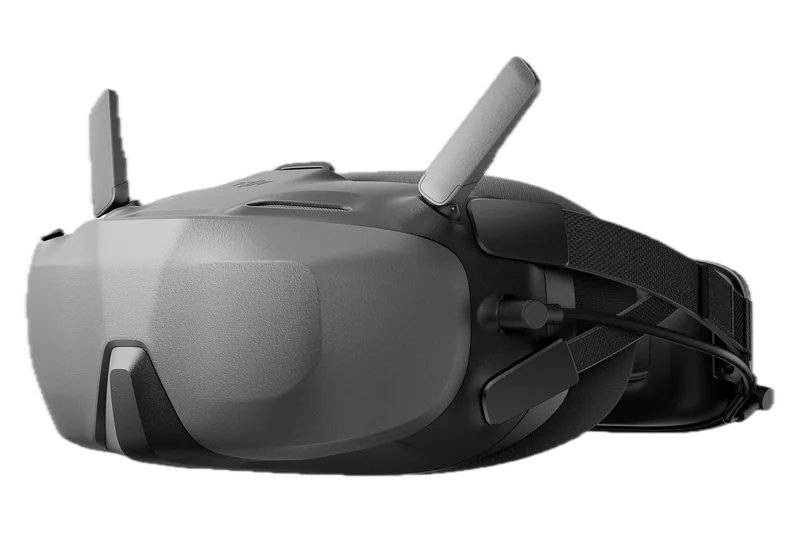
Black DJI Goggles N3 with their antennas raised, a studio photo
DJI Goggles N3, one of the two goggles DJI names for the Neo 2; they need the Digital Transceiver.
With a DJI remote controller, a phone clamped on top.
Through DJI goggles, with a one-handed motion controller; flown for fun, a visual observer next to you keeps the drone in sight.

Three small DJI drones people weigh it against, and what sets each one apart.

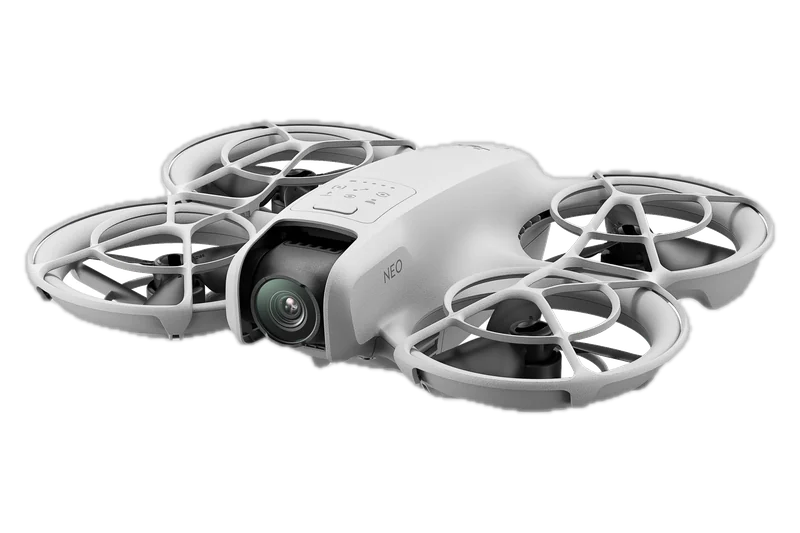
DJI Neo studio cutout with its full propeller guards

Neo 2 vs Neo

DJI's own list of new Neo 2 features over the Neo: omnidirectional vision and a forward LiDAR, a 1/2-inch 12 MP f/2.2 camera with 4K/60 and a 2-axis gimbal, an onboard display and buttons, gesture control and more shooting modes, and 49 GB of storage. The Neo weighs about 135 g and flies about 18 minutes (17 with guards); it is rated for 17.9 mph (8 m/s) wind, films 4K at 30 fps through an f/2.8 lens on a single-axis gimbal, has downward positioning only and reaches 164 ft (50 m) over Wi-Fi.

About 135 g · 18 min · 4K/30

DJI Neo
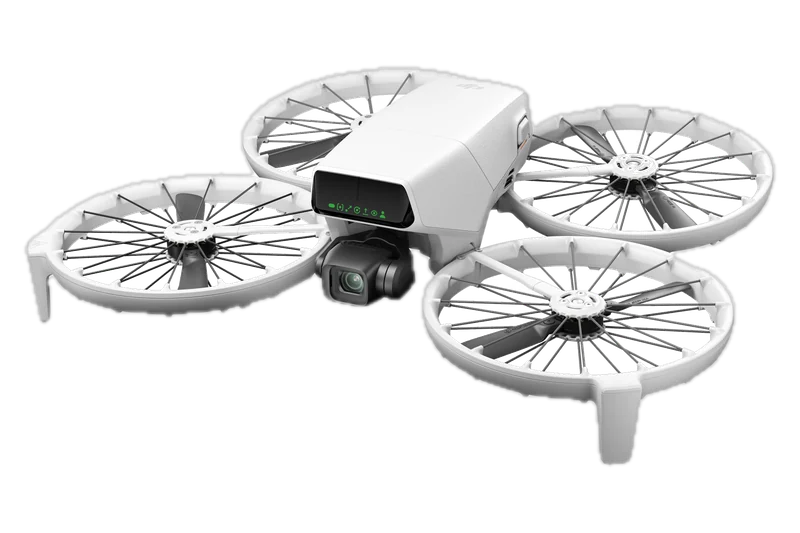
A white DJI Flip with its propeller guards unfolded, seen from the front

Neo 2 or Flip?

The DJI Flip weighs under 249 g and carries a bigger 1/1.3-inch sensor with 48 MP photos at f/1.7, films 4K up to 100 fps on a 3-axis gimbal, flies 31 minutes and is rated for 23.9 mph (10.7 m/s) wind. It senses downward with vision and infrared and forward with 3D infrared, and its O4 video reaches 8.1 mi (13 km) under the FCC rating.

Under 249 g · 31 min · 48 MP

DJI Flip
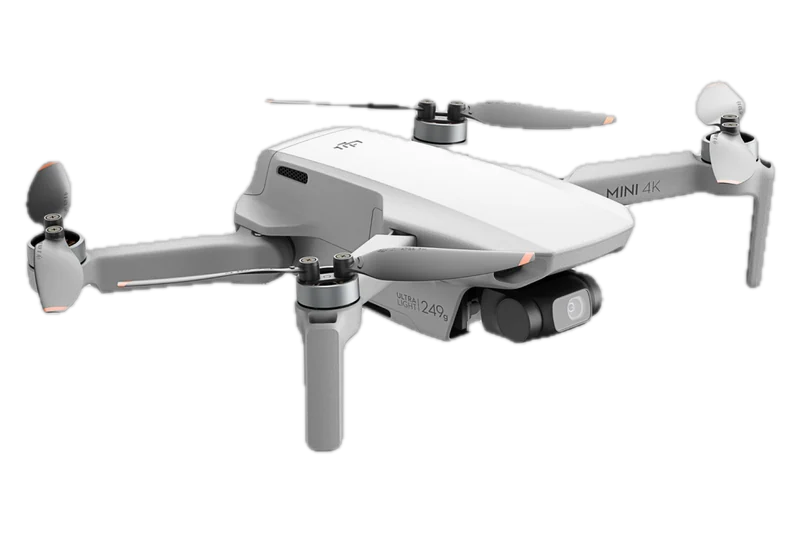
DJI Mini 4K studio cutout, arms unfolded

Neo 2 or Mini 4K?

The Mini 4K weighs 246 g and flies 31 minutes with a 1/2.3-inch 12 MP sensor, 4K up to 30 fps on a 3-axis gimbal, downward sensing and O2 video to 6.2 mi (10 km, FCC). None of the Neo, Flip or Mini 4K has an FAA Remote ID declaration either. All three still have DJI U.S. spec pages; DJI's own U.S. store sells none of the four.

246 g · 31 min · 12 MP

DJI Mini 4K

Questions about the DJI Neo 2

How fast does the DJI Neo 2 fly?

It reaches 17.9 mph (28.8 km/h) in Normal mode and 26.8 mph (43.2 km/h) in Sport mode and while tracking; DJI gives 12 m/s as its top tracking speed. Obstacle avoidance is off in Sport mode.

What sensor size does the DJI Neo 2 have?

A 1/2-inch CMOS sensor that takes 12 MP photos, behind an f/2.2 lens: the same sensor size as the Neo, whose lens is f/2.8, and smaller than the Flip's 1/1.3-inch sensor.

How big is the DJI Neo 2?

With its propeller guards it measures 5.79 × 6.73 × 1.61 in (147 × 171 × 41 mm), or 6.57 × 6.73 × 2.13 in (167 × 171 × 54 mm) with the Digital Transceiver fitted. DJI lists it at 151 g (5.3 oz), or 160 g (5.6 oz) with the transceiver.

It does not fold: the guards stay on, and it fits in one hand.
Sources Named, not linked. Read November 13, 2026.

Documents are named, not linked. Each was read on November 13, 2026; DJI's Canada specs page, release notes and UK downloads page, DJI's U.S. site and online store, the FAA list of Remote ID declarations, 14 CFR 48.15, 89.101, 89.115 and 107.110, and the FCC Covered List page were read again on November 14, 2026.

DJI

  • DJI Neo 2 specs page (Canada): every figure in the tables unless a row names another document; DJI has no U.S. page for this drone
  • DJI Neo 2 specs page (UK): the same text
  • DJI Neo 2 User Manual v1.2 (December 2025): height limits, accessory weights, the EU table
  • DJI Neo 2 Safety Guidelines v1.2: propeller guards, daytime flying, ages
  • DJI Neo 2 Release Notes (newest entry October 20, 2026): firmware versions, 100 fps in Palm Control, Manual mode
  • DJI Neo 2 FAQ and product pages (Canada) and DJI Neo 2 downloads page (UK)
  • DJI Neo specs page (U.S.), DJI Flip specs page (U.S.) and DJI Mini 4K / Mini 2 SE specs page (U.S.)
  • DJI U.S. online store and DJI ViewPoints: “What's Going On with DJI in the U.S.?”

FAA

  • FAA UAS Declaration of Compliance list: no Remote ID declaration for the Neo 2, Neo, Flip or Mini 4K
  • FAA How to Register Your Drone, Recreational Flyers, TRUST, Remote ID, Operations Over People, Become a Drone Pilot, Where Can I Fly? and B4UFLY pages

Laws and regulations

  • 14 CFR 48.15: registration
  • 14 CFR 89.101, 89.105, 89.110 and 89.115: Remote ID, broadcast modules and FRIAs
  • 14 CFR 107.12, 107.51 and 107.110: the Part 107 certificate, its limits and Category 1
  • 49 U.S.C. 44809: the recreational exception and TRUST

FCC

  • FCC Public Notice DA 25-1086: the Covered List entry of December 22, 2025
  • FCC Covered List page and FCC Public Notice DA 26-742: existing authorizations and drones already bought
  • FCC Public Notice DA 26-588: the small toy-drone exclusion
  • FCC Public Notices DA 26-69 and DA 26-454: the firmware update waiver

Photos: DJI press images. Product photos by DJI.